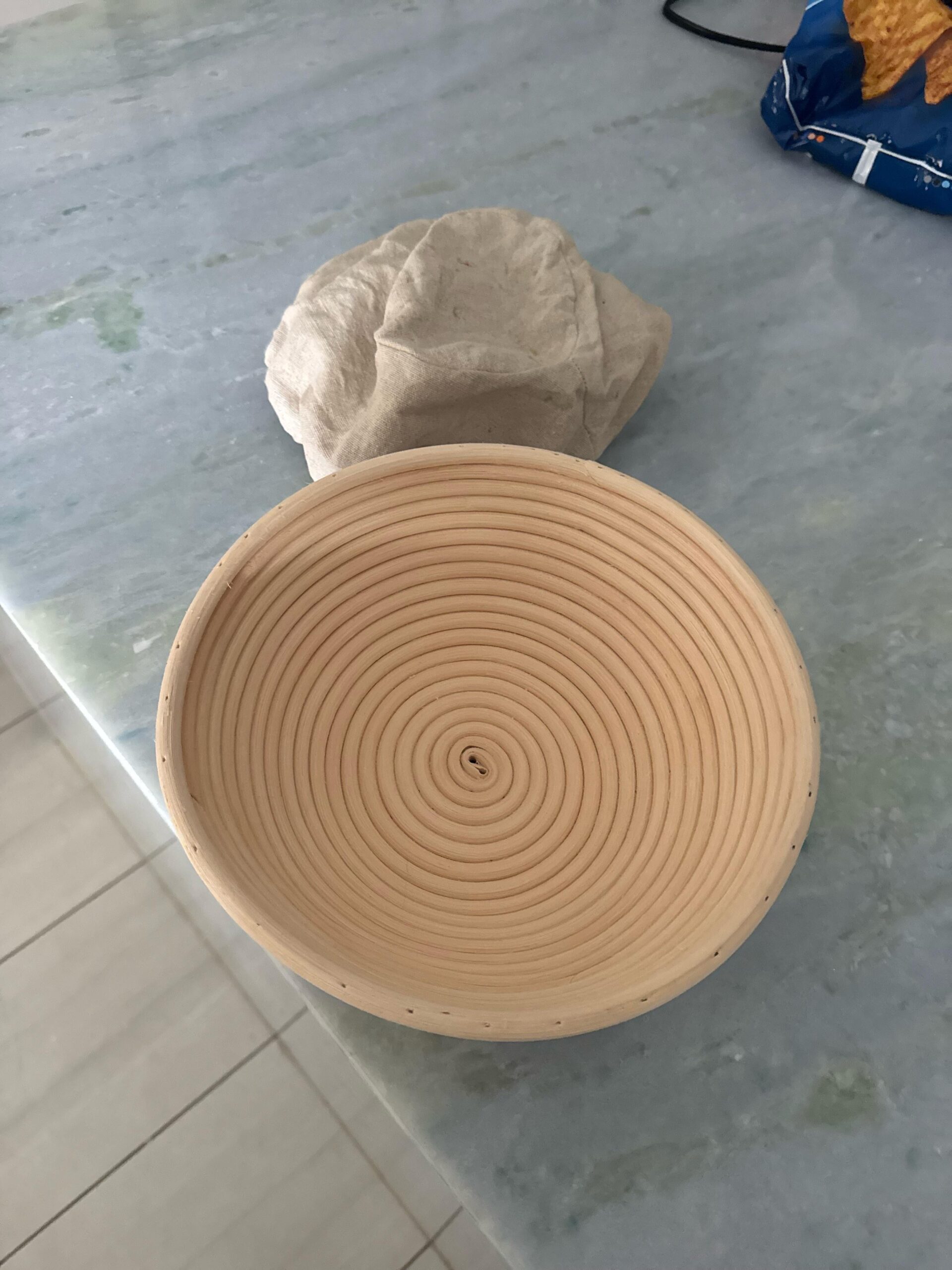
Stupid question but does the dough go directly in the wooden bowl or does it go in the cloth attached to the wooden bowl?
I made some bread this morning and used a new bowl, but I put the dough on top of the cloth, and it stuck quite a bit to the cloth despite flouring it. So, I wanted to double-check if I’m doing this correctly.
by cajunace
36 Comments
player2
It goes in the cloth. You really need to cover the cloth with flour. I use rice flour.
kgramp
Either. Both require liberal flouring. I find rice flour is best.
Edit for flour not flower. Talk to text gets me sometimes.
sneaky_imp
Sprinkle enough flour in the banneton (bowl) so the dough wont stick.
AlfhildsShieldmaiden
Both, depending on your preference. Definitely follow the instructions and prep the banneton before first using it, which will make your life a lot easier going forward.
Also, you can go without washing the cloth, as long as it’s thoroughly aired and dried out after each use. I then kinda agitate it over the sink to remove the loose flour. This ensures the cloth has a nicely floured base to begin with.
Remember that the loaf is going to be disinfected under such high temps, so as long as the cloth smells fine and there’s no mold or anything gross, you should be fine.
Aesthetics-wise, the cloth will give you a flat, lightly textured surface and the bare cane will give you concentric rings.
MrGoofyDawg
As others have said, you can use either, though with high-hydration dough, it’s recommended to use the cloth. Other than that, it’s personal preference. Do you want the banneton pattern on your loaf? Just use the banneton. If you want a smooth surface, use the cloth. Just make sure you use plenty of flour. (50/50 rice/regular is recommended).
hitch_please
I’d like to add a follow up question to OP’s:
Do you rinse out the banneton after you’ve used it? Or just wipe it out and put away?
(Thanks OP for asking this question- I was also too afraid to ask)
mcq76
The cloth is less prone to sticking, but either works
AmazingResponse338
Not stupid at all!
I thought I was stupid for putting the dough right in the banneton, but it worked, so I kept doing it
I use the cloth to cover during second rise
intergalactictactoe
When I ordered my banneton/liner back when I first got into baking sourdough, it came with a little instruction sheet that proved to be pretty helpful for me. It said to spray/mist the liner with some water and then to sprinkle it with some rice flour right after. Let it dry completely and then brush the excess flour out. For what it’s worth, I’ve never had an issue with my dough sticking to the liners.
Afraid-Expression366
Sprinkle flour in bowl. Place dough in bowl. Cover and refrigerate for however long you need to per the recipe.
workgobbler
Dust the bowl with RICE FLOUR. Use the cover on top of banneton while proofing.
ScarlettAddiction
My bannetons came with instructions to submerge the things in water, allow them to dry enough that they were no longer dripping, then flour the ever loving crap out of them, leave them to completely dry, and finally tap out the excess the following day.
I used rice flour. Now I just have to roll enough rice flour in the banneton to fill whatever divots are still left, and I never have sticking issues. I might use a teaspoon of flour per banneton and have had 0 sticking issues
Blackarm777
I think it comes down to aesthetics more than anything and if you want your bread to have the lines or not. If you want the lines, just do it in the bowl. Otherwise use the cloth.
And yea I’ve had issues with the cloth sticking to the dough as well. I think I’m going to try dampening the cloth first, either with a spray bottle or maybe a wet towel. I think the rice flour is supposed to stick more securely for better coverage and not just roll down leaving spots for the dough to stick when you do that.
cajunace
Dang lots of opinions on this didn’t realize there would be so many options!
Wonderful-Matter-627
I also have a stupid question. What is so good about these bowls/liners?
Timmerdogg
I use brown rice flour on my banneton. As soon as my loaf goes in the oven I dust the moist banneton with brown rice flour and set on the warm stove while my loaf bakes to dry out.
Apprehensive_Way471
Cloth in banneton is the move. You won’t get as intense of a spiral pattern on your loaves as if you went straight into the basket, but you’ll still get some cool patterns. I tried going straight into the banneton once (with a ton of flour) and the loaf still stuck like hell and I could never get the basket clean again
wizzard419
Either, there is a whole schism here where some think the bowl liner is to line the bowl while others think it’s a little hat for the bowl.
You can go bareback on the wooden bowl, it leave a neat design.
sidhescreams
So my understanding is that the banneton should be moistened and sprinkled with flour and then allowed to dry completely (like 24 hrs) before being used. But there are likely many ways to prep and use them. Another method I read was to moisten and flour but only to use rice flour — and I have no idea why rice versus wheat.
Even-Reaction-1297
I put the dough in the bowl then cover w the cloth
MorningBrewNumberTwo
Not a stupid question at all! I have also wondered how this works as well.
colcardaki
Either. But pro-tip. Use rice flour instead, it prevents it from sticking much better than flour.
Fuzzy974
In the cloth, and the cloth should also be covered with some rice flour.
If you put the dough in the baneton directly, and it somehow stick to it, good luck cleaning this. If it sticks to your clothes, it’s less of an issue, you can scrap it then put the cloth in your washing machine.
NotSure-2020
Yes
JET304
I put the dough directly in the banneton, after flour dusting, then use the cloth as a cover.
Ancient_Pressure_556
Not a stupid question. You have more than one option, choose wisely:
To stick the dough in the wooden banneton with no liner, make sure you heavily flour the banneton first. Using rice flour or both apf and rice flour can be helpful. It can be easy to under-flour and over-flour a banneton. If you under-flour the dough may stick and make you mad, and if you over-flour you’ll want to gently brush off the excess before baking. The benefit of this method with no liner is mainly a fancy spiral pattern on the loaf. Worth noting that regularly exposing moist dough to wood will cause black mold eventually, so bakers that use this method periodically “bake” the empty wooden bannetons at a low temp to kill mold spores.
Using the liner in the wooden banneton requires the same flouring to make sure the dough doesn’t stick. You won’t get the pretty spiral pattern, but you can throw the liner in the washing machine leaving your wooden banneton pristine clean. This method is strongly encouraged if you’re baking bread with sticky or smelly ingredients – like oil, butter, dried fruits, sticky sugary ingredients, etc. You’ll probably never need to replace the bowl from black mold regardless of how moist your dough is.
CaptainPoset
You can do both, and both are done frequently, as the cloth is a totally optional thing of no real function.
Maverick-Mav
Really high hydration often one will use the cloth. Also if you don’t want the lines. I pretty much never use it. Both need flour to prevent sticking. I use a 50:50 mix of rice flour and regular flour.
CryptographerThat376
Hi! I got a similar set when I first started and threw the cloth part away after the dough kept sticking to it. Since then I stick it directly in the banneton after spraying with a tiny bit of water and rice flour. Since I have not had a sticking issue. I know some people just wipe off the flour afterwards but I thoroughly wash out the banneton after use. I can’t chance a mold or bug issue or else I’ll stop making bread due to extreme disgust LOL
PirkhanMan
wet it (spirtz/spray) and flower (preferably with rice flour) before putting the dough in, don’t do what I have done
Ok-Present4524
As someone who worked in a bakery producing over 2 tons of bread a night. We had around 150 bannetons which we would use for a loaf we only made a small amount of. We use to sieve the flour onto the bannetons before placing the dough in them and then fridge them with the dough in over night for a slow ferment. The next morning when the dough was removed from the banneton we would place the empty banneton upside down on top of the oven to dry out any moisture that it may have picked up from being in the fridge. (doing this at home I would sussget to place the banneton in ur oven at around 40 degrees c upside down for around 30-40 mins. When I bake at home I put mine in the oven after I’ve taken the loaf out and turned the oven off I leave the door open for 10 mins then put the bannetons in and leave door open.) once dry It makes it easier to knock out any flour or left over dough which should have dried out. Tap the banneton upside down 3 or 4 times and then use a stiff hand brush(a new dustpan and brush brush would work or a new dry brush that you would use when washing up would work too. The stiffer and smaller it is the easier it is to get the dry flour out. In my 3 years at that bakery I only ever once found a weevels and that was under a walk in oven. But we had no contamination with flour or banneton or couches either which we would use for our sourdough aswell as our other loaves we produced. Aslong as they are dry and as free from as much flour as possible you should be fine. We aslo had large round bannetons that had a cloth liner. So you could use it inside aswell but make sure u use alot more flour. Over time a couche or cloth lined banneton will build up a flour barrier so you don’t have to use as much or even any if your using rice cones or rice flour.
I hope this helps sorry its soo long.
Beneficial-Tour4821
Instead of using the cloth liner, use a cleaning cloth (chux in Australia; jay cloth in UK; I think in the US they are Clorox HandiWipes) I promise your dough will never stick, and no need for any flour either!
golden_one_42
Not a stupid question.
You’re supposed to spray the raw banneton with water, then dredge with flour until it’s absolutely covered, allow it to dry, then spray and coat a second time, then coat again before dropping the shaped loaf into it.
Once you’ve tipped the proven (proofed?l loaf out, you’re supposed to use a stiff brush to clean out any stuck dough, spray with water, dust with flour, leave to dry, then put the cover back on.
At least, that’s the instructions from the one i was given.
Most of the time it comes out perfectly well, leaving a pleasant pattern on the loaf.
On the other hand, when I’m doing a super high hydration loaf, i add a lot of extra flour. And i mean a lot. And most of the time, it sticks a little around one edge.
Ok-Internal-528
Either, or.
IamTheMagicNinja
The cloth is to cover your dough once in the banneton
YellowBreakfast
You can do either. Directly gives a nice pattern. Most important is use lots of flour regardless of the surface.
When I do it, I put the bread directly in the bowl (again with lots of flour) and put the cloth over the top to keep a little moisture in.

36 Comments
It goes in the cloth. You really need to cover the cloth with flour. I use rice flour.
Either. Both require liberal flouring. I find rice flour is best.
Edit for flour not flower. Talk to text gets me sometimes.
Sprinkle enough flour in the banneton (bowl) so the dough wont stick.
Both, depending on your preference. Definitely follow the instructions and prep the banneton before first using it, which will make your life a lot easier going forward.
Also, you can go without washing the cloth, as long as it’s thoroughly aired and dried out after each use. I then kinda agitate it over the sink to remove the loose flour. This ensures the cloth has a nicely floured base to begin with.
Remember that the loaf is going to be disinfected under such high temps, so as long as the cloth smells fine and there’s no mold or anything gross, you should be fine.
Aesthetics-wise, the cloth will give you a flat, lightly textured surface and the bare cane will give you concentric rings.
As others have said, you can use either, though with high-hydration dough, it’s recommended to use the cloth. Other than that, it’s personal preference. Do you want the banneton pattern on your loaf? Just use the banneton. If you want a smooth surface, use the cloth. Just make sure you use plenty of flour. (50/50 rice/regular is recommended).
I’d like to add a follow up question to OP’s:
Do you rinse out the banneton after you’ve used it? Or just wipe it out and put away?
(Thanks OP for asking this question- I was also too afraid to ask)
The cloth is less prone to sticking, but either works
Not stupid at all!
I thought I was stupid for putting the dough right in the banneton, but it worked, so I kept doing it
I use the cloth to cover during second rise
When I ordered my banneton/liner back when I first got into baking sourdough, it came with a little instruction sheet that proved to be pretty helpful for me. It said to spray/mist the liner with some water and then to sprinkle it with some rice flour right after. Let it dry completely and then brush the excess flour out. For what it’s worth, I’ve never had an issue with my dough sticking to the liners.
Sprinkle flour in bowl. Place dough in bowl. Cover and refrigerate for however long you need to per the recipe.
Dust the bowl with RICE FLOUR. Use the cover on top of banneton while proofing.
My bannetons came with instructions to submerge the things in water, allow them to dry enough that they were no longer dripping, then flour the ever loving crap out of them, leave them to completely dry, and finally tap out the excess the following day.
I used rice flour. Now I just have to roll enough rice flour in the banneton to fill whatever divots are still left, and I never have sticking issues. I might use a teaspoon of flour per banneton and have had 0 sticking issues
I think it comes down to aesthetics more than anything and if you want your bread to have the lines or not. If you want the lines, just do it in the bowl. Otherwise use the cloth.
And yea I’ve had issues with the cloth sticking to the dough as well. I think I’m going to try dampening the cloth first, either with a spray bottle or maybe a wet towel. I think the rice flour is supposed to stick more securely for better coverage and not just roll down leaving spots for the dough to stick when you do that.
Dang lots of opinions on this didn’t realize there would be so many options!
I also have a stupid question. What is so good about these bowls/liners?
I use brown rice flour on my banneton. As soon as my loaf goes in the oven I dust the moist banneton with brown rice flour and set on the warm stove while my loaf bakes to dry out.
Cloth in banneton is the move. You won’t get as intense of a spiral pattern on your loaves as if you went straight into the basket, but you’ll still get some cool patterns. I tried going straight into the banneton once (with a ton of flour) and the loaf still stuck like hell and I could never get the basket clean again
Either, there is a whole schism here where some think the bowl liner is to line the bowl while others think it’s a little hat for the bowl.
You can go bareback on the wooden bowl, it leave a neat design.
So my understanding is that the banneton should be moistened and sprinkled with flour and then allowed to dry completely (like 24 hrs) before being used. But there are likely many ways to prep and use them. Another method I read was to moisten and flour but only to use rice flour — and I have no idea why rice versus wheat.
I put the dough in the bowl then cover w the cloth
Not a stupid question at all! I have also wondered how this works as well.
Either. But pro-tip. Use rice flour instead, it prevents it from sticking much better than flour.
In the cloth, and the cloth should also be covered with some rice flour.
If you put the dough in the baneton directly, and it somehow stick to it, good luck cleaning this. If it sticks to your clothes, it’s less of an issue, you can scrap it then put the cloth in your washing machine.
Yes
I put the dough directly in the banneton, after flour dusting, then use the cloth as a cover.
Not a stupid question. You have more than one option, choose wisely:
To stick the dough in the wooden banneton with no liner, make sure you heavily flour the banneton first. Using rice flour or both apf and rice flour can be helpful. It can be easy to under-flour and over-flour a banneton. If you under-flour the dough may stick and make you mad, and if you over-flour you’ll want to gently brush off the excess before baking. The benefit of this method with no liner is mainly a fancy spiral pattern on the loaf. Worth noting that regularly exposing moist dough to wood will cause black mold eventually, so bakers that use this method periodically “bake” the empty wooden bannetons at a low temp to kill mold spores.
Using the liner in the wooden banneton requires the same flouring to make sure the dough doesn’t stick. You won’t get the pretty spiral pattern, but you can throw the liner in the washing machine leaving your wooden banneton pristine clean. This method is strongly encouraged if you’re baking bread with sticky or smelly ingredients – like oil, butter, dried fruits, sticky sugary ingredients, etc. You’ll probably never need to replace the bowl from black mold regardless of how moist your dough is.
You can do both, and both are done frequently, as the cloth is a totally optional thing of no real function.
Really high hydration often one will use the cloth. Also if you don’t want the lines. I pretty much never use it. Both need flour to prevent sticking. I use a 50:50 mix of rice flour and regular flour.
Hi! I got a similar set when I first started and threw the cloth part away after the dough kept sticking to it. Since then I stick it directly in the banneton after spraying with a tiny bit of water and rice flour. Since I have not had a sticking issue. I know some people just wipe off the flour afterwards but I thoroughly wash out the banneton after use. I can’t chance a mold or bug issue or else I’ll stop making bread due to extreme disgust LOL
wet it (spirtz/spray) and flower (preferably with rice flour) before putting the dough in, don’t do what I have done
As someone who worked in a bakery producing over 2 tons of bread a night. We had around 150 bannetons which we would use for a loaf we only made a small amount of. We use to sieve the flour onto the bannetons before placing the dough in them and then fridge them with the dough in over night for a slow ferment. The next morning when the dough was removed from the banneton we would place the empty banneton upside down on top of the oven to dry out any moisture that it may have picked up from being in the fridge. (doing this at home I would sussget to place the banneton in ur oven at around 40 degrees c upside down for around 30-40 mins. When I bake at home I put mine in the oven after I’ve taken the loaf out and turned the oven off I leave the door open for 10 mins then put the bannetons in and leave door open.) once dry It makes it easier to knock out any flour or left over dough which should have dried out. Tap the banneton upside down 3 or 4 times and then use a stiff hand brush(a new dustpan and brush brush would work or a new dry brush that you would use when washing up would work too. The stiffer and smaller it is the easier it is to get the dry flour out. In my 3 years at that bakery I only ever once found a weevels and that was under a walk in oven. But we had no contamination with flour or banneton or couches either which we would use for our sourdough aswell as our other loaves we produced. Aslong as they are dry and as free from as much flour as possible you should be fine. We aslo had large round bannetons that had a cloth liner. So you could use it inside aswell but make sure u use alot more flour. Over time a couche or cloth lined banneton will build up a flour barrier so you don’t have to use as much or even any if your using rice cones or rice flour.
I hope this helps sorry its soo long.
Instead of using the cloth liner, use a cleaning cloth (chux in Australia; jay cloth in UK; I think in the US they are Clorox HandiWipes) I promise your dough will never stick, and no need for any flour either!
Not a stupid question.
You’re supposed to spray the raw banneton with water, then dredge with flour until it’s absolutely covered, allow it to dry, then spray and coat a second time, then coat again before dropping the shaped loaf into it.
Once you’ve tipped the proven (proofed?l loaf out, you’re supposed to use a stiff brush to clean out any stuck dough, spray with water, dust with flour, leave to dry, then put the cover back on.
At least, that’s the instructions from the one i was given.
Most of the time it comes out perfectly well, leaving a pleasant pattern on the loaf.
On the other hand, when I’m doing a super high hydration loaf, i add a lot of extra flour. And i mean a lot. And most of the time, it sticks a little around one edge.
Either, or.
The cloth is to cover your dough once in the banneton
You can do either. Directly gives a nice pattern. Most important is use lots of flour regardless of the surface.
When I do it, I put the bread directly in the bowl (again with lots of flour) and put the cloth over the top to keep a little moisture in.