
By Bob Lipinski
“Claret, dear, not Coca-Cola, When you’re having Gorgonzola…”
— William Cole, ‘What a Friend We Have in Cheeses’
 Bob Lipinski
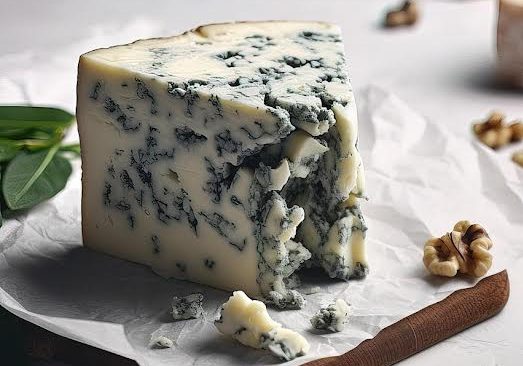
, designated as a Protected Designation of Origin (PDO) product since 1996, is a blue cheese produced in the northern Italian regions of Lombardy and Piedmont. Additionally, production (Gorgonzola-style) occurs in countries such as the United States, Australia, and Brazil.
Cheese production began in A.D. 879 in Gorgonzola, a city in Lombardy, Milan; but now very little is produced there. The cheese was originally called Stracchino di Gorgonzola, a name believed to come from the word stracco, meaning weary, describing the cows after their annual return from the summer pastures in the Alps. Later, it became known as Stracchino Verde, in reference to the green mold veins present within the cheese.
Gorgonzola is a cow’s milk cheese with a reddish-brown or pinkish-grey rind and a pale yellow interior streaked with greenish-blue veins. Cylindrical with flat sides resembling a wheel, this cheese has a creamy to firm, sometimes crumbly texture. Its taste is tangy, rich, slightly pungent, and features salty, spicy-peppery notes.
In the production of Gorgonzola, curds are formed and a mold called Penicillium glaucum is added prior to aging. During aging, cheesemakers use stainless steel needles or rods to pierce the cheese, allowing oxygen to enter, facilitating mold development. The cheese develops blue-green veins as a result. These veins, combined with the presence of salt, contribute to its piquant taste.
Gorgonzola is produced in two styles: dolce (sweet) and piccante (piquant). Dolce has a mild, nutty flavor with a creamy texture. Piccante has a stronger taste and a slightly firmer consistency. Gorgonzola dolce is aged for at least 50 days, resulting in a soft texture and mild taste, while Gorgonzola piccante ages 80 days or longer for a firmer, crumbly texture and stronger flavor.
The cheese can be paired with a variety of beverages such as wine, port, beer, brandy, tequila, gin, and whiskey. Recently, I sampled several wines that paired exceptionally well with a wedge of Gorgonzola.
2020 Cotarella “Sodale” Merlot IGT, Latium, Italy. (Aged in Nevers and Allier barrels for 9 months.) Bouquet of black cherry, anise and plum, with hints of cranberry, dark chocolate, black olives, and spices. A long velvety aftertaste.
2021 Frescobaldi “Tenuta Perano” DOCG Chianti Classico, Tuscany, Italy. Ruby colored with hints of anise, sour cherry, lavender, and red currants. Bouquet and flavor of juicy berries, spices, and roasted coffee, with a bitter almond aftertaste.
2022 Portlandia “Pinot Noir,” Oregon. (Aged 10 months in new French oak) Light ruby with notes of red fruits, cinnamon, earth, and violets. Flavors of cherries, citrus, and black tea.
Bob Lipinski is the author of 10 books, including “101: Everything You Need To Know About Whiskey” and “Italian Wine & Cheese Made Simple” (available on Amazon.com). He consults and conducts training seminars on Wine, Spirits, and Food and is available for speaking engagements. He can be reached at www.boblipinski.com OR [email protected].
Dining and Cooking