
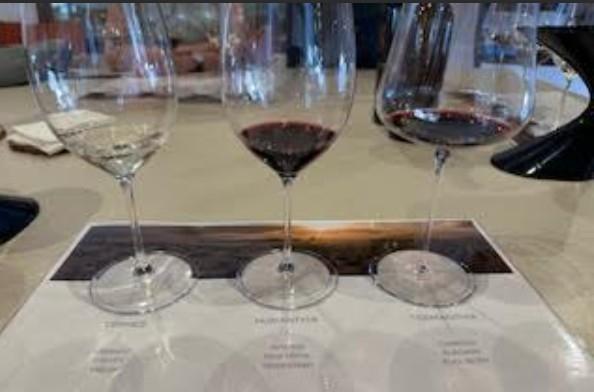
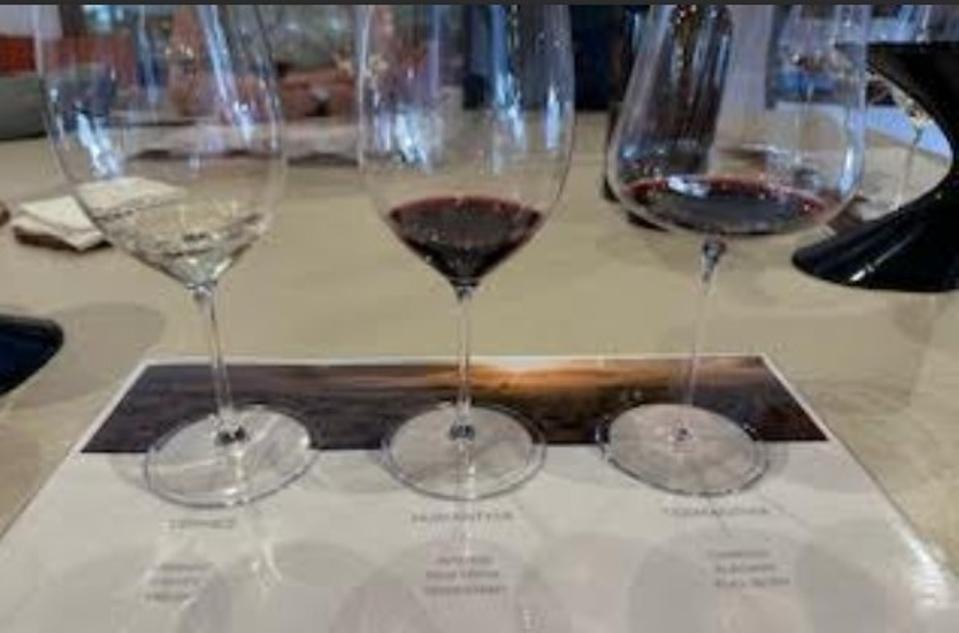
Three Numanthia wines at a tasting at the Bodega in September 2025
Stephen Denning
One sip of Termanthia 2017 and my Bordeaux-trained palate surrendered. Black cherries exploded with Toro’s wild earthiness—powerful yet poised and opulent. This wasn’t just wine: I was in another world. As an agnostic who’d dismissed Spanish reds as predictably bold, I was at Bodega Numanthia in Toro, Spain, during a two-week tour of Spanish wineries. What I experienced opened my mind to new vistas of wine-making possibilities.
Before my call on Bodega Numanthia, I had already visited several tiny Spanish wineries, producing very enjoyable wine. I also had a chance to go through every nook and cranny of a gigantic industrial-scale bodega producing vast quantities of wine in ultra-modern facilities. Their wine was even more drinkable, and yet, somehow did not offer anything memorable or comparable.
Everyone knew that Spanish wine had made major progress over the past 30 years with several bodegas achieving international recognition.
Yet none of the wines I tasted matched the experience of tasting wines that embodied the “terroir”, the spirit of the grapes, the ancient vines, and the art and heart that had gone into the wine-making at Bodega Numanthia.
How Bodega Numanthia Splashed On To The Wine Scene
Founded 1998 by the Eguren brothers (Miguel Angel, Marcos—from Rioja’s Sierra Cantabria dynasty), Bodega Numanthia revived Toro wine with three kinds of wine: terroir-first reds: the youthful Termes, the balanced Numanthia, and the ultra-premium Termanthia. The result? A meteoric rise in reputation with the 2004 Termanthia being the first Toro wine to be rated 100 by wine critic Robert Parker. Yet Numanthia was still operating on a boutique scale with around 100k bottles, according to 1998-2008 trade reports.
Enter LVMH. The luxury conglomerate saw the growth potential of Numanthia and in 2008 bought the whole company. Unlike many takeovers, LVMH did not impose its own strategy on its subsidiary. Instead, it encouraged Numanthia to further its own strategy. The result was hugely positive: the consolidation of fragmented plots into managed estates, new technology, and access to international markets through LVMH’s networks and logistics. Sales doubled with the help of the LVMH’s distribution network and 90% of its new production is exported to Asia and the US.
More important, since the beginning, Numanthia’s style of wine has continued to evolve—less extraction, less stress on the vines and the terroir in return for greater elegance. This was underscored by the post-2008 awards that emphasized “refined power.”
In terms of sales, Numanthia is a minuscule part of LVMH’s Moët Hennessy wine division. But with ancient, ungrafted Tinta de Toro vines, it punches above its weight. As wine expert James Suckling’s wrote in his 2022 100-point review of Numanthia “Ipse” (a blend of 2014-16 vintages), it was “a wine that may live forever”.
Three Driving Principles Of Bodega Numanthia
Numanthia didn’t succeed by doing what other wineries were doing and doing it better. Numanthia came with a different mindset and opted to do things very differently. Three factors were dominant in my conversations with Numanthia’s current estate manager, Julio Rodriguez Buren, and its vigneron, Jesus Jimenez.
1. Terroir Expression: Numanthia excels by nurturing old-vine, site-specific wines that vividly convey Toro’s rugged soils and continental climate, albeit in a different “language” from old Bordeaux. The enthusiasm and dedication that Julio and Jesus convey in our conversations was contagious.
2. Sustainability: A leader since 1998, Numanthia led the way with chemical-free farming, biodiversity promotion, and water conservation (no irrigation). This low-impact approach not only preserves ecosystems but adds value with tastier wine as well as certifications and storytelling, appealing to ethical constituencies and enhancing long-term viability amid climate challenges.
3. Innovation and Brand:
The association of LVMH, a powerhouse in marketing of luxury goods, and Numanthia, winemakers of old tradition complete with a wine to remember, have the potential to raise the threshold for all Spanish wines by taking quality wines to new consumer markets. The goal is to establish a new niche by spurring customer loyalty for Numanthia’s Toro wines. The positioning and cross-promotion possibilities available to Numanthia through its partnership with LVMH open the door for all possibilities.
Blending tradition with technology while leveraging LVMH’s luxury branding and marketing and distribution powerhouse helped elevate Numanthia to “cult” status. It created customer loyalty and intangible value through exclusivity and global reach.
These principles interlink to generate superior value, thus helping to differentiate Numanthia in a crowded market.
How Bodega Numanthia Exemplifies Value-Creating Principles
Estate manager Julio and vigneron Jesus are the current masterminds of Numanthia..
Jesus knows, loves, and cares for every vine on the estate, understanding their personalities and peculiarities in a way that enables him to blend the vintages for the tastes of the customers he is aiming to surprise and delight. He epitomizes the soul of the vineyard.
Julio manages the business side of things, but is equally passionate about the need for business to “get beyond making larger quantities of more affordable products”, and instead concentrate on achieving higher quality of fine wines.
LVMH is the legal owner of Bodega Numanthia and treats it as a jewel among its many enterprises. Financially, Numanthia is miniscule, but in reputation it contributes significantly to LVMH’s brand, just as LMVH contributes greatly to enable Numanthia to play a role the global stage.
Sip this: Size isn’t the killer; an ability to innovate is the principal elixir.
Dining and Cooking