
It’s that sense of place.
When you sip in the country where the grapes are grown and the wine is made, it simply tastes better.
You’re caught up in the romance of it, the glamour of it, the terroir of it.
In the case of German wine in Germany, the ‘gute zeit’ (good time) of it.
I experienced exactly that at this year’s Germany Travel Mart in Chemnitz, the city of 250,000 near the Saxony wine region in the former East Germany.
Travel writers, tour operators and tourism representatives from around the world gathered in Chemnitz to find out what’s new in German tourism and celebrate that Chemnitz will be a European Capital of Culture in 2025.
Of course, you can’t be at a conference — and you, most certainly, can’t be at a conference in Germany — without wine.
At last count, I sipped at least eight exciting German wines over the course of the Germany Travel Mart.
For the purposes of our wine discussion here, I’ve extended the Germany Travel Mart to include the flights to and from Frankfurt because the vinous experience actually started in the plane.
First of all, it was fun to fly the Lufthansa Boeing 747 Jumbo Jet from Vancouver to Frankfurt, even if it was in economy class.
The 747 is the famous wide-bodied airliner that is one of the most recognizable in the world for its signature upper-deck ‘hump’ at the front of the plane.
While seated in 34D, I enjoyed a glass (well, it was actually a plastic cup) of Heinrich Vollmer Altum Riesling Trocken.
When I asked about the wine, the flight attendant told me it is specially made for Lufthansa in one-litre plastic bottles to keep the weight down for flight.
The Heinrich Vollmer is a quintessential German Riesling, lush and mineral-driven with aromas and flavours of crisp green apple and lemon.
By the way, ‘troken’ is the German classification for dry wine, thus dispelling the myth that all German Rieslings are cloying or sweet.
After dinner on the 747, I had a glass (plastic cup) of the sparkling wine I’m sure you’re all familiar with — Henkell Trocken.
It’s made in Wiesbaden, Germany and has become the best-selling sparkling wine in the world thanks to mass production, aggressive exporting and being fresh, delicious and affordable.
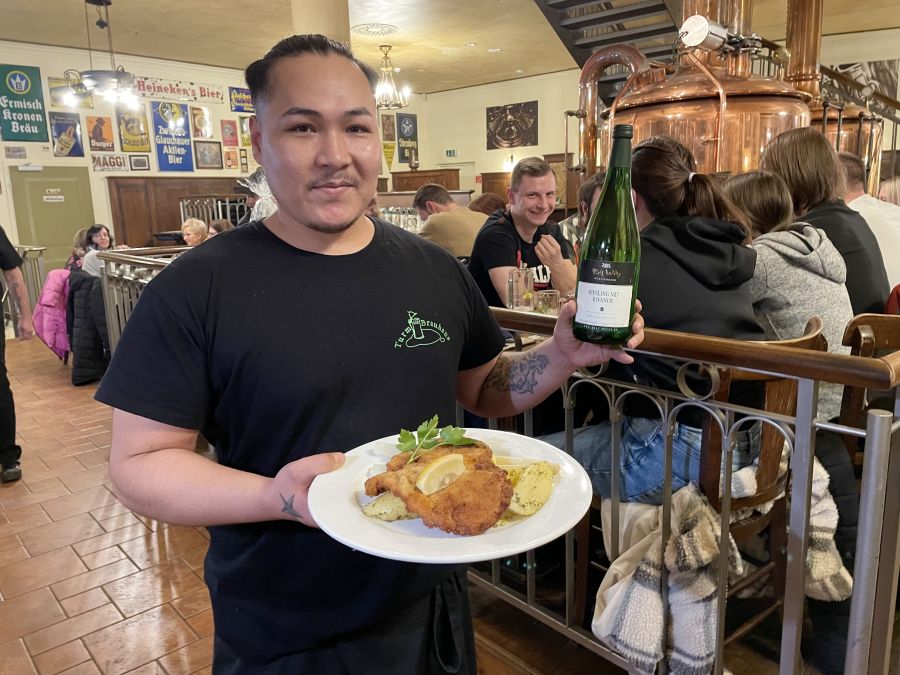
On the ground and in Chemnitz, the Canadian delegation to the Germany Travel Mart had a welcome dinner at the traditional Turm-Brauhaus restaurant.
I ordered the signature dish of brauhaus pork schnitzel with a glass (yes, a real glass with a stem) of Rolf Willy Mit Rivaner Riesling.
Again, a dry, fruit-forward Riesling with nice acidity.
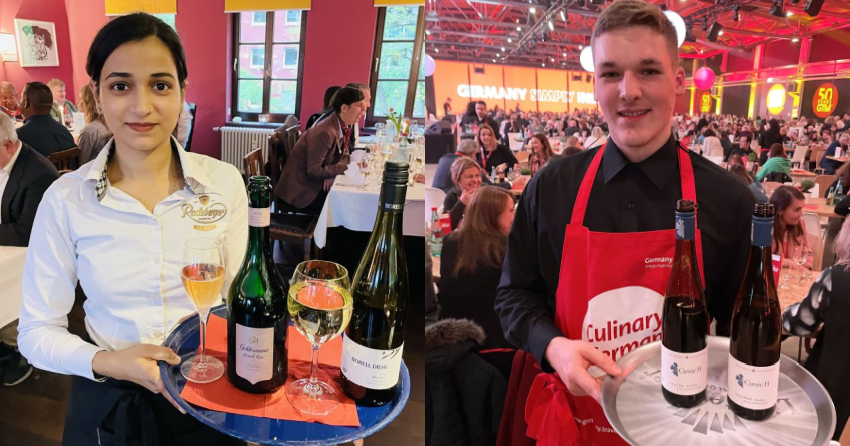
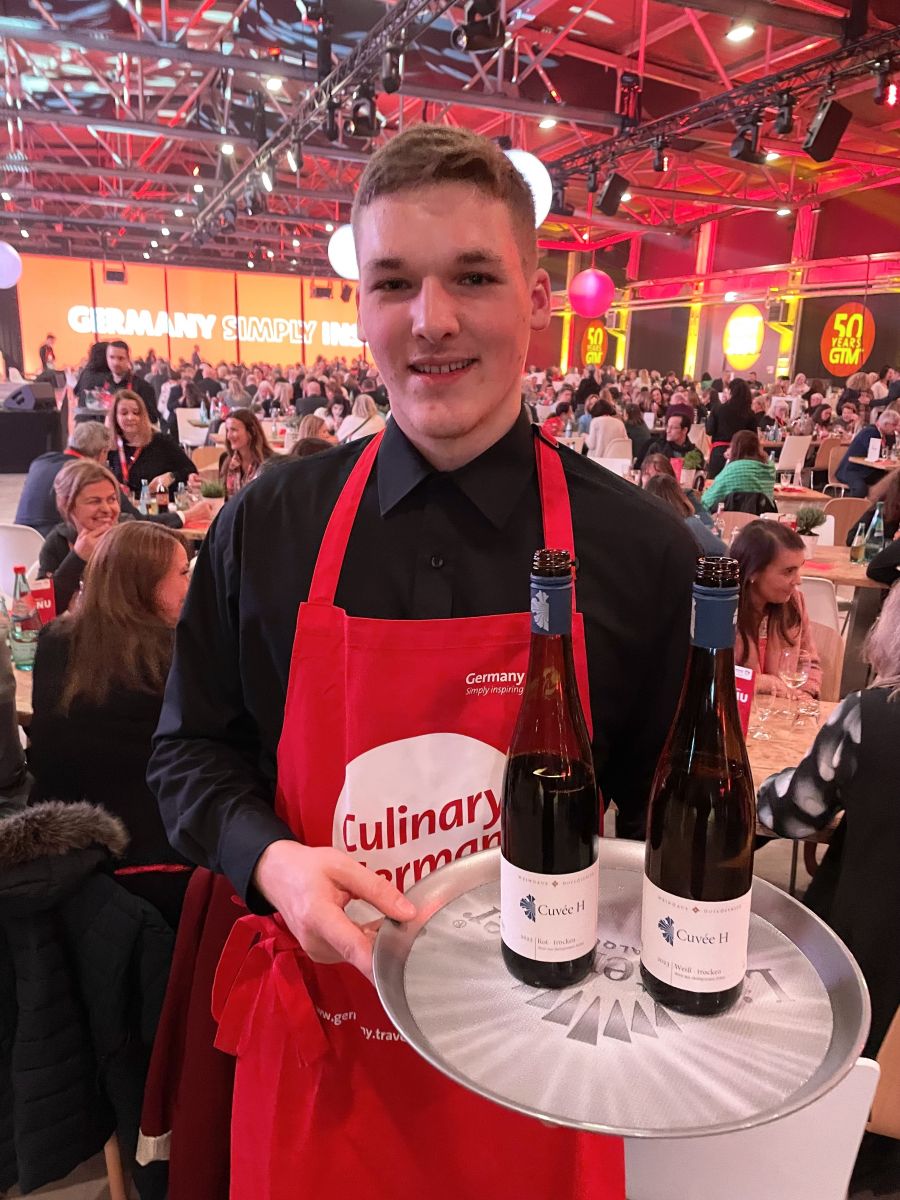
At the opening ceremony for the Germany Travel Mart, the Cuvee H red blend (rot-trocken) and Cuvee H white blend (weiss-trocken) were poured.
Both are affordable, approachable and crowd-pleasing wines — the red a blend of the decidedly German varietals Dornfelder and Regent and the white a blend of more very-German grapes, Muller-Thurgau and Weissburgunder (known as Pinot Blanc in the rest of the world).
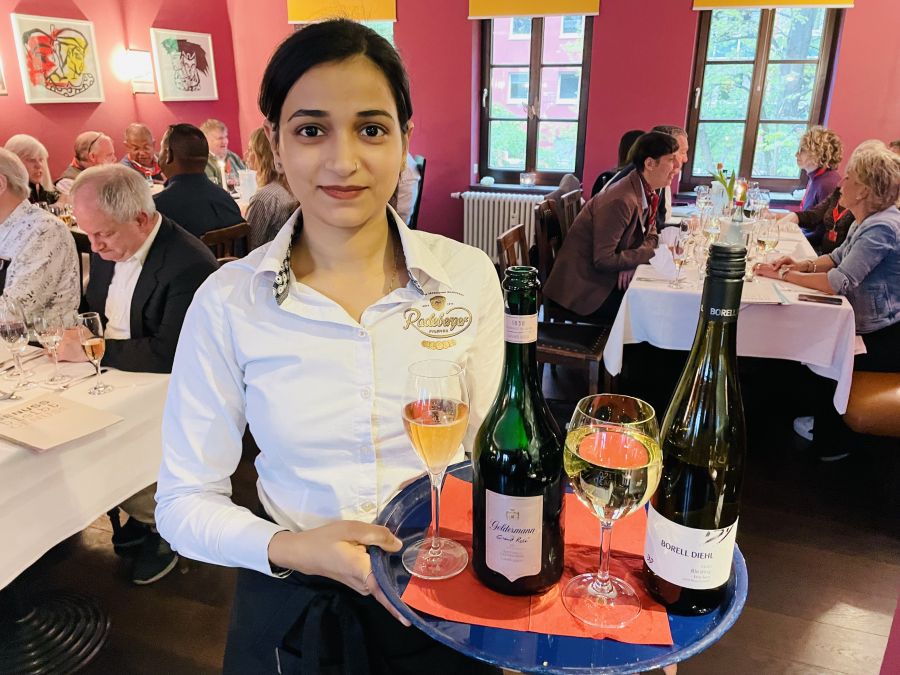
By the end of the conference, the Canadian and American delegations were friends and we had a joint farewell dinner at Heck-Art restaurant in Chemnitz.
We toasted each other with Geldermann Grand Rose Sekt sparkling wine and then drank Borell Diehl 2022 Riesling Trocken with monkfish entrees.
On the way home, fortuitously upgraded to business class on the Lufthansa 747, I settled in with a glass (yes, a real glass, but one of those stemless ones) of Sankt Anna Riesling.
It has a soft and lush profile of yellow plum and pineapple with a mineral streak.
Now, it comes time to tell you that you probably won’t be able to find any of these German wines in BC, except for the ubiquitous Henkell Trocken.
But, don’t despair.
Use this little foray into Teutonic Deutschland to inspire you to buy and try a German bottle from your local liquor store.
Or, better yet, buy and try now and also plan a trip to Germany to quaff the wines in their homeland.
Steve MacNaull is a NowMedia Group reporter, Okanagan (and international) wine lover and Canadian Wine Scholar. Reach him at [email protected]. His wine column appears in this space every Friday afternoon.
Dining and Cooking