
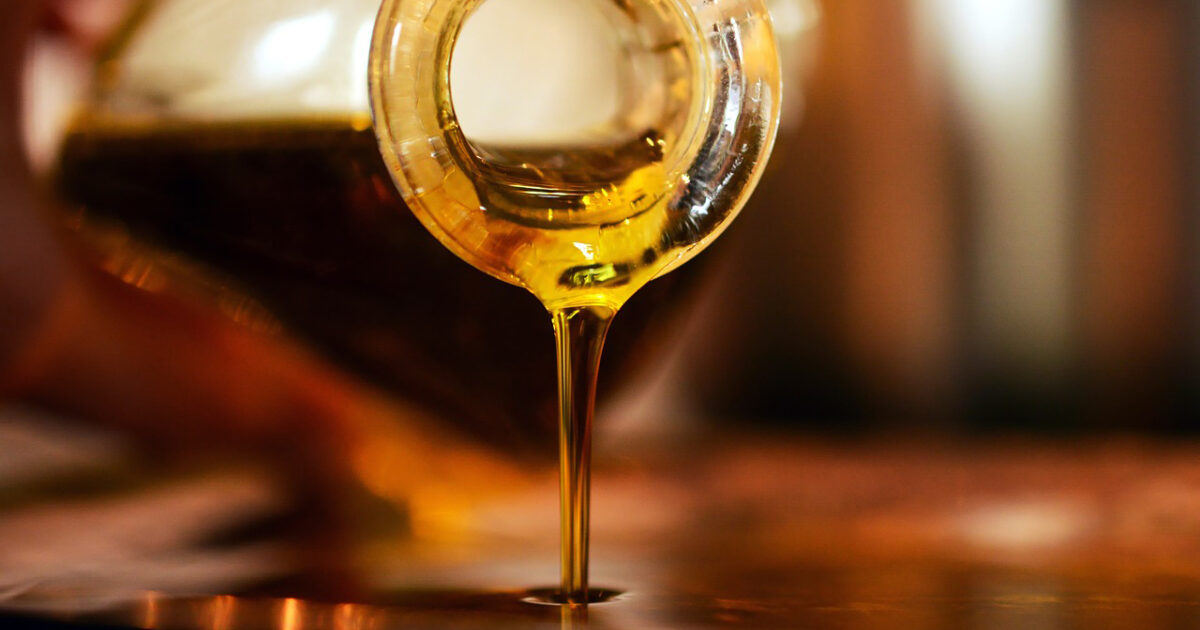
Olive oil production is experiencing significant volatility due to climate change, leading to dramatic fluctuations in prices. Image source: Pixabay
Olive oil production is experiencing significant volatility due to climate change, leading to dramatic fluctuations in prices, according to a RaboResearch report.
The instability in production and prices has been mainly driven by unpredictable weather patterns in the Mediterranean, where the majority of global olive oil production takes place, the 17 September report said.
Over the past decade, olive oil supply had become increasingly unstable but the 2024/25 season saw a significant rebound in production, leading to a sharp correction in prices.
Production in Spain – the world’s leading producer – reached approximately 1.4M tonnes after two years of severe drought that had reduced output to below 1M tonnes.
Other Mediterranean countries also saw production increases: Greece (+43% compared to 2023/24), Portugal (+21%), Tunisia (+55%) and Turkey (+109%).
“In Spain, which sets global prices, olive oil dropped to €3,200 (US$3,768)/tonne in March 2025,” said Vito Martielli, senior specialist of grain & oilseeds for RaboResearch.
“In contrast, Italy’s locally-produced extra-virgin olive oil prices remain high, exceeding €9,000 (US$10,600)/tonne, creating a record premium over Spanish prices.”
The decline in international prices had supported a recovery in global olive oil consumption, particularly in traditional consumer countries in southern Europe, the report said.
“In recent months, Spanish prices have appreciated due to strong international demand and initial estimates for the 2025/26 campaign, which begins in October,” Martielli said.
Olive oil production in the Mediterranean is becoming more unpredictable, according to the report.
The Mediterranean basin – which is responsible for approximately 95% of global olive oil production – was increasingly recognised as a climate change hotspot, facing rising temperatures, water scarcity, greater climate variability and more frequent extreme weather events, such as droughts, floods and heatwaves, Rabobank wrote.
According to Martielli, the long-term challenge is not a decline in production but growing volatility, with climate variability leading to seasons with stronger yields and others with erratic weather and lower outputs, creating uncertainty around production and prices.
With similar climate trends affecting olive-producing regions across the Mediterranean, the olive oil industry faces the challenge of ensuring market stability amid growing climatic pressures, according to the report.
Orchards needed to adapt to changing conditions, with irrigation as the primary adaptation measure, and access to fresh water was crucial for yield stability and long-term orchard viability, Rabobank wrote.
Strategies needed to be tailored to local conditions and include complementary measures such as soil and canopy management, pest control, and the use of climate-resilient varieties.
Downstream companies could mitigate risks by sourcing from diverse regions and hemispheres, partnering with growers to promote sustainable practices that enhanced long-term orchard resilience and reduced exposure to climate-driven supply shocks, the report said.
Dining and Cooking