
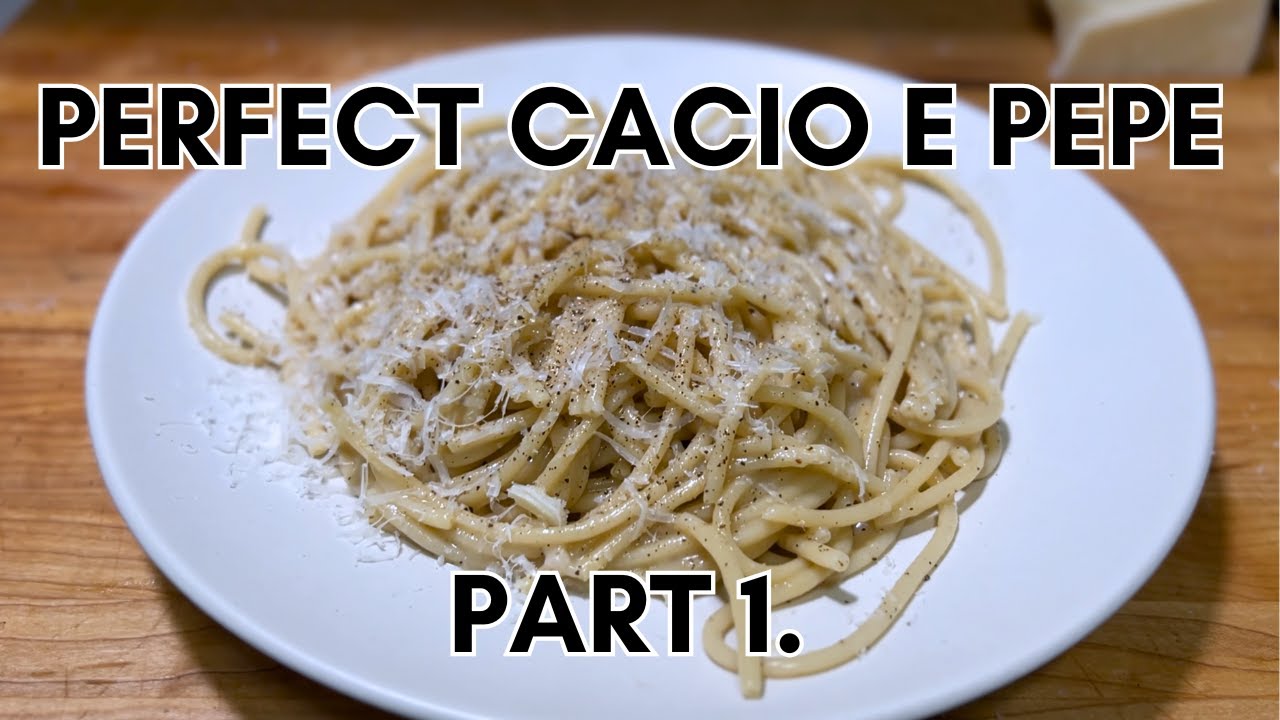
Cacio e Pepe has always been one of my favorite pasta dishes but I have never thought of myself as a good cook when it comes to homemade cacio e pepe, and today we start to change that. I hope it doesnt take too many parts but we will over the next few weeks take a real dive into perfecting cacio e pepe…..
#cacioepepe #pastarecipe #cooking #kitchen
Today we’re going to start the journey to learn how to make the perfect kacio e pepe. The ingredients are all very simple. You’re going to need a good pasta, bronze dye preferably, good amount of starch content right on it. You want to see those ridges on the pasta. That’s what the sauce is going to stick to. Also, that starch is going to help make this creamy. We’re also going to use some good quality black pepper. You want to freshly grind this on hand. That’ll just really enhance those flavors. And then prammano, which is the standard cheese for kacio e pepe. I’m going to preg grind this black pepper right now to help. I’m also going to pre-grate the cheese just using a microplane. I’m also going to cut off the rind of it and we’re going to throw that rind into the sauce which I’ve seen some people do. I’m going to make this a multi-part series though because I’ve never been happy with the creaminess and the overall texture of my kachu pepe. I want to really dive into giving this the best try for multiple parts to perfect this recipe and this is just my first try at really taking it to that next level. So, we’re going to throw that pasta in. This is about a portion and a half worth. All going to be on one plate, but it’s a little more than one person’s worth. And then we’re going to throw that pepper in and just let that toast for maybe 30 seconds to a minute. We’re trying to not use a lot of water because you want it to be super starchy. So, it’s going to take a little while to get that pasta bent down into the water. But once you do, and that starch is there, grab a bunch of that water. It doesn’t really matter how much at this point. And we’re going to throw it into the pepper. I’m just going to let this kind of reduce and let those flavors marry together. I’m also going to throw that rind in. I’ve seen people do that. I don’t know if that’s going to stay longterm in the multiple recipes I try for this, but just let that reduce over the next 5 to 6 minutes. That’s how long we’re going to let that pasta cook for. And we’re going to let the last two to three minutes of it cook in this pan with a little more water. So, here we are after that five or six minutes. You can see it’s greatly reduced. It has a good thickness to it. We’re going to add more pasta water in a second, but just transfer over all those noodles right into your pan. Add a bunch of pasta water. And we’re going to cook this kind of like a risoto. We’re just going to keep adding water as it cooks, as it soaks it up. Make sure you’re keeping a good amount in there. Don’t let it get too dry or burn on the bottom. Over the next two or three minutes, the starch will really increase in here. And you’ll have a great base for your sauce. As you can see there, it’s reducing. It’s bubbling nicely. There’s plenty of it to keep that pasta cooking, but you can see now it’s nice kind of that milky color. That’s that heavy starch content. At that point, it’s ready to be turned into your sauce. So, you’re going to kill the heat and let that sit for just about a minute or two. You don’t want this piping hot. It’ll make the cheese clump. But now, we’re adding this in after it sat for that minute or two. And we’re just going to keep it moving fairly quickly. Don’t let it sit in clump. Add that pasta water as you need. We’re going to do the cheese in very small amounts. Keep working it. After using the tongs for a little bit, I’m going to switch to a spatula. That way, we could really scrape up that cheese that would be normally getting stuck to the pan. If you need more, add more. I didn’t pregrate enough, but we’re going to keep adding it and mixing little bits of pasta water in with it. And it’s really starting to thicken up nicely. I’m much happier with the sauce than I usually am. You can see there there’s a little bit of clumping, but not too bad. It overall is a fairly cohesive sauce, which is very much what I’m looking for. I’m not sure how people get it much thicker than this. So, that’s going to be part of the journey is figuring out how to turn this into like a really thick, luscious sauce, but I am happy with where this is right now. So, let’s plate this up. As always, we try to get a little fancy with the plating here. I should be using kind of like the pasta fork, not the tongs, but it did a good enough job. I just started pouring it right on the plate, though. You can see here though, that sauce is beautiful. It’s cohesive. It’s not as thick as I want it. So, that’s what we’re going to work on. We top it with a little bit more pepper, a little more pasta, but it was not runny. It is not separated. It wasn’t too cheese clumpy. There was one or two clumps in there, but you can see here on the plate, there’s no running liquid. It is sticking that pasta. So, I think this is a good step in the right direction to start. Flavor overall pretty good. I think it could be a little more intense on the peppery side and definitely a little more creamy overall. But, this is a great foundation. I know where to work. I need to work on making this creamier and I need to work on making it a little more cohesive.
1 Comment
Haha, I've got a lot of nostalgia for spaghetti, cheese and black pepper. I used to have some pretty hellish shifts when I started working and coming home after work at 11:30 p.m. cooking something simple, delicious and full of calories was what I needed. The only thing I did differently was adding these thin slices of lamb. Literally goated for the level of energy I would have left to cook lol. Red chilli flakes, white pepper, fresh coriander or pancetta also 10/10 ways to add more dimension with very little effort