
by Jeff Meade
Much has been made of the Mediterranean diet over the years, with well-documented benefits: improved cardiovascular health, cholesterol, and blood pressure, a lower risk of obesity and type 2 diabetes, improved brain health, and even a lower risk of developing Alzheimer’s disease. This largely plant-based diet is also associated with lower risks for certain types of cancers.
Now, the intriguing results of a study on the diet suggest it can provide a 13% lower risk of developing breast cancer in postmenopausal women. That, say the authors, is statistically significant.
The meta-analysis — a pooled analysis of 31 studies — was included in a recent issue of Health Science Reports, an open access journal that publishes research in the medical and health sciences.
To be clear, when we talk about the Mediterranean diet, we’re not talking about fettuccine Alfredo or osso bucco. On the contrary, the Mediterranean diet features veggies, beans, lentils, fruit, whole grains, and nuts, very little red meat, plenty of fish, and unsaturated fatty acids such as olive oil as the primary fat. Alas, no Cheetos. No fudge brownies.
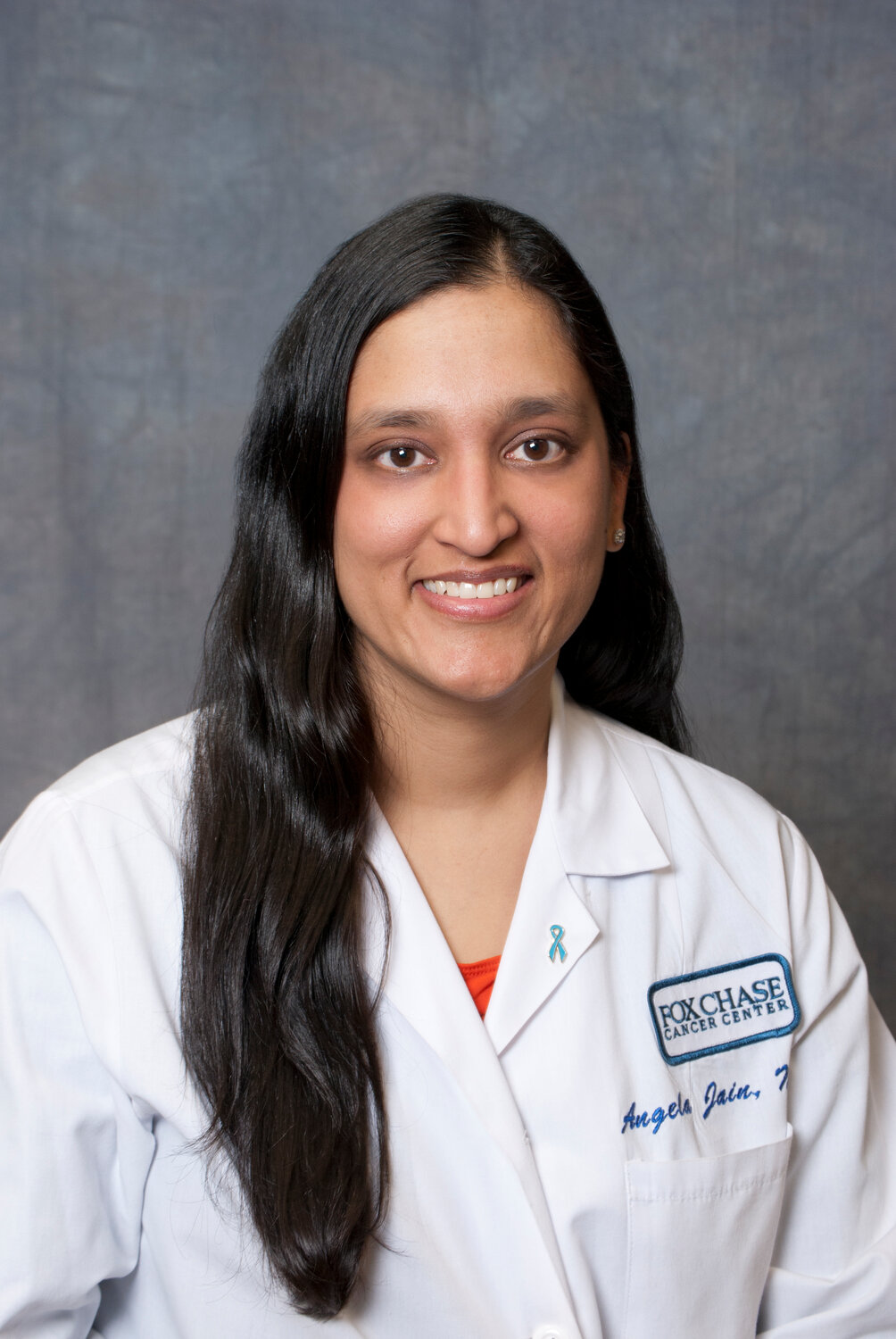
“The Mediterranean diet is pretty well balanced,” explained Dr. Angela Jain, interim chief of the Division of Breast Medical Oncology and an associate professor in the Department of Hematology/Oncology at Fox Chase Cancer Center. “When I describe what a plate of food should look like to a patient, it should be half fruits and vegetables and then part protein and part carbs. The traditional American diet is probably the exact opposite. Food is medicine. That’s what this article is trying to tell us, that it matters what we’re eating.”
So, why do postmenopausal women benefit from this diet? Researchers note the diet is rich in antioxidant and anti-inflammatory agents, which may slow or prevent development of breast cancer. Additionally, the naturally occurring phytoestrogen in a predominantly plant‐based diet may modulate estrogen activity, reducing excess estrogen.
Researchers also suggested a link with excess body weight. In postmenopausal women, estrogen production shifts from the ovaries to body fat, which is associated with tumor development. The Mediterranean diet helps women maintain a lower body weight, they say, which may reduce their risk.
“The difference between a postmenopausal and a premenopausal woman is the amount of estrogen in their body,” Jain said. “In the postmenopausal woman, their ovaries no longer make estrogen, so the postmenopausal woman is more prone to loss of mass and changes in their metabolism. So, this is where the diet may become more important, whereas the premenopausal woman still has a higher metabolism.”
While the research suggests benefits across the board, the effects were more pronounced in Asian women. This may be because Asian women carry less weight than American or European women, Jain said.
Overall, these encouraging findings should not be surprising, Jain suggested. “We’ve been talking about the Mediterranean diet and heart disease probably longer than cancer. That research is probably decades old, but the research in cancer in general is not young. I think we’ve been talking about it for a long time. For lack of better words, we’re always trying to recreate the wheel and tell ourselves that fad diets are better, but at the end of the day, a well-balanced diet is what we need.”
The study also observed some potential benefits of moderate red wine consumption as part of the diet in postmenopausal women, noting antioxidants in red wine may reduce estrogen production, but it concluded that this finding remains open to debate and the risks may outweigh the benefits. So maybe take it easy on the Chianti; no more than one alcoholic drink a day for women and one to two drinks per day for men. And if you don’t drink, don’t start.
There have been numerous studies examining the health benefits of moderate alcohol consumption in general, Jain said, but “it’s very hard to know what to make of that.”
Jain has been at Fox Chase for 15 years, including her time as a trainee. Her research focuses on opening clinical trials to improve patient care. She’s a big believer in following her own dietary advice.
“I realized that if I couldn’t take some of my own medicine that I didn’t seem legit to patients,” she said. “And so I follow a Mediterranean diet, and I try to exercise 150 minutes a week. Those are the two things we talk to patients about outside of surgery, chemo, medication, radiation. And then, hopefully from that experience, I can tell patients what works for me and trying to incorporate that into my daily life.”
When it comes to reducing your risk of future breast cancer, there’s a lot you can’t control, Jain added. And if a woman does develop breast cancer, she may not have control over what treatment her oncologist might recommend. “But what you can eat is something you can make decisions on, and that’s important because so many times our patients feel like things have gotten out of control,” she said.
Kara Stromberg, director of clinical nutrition and nutrition research at Fox Chase and Temple University Hospital — Jeanes Campus advises if you are going to begin the Mediterranean diet, there’s no reason to jump in all at once. Instead, ease into it.
“A lot of people start changing their diet and think that it’s all or nothing,” Stromberg said. “Inevitably, they realize no one is perfect and make changes that are not a part of their plan. That’s okay and expected. Making small and consistent changes is better than not making them at all. Set small, realistic goals for yourself. Start slowly. Making diet and lifestyle changes even in small amounts has been shown to have an impact for your overall health and well-being.”
Ultimately, the more changes you make, she said, the more benefit you reap. Again, the study results show a 13% lower risk of postmenopausal breast cancer versus those who minimally follow the diet. “That suggests that the contrast between high and low [adherence] is meaningful, but that doesn’t preclude that those with intermediate adherence might have intermediate benefits,” Stromberg said.
Diet and lifestyle changes are always hard, Stromberg acknowledged. Start by planning shopping trips. Don’t leave meals to chance. “You are more likely to adhere to something if you have planned for it,” she said. “Keep your pantry and fridge stocked with foods such as olive oil, canned beans and legumes, whole grain cereals and breads, and fruits and vegetables. Know what you are going to make for dinner at least two nights ahead of time.”
As you are making the transition, she says, take it easy on yourself. “Change,” she says, “does not happen overnight.”
Dining and Cooking