
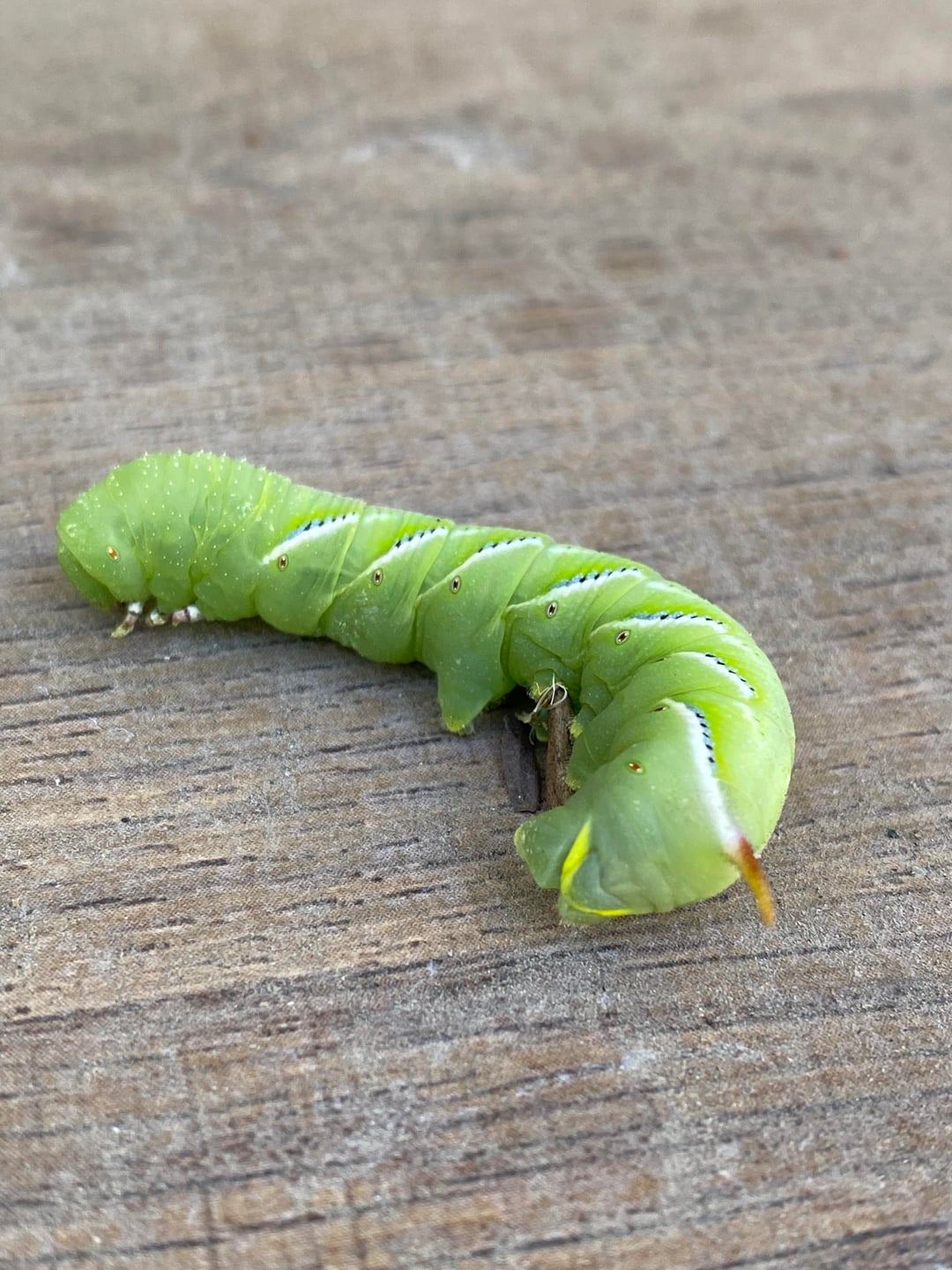
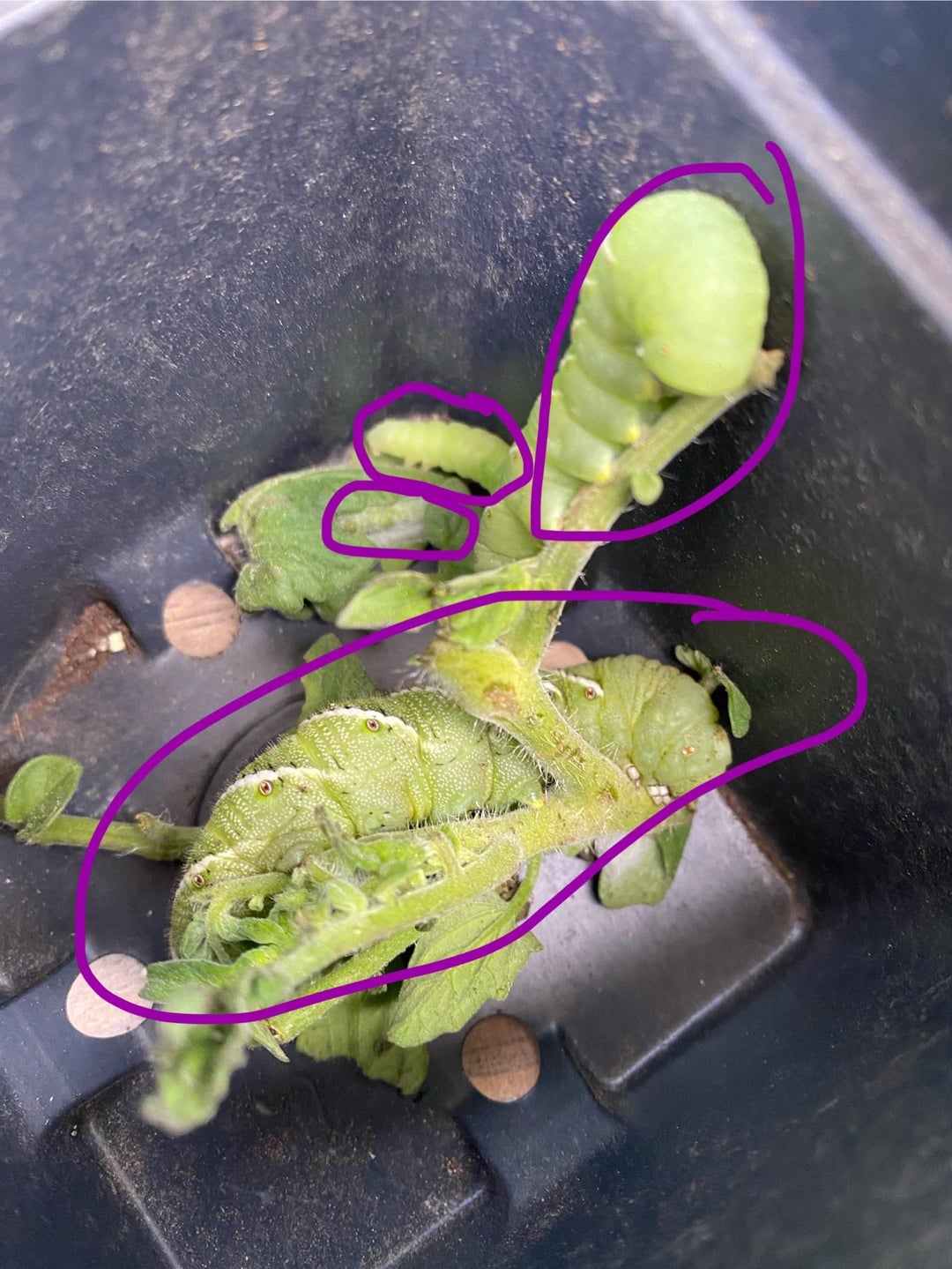
I am finally cutting back my tomato plants. As I was cutting back branches, I collected the last tomatoes. I went to grab what I thought was a small green tomato… It wasn’t. In fact, it was soft and squishy. I hope I didn’t hurt it. It is the first photo; the mama. I have nicknamed them. Big daddy, mama, brat, and the baby. Based on big daddy, they are well fed little pests. I almost didn’t see them! So as I chopped back the branches, I examined them for more. Still not done. I will probably finish tomorrow. How can I let them live their happy little lives? Is there some way I can do that? Where will they not cause harm, and how do I prevent them, humanely, in the future?
by ChooseKind24
18 Comments
Tobacco hornworms, I believe. Tomato hornworms have a blue stinger and slight variations to their patterning.
Yes they are or tobacco either name they eat a lot of peppers/tomatoes
Those are absolutely tobacco hornworms.
If you want to keep their numbers down without artificial methods, it may seem a bit paradoxical but put them back on a tomato plant.
They will probably eat the whole plant, however if you’re lucky some parasitoid wasps will find them and use them as hosts for their larva. (You can also probably buy parasitoid wasps online.)
If you have chickens, they can also be a nice treat for them.
I believe tobacco hornworms can also eat pepper and tobacco plants, but I’m not 100% sure.
I think the general consensus of the best way for them to contribute to the ecosystem is to feed them to your backyard chickens.
Tobacco hornworm. If you don’t want your plants to be eaten up all the way, pick them off by hand and drown them in a cup of water and soap (if you don’t have chickens)
They are hornworms. These look like Carolina sphinx cats and will only eat plants in the nightshade family. If you have any wild nightshade plants, put them on those. Otherwise, give them a spare plant in the corner to eat.
I personally put all the garden caterpillars I find in my bird feeder. I love caterpillars and moths, but they dont always have a place amongst my veggies.
[removed]
These are native beneficial pollinators (when they’re grown ups), even if they are a terror to the yields of tomato and pepper gardeners everywhere. These fellas look like they’re almost done and are getting ready to turn into adult adults, a.k.a. Moths. Why not give them whatever plant matter you cut from the plants and stick them in a corner somewhere far from your veggies. They’ll burrow into the soil to pupate in a few days and bother you no more until next year.
Yes for sure those are hornworms. Remove from the plant. I was fortunate to have a parasitoid wasp take care of mine in the garden this year.
https://preview.redd.it/muljvo3s1suf1.jpeg?width=1080&format=pjpg&auto=webp&s=255e09c0315f6bf9d2d895c2bec3d95b1c4aecb1
If you care about your plants you will remove them immediately.
They love tomatoes you can use them to prune the tomatoes
If you don’t want to harm them in any way but still prevent them from getting to your tomatoes the best thing you can do is cover your tomato bed(s) in bug netting. Tomatoes are wind pollinated and don’t actually require pollinators like bees to produce fruit, so the netting won’t cause issues there (and if you want to ensure pollination and happen to have a leaf blower, taking the blower to your tomatoes periodically will help on that front though it isn’t absolutely necessary) and will prevent the worms from getting to them.
If you are willing to harm them, then Bt spray is particularly useful for caterpillars and worms, especially when they’re young (doesn’t have much effect when they’re fully grown). Parasitic wasp eggs can also be ordered from companies like Arbico Organics. Parasitic wasp larvae latch onto and kill these worms as well.
I just got my first one the other day! It feels like a veggie gardening rite of passage honestly 🙂
https://preview.redd.it/t7o02bytnsuf1.jpeg?width=3024&format=pjpg&auto=webp&s=e2b0cdc4e12ab137c766b67851e16a65205bcf8f
This is the most hornworm to ever hornworm. I don’t mind paying a bit of bug tax but a few of these were absolutely ripping through my tomatoes. I don’t know of many methods for exclusion but you can do organic control by encouraging birds and parasitic wasps. I found that keeping some flowers really did a great job attracting the parasitic wasps this year!
Looks like hornworm, yup. These jerks are eating up my tomatoes rn, they are SO hard to spot that they are just chewing up everything. When I’m lucky enough to find one, I feed to my chickens.
They’re the devil’s worms from Hell and one almost detroyed my tomatoes and tomatillos.
[removed]
Yup. I also recently had a big outbreak of these after seeing none all year