
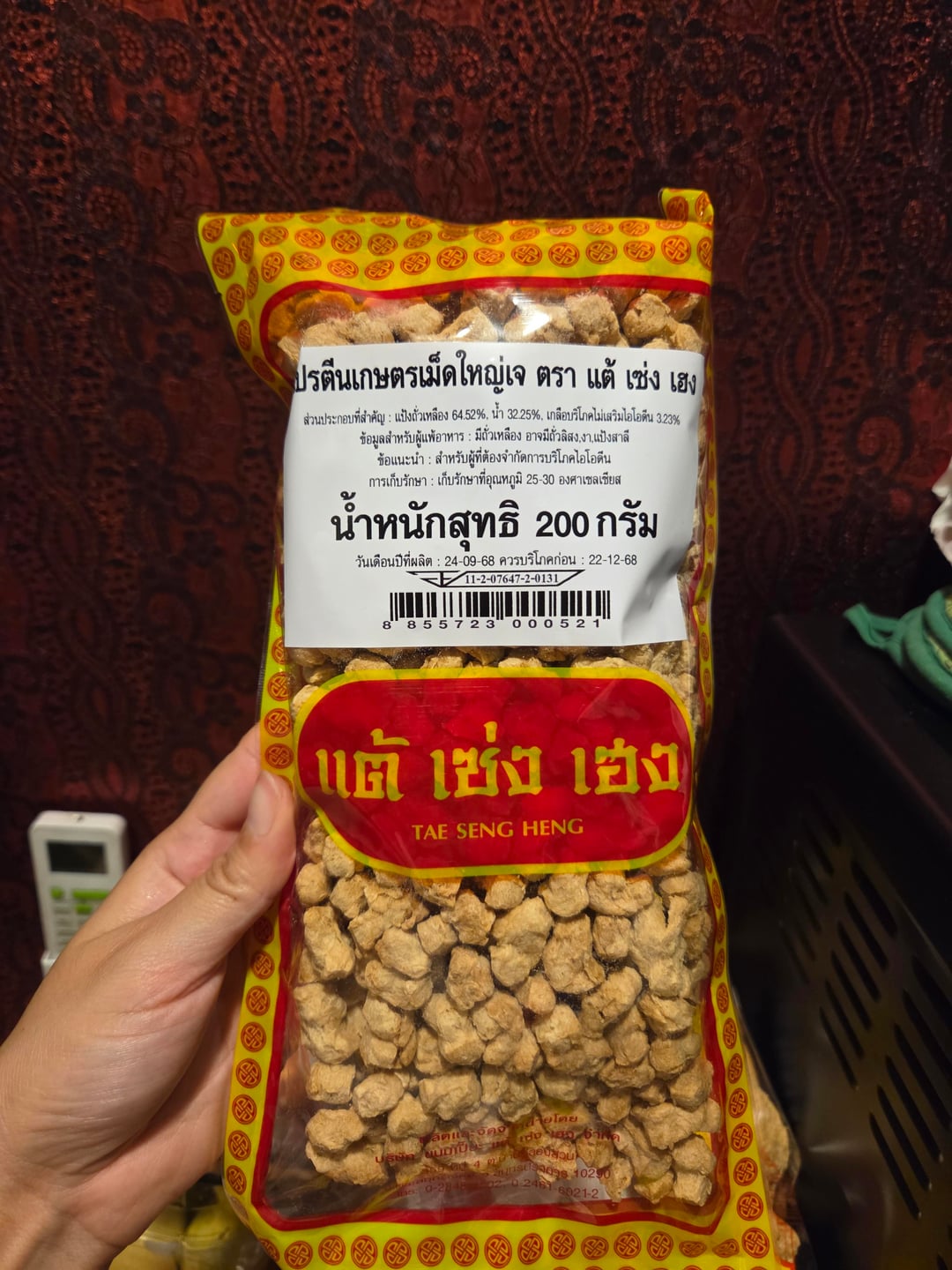
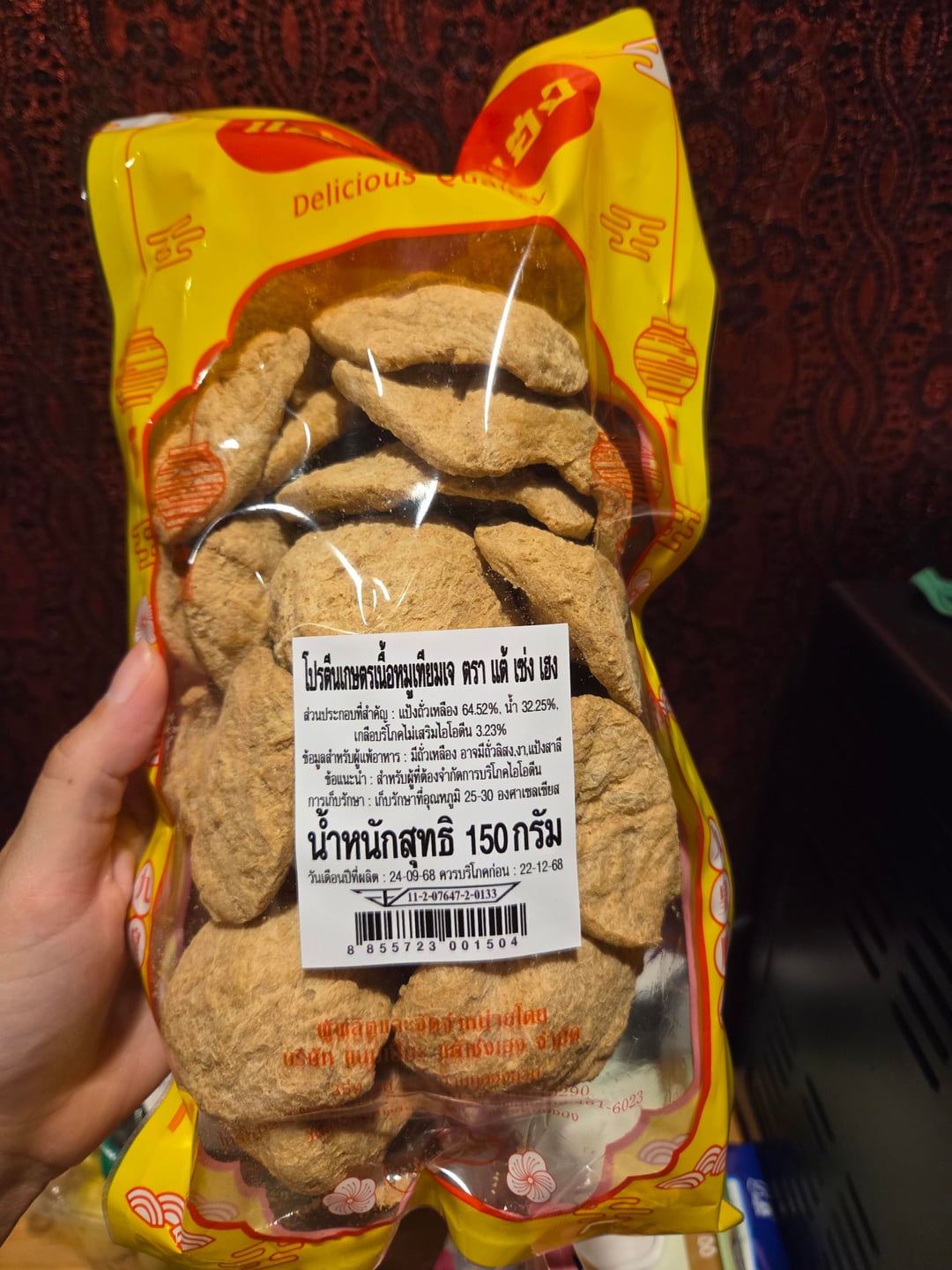
I live in Thailand and the vegan/vegetarian festival is coming up soon, so grocery stores now have special stalls with plant-based products which I haven't seen before.
I have no idea how this is prepared and there doesn't seem to be any instruction on the packaging, if anyone can help. Because it's all dry, I am assuming the first step would be to rehydrate it but that's my best guess.
by MassiveCompanie
17 Comments
If that’s a soy curl product you don’t have to cook it, just soak it in a bit of hot water for about 10 minutes.
I’m not really pro AI in general, but this is definitely the time to use an AI translator.
Boil them in salty water for 10 minutes or so, it softens them up and takes out The bitterness. Pat dry a bit with a tea towel so they are so wet.
Then you have a tasty blank canvas to make what ever you want! I make vegan stake by tossing in soy sauce black pepper and a bit of oil and air frying, or cooking in the oven. You can also add straight into soups or stews. Use them like any other protein
I buy these from local Asian stores in the US. Pour enough boiling water to cover it fully, put a lid on it and let soak for 30 minutes at least. I add a teaspoon of soy sauce to the boiling water to flavor it. After 30 minutes, drain, squeeze dry, use it in stir fries, curries and rice (directly add to rice cooker along with rice) etc. Use like you would use TVP. My favorite application is to stir fry with bell peppers and onions and ginger, garlic with a soy based sauce.
I like to put a stock cube in boiling water and add the soy chunks, sit for 10-20 mins and air fry, really nice stirred into sauces
Looks like soy curls which you rehydrate in water or broth and then you can fry/cook them or eat as is
They are variations of TVP/Soy Curls. So treat them as a sponge that needs to be rehydrated, flavoured, fried, stirfried, added to a savoury pie, or soups, stuffed into veggies and roasted or grilled, and depending on the dish pick the size / shape. enjoy !
I just simmer them in my ramen broth before adding the noodles cuz it’s even cheaper than fresh tofu.
The first bag looks like soy chunks to me, and the second bag looks like it’s made of the same thing but in a different shape. I live in the US, and a Belgian friend shared this recipe with me years ago, and now I get to share it with someone in Thailand and the rest of this sub! It’s a veganized version of Königsberger Klopse. The recipe was shared in the original language, so I’ve made some translation edits.
Konigsberg Soyachunks
* 100 g Soyachunks
* 1 small jar of capers
* 2 onions
* 600ml vegetable stock
* 100ml white wine
* 150 ml plant cream
* 2 tablespoons margarine
* 2 tablespoons flour
* 1 tablespoon mustard
* Salt to taste
* Pepper, parsley, marjoram
* Rice (for serving)
1. Rehydrate Soyachunks in water salted and seasoned with marjoram for about 10 minutes.
2. Drain capers.
3. Drain Soyachunks.
4. Sauté onions, then make a roux with margarine and flour. Deglaze with wine.
5. Add the broth and bring to a boil. Boil gently for 5 minutes.
6. Add the cream and mustard and simmer for another 5 minutes. Season with the spices.
7. Add capers and chunks to the sauce and stir to combine.
8. Serve with rice.
I’ve always wondered how eating plant based is Thailand! Are you vegan? Would love to hear how easy or difficult it is over there as someone from the USA wanting to leave
I’ve had a bag of these for a while and been unsure how to use them.
They do however have instructions on my packet that states to “Cover with boiling water and leaves to stand for 15-20 minutes before adding to your dish”.
Please let me know how it turns out and what you did so I can copy 🙂
Look for recipes for soy/soya chunks, tvp (textured vegetable protein), or soy curls. These are *basically* different shapes of a similar product.
I don’t have an answer, but I’m curious about what the festival is called. It sounds awesome!
Add water or stock to hydrate n season
Soak it in water until it softens before you cook it.
I buy these from my local Asian store, I don’t know how they are used in Thai cuisine but I love these. The rectangles are good additions to ramen, I just dump the whole ramen package and boil with the TVP. It’s easy to tell when they’re rehydrated. However sometimes, maybe brand or size dependent, they take a bit longer to rehydrate, so adding them to the boiling broth before the noodles might be wise. You can also boil them to hydrate, then fry in a wok with veg and noodles.
The smaller chunks can be used in the same fashion but I also use those as a generic protein addition. Pasta pesto? Chuck a handful of those bad boys in it. Fancying a lazy curry? TVP in gravy it is. Just boil in a veggie stock for extra flavour.
Take out a few. Test for rehydration technique by *soaking* two or three in boiling water- check after 30 minutes, if still hard, check again after an hour another by *cooking* in boiling water for 5 minutes.
Easiest method: ask a Thai friend to translate the directions.