
Subscribe: http://bit.ly/akispetretzikiseng
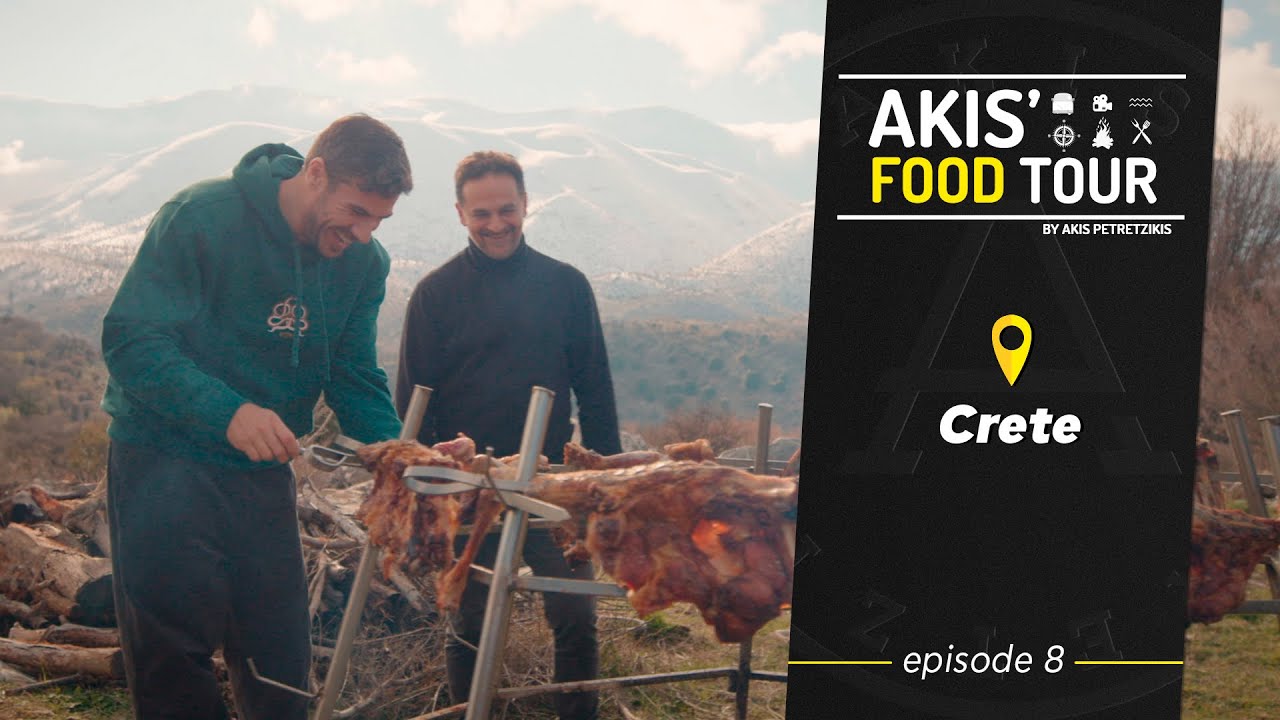
In Crete, you will eat a lot – and you will return!
Shall I give an unpopular opinion? Crete is at its best off-season! I visited the island when the locals were feverishly preparing for Easter, life was moving at a different pace, and there was space and time to discover the true magic of the island. What did I learn? You’ll see in the episode!
✨ If you love Greek food, Mediterranean cuisine, and travel, this episode will inspire you to explore Greece through its flavors.
For more details: https://akispetretzikis.com/en/blog/akis_food_tour/stin-kriti-tha-fas-poly-kai-tha-epistrepseis
📺 Watch now: Akis’ Food Tour – Crete (Season 2, Episode 8)
Presented by: Akis Petretzikis
Director: Panos Georgiou
Editor-in-Chief: Anna Podara
Director of Photography: Giannis Gemeliaris
Production Coordinator: Diamantis Arakas
Sales Department: Mary-Rose Andrianopoulou, Giorgos Athanasiadis
Assistant Director: Vagia Tsiourvopoulou
Technical Support: Th. Savvakis – V. Karypiadis O.E.
Motion Graphics: Giannis Papoulias
Production Assistants: Nikos Triantafyllidis, Theofilos Michalakakos
Camera Operators: Dimitris Adamis, Nikos Mpelesis
Drone Operator: Nikos Mpelesis
Sound Engineer: Giannis Fotiadis
Final Editing: Giannis Mylonas
Editing: Eirini Kefala
Assistant Editor: Marianna Petridou
Music Licensed by: Media Music Publishing
Opening Theme Song: To Taxidi
Performed by: Sakis Rouvas
Music: Giannis Skoutaris
Lyrics: Pantelis Kyramargios
Recorded and mixed at VOX STUDIOS by Aris Binis
Mastering at SWEETSPOT studio by Giannis Christodoulatos
Digital Lab: DCS
Colorist: Panos Polyzos
On-Line Editor: Periklis Begzos
Lab Coordinator: Alexis Kountas
Lab Supervisor: Sokratis Zoidis
Lab Director of Operations: Giorgos Paidas
Stylist: Alkistis Paschou
Special Collaborators: Marianthi Manoli, Barbara Malevri
Wardrobe provided by:
Columbia, Adidas, Quiksilver, Element, DC, Superdry, Billabong, RVCA
Special Thanks
In Heraklion:
Giorgos Maltezakis, Vasiliki Besi, Dimitris Gogkolos, Maria Strataki, Dimitris Kagiampakis, Chara Danelaki, Gavriil Papageorgiou, Manolis Kassakis
In Anogeia:
Zafeirenia Skoula, Giorgos Skoulas, Zafeirenia & Anna Michalou, Evi Vrentsou, Nikos Chairetis
In Zoniana:
Giannis Parasyri (Karagiannis), Giannis Parasyri (Chronogiannis), Eirini & Ismini Parasyri, Kostas Parasyri
For the “Antikristo”: Manolis Parasyri (Bouchourogiannis)
Residents:
Ioannis Parasyri (Bikogiannis), Kakovolia Parasyri, Vasilis Drakoulis (Karouzovasilis)
Musicians:
Giorgis Parasyri (lyra), Ioannis Trevlakis (askompantoura), Giorgos Skoulas (laouto), Giorgos Zervos (mandolin)
In Rethymno:
Stelios Fanourakis (chef), Tasos Papadakis (chef), Eleftheria Germanaki (International Olive Oil Judge), Myron Toupogiannis, Alkis Kranas,
The Hatziparaschos family (Paraskevas Hatziparaschos),
Stefanos Alexandrakis (baker), Ilias Mellisourgos (distiller), Manolis Vagionakis, Michalis Vitorakis, Afroditi Papageorgiou,
Babis Orfanoudakis, Giannis Apostolakis
Municipality of Rethymno Tourism Department: Pepy Birliraki, Ioannis Prokopakis
Production:
Produced by Akis Petretzikis Ltd
Official website: https://akispetretzikis.com/en
Facebook Page: https://www.facebook.com/akispetretzikisofficialpage/
Twitter: https://twitter.com/a_petretzikis?lang=en
Instagram: https://www.instagram.com/akis_petretzikis/
TikTok: https://www.tiktok.com/@akis_petretzikis
Pinterest: https://www.pinterest.com/akispetretzikis/
#akisfoodtour #akispetretzikis #Crete
Kalitsounia with mizithra and greens. Boxes. Elites. Dakaki. A rod. Turban. Little oil. And of course, a pot of sourdough. Let me see how I can put them on the plane to take them with me to Athens. Oh, Crete, with your hospitality! [opening credits song] ♪ Pack your bags ♪ ♪ And meet me at the turn ♪ ♪ Because today we’re leaving ♪ ♪ My love, together ♪ ♪ Close your eyes ♪ ♪ Take a breath and come ♪ ♪ The time has come, don’t be afraid ♪ ♪ Smile ♪ ♪ From Crete to Thassos ♪ ♪ From Corfu to Kasos ♪ ♪ One love that lasts ♪ ♪ In your heart the harbor ♪ ♪ Love we’ll taste ♪ ♪ On our journey we’ll find ♪ ♪ Harauges and moonlight ♪ ♪ As blue as Greece is ♪ [soft music] [waves lapping] [Akis] Shall I say an unpopular opinion? Crete is not better in summer, but there, towards the end of winter. When life moves at a different pace and the locals are preparing for Easter. I have spent part of my life in Heraklion and return often. There I learned that food is a whole philosophy. You understand this better when you find yourself in a traditional Cretan coffee shop. What a fantastic thing to have Mr. Dimitris as a friend and to go to his shop! We’ll have a raki. You’re a handsome boy, though. I could also be Cretan. -To our health. – You are welcome. – Are we drinking this in one piece? -No, this is a fairy tale. We drink it slowly. We must respect the drink. Amazing. Then we have lupins, which are the nut of the old people of the 50’s, 60’s period. It is a bitter fruit. It helped the sugar drop. So far all vegetarian. We haven’t cooked anything. Raw. And the stagnagathi. And where everyone imagines that the Cretan meze has lamb, antikrista, hamos, Cretan cuisine is much simpler. I mean, everything is raw. Raw skins, raw greens, raw papulos, elices without even oil, tomato, cucumber. Things are simple. Twelve dishes, of which only one is meat, the sausage. I like cuisine that doesn’t have a lot of processing and that’s what Cretan is based on. Why does someone say to open a Cretan restaurant in Athens? It’s not possible. Cretan cuisine is something that cannot be cooked outside of Crete because it is based on one basic ingredient, fresh ingredients. You won’t get any boxes? The most important dish of the Cretan diet. -They are also eaten plain. – It’s green beans. -The main meze of raki. – I eat it. Yes. It has a nice taste. [Dimitris] Beans are the breakfast of the people who went to the fields. I remember my father. He ate beans and endured eight or ten hours. – Do you have a secret about the thug? – Here it is with sourdough, in the wood-fired oven. You all agree that dakos is the most delicious salad. Add some water, then add some salt. Then we will put oil, then the tomato, we will put the feta and then oil again. Cafes in Crete are the gathering place to learn the news, exchange opinions, taste, eat, drink. No one leaves there after eight hours. There are groups that will leave at nine in the morning. They will come in the afternoon at seven and may leave at nine in the morning. They sit for at least 12 hours. Yes, because these shops are places where people talk. -[Dimitris] He is sitting, resting. -[Akis] It is his entertainment. It is part of the cultural fabric of the city and of each city. That’s what the coffee shop is all about. It’s the old social media of the era. People went to the coffee shop to find out what was going on in the city, to express opinions, to agree, to disagree. And then there is always a beautiful conclusion. Want to hear my conclusion? The cafes of Crete are culinary museums and their cooks are the guardians of Cretan cuisine. A culinary heritage known as the ends of the world. [cheerful music] George was waiting for me outside Kafenio of Kayabis to show me around the market of Heraklion. That’s the only way you learn the secrets of a place. If a local shows you around. We are now in the central market of Heraklion. We are inside the walls of the Old City. In general, the city is structured in such a way that it has narrow streets, they are more traditional. It also has shops that have been around for many years. Whether they are about coffee, whether they are greengrocers, or fishmongers. The good thing about Crete is that we go to the specialized store. Greengrocer, with local greens. We especially who use a lot of greens in our diet. He will find them here, in this market. -Shall I say something funny? – Tell me. I used to rent a house there when I was at SEAP. -And… -Did you have a good time during your term? Well. We were an officer school. They are not easy. – It’s difficult. -Mr. Did you cook then? -No -After. I used to cook, but not in the army. – Is it our fault? Did it? -No. I felt a little disadvantaged. Cooking in Cretan is difficult. He is a harsh judge. You must make something very tasty. [George] Valid. [cheerful music] We’ve walked enough and it’s time to recharge our batteries. What should I get? [seller] I put a sour mizithropitaki, a sweet one and another traditional recipe, which is the onion kalytsuno. It is mainly onion, tomato, feta and mizithra. [Akis] Fine. -Yummy. – Be well. – Shall we go? – We continue. -Thank you! – Good luck! Aki, what do you know about Cretan cheese? From the graviera, its mizithra. Her stick. – Have you tried Tripa cheese? – I don’t know. Special aging. Let’s go. You will try it. I will explain to you. Akis’ Food Tour gives me this luxury, to go and try different flavors from all over Greece. I wouldn’t find Trypa cheese anywhere in Athens. -Hello. -Aman! Hello, Maria. [George] I also came on a tour. [Akis] And bread. – Is this the Hole cheese? -Trypa cheese, which… It is matured for a year or more. It is from a small cheese factory in a village, Geraki. It’s a great-grandfather’s recipe. Trypa cheese is a hard-to-find cheese in Crete because it is a cheese that ripens in holes deep in the earth. It does not ripen in a refrigerator. They have them out of the fridge. Man, it’s nicer than parmesan. Better than parmesan and I mean it honestly. No. It’s ten times nicer. It’s over there where you really lose it and say “What am I trying?” [Akis] It has the texture and crystals of Parmesan cheese, but it tastes a bit heavier. It’s something in between. One of the most delicious cheeses I’ve tried. A connecting link is missing. Add a raki. [Akis] In Crete everything starts and ends with a tsikoudia. To our health. Okay, not one. And two and three. You understand. Cretans will never run out of two things. From tsikoudia and olive oil. HERACLEIO-KAPSALIANA DISTANCE: 79 KM. 1 HOUR 12 MINUTES When you leave the city limits and travel inland, then you understand why olive oil is considered the foundation of the Cretan diet. You see olive groves all around. A third of Greece’s olive oil is produced on this island alone . Kapsaliana is located in an olive grove next to the famous Arkadiou Monastery . It was an abandoned Cretan village, part of the Arkadi Monastery, until Myron restored it and turned it into a hotel. Empty houses became suites, while the old olive mill built 250 years ago was revived and turned into an olive oil tasting bar. [Myron] We are in Kapsaliana. This is a building from 1763. We are in what used to be called the shop. The store was where when the oil came out, we stored it. We kept it in the jars for a short time until it went back to the monastery. Although I have been to many international competitions, this place is a special place with an identity and as a region and has a special stamp that Myronas has brought out in the best way. Eleftheria Germanaki is an international olive oil connoisseur. He had promised me that he would make a useful lesson for the friends of Akis’ Food Tour. He would explain to me how we pick good olive oil off the shelf. This is extra virgin olive oil. What does extra virgin olive oil mean? The best quality… -There is. -There is no superior quality. If we see on a package “Extra virgin olive oil” it means that it is the best product. Yes. And we smell. -Do you smell? -There isn’t. – Perfumes? -This scent is… -Grass. -You feel the grass, the grass. -Grass, fruits. – Fruits. And it burns a little on the back of the palate. And that is the positive. It needs to be both fruity and bitter and spicy. They are the three positive qualities that are also important for our health. [soft music] [Freedom] And now let’s see the difference between extra virgin and olive oil. It seems. One is green, the other is yellow-gold. One resembles seed oil, the other olive. I have identified olive oil with the color green. -It’s normal, isn’t it? -Exactly. It is not a natural product like extra virgin is. Very important lesson. I will also tell you what I understood. When we see on a label that says “olive oil”, it means that this product has received a treatment. When it says “virgin olive oil”, it is a very good product and when it says “extra virgin olive oil”, it means that it is the juice from the olives. The most premium product we can buy. [soft music] KAPSALIANA, RETHYMNO-ZONIANA, RETHYMNO DISTANCE: 40 KM. 1 HOUR [Akis] Akis’ Food Tour, day two. Destination; The mountainous province of Milopotamos. The village of Zonians is perched between mountain peaks and ravines . One of the most welcoming places I have visited in Crete. In Zoniana, to treat a guest properly, you will make him something to eat and he will eat a lot. Mrs. Ismeni was waiting for me making kalitsouni in the pan and Rena was preparing kalitsouni for the oven. -Welcome to the village! -You are absorbed in the pan. -Welcome. -What are these? -Cheese pies and herb pies. -I’m taking one. [Akis] Let me start right. The dough? Egg, flour? The dough has egg, flour, oil, yogurt I have added, sugar, vanilla, a little mastic. – Oh, it also has mastic. -Yes. -The filling? -Myzithra is ours. In the rest of Greece you call it anthotiros. I have added sugar -…and some cinnamon. -Canelitsa. And we come here… – Shall I help you? -Yes. – I’ll put you here to hang up on me. -One… -[Rena] We are making the mizithra. -[Akis] Two. -Three. Nice I did it. – Perfect! – Then… – Yes. We have beaten sugar with egg, only crumb. -Only yolk. -Yes. Sugar so the egg doesn’t smell. You know them better than I do. – We don’t know them better than you. – We pass it… On top to make them a little sexy. No, to make it brown, to make it beautiful. -Cinnamon. – Oh, you also put cinnamon on top. – Got it. – Ready to bake, take out the sourdough. [Akis] They were baking in the oven… Yes, you guessed it. And other cubs. Easter is coming up. I had never tried these. -Open. -Open up. Wait. It has the same filling as there. Is it a different dough? It’s different because this one has leaven. -Yummy! – It’s nice. When I say delicious, you have to eat it hot. Say “Holy shit, what am I eating!” It is a bun filled with anthotyro. And suddenly little girls come out from everywhere. I tried every flavor of kalitschuni that I had imagined that could possibly exist . – More appetizers have arrived. -Ahem! -Fine. -Should we put some honey? -You don’t put? – Yes, ahem. I haven’t eaten anything yet. These are with the greens. -These are with the greens. – Where is the raki? – The raki is coming. – The raki is coming. – I’ll eat that too. – The raki is also coming. [lively music] -To your health. -What is it; -Welcome. – Is it yours? This is the women’s drink. -My mom put… -I make pomegranate, quince. -Why do you have it in a whiskey bottle? – No, it’s not whiskey. – I don’t drink whiskey. -You’re welcome. – Cheers. -Always successes. Come back to us to get the recipe for the lift. Since I haven’t eaten anything, what should I eat? -Whatever you want. – Let’s eat… Let’s eat some bread because… I also have boiled meat. Within; In Crete they say never to refuse food if you are treated to it. I also have dolmadaki. It’s the best. Where are the dumplings? I never refuse. You’re telling me half and half. I fill my stomach for no reason. They are coming. They messed with the wrong man. – I wanted one or two. -But we’re only going to feed you? Anthogalo also goes with dolmades. I won’t say no. [laughs] Leave it at that. It does not matter. Now that Mrs. Ismini brought them… Shall I start? How much can I eat? As much as you want. I have a pan full. In the morning I finished them and immediately baked them. Why in Crete should we treat you to a raki, not take out a meze? – Two kilos of lamb is not meze. -An appetizer. I have added sour cream to the cream sauce. -Xinochondro? -Yes. Rough. Mrs. Ismeni told me a secret. He boiled the sour fat in the juices from the lamb. – Shall I put… – Xinochondro? It fixes the stomach. He wants something to go with the lamb. If you find it… No! It’s ready. Ready! Nice. Fine. The truth is that… -Aki, eat eat… -Yes. You left the vegetable pies. [laughs] You left the vegetable pies. Take the vegetable pies. – The sour fat man hasn’t come. – The opposite awaits us. -The antichristo takes time to cook. -These are vegetarian. You didn’t get the best, dolmades. And of course… Shouldn’t I take a pot with me to Athens? She gave it to me as is. [sniffs] Yummy! [Traditional Cretan music] -Did you get it, baby, ta za? – Yes, you got it. And the milk inda says? – It’s going well. -Who sings it? My monk. -Seven alone? – Seven alone. Look at a beast! Seven alone! -That’s how he learned. -Yes. [man] Hello, Aki! [honking] Hey! -I’m going with the old one… -Do baby fish give birth? I didn’t let them give birth. Drink a raki. We froze. Cheers. Cheers! Good morning. -Good morning. – Welcome him. what are you doing -Welcome. -Your snack. – Welcome him. – Ahem. Potato, tomato, dakos, olives and raki. Sit if you want. I’m not sitting because I’m leaving. I’m going to the mountains. And without a rod will you go? – I don’t have a rod. – Take a rod. -Neither rod, nor stave. – Here it is. Will you give me your rod? Do you have another one? – I have another one. -What does this 50 mean? The rod costs 50 euros. Price. [laughter] [bells] Why is it that shape? Do you know? Huh? No. The shape is not random. Because just as the rod turns over here, they catch the animal to bring it close by the neck. Secondly. What else does this rod do? He rests the shepherd when he walks with the animals. And the staff is a shepherd’s most useful tool. I’ll keep her. [soft music] I was told that mountainous Crete is another Crete. And I had to get here at the foot of Psiloritis to understand why. It wasn’t easy to get to the mitato, but the route made up for it. In the meantime, Giannis had lit the fire for the cheesemaking, while Manolis was preparing the antichristo. Here is the famous mitato. Welcome. Good morning. – How are you? -Fine. You; I have never seen such a building before. It is the traditional mitato of Crete. The shepherd’s house. Winter, summer, here they bring it out. And is the cheese made here? In here we make cheese, we sleep. Do you want me to show you? – Ahem. – Let’s go. Oh, what a fuss! – Amazing. -Stone built. -You feel the moisture on your bone. -It has a permanent temperature of 18 degrees. – It has natural air conditioning. – Yes, natural. -And here you make the cheese. – I made the cheese. We have heated it, we have thickened it and we have to cut it to make the cheese. -[Akis] What is the milk here? -[Yiannis] It is sheep’s milk. Have you got pus? Now we use rennet. Once we put agastera from the stomach of the lamb. Our ancients dried it in the sun and made cheese. Does this mitato belong to a family? Yes, it belongs to a family. It has been built since 1908. – No one else can get in. -No. It belongs to a family. [Akis] Are there many mitatas on the mountain? They usually have two each family. One at the bottom and one at the top, towards the tops. -Can I help? -No. Until I finish the cheese, Manolis and Giannides are waiting for you to eat the antichristo. Okay, so. I’m going to eat. -For good. – If I don’t come back, the lamb is good. Antichrist is an old method of baking that is even mentioned in the Iliad. The technique is simple, but if you don’t know, it won’t work. I can’t make this recipe at home. She wants… mitato. This setting, this view of Psiloritis. -At the top of Psiloritis. -The second peak. Mikri Seli, Megali Seli, Korfi Psiloritis. Rood. And below is the Crown. It is one of the most beautiful photos I have seen. Even the snow has fallen to perfection. -[Akis] There it is of Zeus. -[man] Exactly. The chef says “Stop talking” and let’s start eating. – Okay. Let me cut a piece from here. – At 1,100 meters altitude. -One thousand hundred here we are. -One thousand hundred. Manolis has a master’s and a doctorate in antichrist. He is the man who makes the whole situation. The secret here is first the right meat. -And secondly, the right fire. – This is your job. What exactly are you doing? We deal professionally. We go all over Crete. Whoever wants to do antichrist, takes you. -“I have 100, 200 people…” -How many? – Make it. -Two thousand people, 3,000 people. Three thousand? Listen to some advice, but don’t try it because you need Cretan with you to succeed. You have to cut the animal into quarters. Mandatory. Do you count one, two, three, four or five? -Five. -Five sides. -You learned it. – You cut. I know that. -You’re turning upside down. -And you turn upside down. You put salt, I know and wine, you marinate. If you don’t add wine, just salt. The way you pass it is important for it to be even. Neither thick pieces on the one hand, nor thick on the other. You bake on one side, you come back on the other. And you’re done. Did I say that right? -Fine. -Did you see where I know? [laughter] Where can you step on it? At the beginning when you put the meat on the fire. – So? -He wants you to have the right temperature. Low so that the meat makes the crust beautiful. If you have a lot of fire, it burns you from the outside and doesn’t let the fire go inside. It’s uncooked inside. What happens in the antichrist is something that cannot be described unless you come to make it. -Exactly. -In a strange way, it makes a crust around, makes the meat hold… -And it’s juicy too. – Yes, only with salt. This is done by the meat juices and the salt. This is only done in this process. That’s why you can’t bake antichrist in the oven. You can’t. It’s not possible. No matter how hard you try, it can’t be done. – The best meze is this one. -Who is he? -Come. -What is it; -Try it. -That’s what you gave me before. – We finished one piece. -We’ll eat the others too. I went to see the art of the antichrist. I expected them to put in a couple of pieces. And suddenly I see eight pieces. And I say “Who’s going to eat all this?” But then I understood. [traditional music] Every cooking in Crete results in a feast. ♪ Housewives of the village ♪ ♪ Housewives of the village ♪ ♪ Roll up your sleeve ♪ ♪ Roll up your sleeve ♪ ♪ Why we have in Zoniana ♪ ♪ Why we have in Zoniana ♪ ♪ Akis Petretzikis ♪ ♪ Why we have in Zoniana ♪ ♪ Akis Petretzikis ♪ -Now I understand why we wanted two lambs. -Did you see? Hello! [together] Hello! ♪ In lavender and in honor ♪ ♪ Pioneers in Crete ♪ You have already eaten one lamb. He has another one. To your health. Cheers! -What else do we say in Crete? – I’m scuttling you. -What is it; -That’s what we call it. I’m kicking you and I’m resisting you! Nice. I’m kicking you and I’m resisting you! Hello! Cheers! ♪ And his name is Zoniana ♪ ♪ A fortified village ♪ ♪ And his name is Zoniana ♪ ♪ A fortified village ♪ -And now? -Come over here. -On the back. -I’ll put it on your back. What does this mean? -You were baptized. -You are a Zonian citizen. Which means that whenever I go to Zoniana, I will have meze and antichrist, and I will have friends. Each Zonian has 20 acres. -Where are my acres? -Everything you see around you is yours. [laughs] -Here. -Around here. Whatever catches your eye is yours! Does it work for me? I do for a Cretan. Do. I’m good. Hey, girl! [traditional music] I may not have been allowed to eat very far down in the village, but at the feast we sat for hours! A little more and we would be best men too. So, Aki. For the visit to Zoniana. – Shall I take her? -Sure. -Did we say roll? -Coil. – We give this to the best men. -Gamokoulouro. Or to the editors. – I have to marry someone in Crete. -Or to sympathize. -You have been baptized, haven’t you? -Marry her. I’ll look for something else. -Thank you very much. -If it is not found, we will find it for you. [interruption of traditional music] ZONIANA, RETHYMNO-ANOGEIA, RETHYMNO DISTANCE: 7.5 KM. 15 MINUTES [upbeat music] Before it got dark, I started for higher. I found myself in the most famous village of Crete, Anogeia. My ninety-year-old grandmother Zafirenia had been preparing two very traditional recipes since noon. Gardoumakia, legs and zucchini with potato. I was on time for the test. This is a riff. -Rifaki? – Do you know what it is? The kid you say. And nice meat. Of the village? It’s ours. He is alone in the mountain and eats velag and grasses. Amazing. What smells so good in the pot? I put two bellies in the pot. -I made a mess. -And zucchini. – And zucchini and potato. -And potato. Belly with zucchini is a traditional recipe in Anogia. Simple, easy and delicious. It uses one hundred percent the whole animal. And you made your goat. And you made the bellies. -And… -I also made the screws. Snails with oatmeal. With oatmeal. We call it thick. Tomato, onion and olive oil. -Yummy. – Do you like it? Coarse screws. You go out, collect the snails and have some wheat and make food for a family. Simplicity at its best. With a handful of snails and a handful of oatmeal… – How many do I feed? – Come on, tell me. Five, six, seven. In one pot. Five, six, seven on the other. Five, six, seven in the oven. Here are the grandchildren, here are the children. And stay and eat because God blesses it. I first make the cross in the pot I’m going to cook. -Always the cross. -Everything. I’m getting hot, I’m making the cross. -Which village are you from? -You won’t know. It’s called a vertex. -It’s… -You’re up there. -Yes. You whitewash the house. -Every year! I, too, whitewashed with grandma and grandpa. We whitewashed the house. Brimstone all around. – Now you know. – I know. Whitewashing was one of my favorite jobs. – You were helping. -Sure. -Well done. – I like it. -Should I continue with the oatmeal? -Ahem! Do you know, Mr. Akis, how many have passed through this being? Not Mr. Akis either. [laughing] Okay. I don’t know. Venizelos Sophocles ate here twice. Konstantinos Mitsotakis ate here. I was cooking. General, a despot from Chania. I have also cooked for artists. To Viki, Moscholiou, to Vougiouklaki, Aliki. – Has he eaten here? -Here, here, here! How come they all passed through here? My son-in-law was also… -An actor? -No. -Artist; -He was a merchant. He got on well with actors and singers. And he brought them to me. And my husband used to bring me the politicians many years ago. – Shall I tell you? -Yes. -Eat your food because it will get cold. -You are right. -I should stop chatting too. -I like these conversations. – Just don’t let the food get cold. -Eat the food so it doesn’t get cold! Happy and full from the hospitality of mountainous Crete, we started to descend towards Rethymnon. ANOGEIA, RETHYMNO-RETHYMNO DISTANCE: 56 KM. 1 HOUR 9 MINUTES And in the morning we woke up once again in a different setting. Between Psiloritis and the White Mountains lies the city of Rethymno. A gem of Venetian architecture. In the winter, the city calms down and changes its rhythm, and if you catch it while awake, it is more beautiful than ever! [happy music] -What are we doing? -Your mustache is amazing. -What do you make it with? – With beeswax. -He wants a job, right? – Be well. -How long do you do it? -Fifteen minutes. Good morning. A smell of something cooking led my steps in front of a small wooden oven. Traditional wood oven Stefanos Alexandrakis. – Am I saying it right? -Hello, Aki. This oven is 200 years old. You won’t go to get bread, which has great bread, but you will go to get your breakfast. The chant “Put it on, Mr. Stefan?” is heard. -Yes. – Fine. We left. [laughter] A cheese pie, Mr. Stefane, from the one with the crispy foil and not too much oil. The one you bake in the oven. And one with chicken with local chicken. -Of course. -The nice thing. And cheese. It also has pepper in it. And a garlic pie, Mr. Stefane. Does the garlic pie have fetoula, Mr. Stefane? -No. -No; Absolutely, Mr. Stephane. – Because the herbs belong to the village. – It’s pure onion pie. – It also has spinach pie, Mr. Stefane. -She also has cheese. And a slice. Then put two pieces of it because they crave it. – I have one, though. -A; – I have one. – It’s okay, Mr. Stephane. -[Stefanos] Later? – [Akis] I want these for a bag. -As it is. – Fine. It goes. What is that smell coming from the oven? He’s broken my nose. Stefanos and Iliana make a unique product. [Stefanos] Tsoureki with castor butter and buttermilk. -[Akis] That smells, huh? -Yes. Over here are our buns. Christ and the Virgin Mary! This is like foam! It’s like cheesecake. It’s completely different. -And the smell… -And it smells… like it has cheese in it. -But it doesn’t have. – He hasn’t. Should I try? You can’t imagine its taste. It is not related to all the tsourekias you have tried because it has neither mace, nor cardamom, nor oranges. – Look here. – Castor butter and buttermilk. -Which of the two do you put? -Of both. – [Akis] I would also anoint a little. -[Stefanos] Drop it. – Does it seem strange to you? – No, I do too. Truth; Take a piece too. [laughs] -There you go. -I’m so hot too. Take it too. -Hello, guys. -Health. It doesn’t exist. I don’t know what to choose first. I’ll take a bun with me and some pies because she still has a few, Mr. Stefane. Do you have anything else to suggest? Bun with mizithra. Very very nice. It’s not with the castor butter, it’s the one with fresh mizithra. -This is like the elevator. -Yes. -That’s it. – The same. -Put four of these, Mr. Stefane. – I’ll do it. [soft music] I continued exploring the Old Town of Rethymnon until it was noon. I wanted to meet an old friend. “You will come to find me”, he had said, “at Elias’ distillery”. Elias, a native Cretan, loved tsikoudia so much that he decided to take it out of the plastic bottle and turn it into a premium spirit. Where there is copper, we do not touch. It burns. -All that copper burns. – It’s burning. You see temperatures. One hundred degrees, ninety, one hundred and ten. Here is the phase of the fractional distillation towers, where the distillate acquires what we call in the language of distillation a great conversation with the copper. It goes back and forth multiple times. You see what’s happening. And copper has this ability to bind the unwanted. Whatever gets through will come here to liquefy. – Here it is. -And we’ll take this. And we will take the heart of the spirit. This will do two things. Either it will go and become young spirit, i.e. a fresh spirit. When we say fresh, we consume it after six months minimum. -Or it will go to age… -In the barrel. Would you do a blind test on the Cretans? To put them without telling them what is what, to say “Try mine? Try the product in the plastic bottle too”. I do the other one which is even more interesting. We make a table, put tsikoudi and drink with our company. You will notice that no one is drinking water. What does it mean? We want to keep the aftertaste and that beautiful feeling that a fine spirit gives. If you take a tsikoudia, which… and drink it, run your hand into a glass of water. I caught it. [lively music] Meanwhile, somewhere in the distillery kitchen, an old friend was waiting for me. I let Elias finish the distillation and went to find him. The first chef I had in Crete was Papadakis. He was the executive chef at a hotel near Agios Nikolaos. When I had gone to the hotel, I was a student. I was a freshman. I had gone as an assistant in the main kitchen. But after a month, the kitchen was left without a head chef. Without the big chef, because the chef left. Mr. Papadakis told me “I want you to take over the restaurant”. I became a chef in a five-star hotel. My beloved. Where do I succeed you? -On the binding. -At the binding. What are we making? A baby goat with ascolymbrus. -Askolymbrus? -Yes. It is this plant, which only grows in Crete. -It looks like a reva. -It will remind us a bit of artichoke. [Akis] Shall we tie with avgolemono? -No. -What not? Here you will allow me to tell you, since we met in Lassithi, that a grandmother in a cloth gave me a recipe, which said “yogurt eggnog”. I only dress it with yogurt and lemon. Nice. We have yogurt here. -What is it? Goat? – Proveio. Yes. -And I’ll throw in the lemonade. Juice? – I have it ready for you. -I always didn’t bother you. – You weren’t bothering me. -Others were bothering us. -But you didn’t help me either. [laughter] No, you used to come sometimes at noon. An hour, half an hour? To eat and I left. So I trusted you. Since. what am i doing Am I dropping it? Little by little, we will do as the housewives who crossed it did. -You have to do it… -They did and… [whistles] Well done. That works, you know. I have tried it. -It’s energy you give it. – Shall I throw it for you to do? Fine, I’ll do it. You shoot and I’ll whistle. Shall we go? [whistles] -You whistle. -Since that’s how they do it. I don’t know that. Let me put the yogurt. It won’t cut because it has yogurt. -It cuts. – Does that cut too? -It cuts. -So, you turn it off. – We have to turn it off. – Wait. It’s okay to mix it up. It’s not like fricassee. I’ve never seen it before. It’s a new food for me. After tying it, add enough dill and fennel. Sure. We are in Crete. After many years, I will again try food from my chef, Papadakis. When I worked with him, I tested every day. I am happy. [Akis] You didn’t do that at the hotel. I do this to special people and those I love very much and you are one of them. Thanks. Didn’t you love me then? Then you don’t… [laughs] Where do they eat that? In which part of Crete? -Everywhere; – In many places, except yogurt. They just cut it in Crete. Usually it is Easter days. In Crete we have divided the seasons. At Christmas we eat anything from pork more and at Easter lamb. Where will we find this vegetable? It exists only in Crete. – Come to Crete. -That’s it. Time to move the food downstairs. – You always put me in trouble. -No. Let me take it. We went down to try the tsikoudia and the lamb, but I had to wait. I found myself in front of a sumptuous meal. Since I don’t like hosting in Crete with only one meal, I asked Stelios Fanourakis for help. Today we have pork with stamnagathi, various cheeses, ascordulakos, lettuce, a piglet and from there another lamb with stamnagathi. -Shall we start with the protagonist? -Sure. The tsikoudia has a rule that we say and write that always with company and never alone. And after a lot of eating, we remembered that we should also drink tsikoudia. To the health of Mr. Ilias who hosted us. – Well, we found you. -Thank you for being here. The tsikoudia comes out first, then the food. We did it backwards. [soft music] Before I left Rethymnon, the chef insisted that I visit one of the few phyllo workshops in Greece. And I went. In a 17th-century Venetian building, I found Paraskeva making foil for baklava, as well as kadaifi. The same way his father taught him. I had seen the process in some old YouTube videos. And I was like, “Look, man. Who thought of that?” And indeed there are still masters who make kadaifi. I was interested to know how the leaf is made. Because at first I thought they take a normal sheet and cut it. Most people think so. They see the leaf and say “How do you cut it so thin?” That’s what you get. That you roll it up and make it like pasta. But it has nothing to do with it. We’re talking about the biggest pan in cooking here. And a porridge that is more like a crepe. Exactly. -What’s up with…? -Flour, water, salt and a little starch. Does that keep coming back from that round and round you did? -Yes. -How is that possible? You have the shaft, there is the funnel where you put oil to lubricate it. We control the fire from the small mirror there. – Shall I see a little? -Come. [Akis] Come on, man! I want you to tell me how the leaf is made. The sheet has flour, water, salt. In the morning, the first thing you check is the humidity. You can see how humid the atmosphere is on the hygrometer. This will depend on how you make the dough, whether it will be soft or dry. Every day before you come to work do you check the weather? Yes. How many sweet syrups do you make in the shop? Baklava, baklavadaki, Yanniotiko, Saragli. Kandaifi. Tip is hot syrup, cold sweet? -Both hot baklavas. -Yes. We make the baklava, the baklava is cold, baked the day before, it has dried out, and the syrup is hot. The kadaifi is cold, the syrup is lukewarm to hot. You have changed my whole theory. Should I try it? Perhaps. – Come get a pan. – I’ll get a pan. You bring baklava. [Akis] Guys, I’m good. I have it. A. Two. Three. Four. I’m very good. Tell me. I made a bit of a knot here. It does not matter. Fine. Where’s the dessert? You have done work here. Wow! If you don’t eat handmade foil in baklava, you can’t understand how delicious it is. It is different from other baklava. My father used to say that the old confectioners used to make the baklava, put it in syrup, leave it in the attic for two days and then take it down to the display case. -Why; -To draw, to drink. Don’t be tempted to give it away. Handmade kadaifi sheet first time I try. -It’s another thing. – And the first time you took out. And I took it out and ate it. I don’t know which is tastier. The baklava is the king. That’s what everyone comes for. They are three different sweets. I could sit here for hours. [Akis] I wanted to be left in Crete for days, not hours. Cretans, like me, can’t get enough of analysis after analysis of food. With passion, with pride and with the seriousness it deserves. I know, however, that Cretan cuisine does not fit into one episode. That’s why I’ll be back again, as I always do. [end credits music]
27 Comments
I like the food and places
good food adventure
Awww love Crete! and although I totay dont understand what your saying in greek😄I enjoy watching it🥰thx😊
❤❤❤❤❤ Καλά να περνάς ❤❤❤❤❤
Τέλειος Άκης στην τέλεια Κρήτη!!!❤❤❤
"Two kilos of lamb is not meze"
Not with that attitude
"Aki's Food Tour" 🍅🚙🥩🚙🫑🚙🐟🚙🍆🚙🍖🚙🫒
Beautiful Greece with great greek food!! 🥘 🍺😋🍞 🌅
❤❤❤❤❤❤
"antichristo" is that the name of rack the meat is cooked from or the original cook?
Jag har varit flera gånger på Kreta. Mat, dryck, trevliga människor och njuta allt det fina som finns där.❤🇬🇷❤ dakos är mums❤
❤❤❤
Ντάκος ποτέ με νερό και ποτέ με φέτα… Φέτα;;; Είμαστε σοβαροί;;; Μόνο ΜΥΖΗΘΡΑ στον ντάκο…
Και το παξιμάδι δεν βρέχεται ποτέ… μόνο ελαιόλαδο και ζουμί από την ντομάτα…
Έλα βρε Άκη μου , πότε ξεκίνησε η εκπομπή??
Το αγαπημένο μου επεισόδιο μέχρι στιγμής.
Yassou love these videos opa❤
ρε τον έμπορα…
💛🖤
I like the kisluxs . I find these bags to be very durable and Iâ ve bought several for under $300.
Πατρίδα μου!Ηρακλειάκι μου…Κρίμα οι παράγκες απο εδώ και απο εκεί.Από ψηλά ακόμα πιο άσχημο…Κααααάποια στιγμή ίσως φτιάξει.Ειδικά στα λιοντάρια ντροπή μόνο….
Πότε θα βγει το επεισόδιο από μπομπίνα και Θραψανό?
Pigaine na kaneis kana merokamato koproskylo
18:00 XAXAXAXAXAXAXAXA
Love the video, lots of the food is what I grew up on. I grow my own fava beans and other vegetables
αντε καλε ειδα νεο βιντεο κ νομιζα ξαναρθες. με το καλο να ξαναερθεις ομως! ❤
Επειδή είδα τους υπότιτλους ήθελα να κάνω μια διόρθωση εξειδικευμένη:
Ο μπάρμπας δεν είπε τα μωροψαρια αλλά τα Μαροπισαρια. Είναι τα μαρωπα αρνιά δηλαδή αυτά που προορίζονται για αναπαραγωγή.
Ολα τα λεφτά η γιαγιά στα ανώγεια !!!ο γιός της έμπορας ήτανε και φέρνε όλο καλλιτέχνες;!!!😊
Διαλέξατε ιδιαίτερα μέρη να επισκευτείτε, εύγε για το επεισόδιο. Δεν ήξερα πως άνοιξε πάλι ο εξαιρετικός Καγιαμπής, πολύ τον αγαπάμε.