
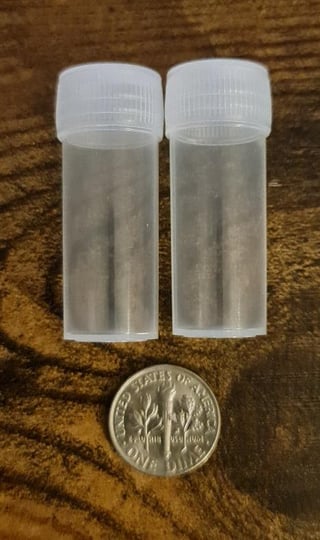
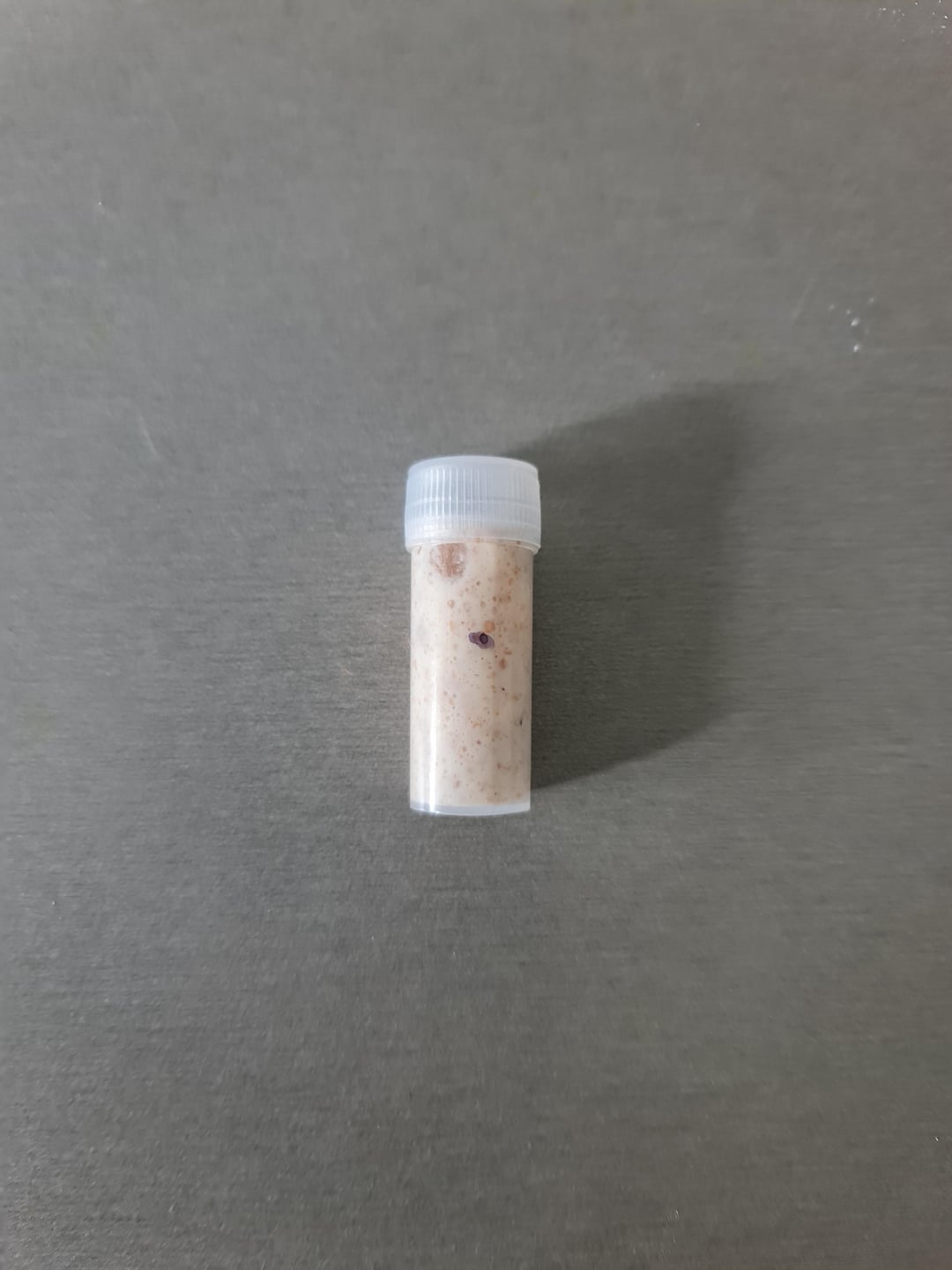
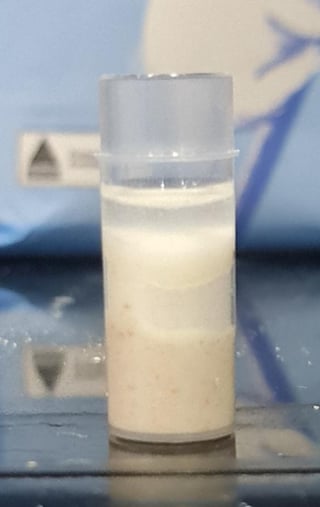
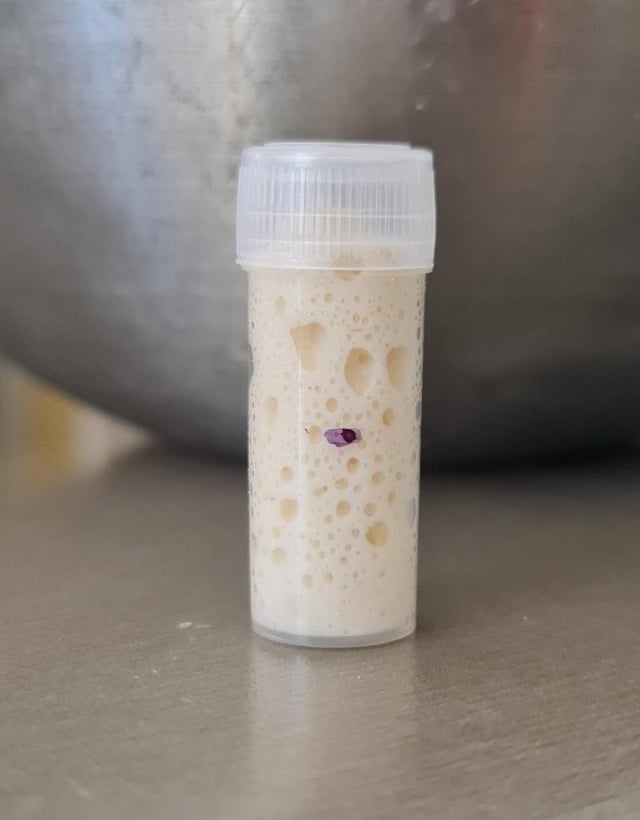
With so many beginners wasting so much flour initially to grow a starter, I wanted to try an experiment to try and grow a starter with as little flour waste as possible. I saw these 5ml sample jars sold for cheap on Aliexpress, thought it'd be fun to give it a go. As we're entering the Australian spring, weather is getting warmer and I can maintain 25-27C during the day.
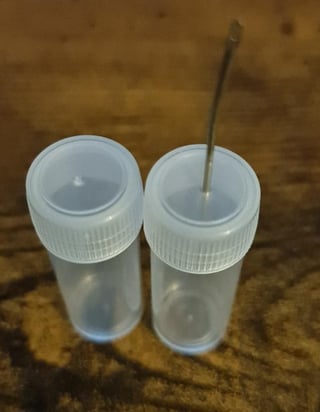
I punched a hole on top of the lids to let gas out.
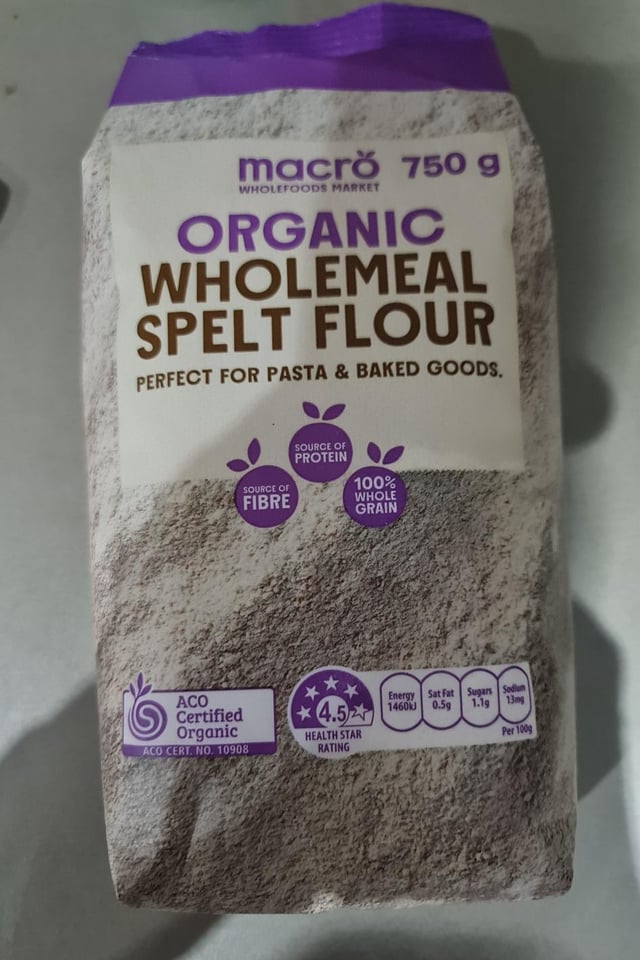
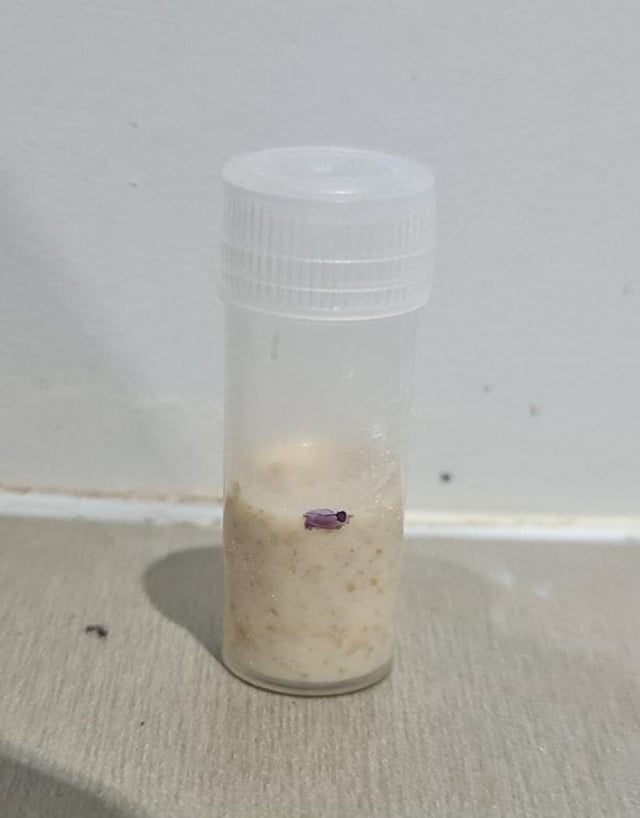
I started with 1g of whole spelt and 1g of water. Mixed it in with a metal skewer and cleaned the sides with a mini spatty spatula. Left for 48 hours until I saw some bubbling/activity. Then took 1g of starter into a new sample jar and added 1g of flour and 1g of water. Daily feeds at the same time every day (alarm set on phone as a reminder) swapping jars every feed.
Hit the peak of the false rise after day 3. Then slowly worked my way down to diminishing activity until the dormant stage by day 6.
At day 6, switch to plain (AP) flour, as now I want to feed my budding yeast colony with clean starch and not risk a second false rise because the starter base amount is so small.
At day 12, started to get regular rises doubling in 6 hours after feed. These dropped to 4 hours at 25C at around day 15.
The size was highly effected by temp and feed times. The starter started to smell like acetone if I left it unfed for 24 hours. I started fridging the starter at peak, only bringing it out to feed, let rise, and peak.
I started discarding directly into a 100ml jar and when I had 10g, I added 10g of flour and 10g of water. Doubled in 4 hours. Time to bake.
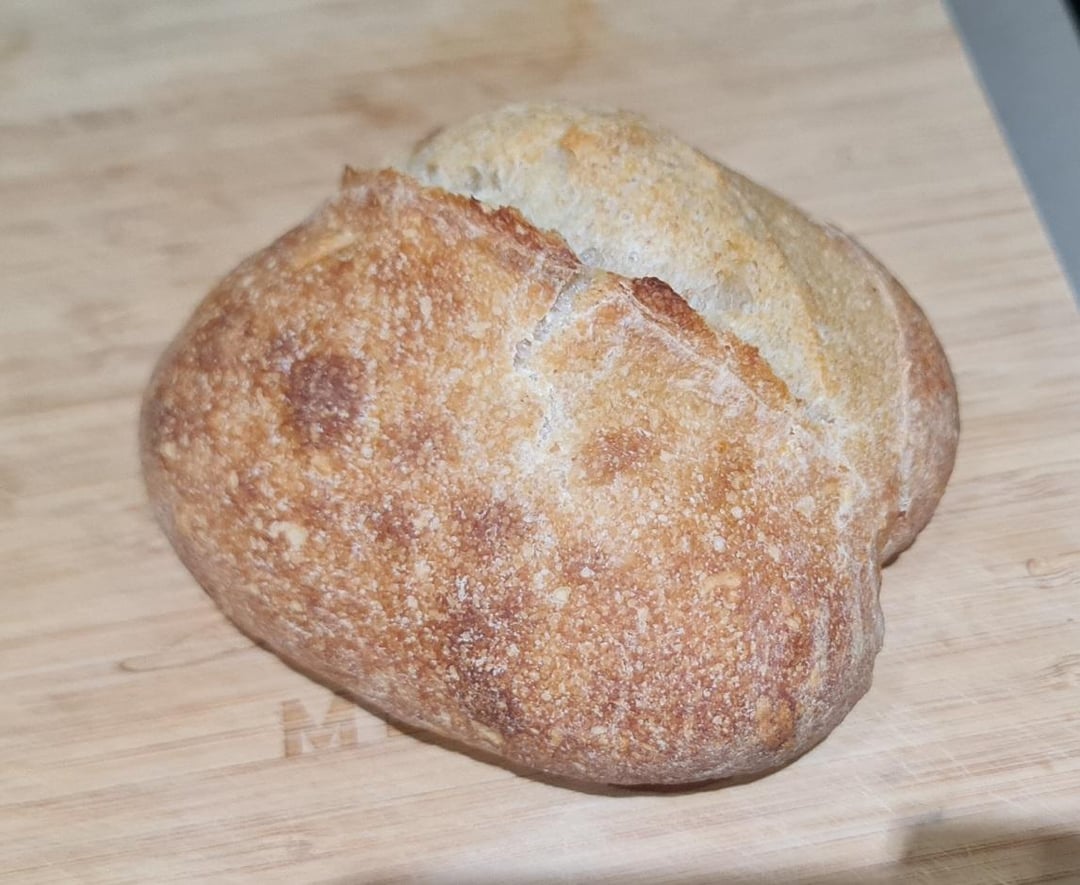
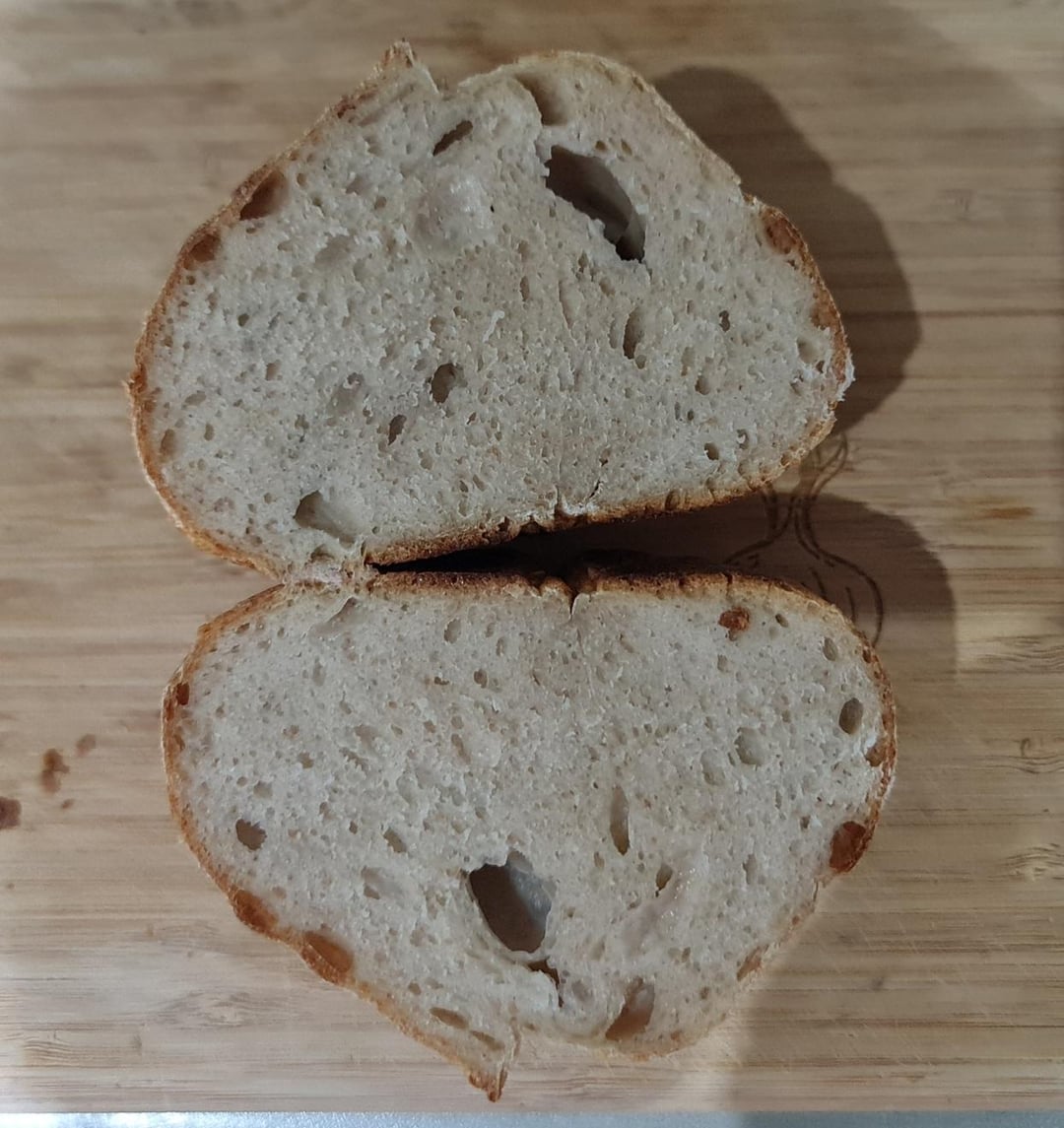
Test loaf was 120g bread flour, 30g spelt, 100g water, 30g starter, 2g salt. 2x slap and folds, 6 hour BF at 27C. Bake covered 220C for 15min, uncovered 180C for 10min.
Good rise, but tight crumb, representative of a young starter. Probably worth developing the starter further with a larger base (eg. 20g), with daily feeds for a couple of weeks, see if that improves the crumb, but I might put that on the back burner for now (dehydrate the sample in the meantime).
Fun experiment. I'll probably try it again with rye next.
by bicep123
6 Comments
**Hello bicep123,**
Thank you for posting. **[Here is the posting prompt](https://imgur.com/a/De6AKiQ)** if you need to read it again. **[RULES LINK](https://www.reddit.com/r/Sourdough/wiki/sourdoughrules/)** :-). This comment appears on **all posts**.
**[Modmail us :-)](https://www.reddit.com/message/compose?to=/r/Sourdough)** with questions.
# **[READING CRUMB GUIDE ](https://www.reddit.com/r/Sourdough/wiki/reading_crumb/)**
# [Wiki index](https://www.reddit.com/r/Sourdough/wiki/index/), &
# [FAQ Beginner starter guide](https://www.reddit.com/r/Sourdough/s/gnqFg7osBO)
*I am a bot, and this action was performed automatically. Please [contact the moderators of this subreddit](/message/compose/?to=/r/Sourdough) if you have any questions or concerns.*
What a great experiment, I as a labrat am very happy to see that 😀
This is fantastic u/bicep123. What a helpful tutorial for starting a “micro starter”. Do you think it wouldn’t mature properly with 1g feeds? I would love to see the mini spatula.
Love the fact that it proves that if you end up with scrapings on the jar wall and still recover your starter!! Nice work!
No control?
Fantastic! As a baker with a biochem education I love it.