
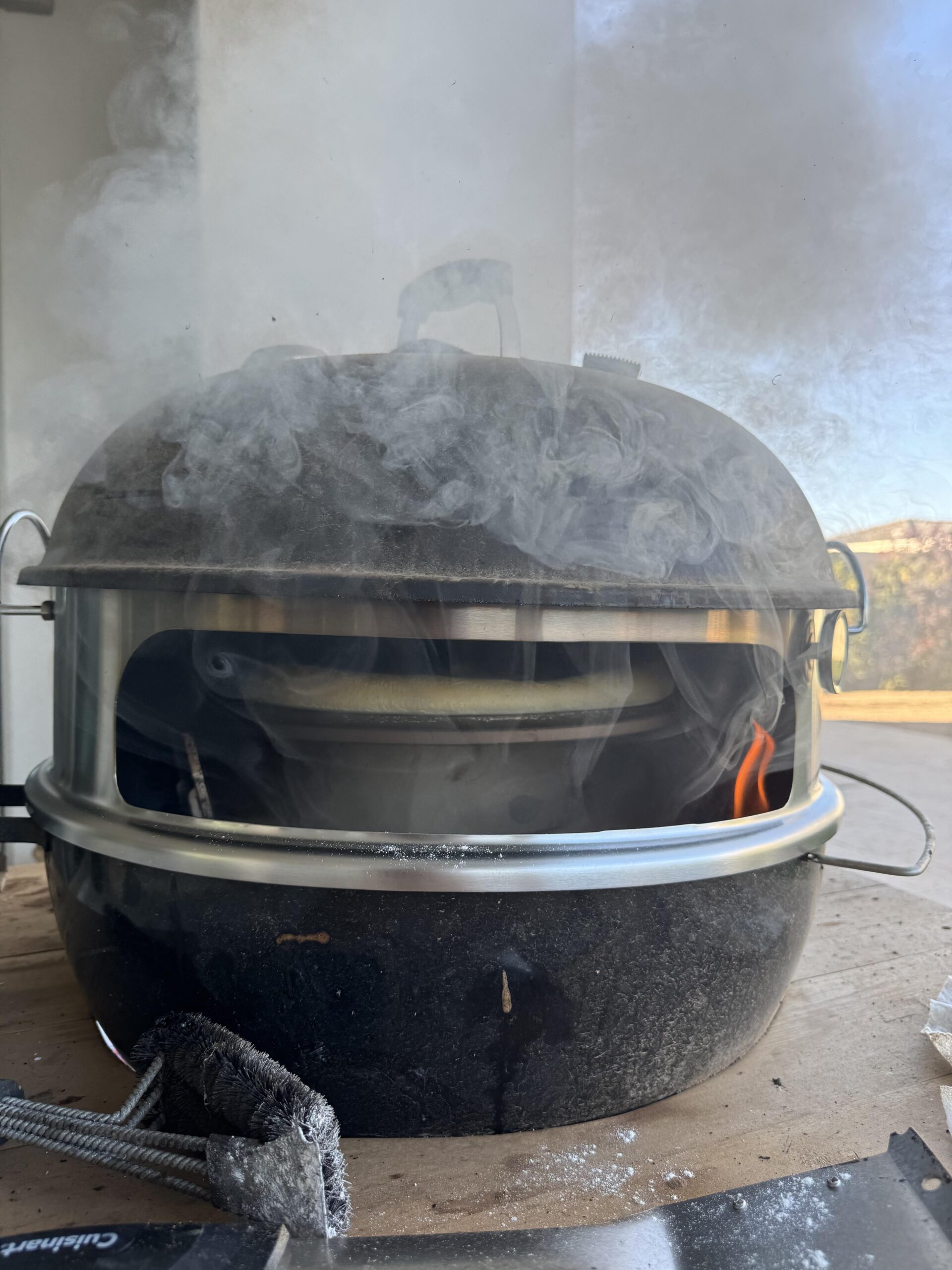
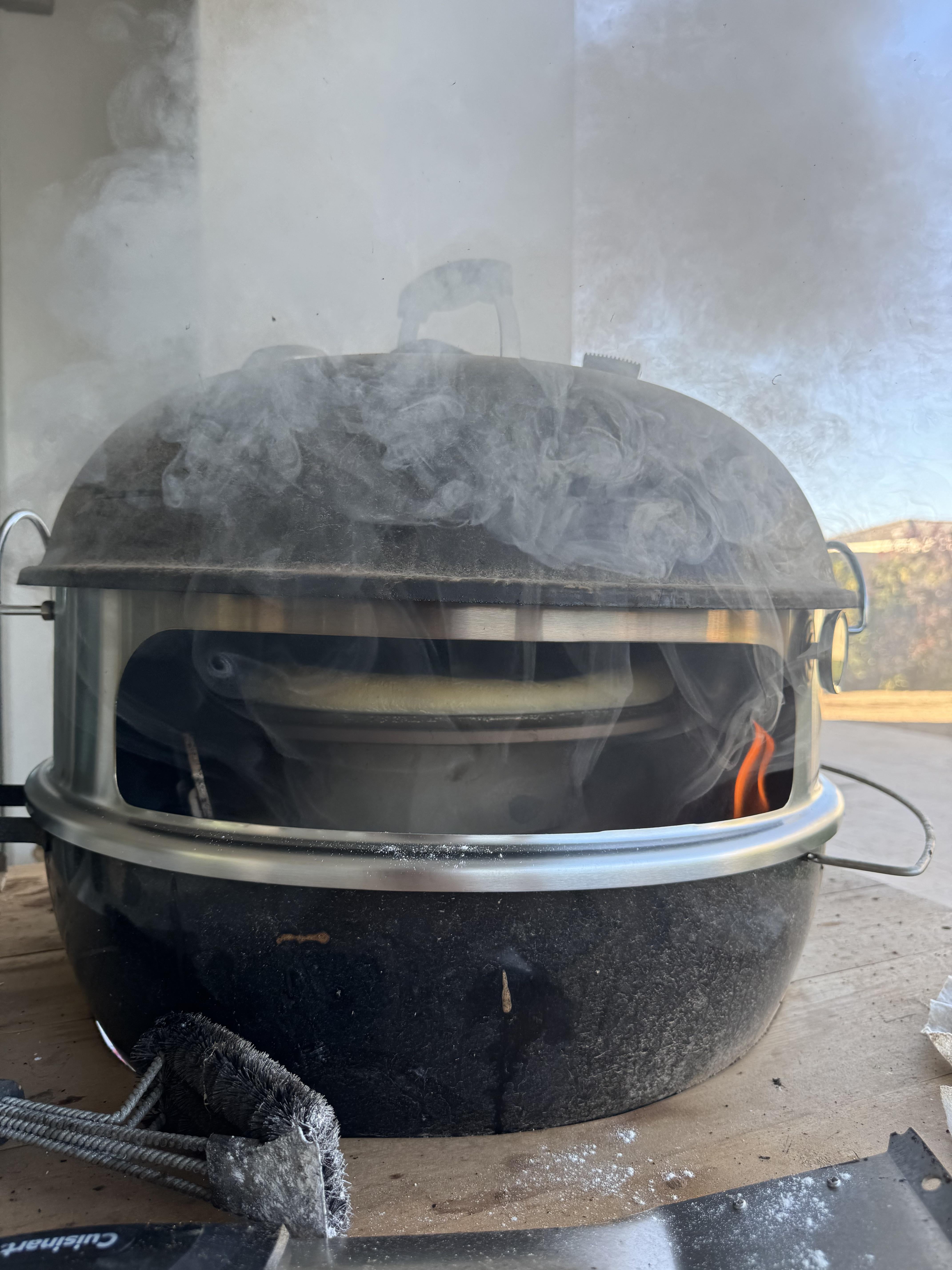
At first I had the pizza stone on top of baskets so it’s not directly over the heat source. Top cooked too fast and dough wasn’t fully cooked. Then I basket so the stone was right over the heat source, burnt crust on the bottom. The key is heat management and I imagine the stone needs to be a certain temperature. Don’t know what that is, anyone got an answer? Internal temp was about 600F. Definitely a learning experience for the first time. I also have the only fire box in there as well.
by zyndurai
6 Comments
To properly cook a pizza you need a proper pizza oven, I won’t add anything else, as an Italian, this is not the place to discuss these kind of things 🙂
What’s all that smoke?
Anyway, kettle is not good for Neapolitan pizza. Maybe NY or Roman… But a pizza oven is generally better.
What was your charcoal layout? You should get one of those infrared thermometers. Typically on a gozney you’re looking for at least 750f on the stone.
Looking at the picture your stone looks quite thin, and also the edges of the pizza line up with the edges of the stone so the edges are going to get hit with a lot of heat and perhaps burn on the edges pretty quickly.
I’d also try cooking a smaller pizza straight on the stone and skipping the pan. You’ll need a small pizza peel for that. I think at such high temps the pan is maybe not the right method as it transfers too much heat too quickly resulting in a burnt base before the top is done.
I love kettle pizza, and have had some great success. Here’s my method:
Set up for two zone cooking with all air flow vents completely open. first, dump about half a chimney of unlit coals into the back of the kettle. Then light an entire chimney, put on top of unlit charcoal. Put on cover, wait for it all to heat up.
Once heated, grab three large chunks of wood and put that on top of the charcoal heap (I usually do one in the middle, one on right, and one on left, evenly spaced).
Put on only fire attachment and pizza stone. Usually I put the pizza stone in the middle-back of the kettle. Wait until kettle temp is around 600-700. I have the kettlepizza attachment with a temp gauge at the front, and once that hits the “pizza zone” (600-700) that’s when I put the pies on.
Since all the heat is in the back of the kettle, you’ll have to move the pizza around to heat it evenly, so just keep spinning it until you get to your preferred doneness. Also, Get a pizza peel. It takes some getting used to, but once you master it, you’ll move the pies around no problem.
Never cooked a pizza on my kettle but did so countless times on my kamado. Similar issues there and with the ceramic firebox your kettle is half kamado anyway.
The main trick with a kamado is to place the ceramic deflectors above the (raging) fire. Place 1/2″ spacers like steel nuts or something similar on the deflectors and the pizza stone on top of the spacers. The air gap prevents the bottom from burning. If you don’t have ceramic deflectors you can use another cheap pizza stone instead. My bet is that it’ll work on a kettle as well.
You need to properly preheat the stone until it’s about 500-550F. My Italian electric pizza oven heats the stone base to 750-800F for a Napolitana, but cooking pizza on a kettle is all about compromise and trial and error, given the imperfect design/ distance between cooking level and the dome above it, trade-offs between briquettes, charcoal and firewood in terms of heat/duration/temperature control&consistency.
I bung my Weber pizza stone in the kitchen oven for about 45 minutes to an hour before cooking while the briquettes heat up. Before I transfer the stone to the kettle, I fan the coals/briquettes until they’re red.
When I cook a taco pizza or substantial toppings, I precook the naked pizza base for a minute or two, remove it and put the meat topping on it, before I put it on for a second cook. This gives the dough some extra integrity – also works if the stone’s at a lower temperature or you struggle getting enough ambient heat. Or you’re cooking in high humidity, which for some reason seems to wreak havoc with carefully prepared 72-hour slow rise Bigga doughs.
When I make my wife’s favourite, the Florentine (the one with cracked eggs on top), the only way I can get those eggs to set and not overdo the dough is by raising the pizza stone so it’s close to the dome where it’s hottest: I put four empty beer/tomato tins on the grate, pizza stone on top of the tins, and then it’s a matter of trial and error.
And be patient, give yourself time to learn by fucking up. Cooking on a Weber kettle is an art, a craft. No shortcuts.