
b’
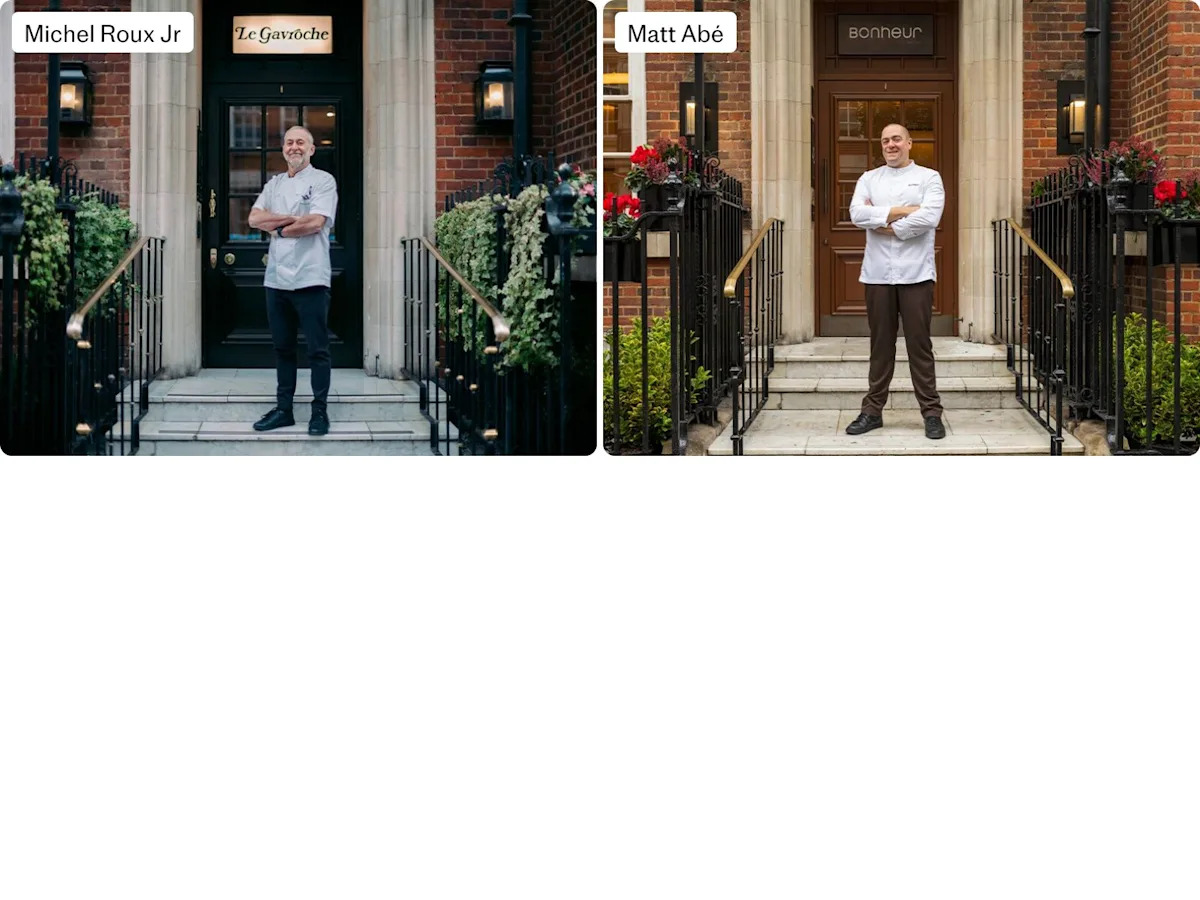
Bonheur Exterior
‘
Like an actor preparing for opening night, any chef launching a restaurant will tell you how nervy it is. Months of painstaking research, fine-tuning recipes and assembling a crack team of cooks and servers.
With thousands, sometimes millions, already invested, every fine detail is pored over, from the tone of paint to the bathroom plumbing. And in the back of your mind, no matter how famous you are – the fear no one will show.
Most chefs, however, are not taking up residence in what is arguably Britain’s most iconic restaurant venue. Such is the fate of Matt Abé, who on 4 November opened the door to his new solo venture, Bonheur, at 43 Upper Brook Street in London – former site of fabled French restaurant Le Gavroche.
“It’s monumental,” Abé tells me in the week pre-launch, while around us workers add finishing touches to the dining room and waiters refine their service skills. “It’s extremely exciting and obviously comes with a lot of responsibility, not just to the team, but to gastronomy.
“So many talented people have come through these doors,” he continues. “But I’m running towards that with arms wide open, excited to play my part in the legacy that will remain within these four walls.”
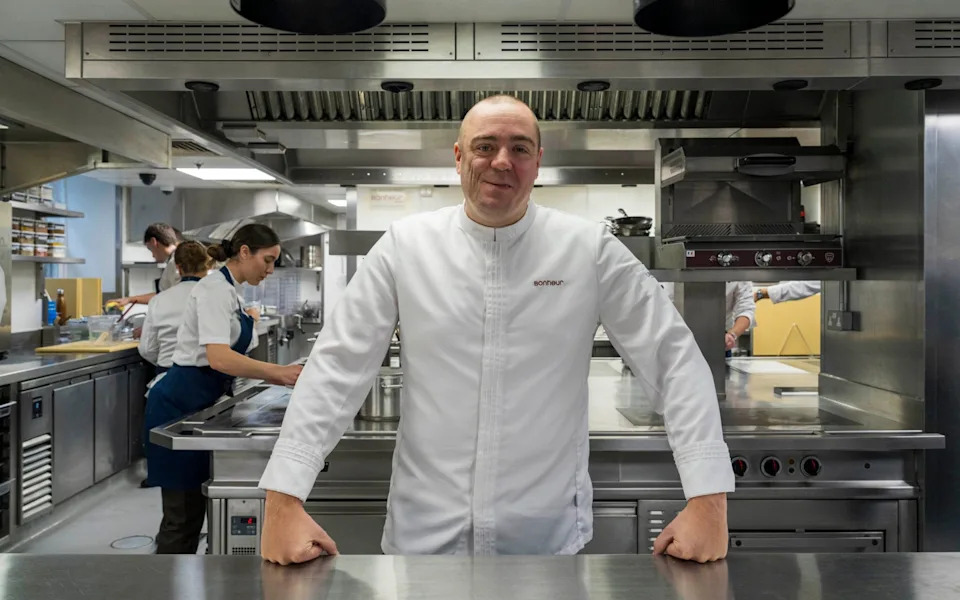
Matt Abé feels a sense of responsibility ‘to gastronomy’ given that he is taking up residence in what is arguably Britain’s most iconic restaurant venue – Andrew Crowley
Abé may not (yet) be a household name but the site’s former patrons certainly are. Having opened Le Gavroche, then just off Sloane Square, in 1967, the late Albert and Michel Roux are credited with reviving Britain’s restaurant scene.
Moving to Mayfair in 1981, the French brothers served such classics as soufflé Suissesse, which Telegraph restaurant critic William Sitwell labelled “the thickest, most luxurious soufflé imaginable”.
Le Gavroche was the first UK restaurant to win three Michelin stars; a who’s who of 1990s chefs passed through its basement kitchen, from Marco Pierre White and Rowley Leigh to Marcus Wareing and Gordon Ramsay.
Abé himself has impeccable culinary credentials. Having worked for Ramsay for almost 20 years, rising through the ranks at his flagship Chelsea establishment Restaurant Gordon Ramsay (which next year will celebrate a quarter of a century with three stars), Abé ended up as chef-patron.
Now, aged 40 and with financial backing from Ramsay, he is going solo. Despite originally writing off Mayfair as a location, Abé felt “there was no harm in looking” at the glitzy postcode’s most prestigious address, unoccupied since Michel Roux Jr, Albert’s son, closed Le Gavroche in January 2024 after 40 years of working there (33 of them as head chef).
Within five minutes of entering the building, Abé was convinced.
b’
‘
Ramsay, who worked at Le Gavroche for a year in 1989, described the prospect in typical Ramsay-an fashion to The Telegraph earlier this year: “absolutely f—ing nerve-wracking. The biggest pair of shoes to fill in the culinary landscape.”
But while Ramsay has the financial chops (in February he opened two restaurants at 22 Bishopsgate for a rumoured £20m), Bonheur is firmly Abé’s restaurant. Le Gavroche was rooted in classical French cookery, with many considering it London’s foremost fine-dining restaurant.
With a £225, seven-course tasting menu (and a three-course à la carte for £165), Bonheur is clearly gunning for a similar clientele.
Yet Abé aims to blend classical cooking with a “lighter, fresher, modern approach”.
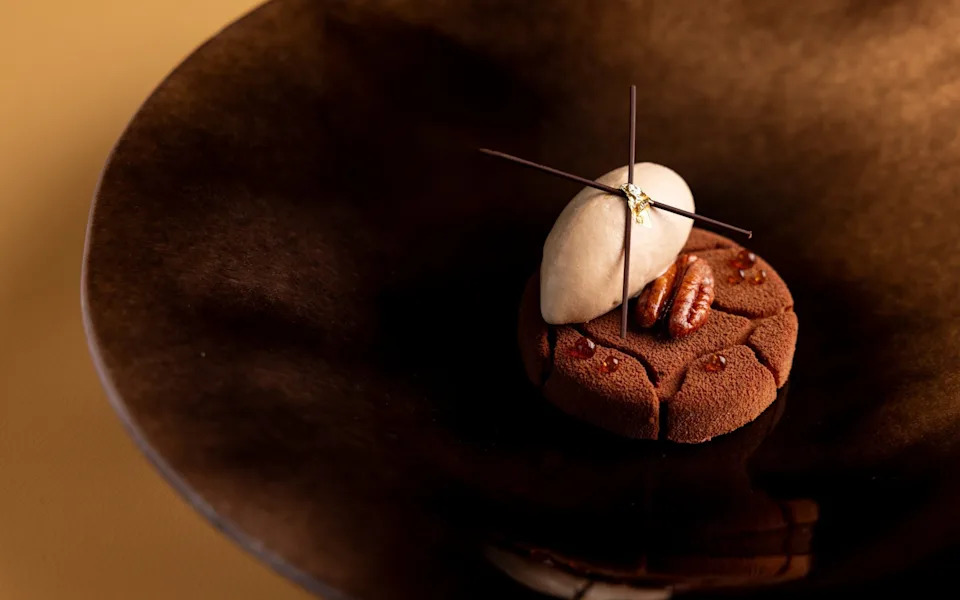
The seven-course tasting menu at Bonheur costs £225; the Pecan Praline offers indulgent layers of pecan, coffee, and vanilla parfait, paired with cocoa nib ice cream – Joe Howard
His ingredients will be mostly British and seasonal. “We’ve got the best shellfish in the world, the most amazing fish, the meat is standout,” he tells me. Cumbrian beef, dry aged for 125 days, will feature prominently, served initially alongside a modern interpretation of potato mille feuille.
Isle of Skye scallops will be seared, glazed with shellfish oil and grilled delicately over charcoal before being served with both pickled and puréed heirloom carrots. The citrus seasoning will range, depending on the season, from pomelo to finger lime to clementine, with a yuzu koshō beurre blanc blending the traditional French sauce with Japanese flavours.
This contemporary approach is partly influenced by Abé’s Australian heritage, his cooking inspired by the “multicultural world I grew up in, then melding a little bit of Asian influence, in a very subtle way”.
Abé grew up in Sydney and food played a significant role in his household. His mother was a “great cook” and a young Abé liked to help, baking cakes or barbecuing. His parents took him and his sister to restaurants where he was exposed to global cuisines from a young age.
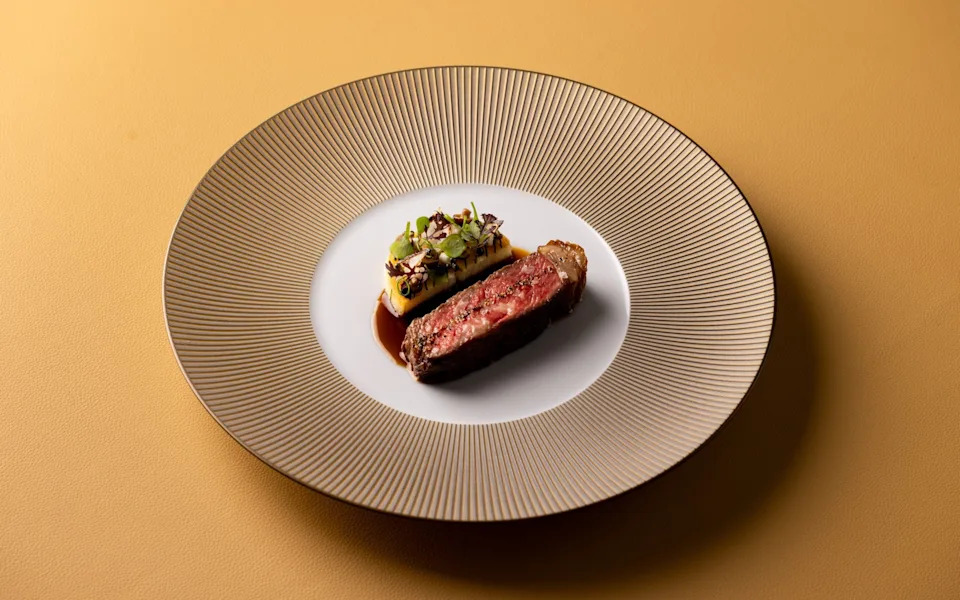
Abé‘s menu blends classical cooking with a ‘modern approach’; this 125-day aged Cumbrian blue grey sirloin sourced from the Lake District is a case in point – Joe Howard
Primarily, he linked food with generosity and hospitality. “We used to always host people at the house,” says Abé, who retains a slight Australian inflection.
“People would come for a barbecue, and something I learnt growing up was hospitality – having some drinks, some food, the pleasure that brings people. Bringing people together is a really important thing for me.”
At 16 he undertook a syllabus-mandated work placement at a Return and Services League club, which fed up to 1,000 veterans a day. Nothing complex – grilled chicken and meat, sandwiches, roasts on the weekend, a noodle bar – but Abé was hooked. The executive chef was impressed and Abé left school to work there.
“It was a great experience, high volume, high intensity,” he recalls, “but it wasn’t refined enough, I wanted to be pushed. I had this yearning for discipline. If I hadn’t fallen into hospitality, the only other thing I wanted to do was join the military.”
Abé worked at top Australian restaurants including Aria in Sydney and Vue du Monde in Melbourne, but Europe called. “Every chef said ‘you’ve got to go to the UK, it’s like the holy grail’. Gordon was the one that always stood out for me. If you’re gonna work for anyone, you may as well work for the best.”
Via his bosses, who knew Ramsay, Abé ended up at Claridge’s, arriving in 2007 and staying for two years, before joining Restaurant Gordon Ramsay, where he remained until this year.
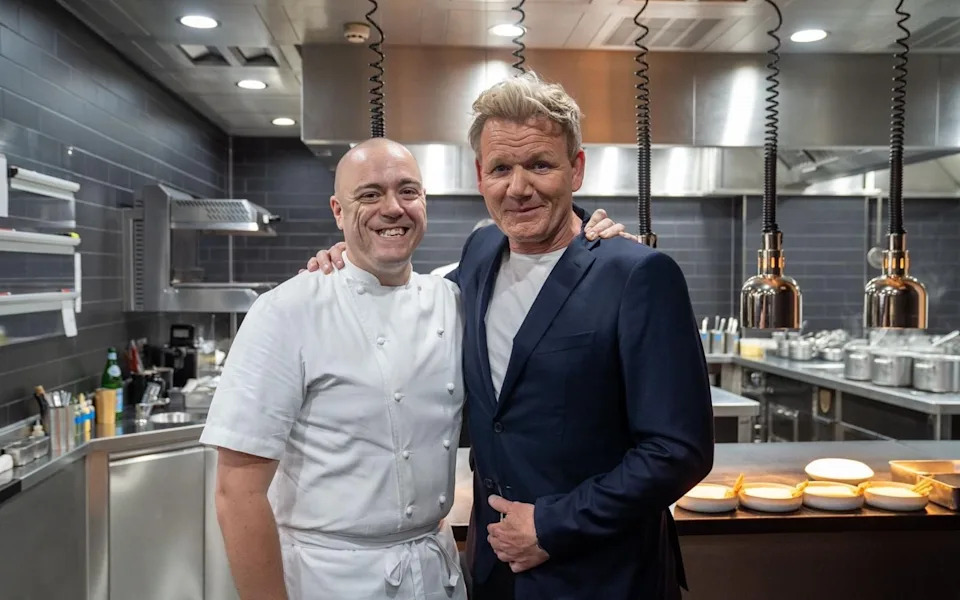
Matt Abé became head chef at three-Michelin-starred Restaurant Gordon Ramsay when he was just 28
By 2013, aged 28, he was head chef of a three-star restaurant; when his boss, Clare Smyth, left to launch her own solo venture in 2016, he replaced her.
Ramsay might have made his name as a foul-mouthed kitchen tyrant, but Abé says his real-life persona is nothing like the caricature on Ramsay’s Kitchen Nightmares. Never a gatekeeper, Ramsay also invested in Core by Clare Smyth and, according to Abé, always promotes his protégés. “Gordon is the most selfless person, he just wants great for everyone, he gives us the platform to perform.”
But, Abé stresses, “this is my restaurant. Gordon is my business partner, my adviser,” he explains. “He hasn’t tasted the food, and that’s the greatest thing. I can’t wait to welcome him into the restaurant as a guest.”
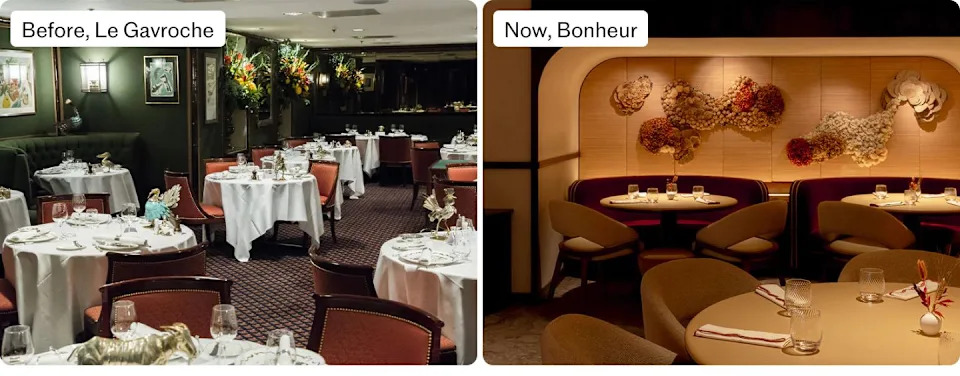
Le Gavroche was famously old-school: white tablecloths, wine-red walls covered in framed paintings, a basement location that could feel dark and cavernous. Abé has transformed the place into something light and airy.
The colour palate of warm, neutral tones – sand, earth and clay – is a subtle nod to his Aussie roots. A painting by the modern artist Rajan Seth was inspired by a pink salt lake in Western Australia.
Has he kept anything? “The walls are in the same place, we couldn’t move those,” Abé jokes. Le Gavroche regulars will find a completely new dining room, but the engine room is mostly intact: “I’ve inherited the Roux kitchen, which is quite magical,” says Abé. “It’s like buying a new home,” however: “it was someone else’s; now you’re going to make it yours.”
But with everything from inflation to rising minimum wages to staff shortges, restaurants are struggling. Isn’t it a risk to open now? “It’s quite scary to open a restaurant at any time,” Abé counters. “You have to make the best of whatever situation; there’s no perfect time to open a restaurant.” Having arguably Britain’s most successful chef behind you will no doubt help.
Abé is setting out his stall on fine dining, a format increasingly considered to be outdated. But he insisted on an à la carte menu, arguing that restaurants offering only tasting menus are limiting.
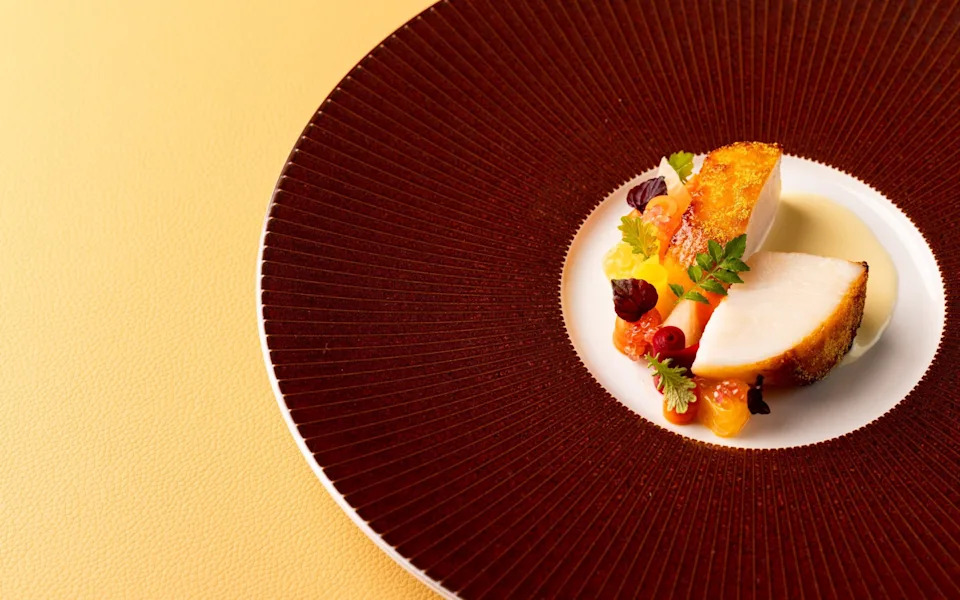
Isle of Skye scallops served with both pickled and puréed heirloom carrots – Joe Howard
He was also inspired by a more “relevant, current and modern” style of service found in many top restaurants these days, including at Core, where he describes the waiters as “attentive, alert, informative, but a little more relaxed. It’s deformalising the formal.” Don’t expect tablecloths at Bonheur.
Opening in a venerated location can be daunting. Ramsay succeeded, turning Pierre Koffman’s La Tante Claire into Restaurant Gordon Ramsay. Abé hopes to follow suit and is wisely avoiding a tribute act.
“I’m not here to emulate [the Roux family]. I’m here to do what we want to do, and do it in our way. I feel very confident – not comfortable, but confident in my ability and the team I’ve pulled together.”
Ultimately, he is excited. “I just can’t wait to welcome guests. We want to create a world-class restaurant and return 43 Upper Brook Street to its full potential.”
The Roux clan, he says, has already booked. “I’m looking for that genuine reaction from them walking in the front door; it’s really night and day from what they left me.”
Does he have any plans to make the famous soufflé? Of course not. This is a chef ready to break the mould.
Broaden your horizons with award-winning British journalism. Try The Telegraph free for 1 month with unlimited access to our award-winning website, exclusive app, money-saving offers and more.
Dining and Cooking