
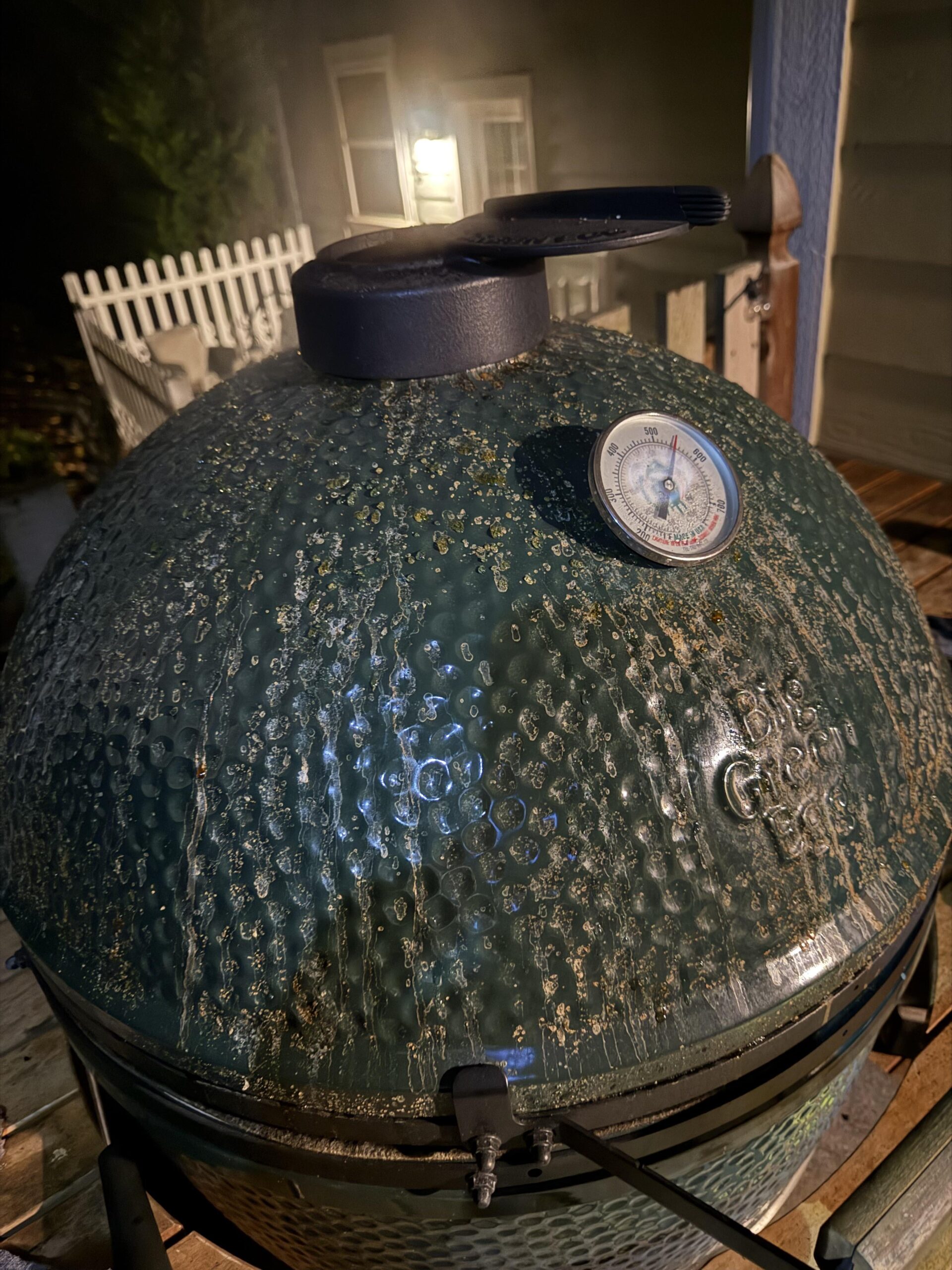
Fired up my XL after it sat unused for a month or so, with a cover. I understand that sweating is normal, I’m in the Seattle area so it’s plenty wet outside, but I’m not sure if that affects the temperature reading. I had a very hot set of coals, burning well but the temperature was reading cold. It finally started to climb but then it dropped again, then back up! Had to adjust my pizza plans to do indoors. Is this normal or do I need a new thermometer?
by Longjumping-Bug-3487
7 Comments
I live in Portland and my impression is yes, sweat impacts the ability for the egg to get hot. If I plan to do a hot cook, I will usually load up the egg with a decent amount of charcoal and cook something basic like burgers or chicken and then run it with the lid closed but the vents open. That will cook off all the excess water.
You should think about doing a clean burn. Be aware that any time you do it you run the small risk of gasket failure.
It sounds like your thermometer is inaccurate. Water evaporating from the surface of the BGE wouldn’t affect the temperature changes of the fire burning inside as you described.
It’s sweating because of the temperature reading.
I’d recommend a grate-level thermometer… or at the least, make sure yours is accurate and calibrate it if not using the boiling water method. If you’re at sea level, it should read 212°F. Also use some steel wool to scrape off all of the creosote.
I only noticed how mine was about 40° off because I got a Thermoworks RFX + billows kit, which comes with a probe for the grill, and saw a pretty big variance between what the digital probe was telling me and what the dome thermometer said. Sure enough, mine was reading around 180 in boiling water. All you have to do is use a wrench to adjust it.
I had a similar issue and wrote BGE Support. They sent this in reply;
Hello,
If there is excess moisture inside your grill, the Egg will push that moisture thru the ceramic material. Unfortunately in your case it also brought the greasy brown residue with it as well. Here are some tips to prevent this from happening:
1) Keep your grill under a cover when not in use. The gaskets can pull water into the Egg. When heated this moisture will be pushed through the ceramic material. The grill may look like it’s sweating. Once the excess moisture is gone, this will stop.
2) Use disposable drip pans to catch excess grease from running into your grill. Nothing good comes from allowing massive amounts of grease to run into the bottom of your grill. The ceramic material will eventually become full and starting pushing it through the ceramic material. I’m not a fan of water baths either. The ceramic grill is already a moist environment. Adding more moisture water into this environment just makes the problem worse.
3) After completing your slow cook, remove your food, and raise the grill temperature to 400-500 degrees for 45 minutes. Get the grill as hot as your remaining fuel will permit. This will drive out any excess grease and moisture.
4) Before covering the grill, open the top and bottom drafts. Allowing a little air flow to move through the Egg will help prevent moisture build up inside the Egg.
5) If you don’t use the Egg in winter, burn it out and clean it out before putting it away. This lessens the likelihood of having moisture or mold problems and you will be ready for grilling in the spring.
People that do more high temp direct grilling don’t have these problems. This is related to slow cooking or an older grill that has not been burned out. Manage the moisture and this will stop. Here is how to burn out an Egg:
Start by filling the Egg with fresh charcoal. Light it and bring the grill up to 600 degrees. Let the Egg burn until it runs out of fuel. After the grill has cooled, sweep out the dome with a soft bristle nylon brush. All the build up on dome will fall away as ash. Next remove the all the internal parts. Vacuum or sweep out any ash inside the Egg. Since the fire ring and upper part of the base don’t get as hot, they might still have some heavy greasy build up. Us a putty knife and scrape these areas to physically remove any residual grease. I’ve only scraped down 15 year old Egg one time. This is not something that’s needed for a new grill. Burning out and cleaning out the grill can be done for all grills on an annual basis. Don’t burn out a grill more than once a year. This is supposed to be fun, not work or drudgery.
Hope this helps,
I have never seen that sweating affects the internal temperature (been cooking on BGE/kamados for nearly 20 years), but you might have a calibration issue. Also, I never pay attention to my dome temperature as it typically is about 25F higher than the grate temp (unless cooking indirectly) as heat, well, rises. I found this really cool probe tree years and years ago from BBQ Guru. I would put me pit probe right at the height of the meat, which is ideally where you want to. Don’t clip a pit probe to the grate as you’ll get a false reading.