
Sign up for the Slatest to get the most insightful analysis, criticism, and advice out there, delivered to your inbox daily.
Alison Roman, star of online food culture in the 2010s, has a new cookbook out that is (in an apparent first for her) slumming it in the Budget Cooking category on Amazon. It’s a pantry book called Something From Nothing, which promises recipes with ingredients that might already be lying around your house, ready to be made into something … from nothing. Although some Roman faithful admit to chafing at the inclusion of recipes that have been previously published online (the famous “Caramelized Shallot Pasta” and “Goodbye Meatballs” each have a page in here), as a relative latecomer to her oeuvre, I don’t mind having these classics at my fingertips. And in my time cooking the recipes in the book, I have yet to find a dud. It’s also fun to read Roman’s intro, in which she describes crying while hearing her husband’s wedding vows, which lauded her ability to make a meal without grocery shopping, just out of what was in stock at home. (“Never had I considered someone might interpret my affinity for practicality as creativity,” she writes.) I love the idea I might catch some of that shine via these recipes. But after spending some time with it, I’m not so sure this book is doing what it says on the tin.
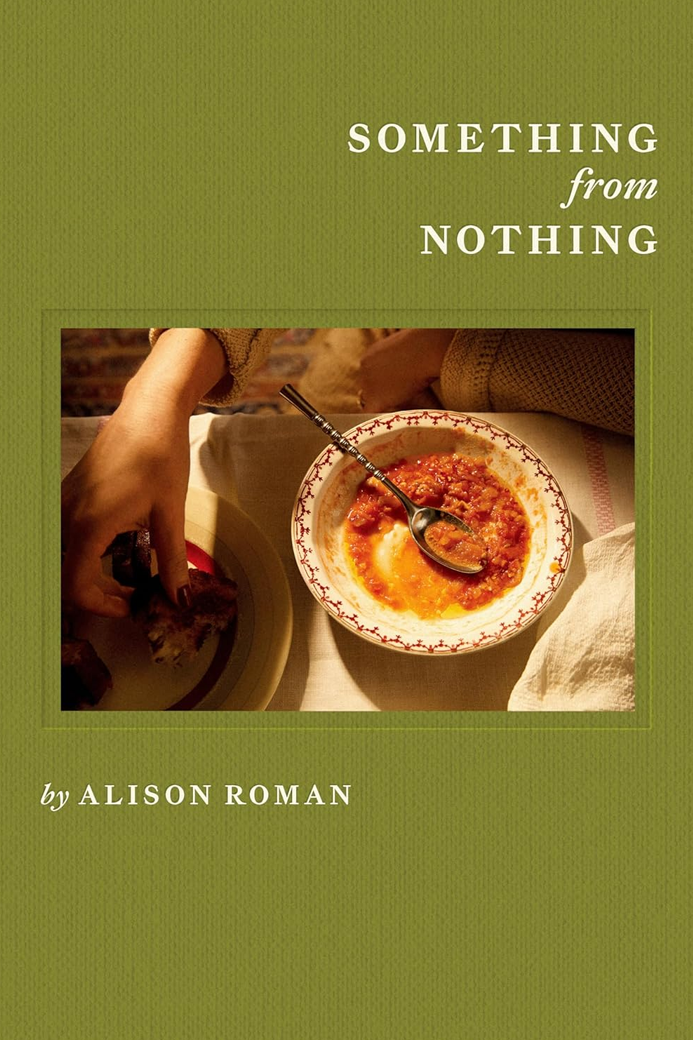
By Alison Roman. Clarkson Potter.
Slate receives a commission when you purchase items using the links on this page.
Thank you for your support.
I’ll describe a few recipes to make my point. Reading “Long-Cooked Potatoes, Garlic & Lemon,” you’ll wonder if you’re seeing the quantities wrong. To make these, you submerge small potatoes in dill, garlic, lemon, and one and a half whole cups of olive oil (or chicken or duck fat, if you’re the kind of person who stocks those things), then bake for 80–90 minutes. The result is frankly incredible: The potatoes are brown on the edges, soft in the middle, the perfect versions of themselves. And over days of keeping them (submerged in their oil) in the fridge, the potatoes were still great when reheated—something you can’t say for standard fried or roasted potatoes, which risk getting dry and mealy on day two.
That wasn’t the only hit. “Spiced, Butter-Roasted Carrots with Walnuts” had great crunch and flavor, for a dish that roasts all together on a sheet pan. (Tossing the finished product with a little bit of raw garlic, as the recipe instructed, made it excellent.) The basic aioli recipe finally got me to make my own by hand, and it was way easier than I had feared. And the “Steak Like Tartare” preparation brought me—not a fish person—to use anchovies for the first time in years. (No, being Against Anchovies is not ideal when you’re a cook reading Something From Nothing.) I’ve marked 10 more recipes as “definitely try” when the good summer tomatoes (or cucumbers, or green beans) come back next year.
At least for me, coming into contact with Alison Roman’s food brain while reading this book back to front has been great—a dose of new energy, just in time for the Thanksgiving marathon. But the recipes I just described all have something else in common. They are, contra the advertising, definitely not “pantry” recipes in the same way the recipes in a book like Milk Street: Cook What You Have, by Christopher Kimball, or The Art of Pantry Cooking, by Ronda Carman (to pull a few off my shelf), are. Typically, a pantry recipe is redolent of sacrifice. You are trying to use up or make do with what you have, doing things you didn’t think you’d ever do, like pureeing two cans of pinto beans into a tomato soup or making deviled eggs with tuna, olives, and capers (two suggestions I’ve tried from Kimball’s book). Sometimes, I think of pantry recipes as being less recipes, more housekeeping concepts, like the ideas Tamar Adler collects in her books about leftovers, or like this tip from a user on Reddit, replying to a question about pantry meals for “when groceries run low”: “When I’m really poor, I like making tiny triangles of toast and putting tinned sardines in tomato sauce on top. Then, before I eat them, I say ‘Canapés?! How posh!’ in my best 1950s RP accent.”
While I think of the “pantry” as comprising mostly shelf-stable stuff like those sardines and that tomato sauce—maybe stretching the term to the root vegetables that store for weeks—Roman extends the pantry umbrella to the freezer and the crisper drawer, so that long-keeping vegetables like celery and cabbage make it into her recipes. But perhaps a bigger difference between old-school pantry recipes and the ones in this book is that her recipes always have fresh herbs, and often have salad greens, cucumbers, tomatillos, leeks … The list of delicious ingredients with definitely brief expiration-date windows marches on. Even some of the true pantry ingredients that you could keep for months have a “you probably have to run out and buy this at your local shoppy shop” vibe to them. And indeed, after getting a Roman buzz from reading this book, I went to the store and bought harissa, Calabrian chiles, better walnuts—end result, I spent more that week on foodstuffs than I had the week before. Which is sort of the opposite of what pantry cooking should do to one’s budget. Oh, and after I made those potatoes I described above, I had to restock my olive oil. I feel like I’m doing this wrong.

Jaya Saxena
The American Condiment Hall of Fame Has a New Member. And It’s Unlike Anything That’s Been There Before.
Read More
I’m Liberating My Family From the Most Excruciating Holiday Tradition of All. I Invite You to Join Me.
It’s Suddenly the Greatest Boogeyman for Women in Their 30s and Early 40s. It Doesn’t Need to Be.
Roman isn’t the only contemporary star with a recent “pantry” book that feels like … a regular cookbook, with a few pantry ingredients thrown into each recipe. Ottolenghi Test Kitchen’s Shelf Love (2021) leads with some inspiring thoughts regarding the benefits of learning how to cook with the bought-and-forgot ingredients at the back of your shelf, but I’m unconvinced it’s not just a regular Ottolenghi book. I’m going to try the “Herby Cabbage and Potato Gratin with Gruyere and Ricotta” for Thanksgiving, but let’s be real: It’s got 15 ingredients, including two cheeses and three types of herbs. Yes, the potatoes and cabbage in this are sturdy keepers, but you’re going to the store for most of this stuff. And you’re definitely pre-roasting that garlic, because we’re talking Ottolenghi, who lives for an intermediate step.
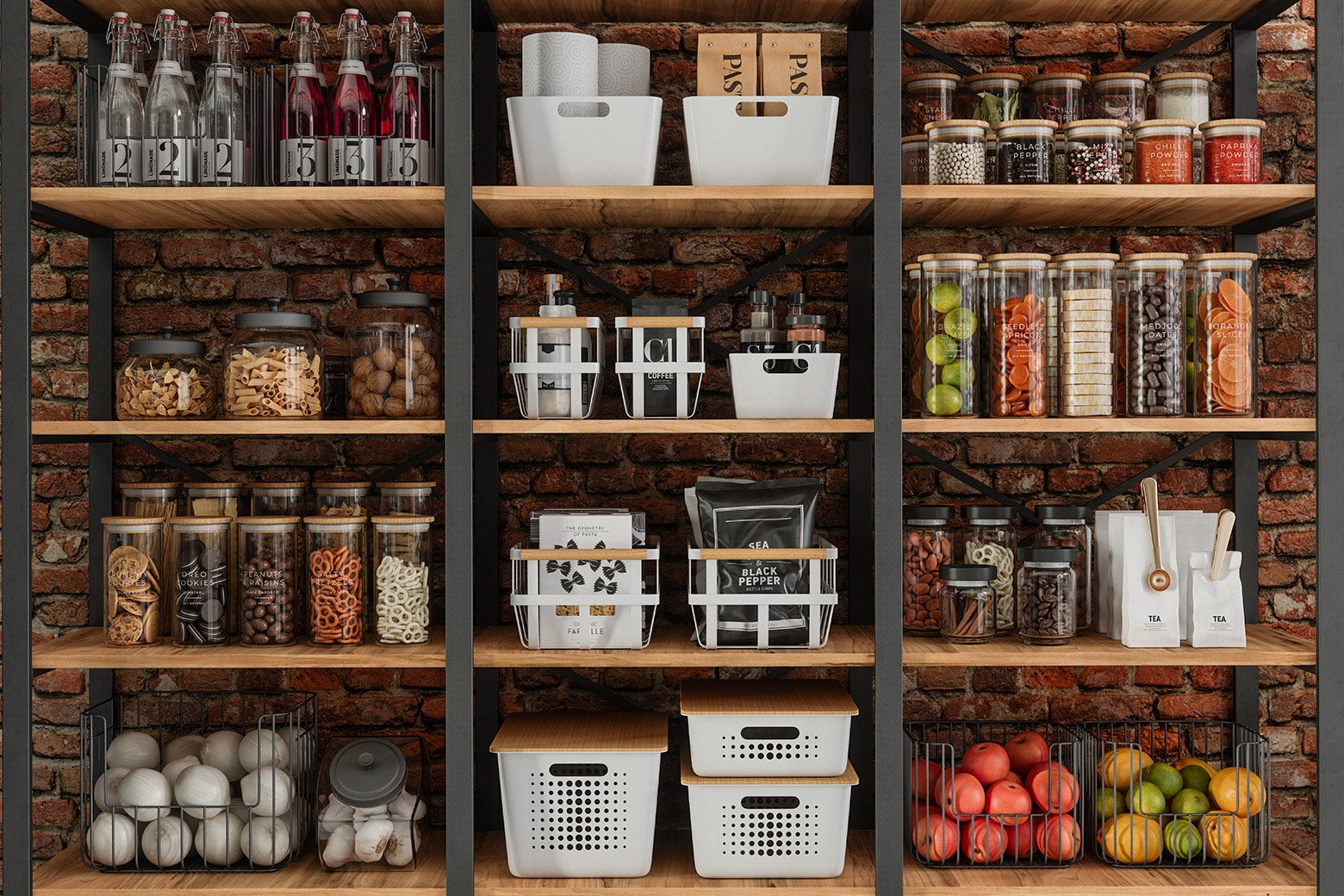
This is, perhaps, a fine whine. Who cares if a cookbook feels a little fancy, if you like the results? But pantries have, in the past 10 years or so, transformed from the rooms of requirement or black holes of yore—full of dusty old packets of lentils, opened by mice long before they’re cooked—into another site for optimization. Looking over Roman’s recipe for “Farro & Pea Salad With Preserved Lemon,” which calls for chives, sugar snaps, pea shoots (or dill or parsley), and labne, I feel hungry, but also a bit melancholy. I think I miss the chaos of the pantry, and the humble ideas that that chaos—along with its sister kitchen forces: money, energy, and time—used to inspire.

Sign up for Slate’s evening newsletter.
Dining and Cooking