
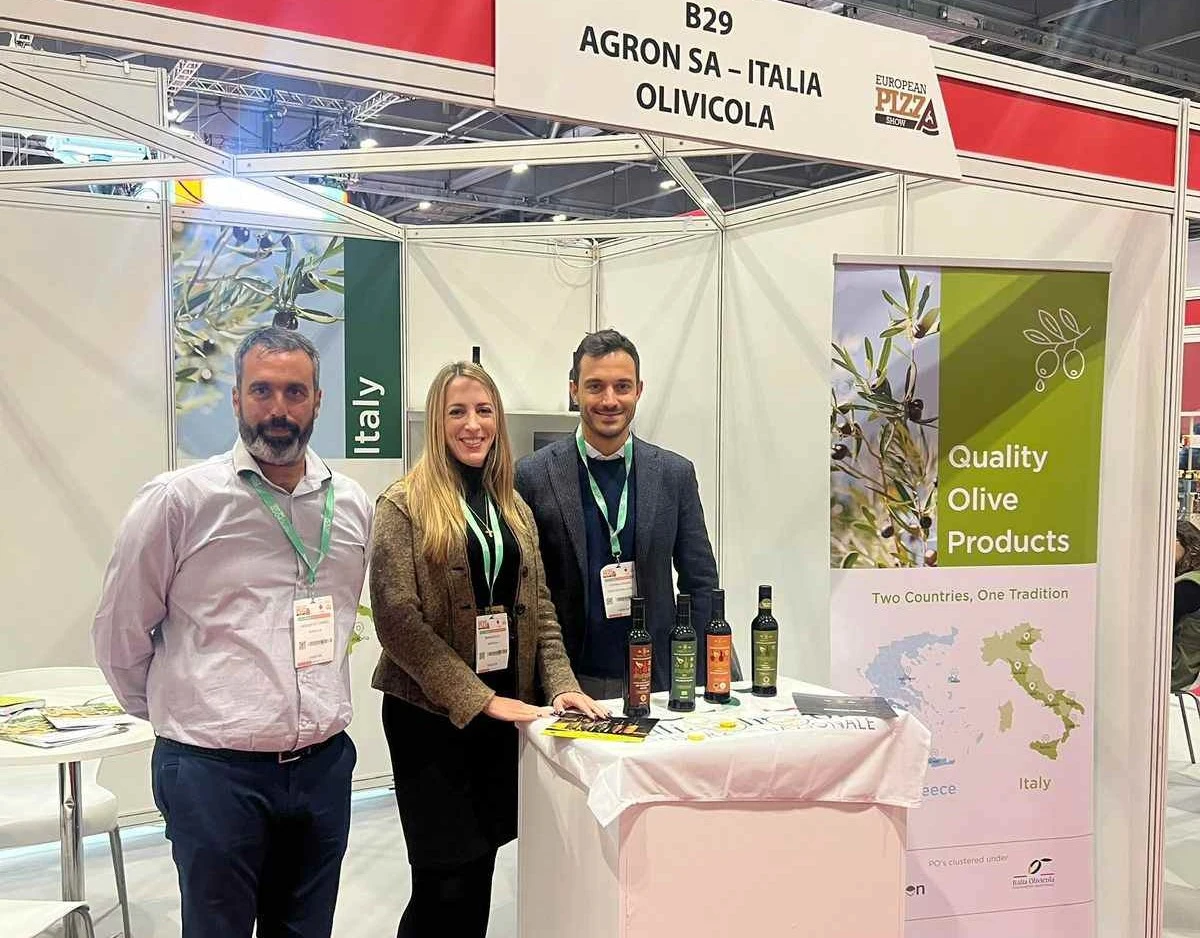
There are many similarities that unite the two nations that compete for cultural leadership in the sector. Greece It boasts of having given birth to olive growing, ever since the goddess Athena donated the first olive tree to the Athenians.Italy, at least since the early 1900s, has boasted a consolidated tradition in the production, trade and export of olive oil throughout the world, so much so that it is recognized as the home of quality.
The olive-growing area in Greece is nearly 900 hectares, compared to 1,1 million in Italy. There are 650 Italian olive growers, and approximately 450 Greek ones. In Greece, Peloponnese e Crete they produce themselves about 70% of national oil, as in Italy, the Puglia, Calabria , Sicilia they produce 80% of Italian extra virgin olive oil.
 The Italy-Greece stand
It is the similarities and analogies that have pushed Italy Olive growing e numerous Greek cooperatives, represented by Agron knows, to share a virtuous path developed over a decade, under the banner of quality, traceability and promotionA journey that begins in the fields, in the members’ olive groves, from the care of the olive trees to the complete traceability of the olives and the oil that arrives in the bottle, guaranteeing a path to health and well-being for the consumer, for the environment, and for all the families who purchase and serve traceable and safe oil.
Over a decade of intense work culminating this year in three major events where Greek and Italian oils were each presented with their own identity and soul, but united by a secure and certified traceability systemThree international events, organized by Bellavita Expo, in Riga (Food Latvia) and Miami (Food & Beverage Show) in September and London (European Pizza Show), which just concluded yesterday. They provided an opportunity to present themselves to consumers in markets where oil consumption is still a niche: 0,5-1 kg/capita per year is the consumption of olive oil in Latvia, USA and UKBut it is precisely where consumption is lowest that the greatest margins for growth lie along well-defined assets such as quality and traceability, so that consumers can have an extra virgin olive oil they can trust.
The tastes, aromas and aromatic complexities are different between one Greek Koroneiki has always been Apulian Coratina, as between a Matsolia of Laconia has always been Calabrian October (which, however, share the fact that they are enormous trees, reaching heights of 8 meters or more), or the Zia di Corfu, which produces tiny olives like the Sicilian Biancolilla. Italia Olivicola and the Greek cooperatives continue to share a common path, aiming to help olive growing flourish in both countries, under the guiding principles of today and tomorrow: sustainability, respect for the environment, traceability, and quality.
Dining and Cooking