
Rosé Wine Industry Analysis in Europe 2025 to 2035
The demand for rosé wine in Europe is projected to grow from USD 4.8 billion in 2025 to approximately USD 6.9 billion by 2035, recording an absolute increase of USD 2.1 billion over the forecast period. This translates into total growth of 43.8%, with demand forecast to expand at a compound annual growth rate (CAGR) of 3.7% between 2025 and 2035.
Overall sales are expected to grow by nearly 1.44X during the same period, supported by rising premium wine consumption, increasing consumer appreciation for rosé varieties, and growing emphasis on lifestyle and social drinking across wine shops, restaurants, and online retail applications. Europe, with its established wine production infrastructure and rich viticultural heritage, continues to demonstrate steady growth potential driven by premiumization trends and consumer preference evolution in wine consumption.
Quick Stats for Europe Rosé Wine Key Takeaways
Europe Rosé Wine Sales Value (2025): USD 4.8 billion
Europe Rosé Wine Forecast Value (2035): USD 6.9 billion
Europe Rosé Wine Forecast CAGR: 3.7%
Leading Type in Europe Rosé Wine Demand: Still Rosé (68.4%)
Key Growth Countries in Europe Rosé Wine Demand: UK, Portugal, and Germany
UK Country Leadership: UK holds 4.1% CAGR, leading country growth
Top Key Players in Europe Rosé Wine Demand: Whispering Angel (Château d’Esclans), Mirabeau, AIX, Minuty, Miraval

Between 2025 and 2030, sales of rosé wine in Europe are projected to expand from USD 4.8 billion to USD 5.76 billion, resulting in a value increase of USD 0.96 billion, which represents 45.7% of the total forecast growth for the decade. This phase of growth will be shaped by rising demand for premium wine experiences regionally, particularly across Europe where lifestyle changes and social consumption patterns are accelerating rosé wine adoption as preferred social and dining beverage. Increasing availability of premium and sparkling rosé varieties and growing penetration through wine specialty retail and online channels continue to drive demand. Wine producers are expanding their product portfolios to address the growing complexity of consumer taste preferences and quality expectations, with European wine operations leading investments in sustainable production technology and premium positioning.
From 2030 to 2035, demand is forecast to grow from USD 5.76 billion to USD 6.9 billion, adding another USD 1.14 billion, which constitutes 54.3% of the overall ten-year expansion. This period is expected to be characterized by expansion of premium wine offerings, integration of sustainable production methods and organic certification, and development of specialized rosé varieties catering to diverse consumer palates. The growing adoption of direct-to-consumer sales channels and wine tourism experiences, particularly accelerating across European wine regions, will drive demand for artisanal rosé wine systems with authenticity and premium positioning.
Between 2020 and 2025, Europe rosé wine demand experienced robust expansion, driven by lifestyle evolution and social drinking culture development, and growing consumer recognition of rosé as year-round consumption option rather than seasonal preference. The sector developed as wine producers, especially across Europe, recognized demand for accessible, premium wine options combining quality craftsmanship with social appeal. Wine retailers and hospitality operators began emphasizing proper wine education and promotional strategies to capitalize on growing rosé category momentum.
Europe Rosé Wine Industry Key Takeaways
Metric
Value
Europe Rosé Wine Sales Value (2025)
USD 4.8 billion
Europe Rosé Wine Forecast Value (2035)
USD 6.9 billion
Europe Rosé Wine Forecast CAGR (2025-2035)
3.7%
Why are Sales of Rosé Wine in Europe Expanding?
Demand expansion is being supported by the rapid increase in lifestyle consumption patterns and premium beverage appreciation regionally, with Europe maintaining its position as a wine culture leadership region, and the corresponding need for accessible premium wine options combining quality craftsmanship, social appeal, and consumption versatility across wine retail, hospitality, and direct-to-consumer applications. Modern wine consumption relies on premium rosé wine varieties to ensure optimal taste experiences, consistent quality delivery, and maximum consumption satisfaction. Rosé wine utilization requires comprehensive wine offerings including diverse grape varieties, multiple price point options, and various consumption occasions to accommodate varying consumer preferences and social settings.
The growing emphasis on lifestyle enhancement and social consumption, particularly heightened wine culture consciousness across European nations, are driving demand for rosé wine products from established producers with appropriate quality standards and taste authenticity. Consumers are increasingly seeking wine products that deliver premium taste experiences, recognizable quality metrics, and lifestyle benefits while providing maximum consumption convenience. Wine requirements and consumer expectations are establishing quality standards that emphasize taste capability, production authenticity, and convenient consumption formats, with European rosé producers often setting benchmark standards for wine quality and innovation.
Opportunity Pathways – Sales of Rosé Wine in Europe
The Europe rosé wine sector stands at a pivotal juncture of steady transformation and expansion. With demand projected to grow from USD 4.8 billion in 2025 to USD 6.9 billion by 2035, a solid 43.8% increase, the sector is being reshaped by lifestyle imperatives, premiumization preferences, and the pursuit of consumption quality with minimal complexity. As consumers seek premium wine experiences without compromising accessibility, rosé wines emerge as mission-critical lifestyle beverages rather than seasonal consumption options.
Europe, led by UK (4.1% CAGR) and supported by Portugal’s wine excellence, Germany’s consumption growth, Netherlands’ premium appreciation, and Italy’s production heritage, represents not just a geography of demand but a laboratory of innovation where wine quality, lifestyle appeal, and consumption versatility are moving from traditional wine categories to accessible premium positioning. The confluence of lifestyle changes, social consumption patterns, and quality expectations creates fertile ground for rosé wine solutions that deliver premium wine experiences with maximum consumption convenience.
Strategic pathways encompassing wine type optimization, grape variety specialization, price range development, and distribution channel advancement offer substantial growth enhancement opportunities, particularly for producers and retailers positioned at the premium wine lifestyle frontier.
Pathway A – Still Rosé Excellence and Traditional Wine Experience. Still rosé systems representing 68.4% of type demand provide traditional wine experience, premium taste profiles, and versatile consumption appealing to consumers prioritizing authentic wine experiences and quality appreciation. Producers offering premium still rosé wines with optimized grape selection can command 15-25% quality premiums while capturing tradition-focused consumers across European facilities. Expected revenue pool: USD 2.3-3.3 billion.
Pathway B – Premium Price Range Focus and Quality Positioning. Premium applications representing 42.8% of price range demand provide quality positioning requirements and established premium economics appealing to consumers focused on wine quality and lifestyle enhancement. Suppliers offering premium-positioned rosé wines with enhanced quality credentials can maintain substantial value advantages while supporting 20-30% margin benefits across quality-focused consumption. Premium opportunity: USD 1.8-3.0 billion.
Pathway C – Wine Shop Distribution Excellence and Specialized Retail. Wine shop channels representing 38.9% of distribution demand create opportunities for specialized positioning through expert curation, consumer education, and quality assurance. Wine producers offering wine shop-optimized rosé portfolios with appropriate quality positioning can capture 25-35% retail premiums in specialty wine segments. Distribution potential: USD 1.6-2.7 billion.
Pathway D – Grenache Grape Variety Specialization and Authentic Heritage. Grenache varieties representing 28.7% of grape variety demand provide authentic heritage positioning and established taste profiles appealing to consumers seeking traditional wine experiences. Equipment manufacturers offering Grenache-based rosé wines with heritage authenticity can command varietal advantages while capturing tradition-focused consumption facilities. Variety segment: USD 1.4-2.0 billion.
Pathway E – Sparkling Rosé Innovation and Celebration Appeal. Sparkling systems representing 31.6% of type demand enable celebration positioning and premium occasion consumption serving specialized lifestyle requirements. Wine producers offering sparkling rosé systems with enhanced production methods can capture celebration occasions and premium consumption situations while generating 20-30% occasion premiums over still alternatives. Sparkling opportunity: USD 1.1-1.5 billion.
Segmental Analysis
Sales are segmented by type, grape variety, price range, and Distribution Channel. By type, sales are divided into still rosé and sparkling rosé. Based on grape variety, demand is categorized into grenache, sangiovese, pinot noir, and others. In terms of price range, sales are segmented into premium, mid-range, and economy. By Distribution Channel, demand spans wine shops, supermarkets, online, and restaurants applications. Regionally, demand is analyzed across key European countries including France, Italy, Spain, Germany, UK, Netherlands, and Portugal.
By Type, Still Rosé Wine Accounts for 68.4% Share

Still rosé systems are projected to account for 68.4% of Europe rosé wine sales in 2025, making them the dominant type across the sector. This leadership reflects strong consumer preference for traditional, versatile wine options providing authentic wine experience, food pairing flexibility, and consumption versatility compared to specialized wine alternatives.
Across Europe, consumers favor still rosé systems for their wine authenticity, consumption convenience, and taste accessibility while maintaining wine quality. Still rosé configurations enable producers to incorporate traditional winemaking techniques, optimized grape expression, and authentic terroir characteristics creating sophisticated wine solutions.
Continuous innovations are improving still rosé production, including enhanced grape selection, improved production methods, and integrated quality control systems addressing taste optimization requirements. Still rosé systems support versatile consumption compared to other wine types while delivering consistent taste performance and consumption reliability. The segment’s strong position is reinforced by growing wine appreciation driving consumption patterns and lifestyle demands necessitating authentic wine solutions.
Wine authenticity and consumption versatility make still rosé systems dominant across European rosé wine applications.
Traditional wine experience and taste accessibility drive continued still rosé development throughout the region.
By Price Range, Premium Segment Accounts for 42.8% Share

Premium price positioning is expected to represent 42.8% of Europe rosé wine sales in 2025, highlighting its critical role as the predominant quality choice. Premium systems provide superior quality credentials, enhanced taste experiences, and lifestyle positioning appealing to consumers prioritizing wine quality and consumption prestige. Premium positioning allows consumers to achieve superior wine quality with established quality assurance, enhanced taste complexity, and lifestyle satisfaction without compromising wine authenticity. The segment is sustained by premium wine’s proven quality advantage, widespread consumer acceptance, established quality standards, and consumer preference spanning various consumption occasions.
Across Europe, consumers maintain premium preferences for quality assurance, taste superiority, and lifestyle enhancement while increasingly demanding improvements including enhanced sustainability credentials, improved authenticity verification, and simplified quality communication. Such positioning preferences ensure sustained premium dominance through proven quality benefits, lifestyle advantages, and continuous quality enhancement addressing evolving consumer requirements.
Quality credentials and lifestyle positioning make premium price range the predominant rosé wine choice across European applications.
European consumers balance quality priorities with value considerations through premium wine adoption across diverse consumption occasions.
By Distribution Channel, Wine Shops Segment Accounts for 38.9% Share

Wine shops are projected to account for 38.9% of all sales in 2025. Wine shop distribution involves expert curation, consumer education, and quality assurance creating specialized retail demands requiring knowledgeable service capabilities. Across Europe, wine shops utilize specialized knowledge for consumer guidance, quality curation, and wine education demanding expertise delivery and service consistency.
Wine shops benefit from established consumer trust, specialized knowledge positioning, and quality focus supporting premium retail investments. The segment sustains significant consumption through continuous wine education needs, established retail expertise, and consumer preference for specialized wine guidance throughout European retail operations. European wine retail facilities maintain specialized service focus targeting consumer education, quality assurance, and expert curation providing steady retail volumes and specialized retail focus within established wine networks.
Specialized expertise and quality focus drive wine shop dominance across European rosé wine applications and retail operations.
Established retail knowledge and consumer education sustain wine shop development and specialized retail expansion throughout European facilities.
What are the Drivers, Restraints, and Key Trends of the Sales of Rosé Wine in Europe?
Europe rosé wine sales advance steadily due to increasing lifestyle consumption patterns and growing premium wine appreciation across consumer segments. However, the sector faces challenges including seasonal consumption patterns, varying regional taste preferences demanding specialized wine profiles, and price sensitivity among value-conscious consumer segments. Sustainability trends and premium positioning continue to influence wine development and quality enhancement initiatives.
Expansion of Lifestyle Consumption and Social Drinking Culture
The growing prominence of lifestyle consumption and social drinking culture, gaining particular emphasis across European consumer frameworks, is driving sales for premium wine products enabling social experiences, lifestyle enhancement, and consumption satisfaction without extensive wine complexity. Premium wine systems equipped with appropriate quality credentials and accessible taste profiles serve wine retailers, hospitality operators, and consumers requiring effective lifestyle enhancement without compromising consumption convenience or social appeal. These lifestyle trends are particularly valuable for wine producers offering quality solutions and consumption capabilities optimizing social experiences while delivering complete wine satisfaction appropriate for lifestyle occasions without compromising wine authenticity or consumption reliability.
Integration of Sustainable Production and Organic Certification
Modern wine producers are incorporating sustainable production methods including organic certification, carbon-neutral production, environmental stewardship, and quality enhancement that improve wine credentials while maintaining taste reliability and consumer acceptance. Integration of sustainable practices, quality enhancement capabilities, and environmental consciousness communicates quality advantages and ethical benefits appealing to sustainability-focused consumers. Advanced systems also support next-generation wine development including biodynamic production, carbon footprint reduction, and sustainable packaging addressing consumer requirements and environmental objectives, with European rosé wine producers increasingly incorporating sustainability solutions balancing traditional wine quality with contemporary environmental and ethical priorities influencing wine purchasing decisions.
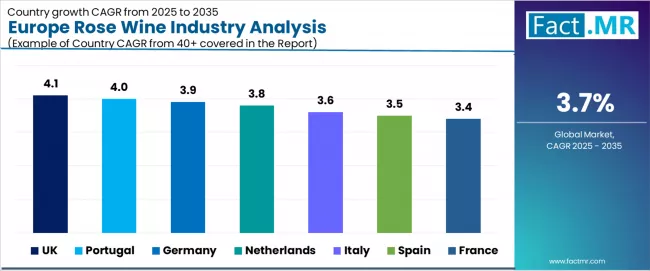
Analysis of Sales of Rosé Wine in Europe by Key Country
Country
CAGR (2025-2035)
UK
4.1%
Portugal
4.0%
Germany
3.9%
Netherlands
3.8%
Italy
3.6%
Spain
3.5%
France
3.4%
The Europe rosé wine sector is witnessing steady growth, supported by rising lifestyle consumption, increasing premium wine appreciation, and the integration of quality enhancement across wine applications. UK leads the region with a 4.1% CAGR, reflecting strong lifestyle consumption growth, expanding premium wine market, and consumer openness to wine category exploration. Portugal follows with a 4.0% CAGR, driven by wine tourism development and premium positioning.
Germany grows at 3.9%, as wine consumption culture increasingly drives rosé category adoption. Netherlands maintains 3.8% growth through premium consumption and lifestyle trends, while Italy grows at 3.6%, supported by production excellence and wine heritage. Spain demonstrates 3.5% growth, and France achieves 3.4%, both driven by established wine culture and quality positioning.
UK Leads Europe Growth with Lifestyle Consumption and Premium Wine Market Expansion

Sales of rosé wine in UK is projected to exhibit exceptional growth with a CAGR of 4.1% through 2035, driven by strong lifestyle consumption development, expanding premium wine market, and consumer openness to wine category exploration and quality appreciation. As the leading European country with significant wine consumption growth and increasing lifestyle consciousness, UK’s focus on premium wine experiences without compromising accessibility is creating substantial sales for rosé wine products with quality positioning and lifestyle appeal. Major wine producers and retail operators are establishing comprehensive wine portfolios and consumer engagement strategies across UK facilities.
Lifestyle consumption development and premium wine market expansion are driving robust rosé wine adoption across retail facilities, hospitality operations, and specialized wine applications throughout UK wine and lifestyle operations.
Consumer exploration and quality appreciation requirements are supporting wine investment, category development, and consumption enhancement, enabling rosé wine penetration across consumer segments and consumption occasions, positioning UK as a European wine lifestyle leader.
Portugal Demonstrates Strong Europe Potential with Wine Tourism Development and Premium Positioning
Sales of rosé wine in Portugal is expanding at a CAGR of 4.0%, supported by wine tourism development, established wine production infrastructure, and continuous quality enhancement driving wine consumption adoption. The Portuguese wine sector is increasingly incorporating premium rosé positioning while maintaining production authenticity and tourism excellence expectations. Wine producers and tourism operators are implementing comprehensive wine development programs throughout Portuguese operations.
Wine tourism development and premium positioning are creating receptive environments for quality rosé wine products that deliver superior taste experiences with production authenticity across Portuguese wine facilities and tourism operations.
Quality enhancement capabilities and tourism infrastructure are enhancing wine adoption and enabling consumption optimization across Portuguese operators balancing authenticity advancement with quality enhancement and wine reliability requirements.
Germany Maintains Strong Growth with Wine Consumption Culture and Rosé Category Development
Sales of rosé wine in Germany is growing at a CAGR of 3.9%, driven by wine consumption culture development, established retail infrastructure, and continuous category development supporting wine consumption adoption. The German wine sector continues expanding rosé consumption emphasizing quality appreciation and lifestyle integration. Wine producers and facility operators are investing in advanced wine development throughout German operations.
Wine consumption culture development and rosé category growth are facilitating rosé wine adoption across consumers seeking quality wine experiences, lifestyle enhancement, and superior taste performance within wine consumption throughout German retail facilities.
Category development and consumption infrastructure are enhancing wine investment and enabling consumption optimization, supporting rosé wine expansion and retail development across German wine and lifestyle operations.
Netherlands Maintains Strong Growth with Premium Consumption and Lifestyle Enhancement
Sales of rosé wine in Netherlands is growing at a CAGR of 3.8%, driven by premium consumption culture, established lifestyle retail infrastructure, and continuous optimization in wine appreciation supporting consumption adoption. The Dutch wine sector continues developing sophisticated consumption capabilities emphasizing quality experience and lifestyle performance. Wine producers and retail operators are implementing advanced wine solutions throughout Netherlands operations.
Premium consumption culture and lifestyle enhancement are creating opportunities for quality rosé wine products delivering superior wine experiences, consumption reliability, and lifestyle satisfaction meeting Dutch expectations for wine excellence within premium lifestyle applications.
Consumption optimization and retail infrastructure stability are enabling wine development and supporting consumption advancement, facilitating rosé wine lifestyle development across Netherlands operators pursuing wine excellence combined with lifestyle effectiveness.
Italy Maintains Strong Growth with Production Excellence and Wine Heritage
Sales of rosé wine in Italy is growing at a CAGR of 3.6%, driven by wine production excellence, established viticultural heritage, and gradual consumption modernization among consumers seeking quality wine experiences without sacrificing production authenticity. The Italian wine sector continues developing production capabilities meeting quality requirements. Wine producers and facility operators are establishing authenticity-focused wine solutions throughout Italian operations.
Wine production excellence and viticultural heritage are creating opportunities for authentic rosé wine products delivering reliable wine experiences, production effectiveness, and quality satisfaction meeting Italian expectations for wine performance within traditional wine applications.
Gradual modernization and consumption expansion are enabling rosé wine facility development across Italian operators increasingly accepting quality wine solutions that maintain production standards and wine reliability central to Italian wine operations.
Spain Demonstrates Steady Growth with Wine Culture and Quality Development
Sales of rosé wine in Spain is expanding at a CAGR of 3.5%, supported by wine culture development, growing wine tourism, and increasing emphasis on quality wine positioning supporting consumption adoption. The Spanish wine sector maintains production development while embracing quality wine solutions. Wine companies and facility operators are developing wine capabilities throughout Spanish operations.
Wine culture development and quality positioning are driving rosé wine adoption across consumers seeking authentic wine experiences, production reliability, and quality wine optimization within wine consumption throughout Spanish wine and tourism facilities.
Quality expansion and production development are supporting wine investment and capability enhancement, enabling rosé wine facility growth across Spanish operators pursuing production efficiency combined with wine effectiveness.
France Demonstrates Stable Growth with Established Wine Culture and Production Heritage
Sales of rosé wine in France is growing at a CAGR of 3.4%, supported by established wine culture, production heritage emphasis, and traditional wine infrastructure driving consumption adoption. The French wine sector continues maintaining production capabilities while adapting to consumption changes and quality requirements. Wine suppliers and facility operators are establishing heritage-focused wine solutions throughout French operations.
Established wine culture and production heritage requirements are driving rosé wine adoption across consumers seeking traditional wine experiences, heritage authenticity, and wine effectiveness within wine consumption throughout French wine and production facilities.
Heritage stability and production focus are supporting wine investment and consumption development, enabling rosé wine production advancement across French operators balancing heritage requirements with quality efficiency and wine reliability.
Competitive Landscape of Sales of Rosé Wine in Europe
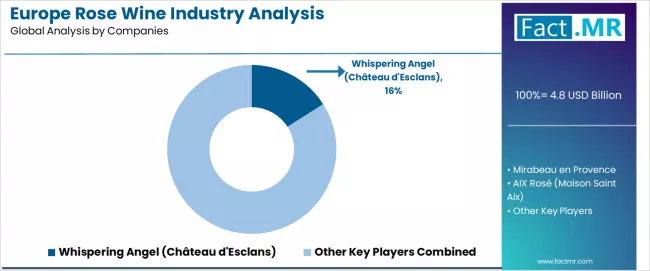
The Europe rosé wine landscape is defined by competition among international wine producers with European operations, specialized rosé wine makers, and diversified beverage companies offering comprehensive wine portfolios. Companies are investing in quality enhancement, wine optimization, production development, and brand support to deliver reliable, premium, high-quality rosé wine products across European retail and hospitality operations. Wine development, production expertise, and effective brand building are central to strengthening competitive positions and consumer loyalty across wine categories.
Whispering Angel (Château d’Esclans), French-based premium rosé specialist with extensive European presence, offers comprehensive rosé wine portfolios including premium still rosé systems with focus on quality reliability and brand coverage across European facilities. Mirabeau, established premium wine producer, provides advanced wine systems emphasizing quality innovation and lifestyle positioning.
AIX, specialized rosé wine producer, delivers proven wine solutions and reliable quality performance serving European consumer requirements. Minuty offers traditional Provence rosé systems with focus on authenticity optimization and heritage quality. Miraval provides diversified premium wine solutions emphasizing production reliability and quality effectiveness serving diverse consumer segments.
Recent key developments include Whispering Angel (Château d’Esclans) launching new premium rosé collection in 2024 with sustainable packaging and carbon-neutral production. Mirabeau introduced new organic rosé line in 2025 with enhanced flavor complexity and extended aging process. Miraval developed new limited edition rosé series in 2024 in collaboration with celebrity partnerships targeting younger demographics.
Key Players in Sales of Rosé Wine in Europe
Whispering Angel (Château d’Esclans)
Mirabeau en Provence
AIX Rosé (Maison Saint Aix)
Château Minuty S.A.S.
Miraval Rosé (Château Miraval)
Villa des Anges
Côtes de Provence (Provence Wine Producers)
Domaines Ott S.A.
Laurent-Perrier S.A.
Moët & Chandon S.A.
Scope of the Report
Item
Value
Quantitative Units
USD 6.9 Billion
Type
Still rosé, sparkling rosé
Grape Variety
Grenache, sangiovese, pinot noir, others
Price Range
Premium, mid-range, economy
Distribution Channel
Wine shops, supermarkets, online, restaurants
Regions Covered
Europe
Countries Covered
France, Italy, Spain, Germany, UK, Netherlands, Portugal
Key Companies Profiled
Whispering Angel (Château d’Esclans), Mirabeau, AIX, Minuty, Miraval, Villa Des Anges, Côtes de Provence, Domaines Ott, Laurent Perrier, Moët & Chandon
Additional Attributes
Dollar sales by wine type, grape variety, price positioning, and distribution channel, per capita consumption trends across France, Italy, Spain, Germany, UK, Netherlands, and Portugal, competitive landscape with international wine producers and specialized rosé wine makers, consumer preferences for wine quality and lifestyle formats, integration with sustainable production and organic certification initiatives, innovations in premium positioning and heritage authenticity, and adoption of quality wine solutions, specialized varieties, and brand enhancement capabilities for enhanced consumption access and lifestyle satisfaction across European retail, hospitality, and direct-to-consumer wine operations
Sales of Rosé Wine in Europe by Segments
Type :
Still Rosé
Sparkling Rosé
Grape Variety :
Grenache
Sangiovese
Pinot Noir
Others
Price Range :
Premium
Mid-range
Economy
Distribution Channel :
Wine Shops
Supermarkets
Online
Restaurants
Country :
France
Italy
Spain
Germany
UK
Netherlands
Portugal
Dining and Cooking