
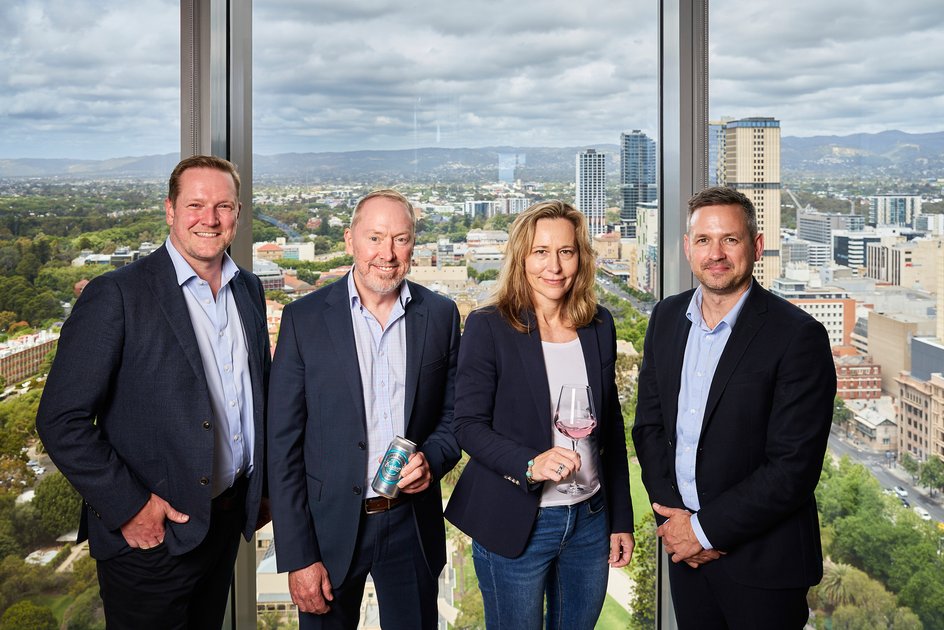
Treasury Wine Estates has united industry leaders from beer, retail, government, app development, and research to conduct one of the most comprehensive analyses of Australian NoLo to date.
This included two separate components, an industry roundtable and an industry research paper, both of which are aimed at developing an understanding of the future of no- and low-alcohol products in Australia and at furthering Australia’s current advantage.
Produced in partnership with the Australian Wine Research Institute, the Toasting the future paper outlines the strong opportunity for Australian NoLo to emerge as a global leader in the future.
This was supported by a roundtable moderated by Kate Racovolis, Editor of The Growth Agenda, and featuring South Australian Minister Joe Szakacs, Coopers Brewery’s Scott Harris, Endeavour Group’s Leigh Firkin, and Mind The Sip’s Ange Chappel, among others.
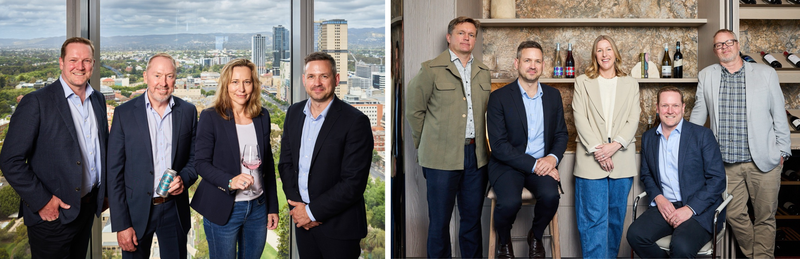
Some of the roundtable participants (L-R): Angus Lilley (TWE), Scott Harris (Coopers Brewery), Leigh Firkin (Endeavour Group), Kerrin Petty (TWE) || Toby Barlow (TWE), Kerrin Petty (TWE), Ange Chappel (Mind The Sip), Angus Lilley (TWE), Dr Wes Pearson (AWRI)
Both research investments coincide with new data revealing that 47 per cent of Australians have reduced their alcohol intake over the past 12 months.
According to TWE’s Chief Supply and Sustainability Officer Kerrin Petty, “the increasing appetite for NoLo wines is broadening the overall wine category, creating dual buying and consumption habits where people are picking up full-strength and NoLo wines in the same purchase.”
Continuing, Endeavour Group’s Head of Merchandise – Commercial Wine Leigh Firkin says the way consumers are purchasing NoLo in store is changing significantly as the segment continues to evolve.
“We’re seeing the moderation movement shift firmly from a niche behaviour to a mainstream expectation,” she said. “Customers aren’t browsing the NoLo category out of curiosity anymore; they’re going in with intent and seeking quality, flavour and real varietal character.”
Firkin also flags that consumers are not exclusively purchasing NoLo wines but are buying full-strength, low-strength and no-alcohol wines in the same shop: “We expect this blended consumption pattern to accelerate into 2026.”
This finding is backed up by global research from Nielsen IQ showing that more than 90 per cent of consumers buying non-alcoholic beverages simultaneously purchase alcoholic drinks.
It is also noted by Ange Chappel, CEO and founder of Mind The Sip, a mindful drinking app and network, who says “people are looking for an alternative to the ‘all or nothing’ approach.”
Ange Chappel also forecasts different consumer habits in the lead up to the upcoming festive trading period.
“Patterns show higher levels of moderation during ‘dry’ months and a growing shift among consumers conscious to reduce intake in the weeks leading into the Christmas and New Year period; however, alcohol consumption remains linked to social situations and the festive season.”
Offering insights from beer, the most advanced and fastest-growing NoLo segment across both emerging and established markets, was Scott Harris, Coopers’ Divisional Manager of Brewing Products.
According to Harris, the launch of Coopers Zero in August was a response “to changing lifestyle trends with exclusive Coopers research showing younger Australians (aged 18-44) are twice as likely to consume NoLo beverages compared to those aged 45+.” This research also found that nearly 50 per cent of beer drinkers have tried NoLo beer alternatives, with more consumers now drinking no-alcohol beer when compared to a year ago.

Minister Joe Szakacs and Marianne Duluk with NoLo roundtable participants
South Australian Minister for Industry, Innovation and Science Joe Szakacs says the state’s current positioning as a global leader in NoLo presents a significant opportunity for the sector moving forwards.
“If any industry isn’t live to the changing habits of their consumers, then they risk being left behind, which is why it’s pleasing to see our producers and our industry collaborating and investing in research, development, and advanced technology to pioneer great tasting lower-in-alcohol wines,” he said.
“Our global leadership in the no-and-low space will not go unnoticed and will reinforce our state’s reputation for innovation among the world’s premier producing regions.”
According to the Toasting the future report, which can be read in full here, half of the world’s regular wine drinkers are now moderating. This includes 27 per cent now not drinking at some occasions, 21 per cent switching to lower-alc options, and 16 per cent switching to non-alc options.
The report also forecasts significant shifts in the future behaviour of NoLo consumers, including changes to the place of purchase. According to the study, the number of consumers purchasing NoLo alternatives at their local bottle shop will shift from 23 per cent today to 79 per cent in the future. Similarly, purchases in supermarkets will increase from 23 to 72 per cent, from online retailers from 18 to 70 per cent, and in bars from 10 to 63 per cent.
Both the roundtable and the report outline the growing importance of NoLo as an essential option for people hosting social gatherings and events.
“Many NoLo products are purchased by hosts of a social gathering so they’re inclusive of all attendees and we expect this trend to continue into the festive season,” explains Kerrin Petty.
“Consumers are also increasingly ‘zebra striping’ and ‘damp drinking’ – trends gaining popularity as drinking habits change. Zebra striping is alternating between alcoholic and non-alcoholic drinks, while damp drinking is reducing alcohol consumption without cutting it out altogether.”
In June, Australia’s largest wine producer launched a new $15 million production facility within its flagship Barossa Valley site exclusively dedicated to low- and no-alcohol wines.
It has since unveiled Sorbet, the first new wine range to come from the facility. Developed for what TWE describes as “the modern drinker,” the collection spans six SKUs, each pairing a different fruit flavour with a different grape variety and bottled at 9% abv.
Kerrin Petty concludes: “Our award-winning winemakers are making the most of our state-of-the-art technology to create great-tasting wines that still have the varietal characteristics and ‘essence’ of their full-strength cousins. We’re seeing the improvement in quality translating into sales volumes – particularly in mid-strength alternatives.”
//
Read more about the new facility and Sorbet collection
Dining and Cooking