
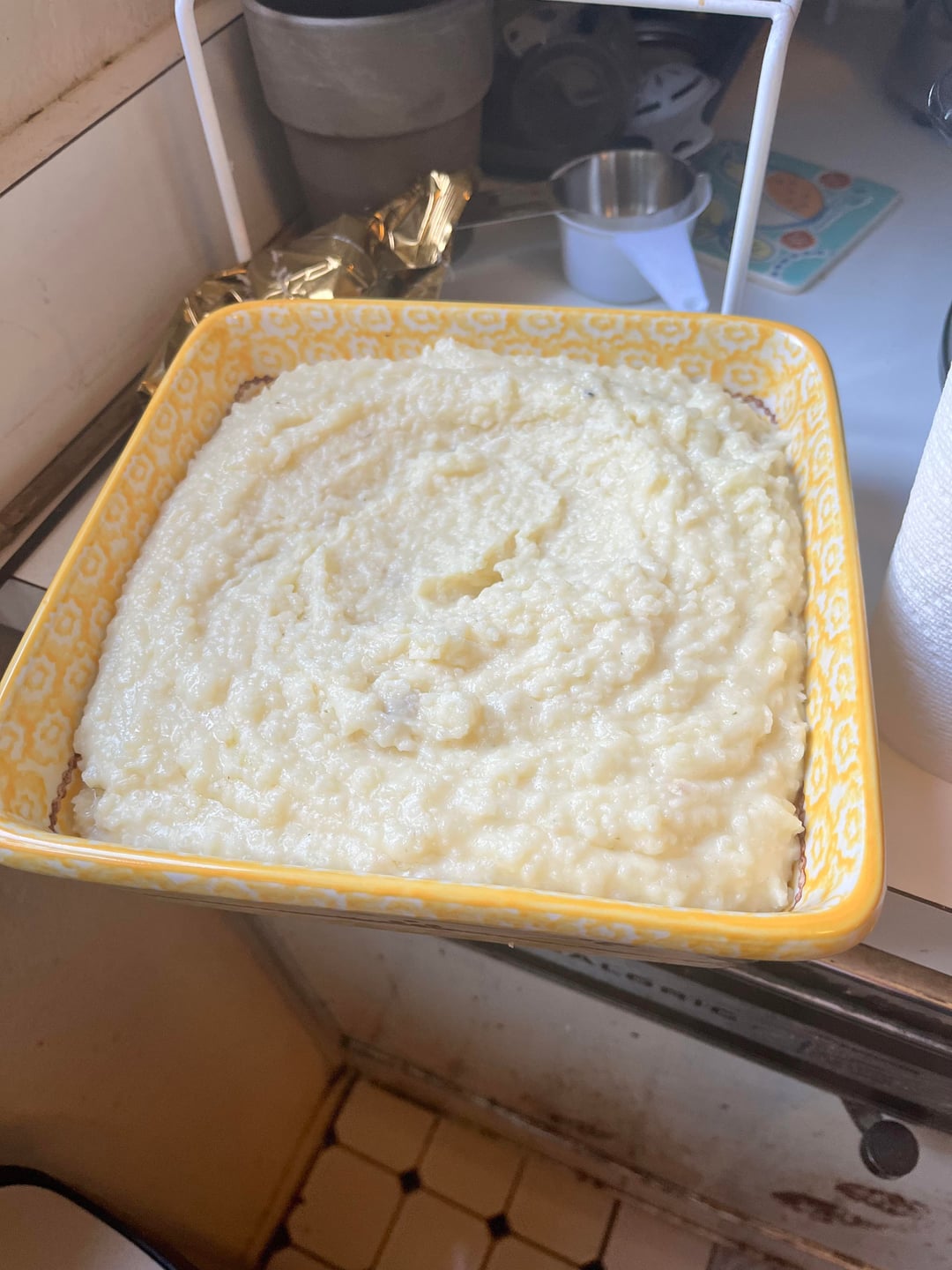
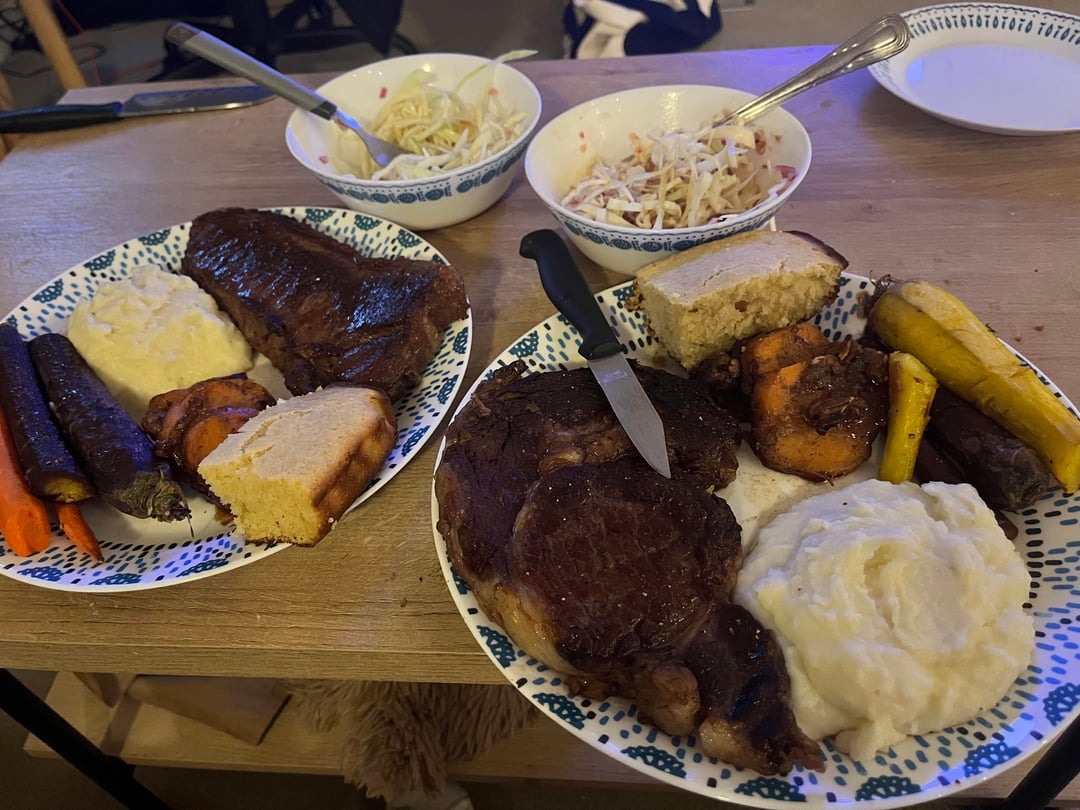
I’ve been wracking my brain since Thanksgiving and I can’t figure this one out. I’ve pretty much perfected my mashed potatoes recipe over the years (adapted from Kenji’s) and thought I’d save myself some stress by prepping them the day before. Alsooo, I read recently that some restaurant chefs swear by baked over boiled potatoes for mash.
I know I know, don’t experiment on Thanksgiving, but I really flew too close to the sun this time.
My mashed potatoes came out totally gritty and almost watery(?), but I feel like I took every precaution:
– used a potato ricer
– baked the roughly same-size potatoes whole to 210° internal temp and made sure they were all fork-tender
– used the same butter-to-potato ratio as always (tbh, it’s just this side of nasty)
– added extra dairy to make up for the lack of moisture from the bake.
The instructions in the Serious Eats article were pretty basic: just do the same process as always, stopping right before adding dairy, then heating it and mixing it in the day of.
The taste was delicious but the texture was so bad 🙁 For the 10lb of potatoes, I used 6.5 sticks of butter & heated a quart of heavy cream to just boiling a little at a time, folding it into my refrigerated mash + butter mixture. The dairy just wasn’t enough to heat up the potatoes, so I for sure ended up adding too much liquid and then, nail-in-the-coffin, overmixing.
The test run with the same technique but half the potatoes worked a lot better but were still grainy (see second pic).
The only things I can think of are that I used russets, maybe the potatoes weren’t evenly baked through, and maybe this technique just doesn’t work for this scale. Any ideas? Has anyone used this technique before with a lot of potatoes?
This would be such a time-saver if I figure it out, so I would really appreciate any pointers. Thanks!
https://www.seriouseats.com/make-ahead-mashed-potato-trick-11846900
https://www.seriouseats.com/ultra-fluffy-mashed-potatoes-recipe
by nefariousail
21 Comments
I had a similar result before using baked russets for mashed potatoes, very gritty after ricing. I assumed at the time that they had been unevenly baked. I have also never had a lot of luck maintaining creamy texture after they cool down overnight.
I wish I had better advice for your problem if you want to try this technique again. What I did this year is make them fully about 3-4 hours before the planned dinner and kept them warm in the crock pot. I was very happy with the result of this and it still kept the stress out of the last hour before dinner.
Not a lot of insight but 6.5 sticks of butter made me 😳
I have no answers for you, but I bake russets all the time for mashed potatoes and have never had this problem.
Potato starch breaks down after a night in the fridge. It kills the texture of them. It’s best just to make mash the day of. It’ll always be better.
That much dairy, Robuchon style needs a waxy potato
I can’t answer all your questions, but I will say that the only time I’ve had grainy mashed potatoes was when I undercooked the potatoes. They’re soft enough that I can pierce them easily with a knife, but underdone enough that what comes through the ricer is still too hard to be called mashed.
Why did you go to just 210? That honestly looks like you were aiming for just done. Is there a reason you were so particular about that?
This is the make ahead recipe you need!
https://www.onceuponachef.com/recipes/creamy-make-ahead-mashed-potatoes.html
Guess I’m lucky, since I’ve been making Tyler Florence mashed potatoes for the past decade and they are always delicious. I skip the ricer and use a stand mixer too. I can make them 3 – 4 days ahead and same texture and flavor. They have never lasted longer than that because they are gone. Everybody raves about them and I usually double the recipe since they don’t last. Anyway, give them a try unless you like experimenting.
I always use yellow potatoes for mashed potatoes, seems to come out the creamiest. I only use 1 stick of butter for every 5 lbs though and I eyeball the milk.
I think you undercooked them. I always bake mine, I use smaller ones in order to load and serve the potato skins for dinner, and I do add the butter and salt right away. Then I reheat the next day and add half n half.
I don’t have insight however I have made mashed potatoes with a consistency I didn’t love in the past, and if you still have them and don’t want them to go to waste hit them with an immersion blender and enjoy a delicious potato soup. (I just learned on Thanksgiving that miso adds a wonderful depth to mashed or souped potatoes as well)
I didn’t follow the Serious Eats recipe for Thanksgiving but I also attempted make ahead mashed potatoes with great results.
I’d recommend trying the ‘casserole’ directions with the sour cream / cream cheese. I’m not sure if I can link other recipe sites here but the one I used was very similar to this option and I’d definitely do it again.
Can’t speak to the recipe but I can share mine
– 3lb red potatoes quartered, just barely fork poke through ready after cooking
– 4 sticks or so butter
– 1 cup sour cream or so
– 2 tbsp regular ranch
– 1/2 salt and 1/4 tbsp pepper
[ Removed by Reddit ]
Are we not going to discuss the dishes hanging over the counter and table?
I make mashed potatoes in advance in large quantities and freeze them and deli cups to be reheated for meals. I’ve been doing this for years and I get a great texture out of my mashed.
Switch to a Yukon gold potato if available. Russets aren’t the best for this style of potato.
Blend the dairy in right after ricing. Don’t be shy with salt.
One piece of advice I’ve recently learned which is up to my potato game is that you should stir the butter into the potatoes first make sure it’s evenly incorporated and then add any liquid dairy. You’re going to add. Doing it this way ensures that the butter surrounds the starch molecules and gives you a really nice creamy mash.
Here’s one of the things I think you’re missing. You have to be quite aggressive in the reheat. When I take my mashed potatoes out of the freezer, if I just allow them to come to room temperature, they will actually separate and become grainy.
So when I microwave them, I do it at a high temperature until the potato actually almost boils stopping after about two minutes for a 500 ML deli cup in the microwave to give them a really thorough stir and then giving it another three minutes. Essentially you’re cooking the potato and remixing the starches.
Best of luck. Don’t let anybody tell you that it’s not OK to make mashed potatoes ahead of time. Chefs do it all the time.
I think baking them and ricing them and then cooking them really messed with the texture. Magic happens while the potatoes are initially hot.
What is the purpose of withholding the dairy the day before? Why not just fully make mashed potatoes and then just reheat them with a splash of milk/cream the next day?
When I make mash in advance, I don’t put the milk in until I reheat them, so when I heat it up it whips better
Cold potato and hot dairy has to be the problem. Same effect as hot potato and cold dairy.
I think the dairy and residual water in the spud doesn’t incorporate correctly. Then when they are warmed it all kind of leaks out into a watery mess.
Need to mix warm butter with warm potatoes
If you’ve made mashed potatoes with a ricer before and they came out smooth, your answer probably lies with someone else’s comment. However, I had trouble for ages with grainy mash every single time I used a ricer no matter what I did. Of course if I didn’t use one, my mash wasn’t grainy but I was always left with lumps.
I tried scraping them through a drum sieve, which worked, but is one of my least favorite things in the world to do. In the end, I found that cooking the potatoes until they were extremely tender was crucial. Then, after passing them through a ricer once, feeding the resulting mash back through the ricer a second time got rid of nearly all the graininess with very little added effort.
That’s the method I now use with golden potatoes like Yukons. Russets are so fluffy that it almost makes sense to me to keep them rustic and lumpy by mashing them the traditional way by, well, mashing them. But I can’t imagine a second pass through a ricer would work their starches too much if that’s the kind of potato you prefer.
As far as reheating goes, I know mashed potatoes are supposed to be served the day of, and I can concede that’s when they are at their absolute best – but any mash that’s fantastic when it comes off the stove still tastes pretty great to me for a few days after, even out of the microwave.