
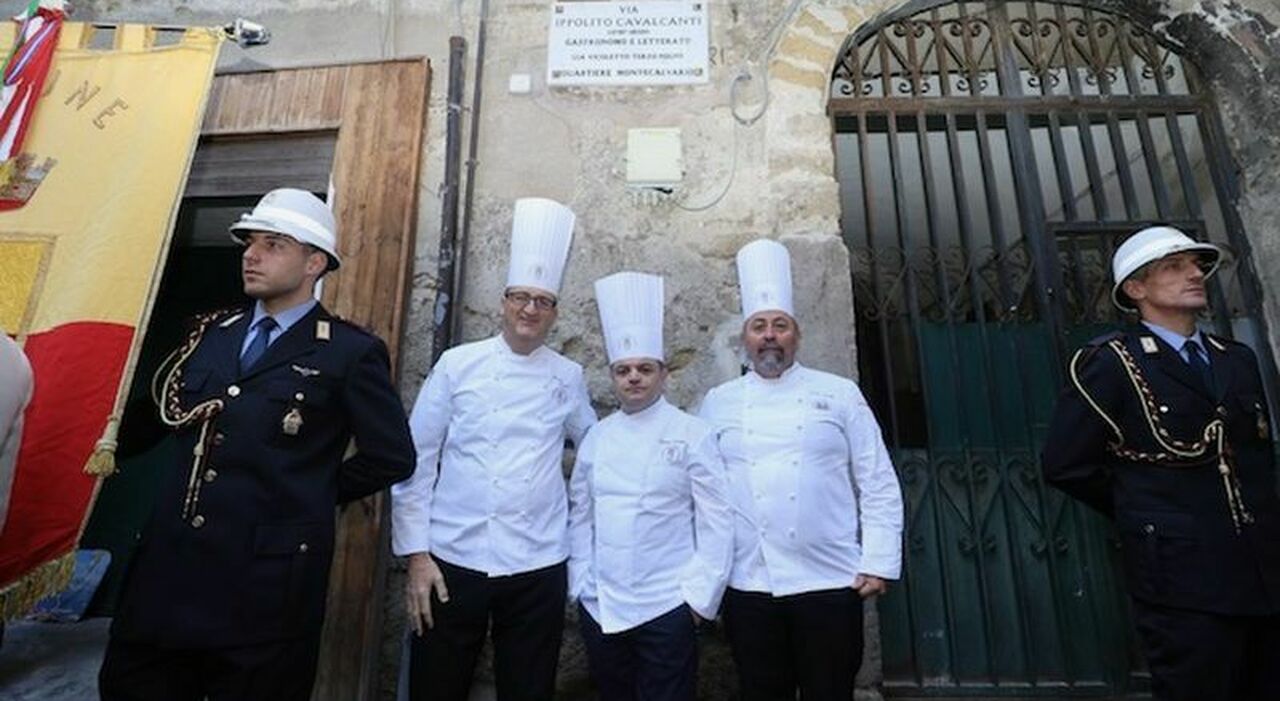
 Naples pays homage to its culinary tradition with a symbolic yet meaningful gesture: three alleys in the Montecalvario…
OFFERTA ESCLUSIVA
Leggi tutto il sito gratis per 2 mesi, poi 29€ per un anno
ABBONATI ORA Già abbonato? Accedi qui!
Tutti gli articoli del sito, anche da app Approfondimenti e newsletter esclusive I podcast delle nostre firme Già abbonato? Accedi qui!
– oppure –
Sottoscrivi l’abbonamento pagando con Google
Abbonati
Promo Flash
Leggi questo articolo e tutto il sito
Tutti i vantaggi:
Tutti gli articoli del sito, anche da app Approfondimenti e aggiornamenti live Le newsletter esclusive
OFFERTA SPECIALE
OFFERTA SPECIALE
MENSILE
4,99€
1€ AL MESE
Per 3 mesi
SCEGLI ORA Naples pays homage to its culinary tradition with a symbolic yet meaningful gesture: three alleys in the Montecalvario district will now bear the names of Antonio Latini, Vincenzo Corrado, and Ippolito Cavalcanti, key figures in the history of Neapolitan cuisine. The plaque unveiling ceremony took place in the presence of Deputy Mayor Laura Lieto, Tourism Councillor Teresa Armato, and Councillor Toti Lange Consiglio, the initiative’s promoter. Masters not only in the kitchen but also as authentic disseminators capable of recording the culinary experiences of their time, these three literary chefs, who lived between the 17th and 19th centuries, profoundly innovated Mediterranean cuisine and testify to the roots of an extraordinary gastronomic heritage. After the dedication, the celebratory publication ‘The Literary Chefs, for the Glory of Neapolitan Cuisine,’ curated by the Neapolitan Academy of Baccala and Salvatore Lange Consiglio, was presented at the Casa della Cultura di Palazzo Cavalcanti. “It is a recognition of the history of an extraordinary culture,” declared Deputy Mayor with responsibility for Toponymy Laura Lieto, “which is not only the culture of the food we eat but also the culture of our relationships, affections, our health, and what we bring to our tables every day. Naming three streets in the Spanish Quarters after three great chefs, who were also intellectuals of Neapolitan cuisine, means paying homage to this long history and a heritage that continues to speak of us. This is intended as a tribute to our culture, one of the reasons why our city is renowned worldwide. It is a recognition of the great factors of attraction we possess, but above all of the deeper, necessary, and emotional dimension of our gastronomic and cultural identity.” “These plaques,” declared Councillor for Tourism and Productive Activities Teresa Armato, “pay homage to three geniuses of Neapolitan cuisine and remind citizens and visitors how our gastronomy is living culture: tradition passed down, art that unites families, expression of love and, at the same time, a powerful economic and tourist engine. Naples grows also thanks to its restaurants and chefs, who innovate without ever losing the connection to the authentic flavors of our history. We will continue to value and protect this extraordinary heritage because Neapolitan cuisine is not just taste: it is identity, it is beauty, it is part of our art and our collective memory.” “I am among the promoters,” declared City Councillor Toti Lange, “of naming three streets in the Spanish Quarters after Vincenzo Corrado, Antonio Latini, and Ippolito Cavalcanti, three great chefs and literary figures who laid the foundations of Neapolitan cuisine as we know it today between the 17th and 19th centuries. We chose the Spanish Quarters because they represent a symbolic place for the rebirth of Naples, much loved by tourists who come here every day to taste the delicacies of our tradition. Neapolitan cuisine, in fact, is a privileged gateway to our culture: through a dish, we can tell the history, richness, and uniqueness of the Neapolitan heritage. On the occasion of the dedication, a publication was created, promoted by the Neapolitan Academy of Baccala, to spread the knowledge of these three protagonists who contributed decisively to the gastronomic—and not only gastronomic—culture of our city.”
© ALL RIGHTS RESERVED
This article is automatically translated
Read the full article on
Il Mattino
Dining and Cooking