
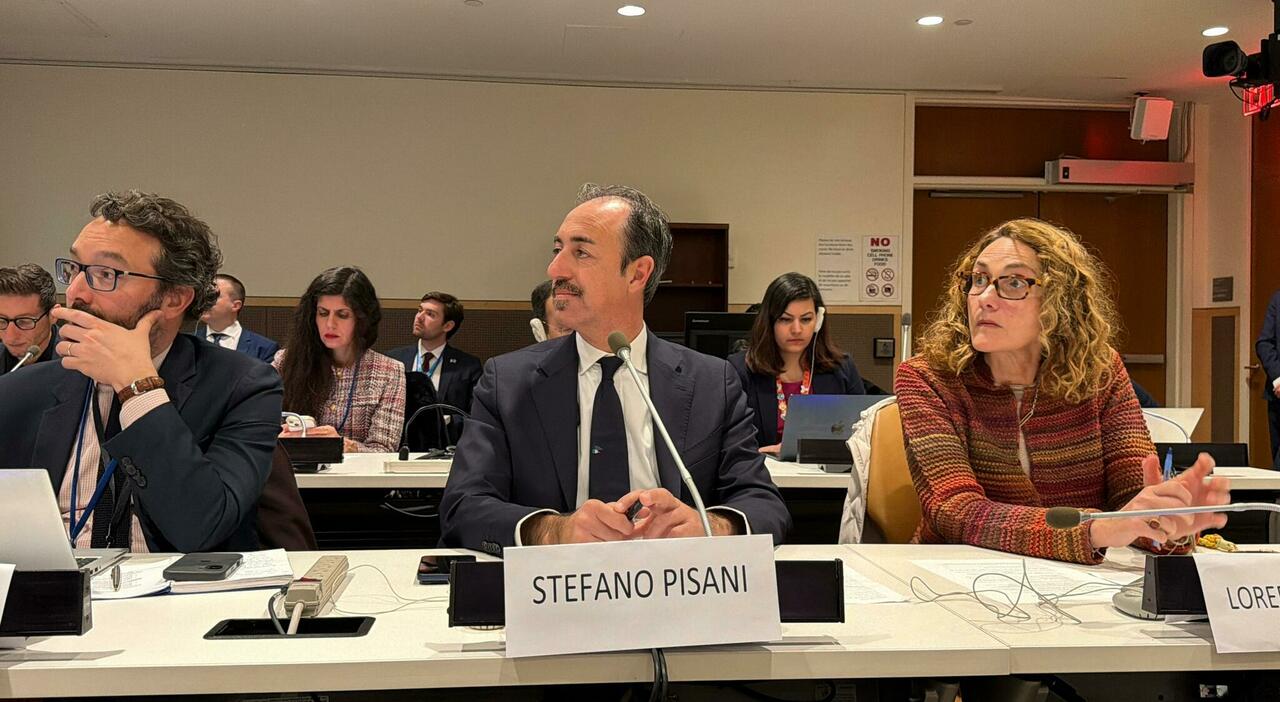
In New York, successful negotiations concluded on the resolution establishing November 16 as the International Day of the Mediterranean Diet, now submitted for formal adoption by the United Nations General Assembly. The announcement was made by Ambassador Maurizio Massari, Italy’s Permanent Representative to the United Nations, during the event “Mediterranean Diet: Science, Sustainability, and Cultural Heritage,” organized by Italy, Lebanon, and Morocco at the Glass Palace. Massari recalled how “science and academia have widely demonstrated that the Mediterranean Diet is a healthy lifestyle, promoting health, well-being, and resilience, reflecting deep cultural and identity values. A message that extends far beyond the Mediterranean, valuing the role of traditional diets, local cultures, and territorial products in sustainable development and future food systems.” The event was attended by permanent representatives from FAO and UNESCO, along with experts like Antonia Trichopoulou, considered the “scientific mother of the Mediterranean Diet,” recently appointed by the Municipality of Pollica as Ambassador of the Mediterranean Diet in the World, and researchers Loredana Quadro and Harini Sampath. For the Emblematic Communities of the Mediterranean Diet, the Mayor of Pollica, Stefano Pisani, Coordinator of the Permanent Secretariat of the Emblematic Communities, spoke. Pollica, chosen by Ancel Keys for his studies and home to the world’s first Living Museum of the Mediterranean Diet, is today an international reference center for the protection of this cultural heritage. In the past 15 years, thanks to the Angelo Vassallo Study Center, the Municipality has intensified scientific and institutional collaborations, leading the work of the Emblematic Communities for the safeguarding and transmission of the Mediterranean Diet since 2022. “The Mediterranean Diet is not just a dietary model: it is a vision of the future that integrates public health, equity, and sustainability. It is a philosophy of life built every day in our communities, fields, markets, kitchens, and on tables. The recognition of the International Day by the UN represents a decisive step in transforming this heritage into a strategic lever for global food systems. We thank FAO for supporting our proposal and UNESCO for initiating a path that today finds new momentum. Pollica will continue to put its experience, history, and vision at the service of the Mediterranean and the world, for shared governance that unites health, sustainability, and cultural identity,” declared Mayor Pisani in his speech at the United Nations.
© ALL RIGHTS RESERVED
This article is automatically translated
Dining and Cooking