
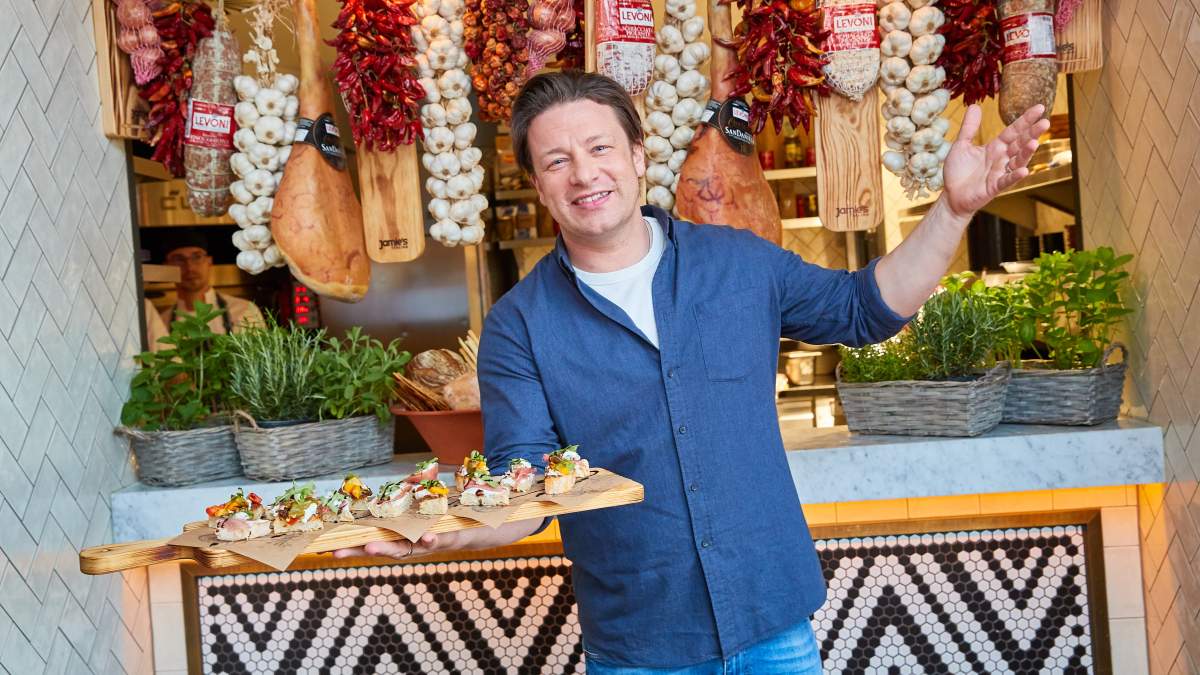
Jamie Oliver is resurrecting his collapsed Italian restaurant chain, mounting a return to the high street despite what he described as one of the most hostile trading environments the hospitality sector has ever faced.
The celebrity chef, whose chain of Italian-themed eateries fell into administration six years ago, is reviving the Jamie’s Italian brand under a franchise partnership with Brava Hospitality Group, the owner of Prezzo.
Oliver plans to open the first site in Leicester Square in London in February and, if the launch goes well, he intends to open four new restaurants a year.
• No such thing as too much butter — turkey dinner, the Jamie Oliver way
“As a chef, having the chance to return to the high street is incredibly important to me,” Oliver, 50, said. “In theory it’s not the easiest time to return but conversely I think it’s the perfect time. I believe the mid-market needs excitement, surprise and delight and that’s exactly what I am planning on delivering.”
Oliver is relaunching in the midst of what he described as a “perfect storm” of economic pressures: soaring food inflation, utilities that remain far above pre-pandemic norms, labour shortages that have pushed wage bills to record levels, and consumers who are eating out less frequently and trading down when they do. He told Bloomberg, which first reported the development, that the mid-market was facing a “horror show” of higher costs and fragile demand.
Yet he argued that the market is ready for a reset and for a more disciplined version of the Jamie’s Italian brand. “I think the public wants freshly made delicious food at a reasonable price with an award-winning kids menu,” he said. “Eating out is a treat but I believe it should offer value for money with higher welfare sourcing.”
Jamie’s Italian first came onto the scene in 2008, when Oliver was just 33 and at the peak of his influence as Britain’s best-known advocate for healthier eating. The brand promised rustic, affordable Italian dishes and grew rapidly, eventually reaching 42 sites across the UK. But behind the scenes, the rapid expansion masked deep structural problems.
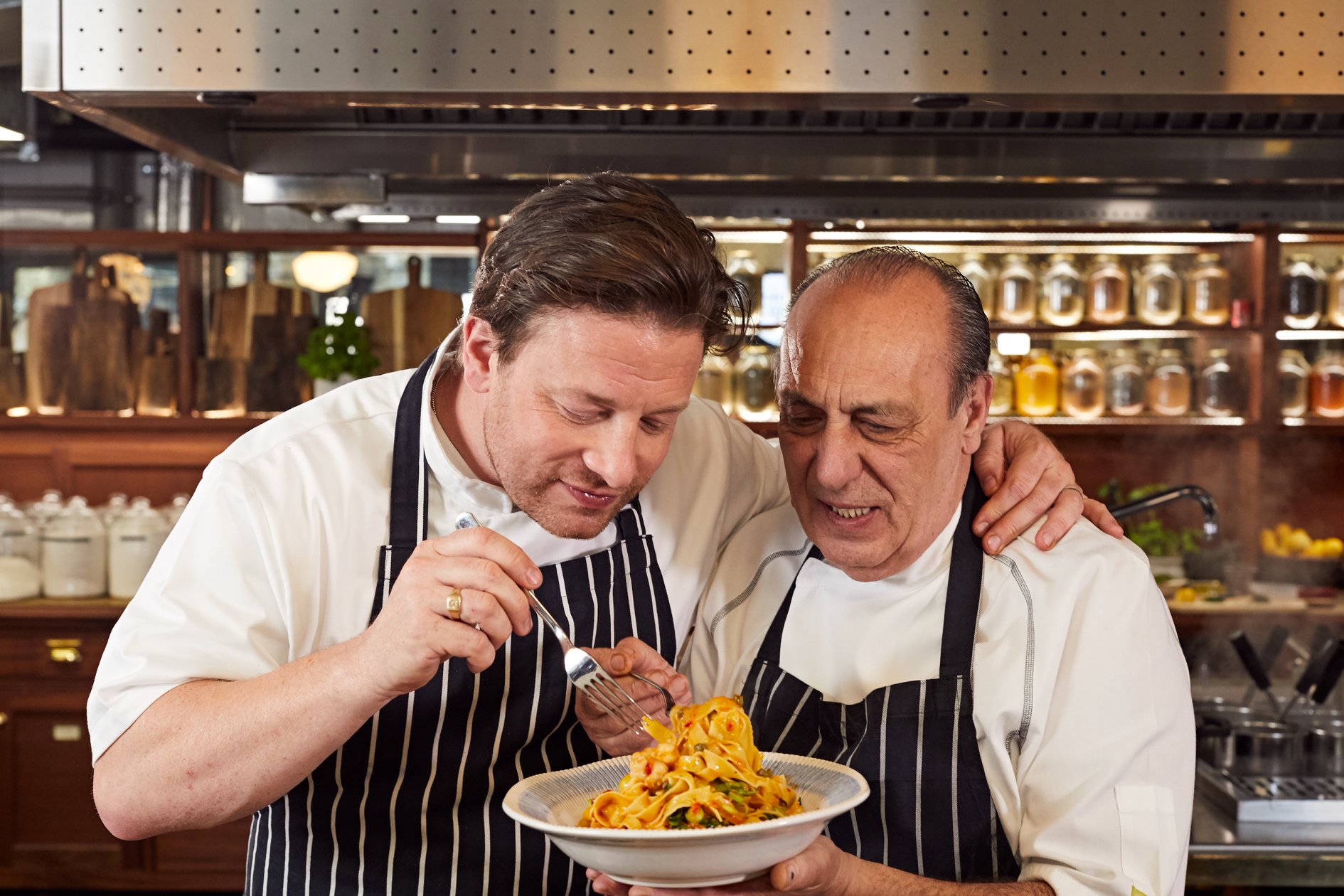
Oliver with his colleague and friend the Italian chef Gennaro Contaldo
The business collapsed into administration in 2019, shutting 22 restaurants and cutting about 1,000 jobs. Oliver later acknowledged that the chain had been flawed “from day one”, admitting he had been “conceptually thick” on the numbers and had delegated too much control over the basics, from profit margins to cost management.
The group had taken on expensive high street sites and struggled to maintain consistency as it grew. Meanwhile, the entire mid-market casual dining sector was suffering from oversupply, rising food costs linked in part to Brexit, and higher taxes and wage obligations. Jamie’s Italian sites outside the UK were not affected by the 2019 administration, and the brand continued to operate overseas.
“We’re going to take it slowly, but we’re back,” Oliver said of the relaunch. He will take a more hands-on approach this time, approving locations, overseeing the look and feel of the restaurant, and taking responsibility for menus and sourcing. “All the effort, time, love and attention will be the same as before,” he said, “but with the right foundations in place.”
• Jamie Oliver’s annual payout drops £2 million as profits fall
This arrangement is structured to protect Oliver financially by shifting the operational risk and investment burden onto the franchisee.
Oliver, whose reputation has weathered its own highs and lows, added: “This is the moment to get it right. And I’m determined that we will.”
Kate Nicholls, chair of UKHospitality, the trade body, said: “New openings are always positive for Britain’s high streets, which are under even more threat following the budget last week.”
Dining and Cooking