
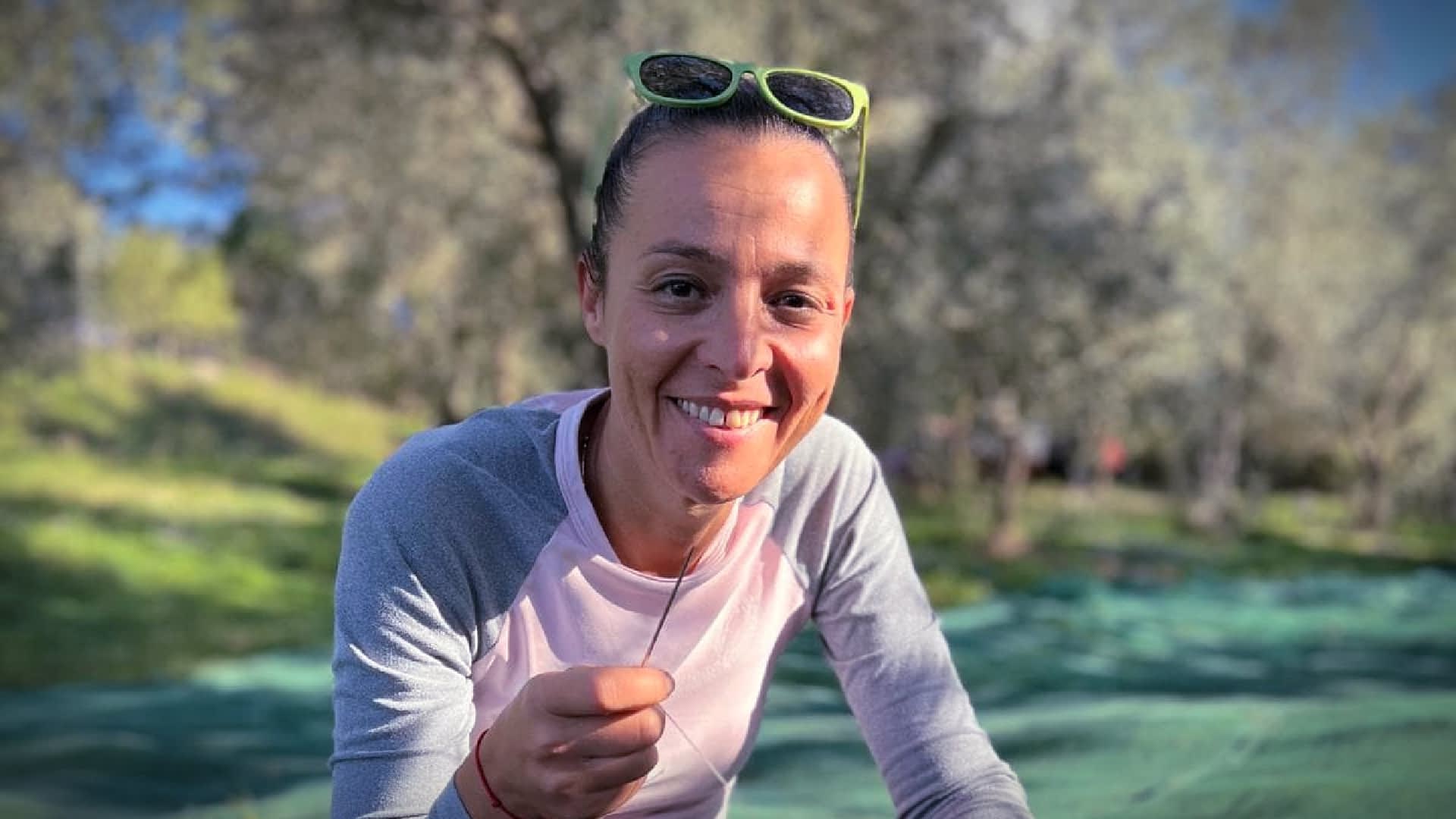
Summary 
Alessandra Nicolai founded her company in Lazio, Italy, guided by a commitment to sustainability and quality, producing organic extra virgin olive oil that has won five consecutive Gold Awards. Despite challenges such as climate change and labor shortages, Nicolai finds immense rewards in producing olive oil and has expanded into natural wine production on her family’s property.
Lake Bolsena is framed by rolling hills where olive groves, vineyards and vegetable gardens thrive on fertile volcanic soil. As cultivated land yields to natural vegetation, centuries-old oaks, beeches and chestnuts rise, shaping the distinctive atmosphere of Tuscia, once the heartland of the Etruscans.
The difficulties are many, but the satisfactions make me believe that producing extra virgin olive oil is the best decision I ever made.- Alessandra Nicolai, Azienda Agricola Alessandra Nicolai
On her family’s property in this northernmost corner of Lazio, Alessandra Nicolai founded her company, guided by a commitment to sustainability and uncompromising quality. Though still young, the project has been remarkably successful, with her organic extra virgin olive oil, A1980, earning five consecutive Gold Awards at the NYIOOC World Olive Oil Competition.
The oil’s harmonious profile — marked by notes of artichoke and freshly cut grass — stems from a careful on-field blend of Caninese, Leccino, Frantoio and Moraiolo olives grown on the southeastern banks of the lake in Montefiascone.
“Can you imagine that harvesting olives was once one of the things I disliked the most?” Nicolai said. Before dedicating herself to agriculture, she worked in an office, far removed from daily farm life, helping her family only occasionally.
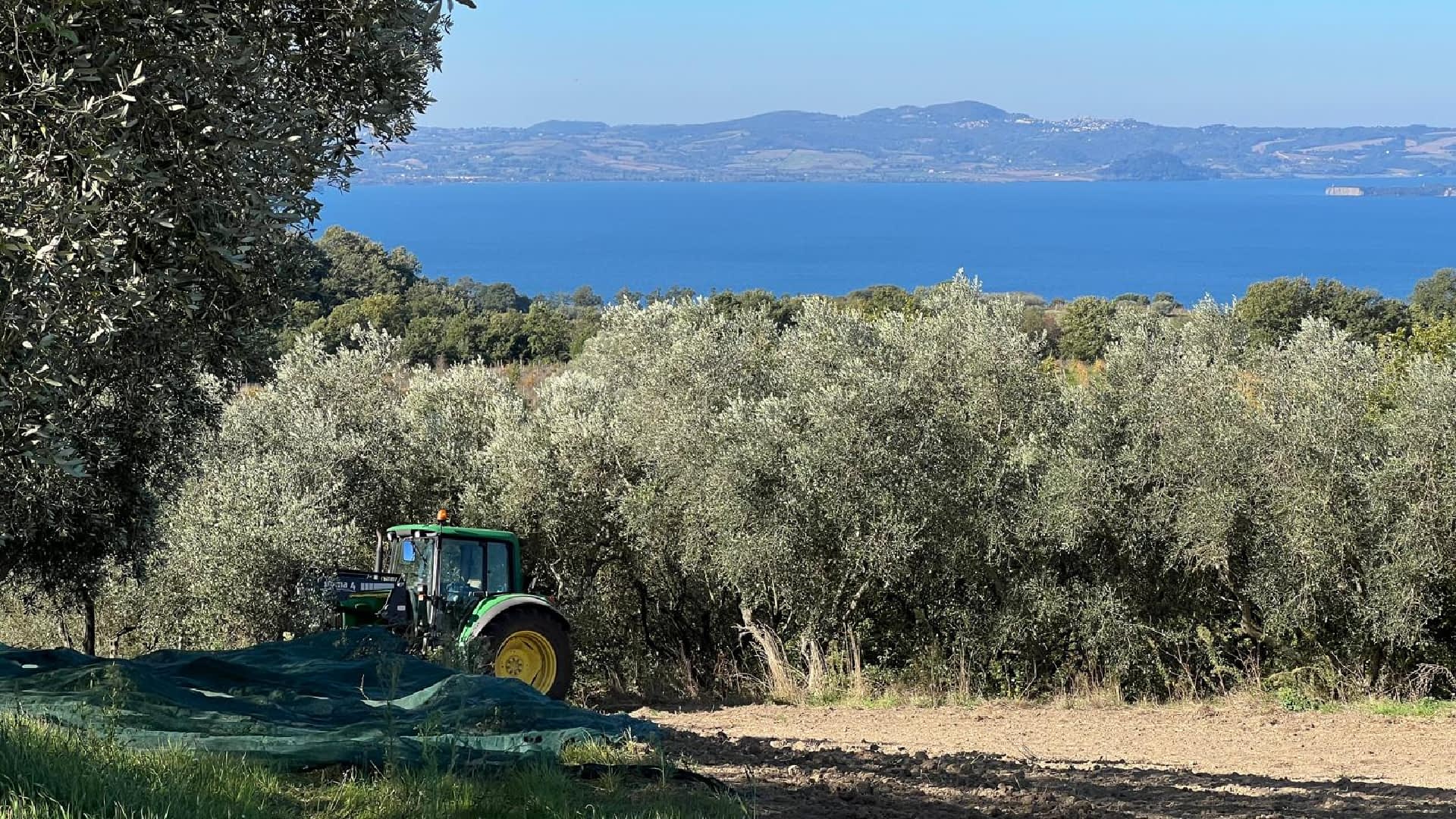 The organic blend A1980 is sourced from groves nestled on the southeastern banks of Lake Bolsena.
“During harvest, my father and grandmother would make my sister and me pick olives on weekends, the only days I had off,” she recalled. “I spent all my free time toiling in the grove, which felt like a real nuisance.”
Her grandmother often retold the story of Nicolai’s birth in October 1980, which coincided with a grape harvest in the family vineyard. That day, she said, she picked the largest bunch of grapes of her life.
“Looking back, that feels like a sign — like I was meant to be connected to the land,” Nicolai said. “Even with excellent conditions at work, I began to feel breathless within those four walls. I asked myself what the best thing in my life was, and I pictured that land. That’s when I knew I needed to change. My mother was worried I was leaving a secure job, but I resigned.”
“I remember waking up those first days and realizing I no longer had to clock in,” she said. “But from the very first morning I set out for the countryside, I knew there was no greater bliss than being there.”
In the beginning, Nicolai worked alongside her father and continued the family’s longstanding practice of supplying olives and grapes to the local cooperative.
“The property was entrusted to my father by my grandfather, who inherited it from his father,” she said. “Both my great-grandparents received some plots from the state after the First World War. They had to carry out major reclamation because the land was full of stones and unsuitable for cultivation. Thanks to their efforts, we now enjoy exceptional, mineral-rich soil.”
The skyline of Montefiascone — home to the estate — appears on the label of her extra virgin olive oil. Beneath it sits the name A1980, which Nicolai devised by combining her initial and birth year. The minimalist design reflects her straightforward nature and honors the courage it took to chart her own path.
Today, she manages the farm with her husband, Marco Crisostomi, while her father, Valerio, remains a constant source of advice. The farm has been organic since his conversion in the 1990s.
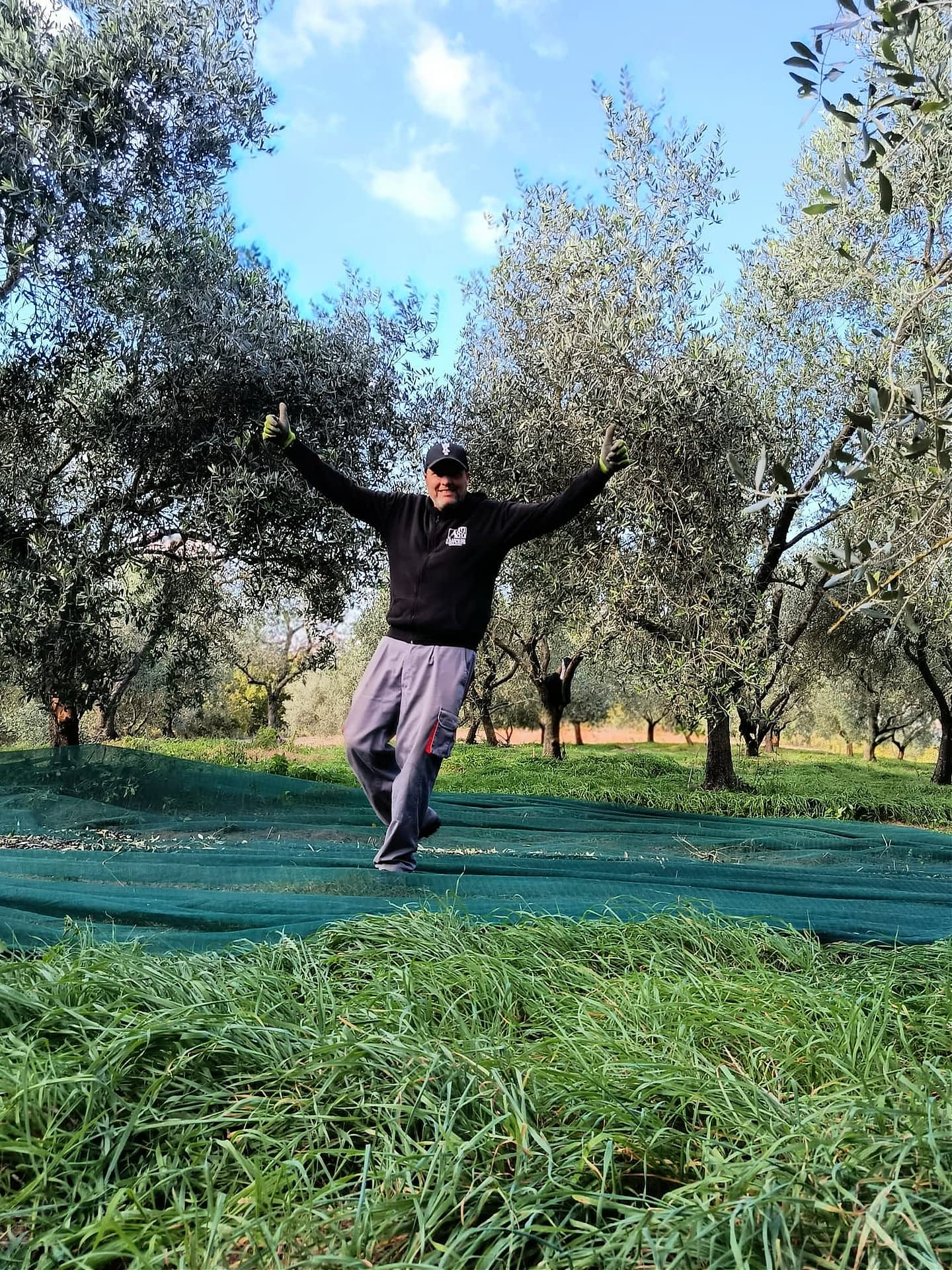 Marco Crisostomi, Alessandra Nicolai’s husband, motivated her to focus on quality and helps manage the farm.
“When my father first had the option to use pesticides and other invasive treatments, he instead chose a sustainable approach and relied only on organic products,” she said. “He truly pioneered organic farming in the area. His foresight left us pristine soil, which we continue to manage responsibly because we believe it is the only viable way to farm today.”
Over time, Nicolai increasingly focused on olive oil. With her husband’s encouragement, she set higher quality standards.
“Marco quickly grew passionate about olive oil. He began rigorous training and drew me into this world,” she said. “A whole new universe opened up. So we decided to produce a premium oil and said, ‘Let’s make it and see what happens!’”
They began bottling their own oil, spending the first season experimenting until they achieved the quality they sought.
“The first gold at the 2021 NYIOOC is an award I will never forget,” she said. “Submitting the sample, I felt like a complete novice. I was hesitant, but encouraged by industry experts — who later became friends — we gave it a try. And we succeeded. Since then, it has been a crescendo. More and more people appreciate our product, and that motivates us to continue.”
Growing demand prompted the expansion of their groves. The company acquired new plots in Viterbo, bringing the total to about 1,300 trees.
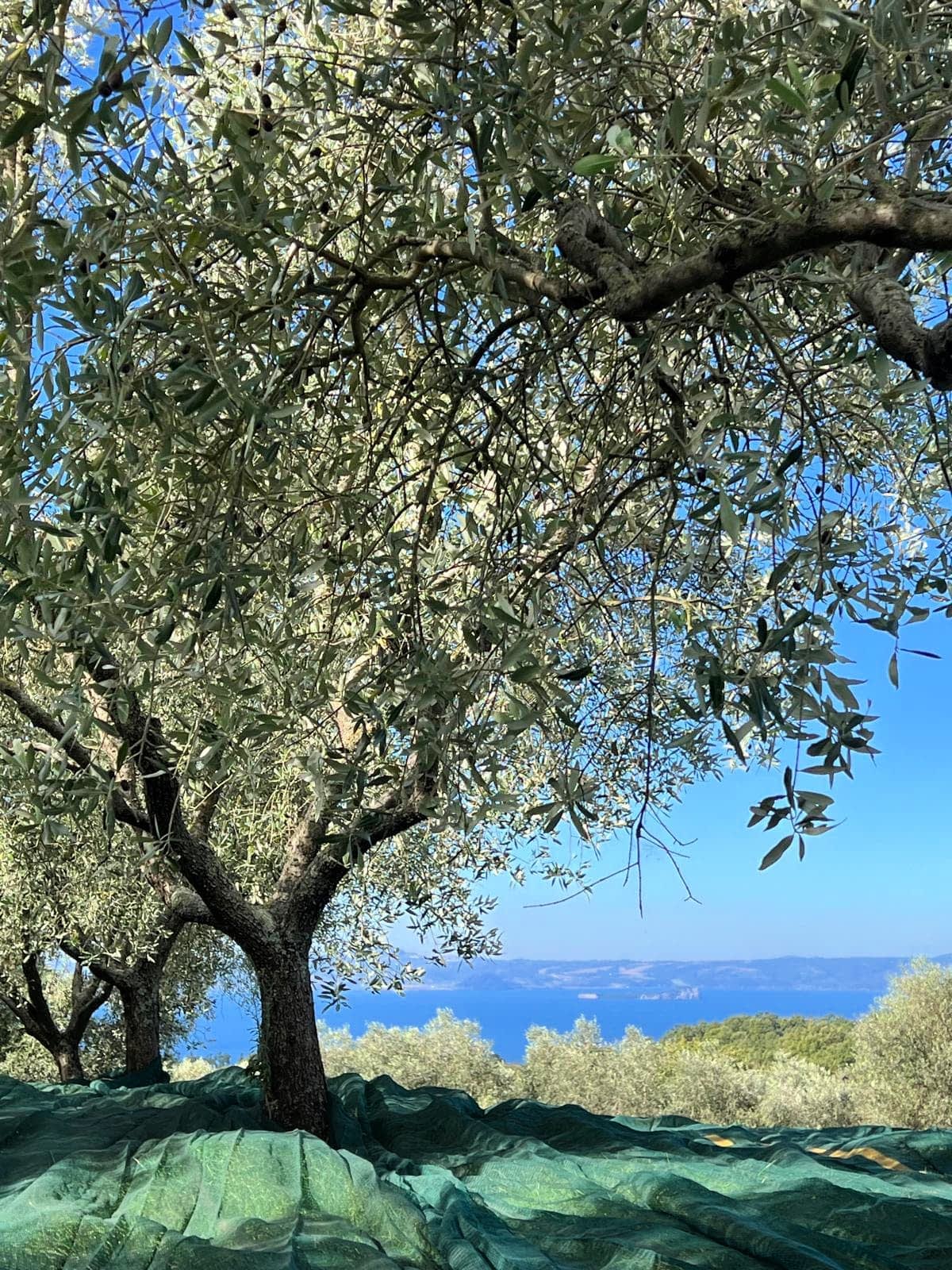 The organic blend A1980 is produced on the hills overlooking Lake Bolsena.
“We are still small, but slowly expanding,” Nicolai said. “Last year we added a hundred trees, this year another three hundred Caninese plants, and we plan to plant more.”
The company recently ventured into natural wine production. Two lines are currently available: a red crafted from Merlot and Sangiovese, and a white made from Trebbiano, Malvasia and Rossetto. A rosé will debut next year.
“We love this new adventure,” she said. “Extra virgin olive oil and what I like to call ‘naturally produced’ wine go perfectly hand in hand. As with our oil, we aim to highlight native grape varieties and honor the territory.”
Their white wine is named Lisandrone, after her great-grandfather Alessandro, the estate’s first owner. “He was known in the village for his singular, unconventional personality,” she said. “It is thanks to him that I can do what I love today, and this is my way of honoring him.”
Nicolai noted that recent olive oil crop years have brought mounting challenges. Extreme weather linked to climate change has intensified bureaucratic hurdles, rising production costs and labor shortages. Even so, she said the rewards continue to outweigh the difficulties.
“My rational side tells me it’s all incredibly difficult. Climate change is a real threat, and every year is different. Labor is hard to find, and the challenges are many,” she said. “Yet my heart says I love what I do. The rewards are immense. People genuinely appreciate our oil. Someone returns after some time and says, ‘I’ve changed, but I like your oil more.’ Another says, ‘I’ve heard about your oil and want to taste it.’ When they try it and look amazed by what they discover — that is priceless.”
“We have also met extraordinary people in this sector,” she added. “And then there is the joy of working in nature. This morning the fresh air, the sun and the view of the lake from our grove were stunning. Moments like these make up for everything. The difficulties are many, but the satisfactions make me believe that producing extra virgin olive oil is the best decision I ever made.”
Dining and Cooking