
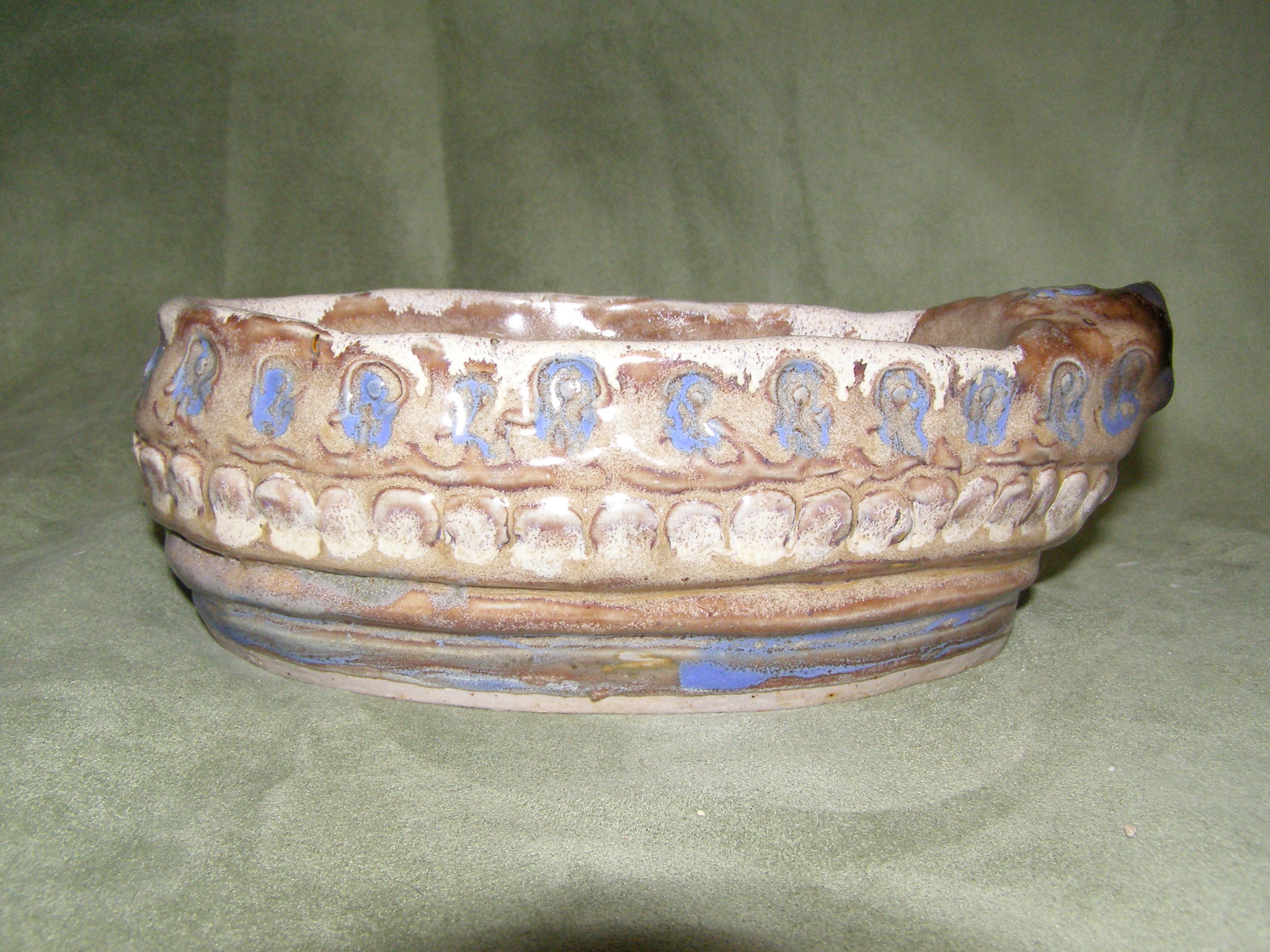
An ancient olive oil lamp. Credit: RNCB / Flickr / CC BY-NC 2.0
Olive oil has long been viewed as a cornerstone of life in ancient Mediterranean societies. It was used for cooking, lighting, and even in religious ceremonies. For decades, archaeologists have studied traces of olive oil left behind in ancient pottery to better understand how people lived, traded, and farmed. But recent research from Cornell University now suggests that many of those conclusions may be on shaky ground because olive oil may not survive in ancient Mediterranean soil.
The study reveals that olive oil does not hold up well in the types of soils found across much of the Mediterranean region. These soils, often high in calcium and naturally alkaline, tend to break down the key chemical markers that help scientists identify olive oil. As a result, some ancient pots believed to have held olive oil might have actually contained different plant-based substances.
This discovery could reshape how experts understand ancient economies, diets, and trade routes. It challenges the idea that all oil traces in pottery automatically point to olive oil use, and it raises fresh doubts about several key assumptions in Mediterranean archaeology.
Olive oil may not survive in ancient Mediterranean soil
The Cornell research team found that plant oils break down much faster in certain types of soil. In particular, the calcareous soils common in countries such as Cyprus, Greece, and parts of Italy speed up the loss of chemical indicators that point to olive oil. When those chemical clues disappear, experts can no longer say for sure what was once stored in a pot.
Cornell researchers found that olive oil breaks down fast in Mediterranean soils, making it hard to detect in ancient pots. Many long-held archaeological claims may be on shaky ground.#oliveoil #mediterranean pic.twitter.com/EHE7JnaBZt
— Tom Marvolo Riddle (@tom_riddle2025) December 8, 2025
Until now, researchers have relied on these chemical residues to support broad claims about how people in the past lived and traded. If olive oil was involved, it often signaled wealth, commerce, and connections across regions. But the new findings show that even when olive oil was present, it may leave no trace behind if buried in the wrong type of soil.
Cyprus served as a key testing ground for this study. The island has long been considered a central part of ancient Mediterranean trade networks, and its soils represent conditions found across the region. The researchers tested how olive oil residues behaved in this environment compared to other soil types, including samples from New York with different chemical properties. The results were clear: In Mediterranean soil, olive oil markers faded quickly and became hard to identify.
Experts urged to rethink how they interpret ancient pottery
The implications of this study go beyond chemistry. For decades, archaeologists have used oil residues in pottery to paint a picture of ancient life — from household habits to long-distance trade. But if olive oil cannot be reliably identified in many Mediterranean soils, those stories might need to be revised.
In some cases, pottery previously thought to reflect olive oil production or religious use may need a second look. The study’s findings also suggest that entire economic models built around olive oil trade might be more complicated than once believed.
One of the researchers, Alexis Gerdes, noted that the desire to find olive oil in ancient artifacts is often tied to its cultural significance. Its presence fits well-known narratives about Greek and Mediterranean life. But without solid chemical proof, such interpretations may not hold up.
The study, published in the Journal of Archaeological Science, encourages archaeologists to use more caution when linking ancient vessels to olive oil. As scientists continue to explore ancient societies, this research serves as a reminder that even familiar stories can change with new evidence.
Dining and Cooking