
Photo by Simon Reddy / Alamy
In January 2009, US Airways Flight 1549 from New York to Charlotte collided with a flock of geese and was forced to make an emergency landing in the Hudson River. Everyone survived, apart from the geese, which presumably went up – deservedly – in a poof of feathers. Detecting a dark turn in the public’s attitude towards the avians, pre-eminent ornithologist Roger Pasquier went on the defensive: what about all the planes that aren’t felled by geese?
I know a losing starting point when I see one, Roger. Geese – with their hissing, and those horrible tongues, malign spirits and voluble honking – are deservedly loathed. In fact, the only thing worse than a live one is a dead one: by some conspiracy the meat manages to be fatty and papery-dry at once; a cosmic alignment between their character and the quality of their roasted flesh. The second most valuable contribution made by these birds is to somehow make turkey seem tolerable by contrast.
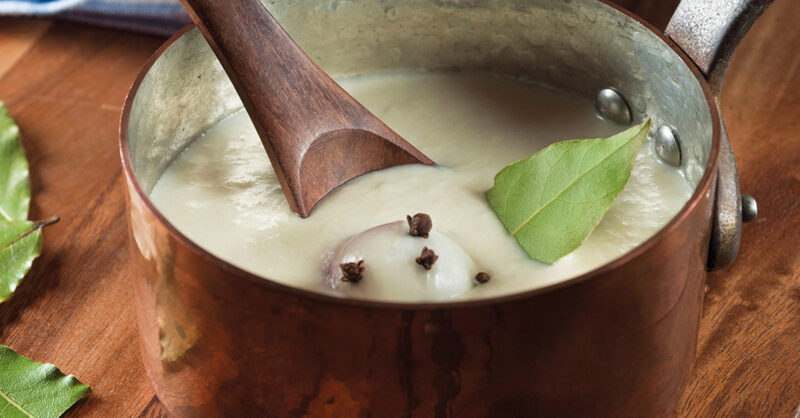
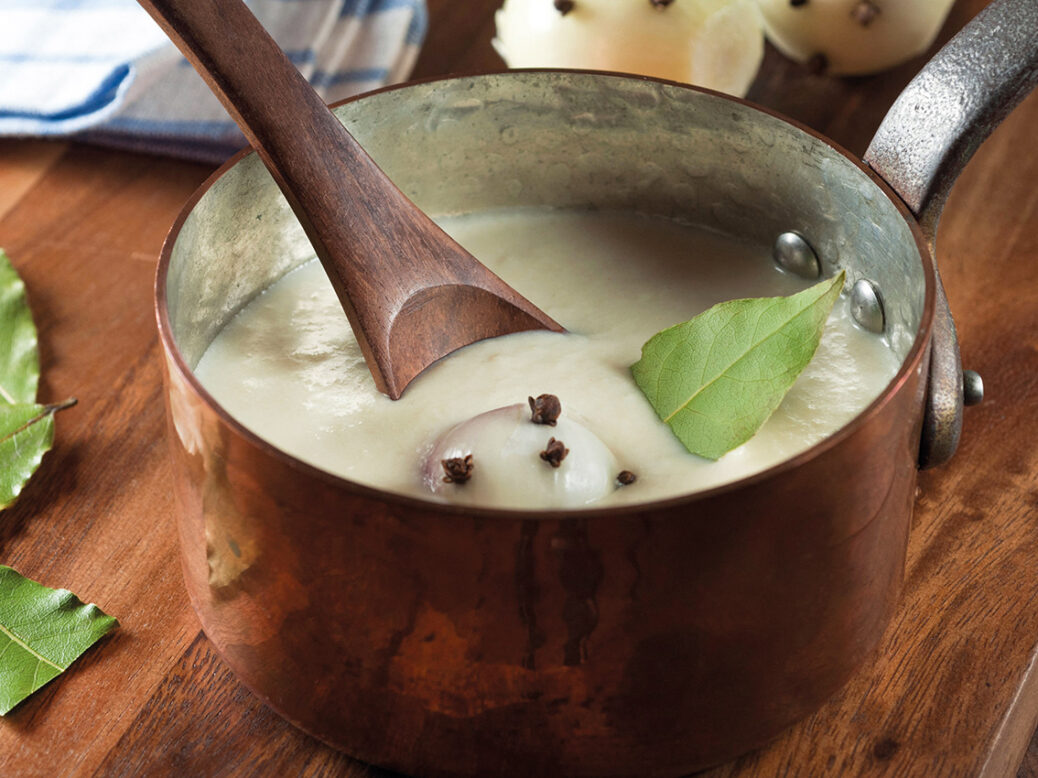
As for their most valuable contribution? I am glad you asked. Once a year these ghastly animals serve a noble function: as a delivery mechanism for bread sauce. We have our medieval ancestors to thank for this ye-oldiest of condiments, born from the resourceful practice of using stale bread to thicken up soups and stews. In Italy, stale bread gets turned into a salad – panzanella. In doughty, cold and dark England? Either “pudding” (but of course) or this lightly spiced, creamy, savoury slop. It should be a greater point of national pride than it is.
Bread is so ancient that it pre-dates agriculture. And what rice is to eastern Asia, bread is to almost everywhere else: the definite article of our culinary lexicon. Find me a British person without strong feelings about toast – and then an Italian without murderous sensibilities on the question of pizza. And is there a more famous symbol of gastro-nationalism than the baguette? A friend, meanwhile, recently claimed bagels in Manchester tasted different from bagels in London, owing to the different water used in the boiling process. I think the concept of terroir for bagels goes too far for me, but the carbophilia required to make such ludicrous claims is admirable, nonetheless.

Treat yourself or a friend this Christmas to a New Statesman subscription for just £2
And so, once a year, with our 14th-century forbears breathing down our necks, we take one of the highest forms of matter – bread – and transform it into the only higher form of matter than that: sauce. It is important that we do limit this to once a year. Forced scarcity is a social good – as with Beaujolais Nouveau, or Creme Eggs, this diurnal restriction on bread sauce prevents irreligious overindulgence, and probably saves the NHS millions a year on gout-prevention services.
Christmas dinner otherwise – somehow less than the sum of its parts – has a unique capacity to confuse and distress the senses. This is a hot, meaty salad pretending to be a dignified meal. How did we get here? We might have Charles Dickens and A Christmas Carol to blame for the goose, and the Americans we can hold responsible for the cranberry sauce (that’s jam, to you); as for the Brussels sprout? Well, we might need to look inward on that one. But somewhere on that plate there are saving graces: stuffing is OK, and I have yet to meet a parsnip I dislike. Then there is the lumpy comfort of bread sauce.
You do not need me to tell you how to make it. Contact the Delia Smith within for that (more cloves than you think, btw). If, however, you need a reminder of its central importance to Christmas then it is this: as Amazon has been raided for presents destined for the landfill, and Britain’s ravaged high streets are somehow made more depressing than ever with cheap Yuletide decorations, the medieval continuity of bread sauce is a spiritual salve – symbolic of a pre-ISA, pre-Temu, pre-HMRC, pre-SSRI world. And besides, it’s never been responsible for downing an Airbus A320.
[Further reading: Stop perving over chefs!]
Content from our partners
Dining and Cooking