
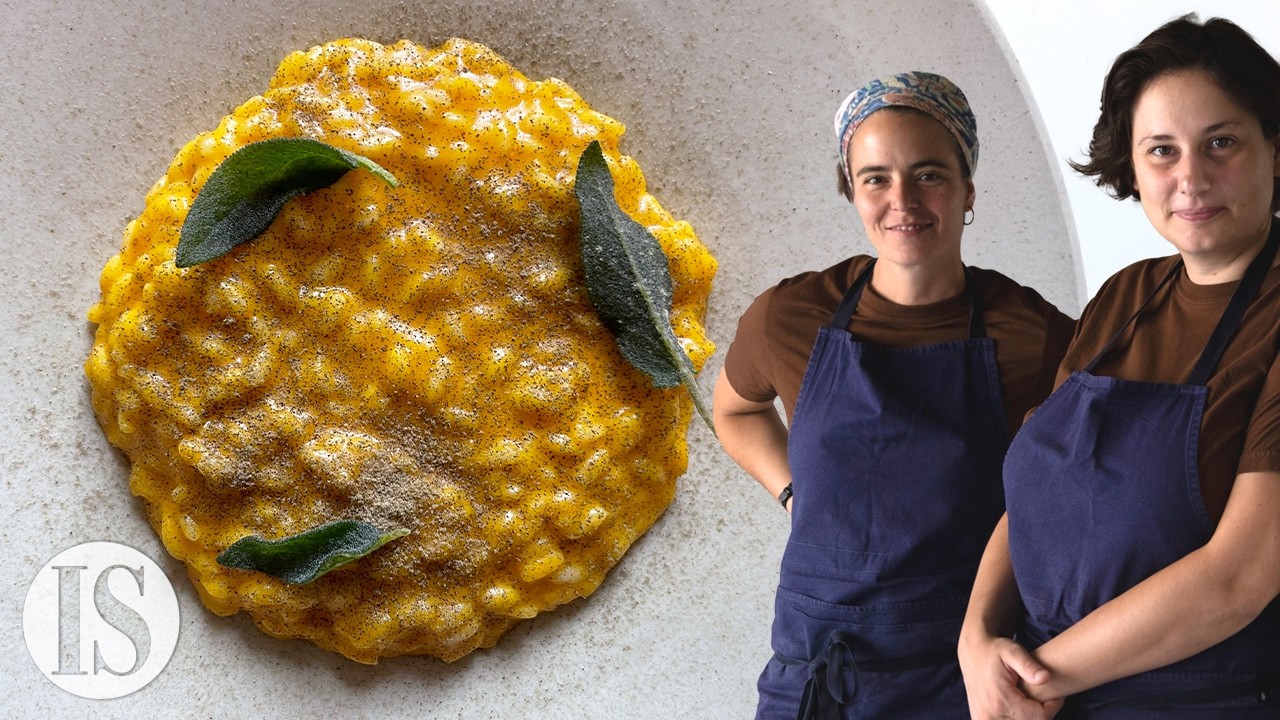
Uno dei piatti cult dell’autunno-inverno italiano, nella visione di una coppia di chef che ha fatto della cucina vegetale il cuore del proprio pensiero gastronomico. Cinzia De Lauri e Sara Nicolosi raccontano il risotto alla zucca in due versioni: la ricetta classica, con tutti gli accorgimenti per realizzarla in maniera tradizionale e tecnicamente impeccabile, e quella del ristorante Altatto che, tra conservazione e concentrazione del sapore, mette in discussione le nostre abitudini andando oltre la stagionalità.
In collaborazione con Riserva San Massimo https://riservasanmassimo.it/
Approfitta delle offerte XMAS Sale su tutti i libri di ItaliaSquisita, hai tempo fino al 14 dicembre: https://italiasquisita.net/it/posts/sales
Visita:
http://italiasquisita.net/
Shop:
https://shop.vertical.it/
Seguici su:
https://www.facebook.com/pages/ItaliaSquisita/147031685608
Tweets by italiasquisita
https://www.instagram.com/italiasquisita/
Contattaci:
info@italiasquisita.net
Hi everyone, we are in Milan. I am Cinzia De Lauri. I am Sara Nicolosi and together we created this restaurant called Altatto. In 2019 we opened the bistro in the Greco neighborhood and now in 2025 we opened the restaurant in the
Barona area instead, so we moved from one part of Milan to the other, still keeping our project and our vision of vegetable cuisine. Altatto tries to redefine a little the boundaries of vegetable cuisine,
often using techniques that are classic, offering guests a seasonal cuisine made of local products,
some self-produced, others instead produced by farmers with whom we have a very close relationship, with the idea of redeveloping the thought behind this cuisine, with the idea of ennobling vegetable
cuisine, which is often considered a cuisine of deprivation. Altatto as a restaurant develops two tasting itineraries. We also have some signature dishes. Signature dishes are dishes that are not seasonal, that thanks to preservation
techniques such as smoking and drying, such as vacuuming, the preservation in brine or fermentation, allow us to having a product that is harvested and then preserved all year round. The idea, precisely, is to propose something and preserve something that in that moment is proposed to us and which perhaps we are not going to consume entirely in the month in which it is available. One of these signature dishes that does not follow seasonality is precisely the risotto that we are going to propose today, therefore a pumpkin risotto made with preservation and desiccation of the pumpkin in its autumn period. Today in particular we propose two risottos, therefore the classic risotto and then the one reinterpreted by Altatto through preservation. Altatto is featured in both books by Italia Squisita. In ‘Rice, The Italian Way’ we brought a yellow risotto in its vegan version, while in ‘Vegetables’ we presented our lasagnetta with pesto and walnuts. Caterina Perazzi, our sous chef, will prepare the classic version of pumpkin risotto. She will start with simple cleaning, so she will remove the seeds inside which we generally then dry and use to make a tahini. The pumpkin will be cooked inside foil with aromatic herbs. In this case we have some rosemary, garlic and ginger and we place them
in the oven for a long cooking. The pumpkin will be placed
in the oven to cook at a high temperature, 180°C for an hour, such that it concentrates all the tastes and flavors of the pumpkin itself and the aromas we put inside. The pumpkin itself after this cooking contains the necessary juices to create a very smooth and soft cream, but as Cinzia said, it is rich in flavour. From this pumpkin we will extract the pulp and blend it to create a puree. We preferred to use this cooking technique over boiling precisely to create this consistent cream that we will then proceed to add to the risotto when creaming. Now Caterina will toast the risotto. Here at Altatto we always use the
same technique. We use Carnaroli rice from Riserva San Massimo. We toast it in a drizzle of seed oil which still holds a very high smoke point, so this allows us to toast it to perfection and we immediately add salt which is not something everyone does, we like it because we want the saltiness inside the grain to be the same as the cream that
will then envelop the risotto. We don’t use the broth to blend, to cook, but we always
use water. We use water because we then want to characterize the risotto with pumpkin in this case or other ingredients
that we decide to add later. After 12 minutes it’s time to add the puree and finish cooking the risotto for another 3 minutes. Once cooked, remove from the heat and rest the rice for a few seconds to then add a classic
creaming with a base of butter and Parmigiano, with a touch of vinegar and agave which give the risotto two characteristics, a bit of sweetness and a little acidity and this, in short, makes it palatable,
makes the rice less heavy. The plating is classic. Let’s then plate it on a flat dish and we finish with a little
sage powder and fried sage. As you have seen,
it is a very simple dish, easy to make even at home. Now we move to the kitchen and show you our idea of a
pumpkin risotto. I’m cutting the pumpkin. I’m simply going to slice it without either removing its peel. For us it is not scraps in this case. Then I give it
to Cinzia for the smoking. So, we set fire to apple tree chips and straw and then place them in the pot. We wait for the fire to go out and start the smoking. This smoking process will last an hour to then move to the oven at 180°C for an hour, so as to caramelize it. We then lower it to 100°C for about an hour to start dehydrating it, and then place it in a 70°C drying chamber for 3 days, in order to remove all liquid parts and still allow the pumpkin to keep for a very long time without ever spoiling in organoleptic terms. For us, drying is a fundamental
technique and we use it a lot, for example now on the menu we have five powders with different ingredients because it is the absolute concentration of taste and it allows us to give closure to the dish, it’s often a very very powerful note.
Of course, it adds to the fact of being able to dry the product at its best moment, then preserve it by concentrating the flavor right at its peak and therefore being able to use it for longer with its concentrated flavor. After 2 days of drying the pumpkin looks like this, very solid.
We’ll use the smaller parts for the broth, while we will use these parts to grate them over the risotto itself. So the pumpkin will not appear as
a fresh product but only in its dehydrated
and dried part and will have a completely different taste compared to the classic puree that you add in pumpkin risotto. To bring out its maximum flavor, let’s start with cold water. 70°C is the temperature at which
the major extraction happens. Only 5 minutes passed here, but the broth is already getting a lot of
brown color, until after an hour it reaches this very dark color. In this case we filtered the broth, but without passing it
through a mesh that is too fine, because we want it to be slightly fibrous, still containing some more of the pumpkin. The broth we obtained will be used for the risotto throughout its whole cooking and to reduce it and create a glaze like this that we will add on the rice once it is plated. So, let’s add some oil in the pan and then toast the rice. We salt it, then make a toasting with seed oil
and salt. For our risottos we always use classic Carnaroli because it holds cooking differently, it has a different release of starches.
Right from the start, we have never made risottos that were not prepared with this type of rice. So, let’s add our broth and
we can see the rice already starting to absorb this bronze color. In fact, the risotto compared to the classic pumpkin risotto with a
beautiful orange puree will be a little darker. The idea of dousing it with this broth gives the grain the taste of pumpkin even inside, compared to a classic risotto in which the pumpkin is often added later so that it is creamy. Here instead thanks to the transformation of the pumpkin into a liquid product, we can still add it from the first minute of cooking. Carnaroli must be boiled slowly, as you can see in the pan, so that cooking is absolutely uniform, but without it sticking. We are more or less halfway
through cooking, we can see that the starch is already starting to create a nice cream. We will continue to cook it until done, approximately 15 minutes. We turn off the heat and stir it in the butter, Parmigiano and use Valtellina apple vinegar and an agave syrup. We finished creaming it, now I move on to plating. At the bottom, chilli fermented with bergamot. So let’s add spicy and acidic to contrast the roundness and smokiness
the pumpkin has taken on. And to finish it we add the pumpkin reduction and the pumpkin is simply dried and grated. This is pumpkin risotto prepared by Altatto. A pumpkin risotto that thanks to preservation
goes beyond seasonality. Today we opened the doors of Altatto to Italia Squisita to show the classic version of pumpkin risotto and our idea, instead. We hope that our approach to plant-based cuisine can be an inspiration for you and you can take some ideas from our way of cooking. We look forward to seeing you soon in Milan. Ciao!
43 Comments
Sì, bene, brave e graziose. Però, dio mio, un sorriso in più, coraggio, anche appena accennato… 😉
Gasate! Bravissime! Non vedo l'ora di venirvi a trovare
io peró ho paura pramai a mettere i cibi avvolti nella stagnola😢
EXQUISITE ! ! ! ! !
Both dishes look stunning.
Una zucca cotta 60 minuti a 180 non esce sfatta così. Che senso ha dare valori sbagliati? Potete non darli…
Bravissime ❤
Mi fa piacere scoprire che la mia ricetta è molto simile a quella classica
So refreshing to see the girls!!! I feel like they are the first girls in this channel!!! GO GIRLS 💪🏻💪🏻😎✨
Looks good
up
Cucina vegetale…bbene! Burro e parmigiano…..ehm……🤨
Qué personas más antipáticas! No iría a su restaurante
squisito i risotti peccato averli rovinati con salvia fritta e zucca essiccata
Il classico è sempre quello più buono
"all'interno del chicco la sapidità sia la stessa della crema che lo avvolge" dai…finiamola!
Solo l'impegno nella produzione di conserve e fermentati è encomiabile, e quegli scaffali pieni di buone cose invitano a visitarvi. Poi è un'impresa femminile molto definita, magari con uno stile che ritengo troppo spartano e lineare, ma c'è classe, ci sono idee interessanti. Pensavo anch'io di fare il criticone (contestanto il lessico anglofilo e ridondante), ma vi state dando tanto impegno. Brave!
devo provarla sta cosa di disidratare la zucca
> cucina vegetale
> look inside
> burro e formaggio
Brave! Saluto de Brasile
Dai farmer… Ma parla italiano per dio! O parli inglese o italiano. Vi credete fighi a buttare qualche parole straniera in mezzo alle frasi. Sorridete un po' magari.
🫶
Bravissime😊
Che bomba, quella riduzione dev'essere incredibile! Bellissima idea
Ragazze un bel sorriso ogni tanto fatelo
Brave ragazze e lasciate perdere i belinoni che vi criticano.
Mmm, la seconda ricetta è veramente interessante.
Bravissime, belle ricette e tecniche
Very ingenious preparation! ❤
Perché farmers? Esiste la parola italiana agricoltore, oppure il bellissimo e semplice contadino!
Ma la ragazza che grattuggia la zucca non è la stessa del dettaglio. Una usa la mano sx ed una la dx.
Bravo, the second is impressive and very special
Peccato solo vedere una grande tristezza nei loro occhi. Mai un sorriso. Spero di cuore che il loro talento sia anche gioia. E non la rassegnazione tipica di un certo movimento; specialmente verso il cibo.
Ma fare un fondo di cottura, portarlo a salsa in riduzione,sottovuotarlo e congerlarlo?
Radical con le blundstone da 2 piotte = incoerenza dell’era moderna = tutta fuffa!! ❤️
Awesome technique!
Grazie
Che bello vedere due interpretazioni così diverse dello stesso piatto: la tradizione che rassicura e la versione gourmet che spinge oltre la stagionalità con grande tecnica.
Il lavoro sulla zucca, tra concentrazione del gusto e delicatezza del mantecato, è davvero affascinante.
Un video ricchissimo di spunti, complimenti!
Un chef d’œuvre! Magnifique!
figo!
Mamma che fastidio la musica in sottofondo mentre spiegano i procedimenti… Very very annoying!
come rovinare un risotto…..
Vegetable cuisine is disgusting.