
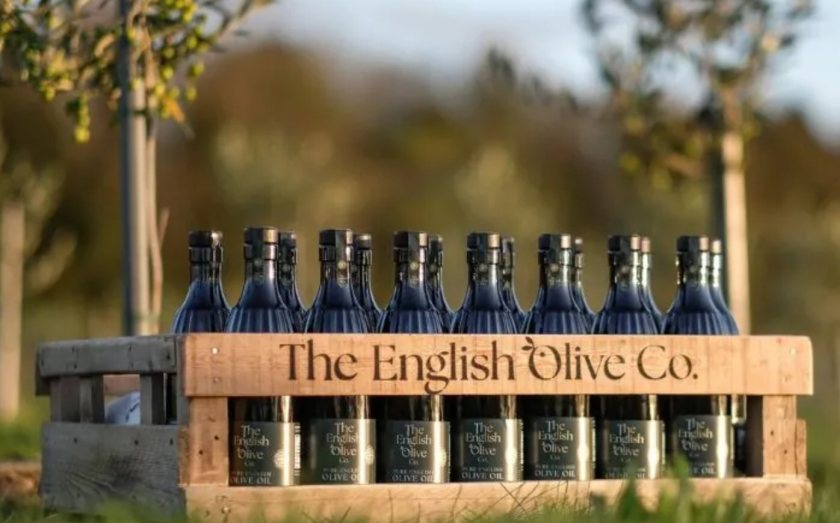
A Lincolnshire farm is redefining what can be grown in the UK as it completes the first harvest from what is believed to be the world’s most northerly commercial olive grove, signalling a bold shift in how British agriculture may adapt to a changing climate.
The English Olive Co., based near Spalding, has harvested olives from a 10-hectare site planted in 2024, marking a significant step in proving that olives can be grown and processed commercially at field scale in the UK.
The business is now pressing the fruit on site using the country’s first on-farm olive press and bottling line, with a small quantity of English olive oil expected to be released shortly.
Although the inaugural harvest was limited, it demonstrated that olive trees can successfully flower, fruit and mature under UK conditions. The olives were picked by hand by family and friends and taken to the on-farm press within hours to preserve quality.
Farmer David Hoyles said the results had exceeded expectations despite difficult weather earlier in the year. “We were pleased to have our first, albeit small, harvest, but it does show that olive trees can flower, fruit and mature on a commercial and field scale in the UK,” he said.
Frosts, strong winds and heavy rain reduced yields and fruit size compared with Mediterranean growing regions, but flavour quality remained high. “The taste profiles of this 2025 crop are fantastic – grassy, fresh, and piney, with a very good peppery kick at your throat due to fantastic polyphenol levels,” Mr Hoyles said.
The decision to plant olives was driven by a need to future-proof the family’s long-established Fenland farm as weather patterns shift and volatility increases in traditional crop markets.
Mr Hoyles said some existing crops were struggling under hotter and drier conditions, prompting the search for alternatives better suited to a warming climate. “We wanted long-term security in food production,” he said.
He added that the extended warmth later in the season helped the olives ripen. “2025 has been good for the olives. They flowered in July, and the fruit grew well over the summer,” he said, noting that milder conditions into October allowed the fruit to reach a blushed green colour that enhanced flavour.
Supply of English olive oil will be extremely limited in the first year, but volumes are expected to increase steadily as the grove matures. “As the trees grow and increase in maturity each year, we hope olive numbers, and hence oil volumes, will also increase year on year,” Mr Hoyles said.
The olive project sits alongside a broader arable and vegetable operation with a 250-year history in the Fens, producing crops including wheat, potatoes, sugar beet and peas.
The farm has invested in renewable energy, water storage and habitat creation, while the olive grove itself is managed using low-input methods without insecticides or fungicides.
With cold pressing now under way, limited batches of English olive oil will be made available through the company’s online shop later this month. As production increases in future years, the business plans to move away from hand harvesting.
“When the volume of olives increases, we hope to invest in a self-propelled harvester in place of hand harvesting,” Mr Hoyles said — a move that could mark the next stage in scaling what is already one of the most unconventional farming ventures in the UK.
Dining and Cooking