
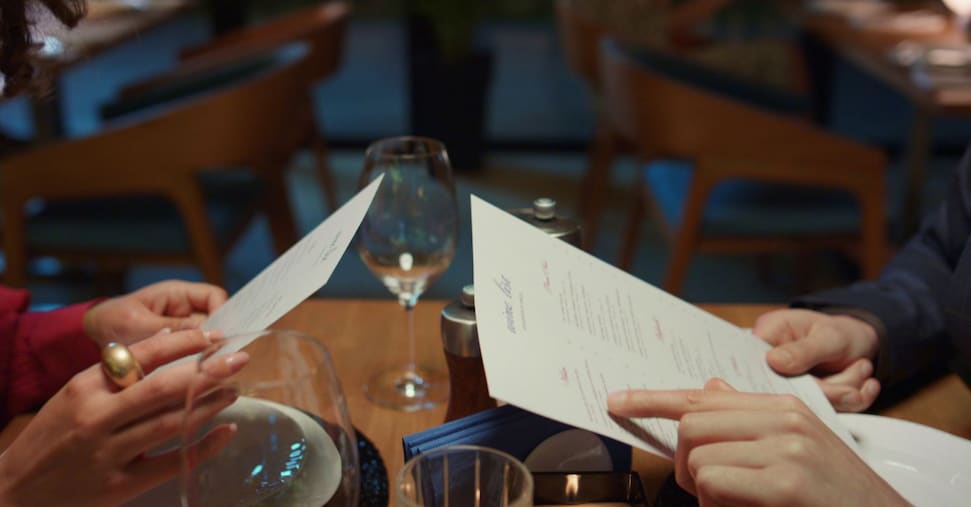
Of the more than one million tonnes of frozen food consumed in Italy each year, one third passes through canteens and restaurants. Where an asterisk is still required on menus in cases where food preserved by the cold chain is used. An indication that has no real objective justification according to Iias – the Italian Frozen Foods Institute, founded in the 1960s on the initiative of the main Italian industries in the sector and which today has twenty member companies of Unione Italiana Food – which has long been calling for it to be abolished.
This, emphasises Iias, ‘while on the one hand it provides the consumer with extra information (which is, moreover, partial, given the difference between industrial-type freezing and the various forms of ‘do-it-yourself’ freezing/thawing), on the other hand it risks giving a negative and misleading connotation to the product’.
“In a scenario of matured awareness and appreciation of frozen food,” explains Giorgio Donegani, president of Iias, “the permanence of the obligation to display the asterisk on menus is part of the problem, which, it should be clarified, does not derive from a specific law but from an orientation of Italian jurisprudence, consolidated since the end of the last century through numerous rulings of the Court of Cassation. We are talking about a now anachronistic instrument that in the half-century since its appearance has remained unchanged despite technological evolution, increasing knowledge of the quality of frozen products and improved consumer awareness and perception. Not surprisingly, a recent Doxa survey showed that for 7 out of 10 Italians, the presence of the asterisk on the menu does not influence their choice of a particular dish at all. In addition, the asterisk on menus has nothing to do with the food’s health and hygiene safety, as the possible omission of this information would in no case represent a potential compromise of the consumer’s health.
The Italian restaurant industry, according to Iias, is experiencing “a period of light and shade: while 2024 closed with consumer spending of 85 billion euro, an increase compared to 2023, it is also true that the figure is still a long way from the 88 billion of the pre-covid period (2019). Volumes are also declining, with a drop in consumer ‘visits’ of -6%. Against this backdrop, the consumption volumes of frozen food are bucking the trend, holding steady (+0.1%)’.
“Continuing to impose the asterisk requirement on the menu based on the now outdated and anachronistic assumption that the customer expects only fresh ingredients/foods, as such better, seems to Iias completely out of place. For these reasons,” concludes Donegani, “the sector is calling for a debate on the issue with the public decision-maker and consumer representatives, in order to effectively protect the needs of everyone, consumers and restaurateurs in the lead”.
Dining and Cooking