
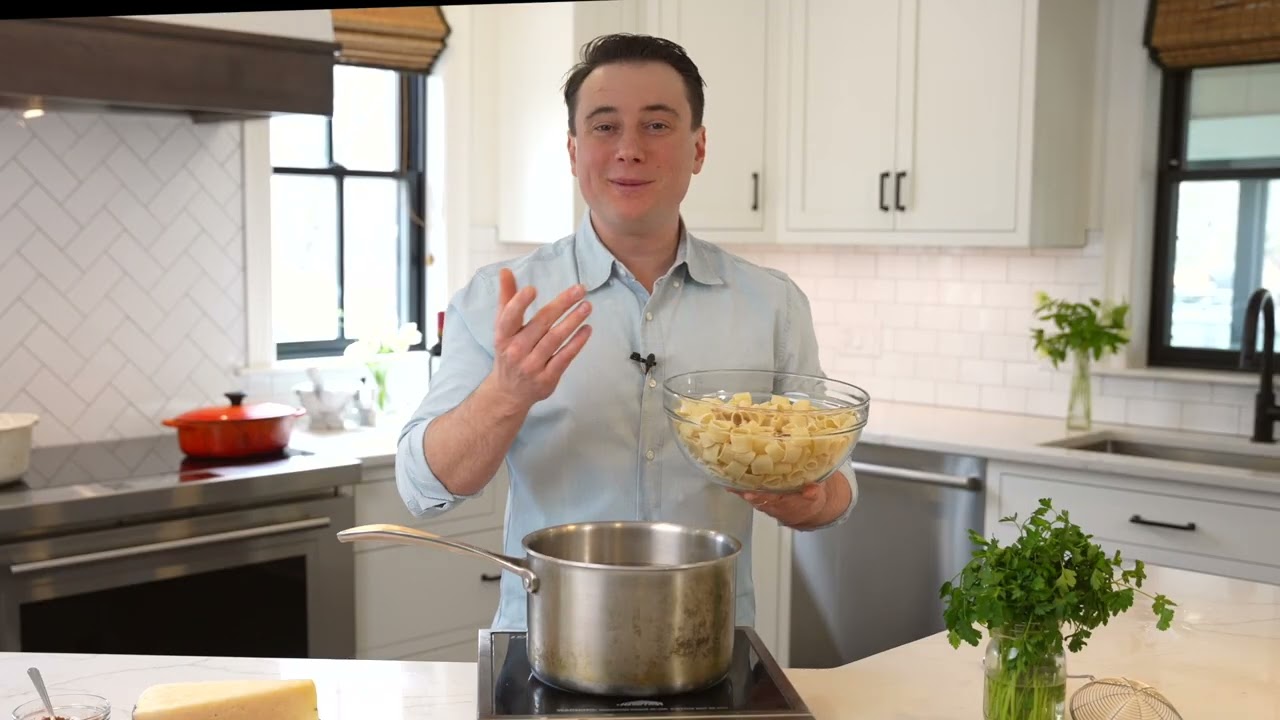
This bitter cold weather calls for hearty and comforting recipes! One of our favorites is “Mezze Maniche al Sugo di Coda,” a quintessential Roman dish made from slow braised oxtail. This recipe is part of the “quinto-quarto” tradition originating in the Roman neighborhood of Testaccio. These were dishes consisting of leftover scraps and cheap cuts of meat which butchers, trattorias and home cooks turned into delicious meals and which became eternal columns of Roman cuisine and culture.
Chowamishi and welcome to 7 Hills Pasta Kitchen. Today we’ll be preparing a quintessentially Roman dish called Medz Man also alavinara which is a pasta dish in a brazed oxtail sauce unaki karagati as they say in Rome. So the star of the show is our oxtail, our kuda. The koda is a very strong muscle because being the tail of course the cow is wagging the tail every day. So it becomes a very strong muscle. So this particular cut of meat has a lot of connective tissue, cartilage and bone marrow. So it is very nutrientdense. It’s also a great way of being sustainable by using every part of the animal which is the essence of lauchina va the cuisine of the poor of the peasants. So, of course, you can buy this pre-cut, but today we’ll be cutting it together. Now, the tail is composed of different vertebras, and we’ll be cutting each vertebra individually into chunks. So, make sure your knife is very, very, very sharp, cuz we’ll need to cut through those vertebbras. So, now that we’ve cut our oxtail into manageable chunks, we’ll be brazing them slowly. We want to salt our meat before it goes in. We’re going to do a nice bit of extra virgin olive oil. And we’ll be brazing this and browning it on all sides. Now that we’ve delazed our pan, we can go in with our celery, carrot, and onion finely chopped. We’re going to add a little bit of olive oil. We’re looking to get our onions translucent and our carrots and celery cooked through. Okay, now we go and put our meat back in. After 3 or 4 minutes that the flavors have mixed, we’re going to go in with our tomato sauce. I’m using a patada. You can totally use canned tomatoes as well. Then we’re going to add a little bit of tomato concentrate. Helps with the sweetness. So, now we’re going to add just a couple teaspoons of bitter cocoa powder, which will also thicken our sauce and give it a lovely rich flavor. And because this is such a tough cut of meat, we got to go low and slow. This recipe takes at least 2 hours and up to 4 hours. What we’re looking for is for the meat to fall off the bone, to fall off that vertebrae. And this is our finished product. Right here we have our lovely koda lava vachinara perfectly cooked. This is cooked for over 4 hours. You see the sauce is nice and rich and thick and the meat is literally falling off the bone here. That is exactly what we’re looking for. All this will conspire to create a truly amazing pasta dish. And now finally for the pasta, these are called mediman. And medsmani literally translates to half a sleeve because it’s shorter relative to its cousin the riatonyi and so it’s about half a riotoni and they give it the nickname of a half a sleeve. These are extruded through bronze dyes and that’s what gives it its nice rough texture and then it’s slowly slowly air dried for over 24 hours in order to make sure that it rehydrates properly and stays nice al dente. So then when our water is boiling, you want to salt our water, put our pasta in and I’ll see you in about 5 to 6 minutes, we’ll taste them. Bring in some of that starchy water, which helps with emulsification. Once we have them evenly coated, you can go in with some freshly grated borino. And here you have it, your lovely medium also deodinara. Now all it needs is some freshly grated peorino romano which we have right here. Now let’s taste them to see how they turned out. Rich, flavorful sauce, nutrientdense. You can see little bits of meat that fell off the bone. Delicious. Absolutely delicious. a dish, one of my favorite dishes in the Roman gastronomic cannon. All right, so until next time, this is Julio from Seven Hills Pasta. I hope you’ll accompany me in the next uh culinary adventure that we take where we learn the background of dishes, the history, the narrative, and the stories of the people who make truly truly special meals.
Dining and Cooking