
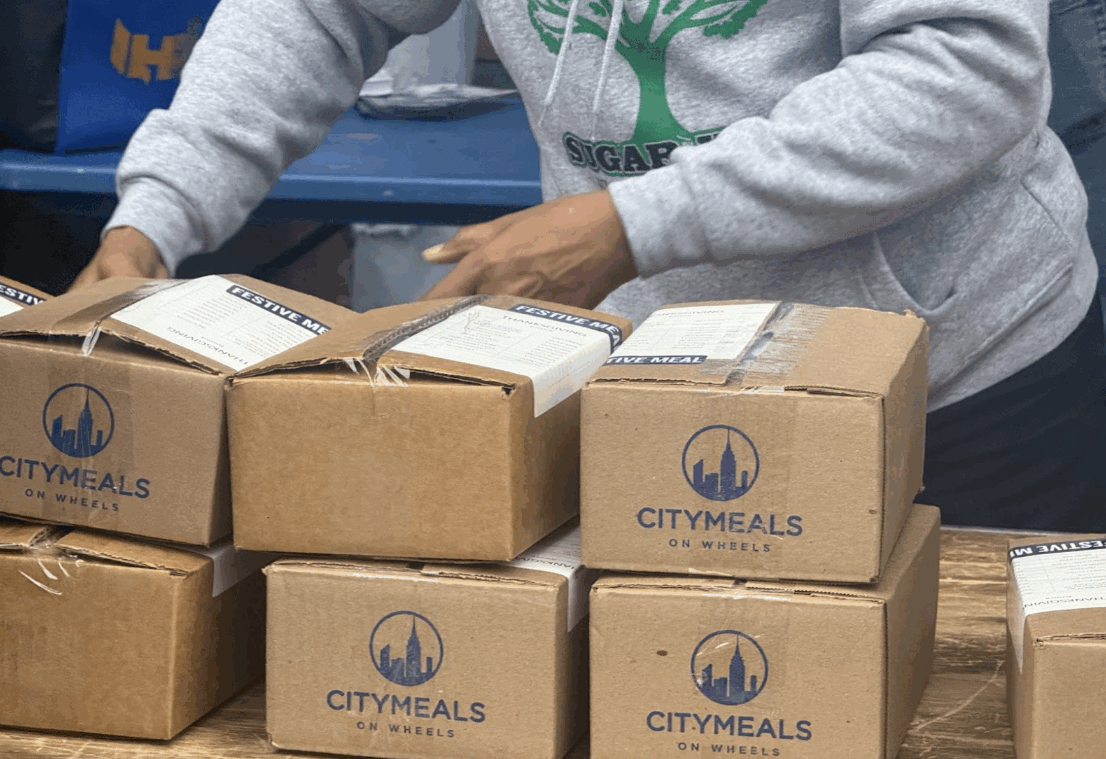
A historic 43-day federal shutdown delayed food benefit payments for 1.8 million New Yorkers ahead of Thanksgiving —and few neighborhoods felt the pinch as acutely as Central Harlem.
Central Harlem has one of the highest rates of food insecurity in the city. Nearly 26% of residents don’t have reliable access to enough food to meet their needs. Nearly one in four households depends on food stamps, now known as Supplemental Nutrition Assistance Program, or SNAP, benefits, according to the Hunter College New York City Food Policy Center.
Even after the shutdown ended on Nov. 12, and SNAP benefits resumed, many residents said it revealed just how vulnerable the neighborhood remains.
“If a shutdown like this happens again, only poor people suffer,” said Ingrid Williams, 57, from Harlem. “I barely had any food, and the pantry lines were so long. I ended up going to my doctor’s office and they gave me food. I am going to start stacking up food from now on.”
On Friday Nov. 21, hundreds of residents lined up outside the Adam Clayton Powell Jr. State Office Building in Central Harlem for Thanksgiving food distributions. Volunteers from local sororities, churches, and nonprofits said turnout was noticeably higher than at previous events.
“More people came this year than last year,” said Brianna Scott, a member of Zeta Phi Beta Sorority, Inc. “The shutdown didn’t create food insecurity — it amplified it.”
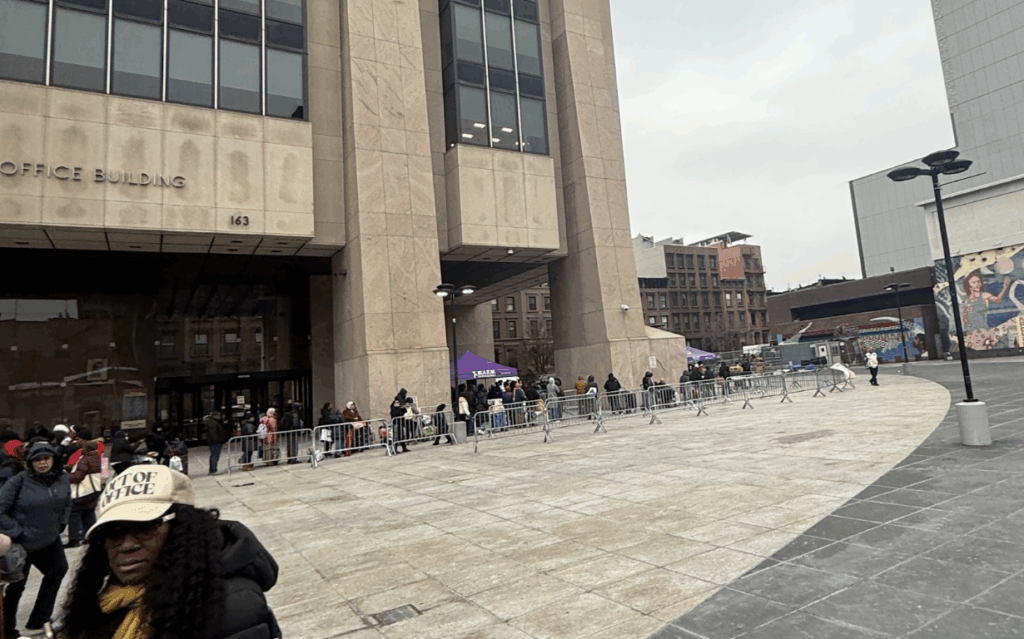
People lined-up at the Adam Clayton Powell Jr. State Office building to collect food donations. (Credit: Kai Adjetey)
Matt Staubi, president of Knowing Unexpected Love’s Unconditional (KULU), a charity organization that aims to help those in need by partnering with local underserved communities, said that his group contributed 600 turkeys this year. They joined 800 other birds brought by other organizations, he said. “This was definitely the longest line we’ve seen,” Staubi said. “People need help and support.”
State Sen. Cordell Cleare also participated in the holiday giveaway by sending a representative from her office.
“The fact that people have to wait on food lines in the nation that has money is an abomination.” said Velvet Johnson Ross, a housing and hunger advocate. She pointed out that Harlem’s food insecurity is matched by its housing insecurity, meaning many in the community take a double hit when resources are cut back.
“Many people who have housing subsidies also have food subsidies,” said Ross.
At Salem United Methodist Church, Norma Willis, 65, who works for its food pantry, said that demand for nourishing produce barely subsided even after SNAP payments resumed.
“We serve about 200 to 300 people every Tuesday and Wednesday.We’ve seen more people since the shutdown till now,” she said. The pantry also has several new first-time visitors.
“People come from all over — even from the Bronx,” according to Willis.
Some were able to weather the shutdown better than others because they had stockpiled food in advance.
“You have to be ahead of the game,” said Diane Jenkins, 71, from Central Harlem, who stopped by the giveaway to pick up items. “Moving forward, people need to learn how to shop right.”
Even ahead of the shutdown, Jenkins gathered coupons from newspapers and saved whatever money she could in preparation for the day when SNAP benefits disappeared.
“I buy bundles, I use coupons, I stock up,” she said. “That’s the only reason the shutdown didn’t hit me the way it hit others.”
But she worries for her neighbors that live from meal to meal. “People are not being educated on how to shop right. If this happens again, some won’t make it,” Jenkins said.
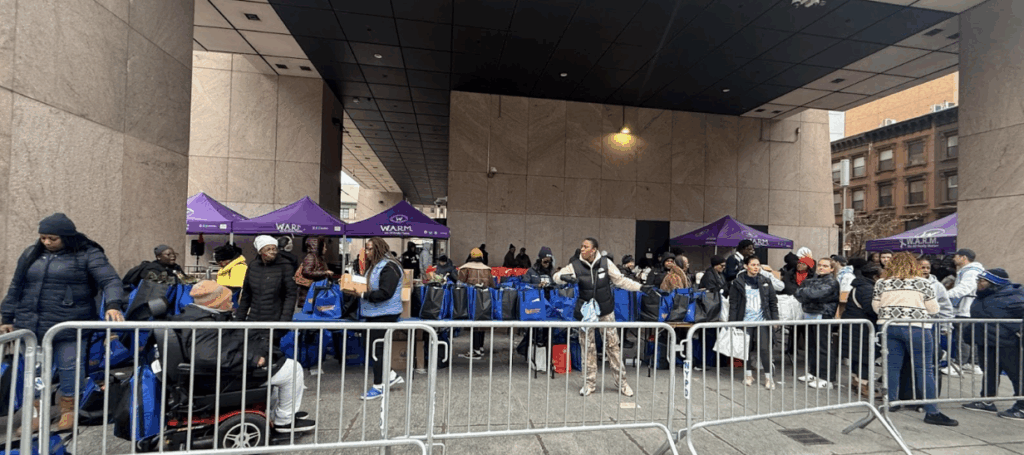
People collect food donations at the Adam Clayton Powell Jr. State Office building. (Credit: Kai Adjetey)
Even with SNAP restored, residents must now navigate new federal policy changes that will tighten work requirements and narrow exemptions for millions of Americans.
The city is implementing these new federal food benefit work requirements for Able-Bodied Adults Without Dependents— a term generally referring to recipients aged 18 to 64 who do not have a child under 14 in their household and are not disabled.
The changes could reduce national SNAP enrollment and spending, according to the Congressional Budget Office. They’re just some of the broader policy adjustments under the One Big Beautiful Bill Act, a sweeping measure passed by Republicans in Congress and signed by the President in July that enacted large-scale cuts to programs, including Medicaid among others.
In Central Harlem, where 22.7% of households rely on SNAP, the incoming policy will redefine eligibility for the program.
Dining and Cooking