
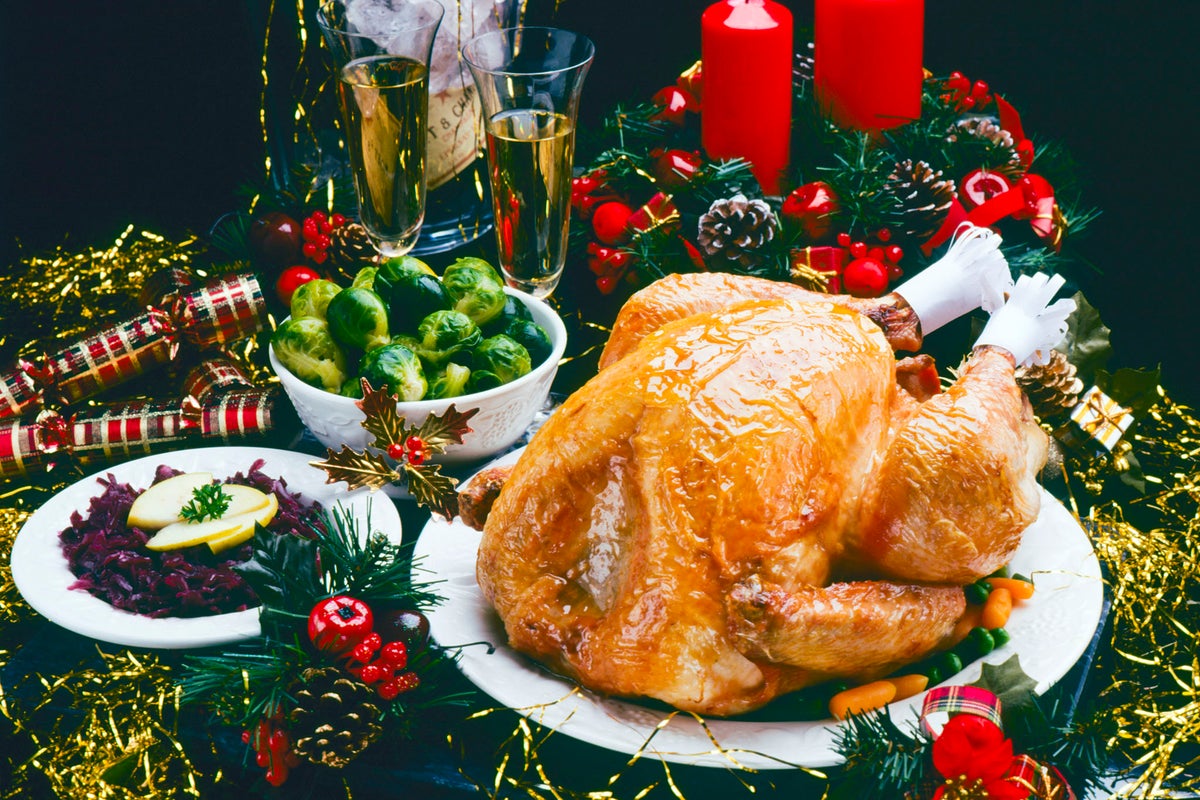
There’s a moment, usually sometime around mid-December, when the nation collectively panics about what to put in the middle of the Christmas table. Turkey loyalists cling to tradition, beef wellington devotees insist theirs is the only showstopper that matters, and everyone else quietly wonders whether this is the year to do something completely different – a porchetta, a goose, maybe even a glazed butternut squash wreath that looks like it belongs in a glossy Scandi cookbook.
What counts as a “centrepiece” has changed. It’s no longer just a bird and a prayer; it’s a statement. A culinary flex. Something that silences the room for a second before the carving fork goes in. And this year’s line-up is our most spectacular yet. Gordon Ramsay’s turkey promises bronzed skin and butter-soaked succulence instead of heartbreakingly dry breast meat. His beef wellington remains the gold standard – crisp pastry, velvety duxelle, the kind of fillet that makes grown adults tear up. Jamie Oliver’s festive porchetta is a five-hour ode to crackling and fruit-laced stuffing, while Rick Stein’s goose leans into richness with gravy so good it could start fights.
For those stepping off the meat treadmill, Heather Thomas’s butternut squash wreath is a triumph of colour and cleverness, and Gaz Oakley’s stuffed squash proves the vegan main can absolutely steal the show. Add in slow-roast duck, blushing roast beef and even a whole turbot with yorkshire puddings – because why not? – and you’ve got a festive feast worthy of the chaos, the ceremony and the camera roll.
Whichever path you choose, these are the dishes that make Christmas dinner unforgettable.
Gordon Ramsay’s perfect roast turkey
Ramsay’s signature Christmas turkey promises crisp skin, juicy meat and a lemon-parsley butter that keeps everything impossibly moist. It’s the recipe people turn to when they’ve had one too many dry-bird disasters.
Serves: 8-10
Ingredients:
1 free-range turkey (ideally Norfolk Black or Bronze), about 5-5.5kg
Sea salt and freshly ground black pepper
2 onions, peeled and halved
1 lemon, halved
1 head of garlic, halved horizontally
6 bay leaves
Olive oil, to drizzle
8 rashers of smoked streaky bacon
For the lemon, parsley and garlic butter:
375g butter, at room temperature
1 tbsp olive oil
Finely grated zest and juice of 2 small lemons
3 garlic cloves, peeled and crushed
Small bunch of flat-leaf parsley, leaves only, chopped
Method:
1. Preheat the oven to 220C/gas 7. Meanwhile, prepare the herb butter. Put the butter into a large bowl and season with salt and pepper. Add the olive oil and mix well. Add the lemon zest and juice, crushed garlic and chopped parsley. Mix well to combine.
2. Remove the giblets from the turkey cavity. Season the cavity well with salt and pepper, then stuff with the onions, lemon, garlic halves and two bay leaves.
3. With your hands, loosen the skin on the breast from both ends of the bird so that you will be able to stuff the flavoured butter underneath it, making sure you keep the skin intact. Repeat with the skin on the legs – from the lower side of the breast, feel your way under the skin and out towards the leg, loosening the gap.
4. Stuff half the butter mix into the opened spaces under the skin. From the outside of the skin, gently massage the butter around the breasts so that the meat is evenly covered. Finally, insert the rest of the bay leaves under the skin of the breasts.
5. Place the bird in a large roasting tray, breast side up. Spread the rest of the butter all over the skin. Season well with salt and pepper, then drizzle with a little olive oil. (If preparing a day ahead, cover the turkey with foil and refrigerate at this stage.)
6. Roast the turkey in the hot oven for 10-15 minutes. Take the tray out of the oven, baste the bird with the pan juices and lay the bacon rashers over the breast to keep it moist. Baste again. Lower the setting to 180C/gas 4 and cook for about two and a half hours (calculating at 30 minutes per kilogram), basting occasionally.
7. To test whether your turkey is cooked, insert a skewer into the thickest part of the leg and check that the juices are running clear, rather than pink. As oven temperatures and turkey shapes and sizes vary, it is crucial to check your turkey about 30 minutes before the calculated roasting time. If the juices are pink, roast for another 15 minutes and check again. Repeat as necessary until the turkey is cooked.
8. Transfer the turkey to a warmed platter and remove the parson’s nose, wings and tips of the drumsticks; reserve these for the gravy. Leave the turkey to rest in a warm place for at least 45 minutes; make the gravy in the meantime. Remove the bay leaves from under the skin before carving. Serve the turkey with the piping hot gravy, stuffing and accompaniments.
Gordon Ramsay’s traditional beef wellington
open image in gallery
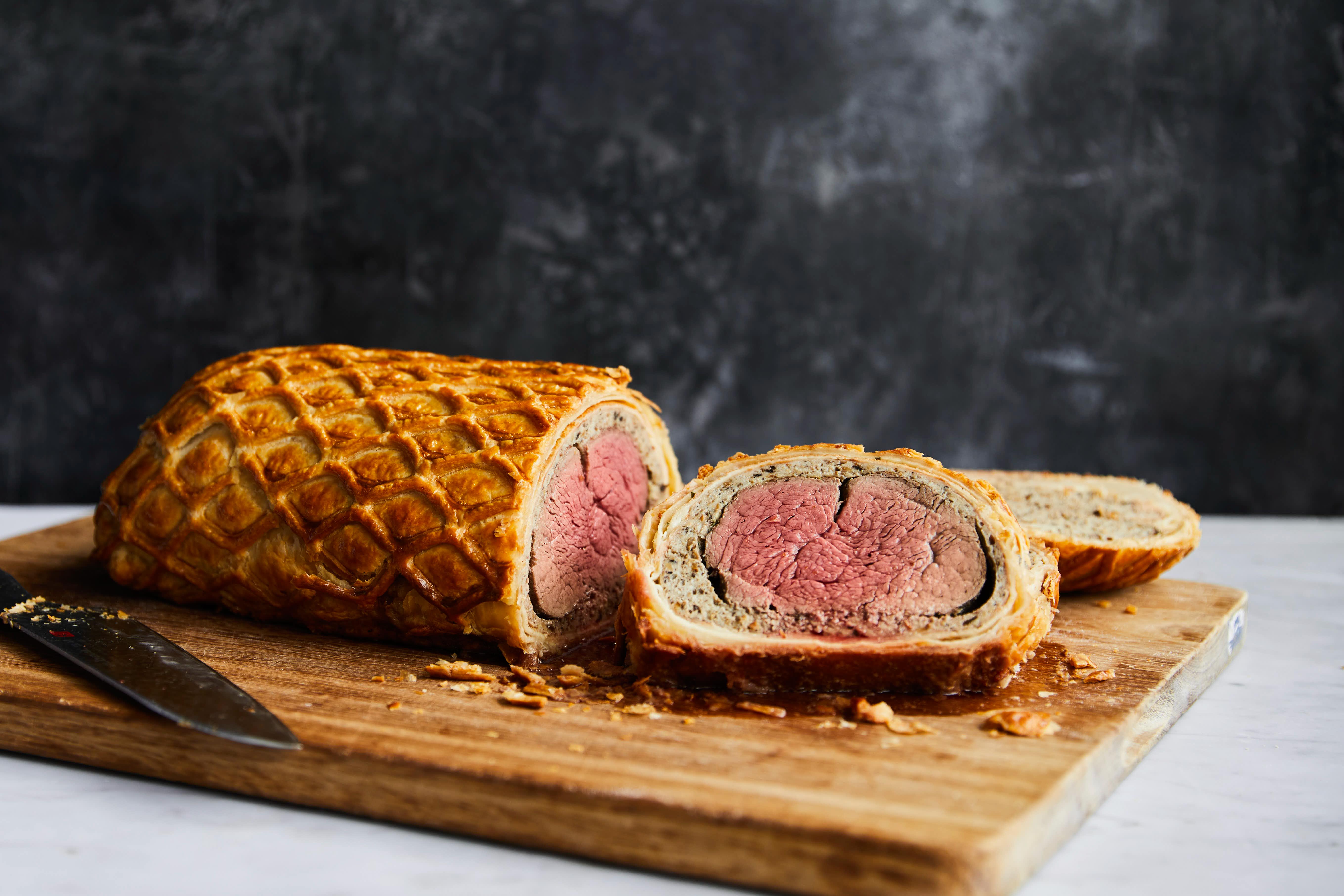
The dish that launched a thousand imitators – and still outclasses every pretender (Supplied)
The chef’s most iconic showstopper: a golden, glossy wellington with a velvety mushroom duxelle and perfectly blushing fillet. It’s the definition of a centrepiece – dramatic, decadent and guaranteed to silence the room.
Serves: 2
Ingredients:
500g whole beef fillet
10g English mustard
150g square piece puff pastry
50g egg yolk for brushing
20g butter
For the mushroom duxelle:
250g button mushrooms
2 cloves garlic
1 shallot finely diced
10g picked and chopped thyme
100ml Madeira wine
100ml chicken stock
1 x 200g chicken breast
20ml double cream
40g chopped parsley
Salt and pepper
For the crepes:
1 eggs
125g litre milk
50g flour
Salt to taste
20g chopped chives
Method:
For the mushroom duxelle:
1. Wash and finely slice button mushrooms, and finely dice the shallots and garlic.
2. Sauté the mushrooms in small batches on high heat with vegetable oil. This ensures a nice caramelisation. You may need to keep adding oil to the pan as the mushrooms will absorb it.
3. In a separate saucepan, while sautéing the mushrooms, sweat down the finely diced shallots, garlic and thyme. When all the mushrooms have been caramelised, add them to the saucepan with the herbs.
4. Add Madeira wine and cook off the alcohol. Then, add the chicken stock. Simmer together until the liquid has cooked out.
5. Lay the mushroom mixture on a tray and place in the refrigerator until chilled. Once chilled, pour the mushroom mixture onto a chopping board and chop as finely as possible with a large chef’s knife. Add parsley.
6. Place the chicken breast in a food processor and pulse until it is puréed while adding the double cream.
7. Mix in the chicken mousse with the mushroom mixture. Season with salt and pepper. Duxelle done!
For the crepes:
8. In a large bowl, beat the egg.
9. Mix in milk.
10. Sieve the flour and add to the egg and milk mixture.
11. Season with salt.
12. Pass the mixture through a sieve into another bowl to get out any lumps.
13. Add the finely chopped chives to the mix and set aside.
14. In a large non-stick frying pan, heat a small amount of butter. Once melted, pour in one ladleful of crepe mix and spread across the bottom of the pan.
15. Heat until it is cooked but with no colour, which should take about 30 seconds.
16. Flip it over onto the other side for approximately 10 seconds until it is fully cooked.
17. Repeat for the second large crepe.
Putting it all together:
18. Season the beef fillet with salt and pepper.
19. Heat a medium-sized frying pan, add some vegetable oil. Sear the meat on all sides until golden. This should take approximately 1 to 2 minutes.
20. Once seared, place beef in refrigerator for approximately 20 to 30 minutes until completely chilled.
21. Roll out puff pastry until it is ½cm thick, lay in a tray and put back in the fridge until needed.
22. After chilling, brush the seared beef fillet with mustard.
23. Lay out the two crêpes overlapping each other halfway.
24. Spread the duxelle over the crêpes, making a thin layer around 0.5cm thick.
25. Place the beef fillet in the centre of the two crêpes. Roll the crêpes around the beef fillet until it is completely covered. Carefully, with cling film, wrap the beef as tight as possible and place back in the refrigerator for around 10 to 15 minutes.
26. Remove the puff pastry from the fridge and brush the whole sheet with a beaten egg yolk. Place the beef in the centre and roll so that the pastry completely covers it. Make sure it is as tight and as neat as possible, trim off any excess pastry and place on a tray with parchment paper underneath.
27. Carefully score the pastry in whatever pattern you’d like, making sure not to cut through the pastry. Glaze the whole wellington with egg yolk and place in the oven on a tray at 210C for around 20 to 25 minutes, or until an internal probe thermometer reaches 32C.
28. Allow to rest for 10 minutes and carve. Serve with some crispy potatoes, roasted garlic, spring greens and gravy.
Jamie Oliver’s festive porchetta and all the trimmings
open image in gallery
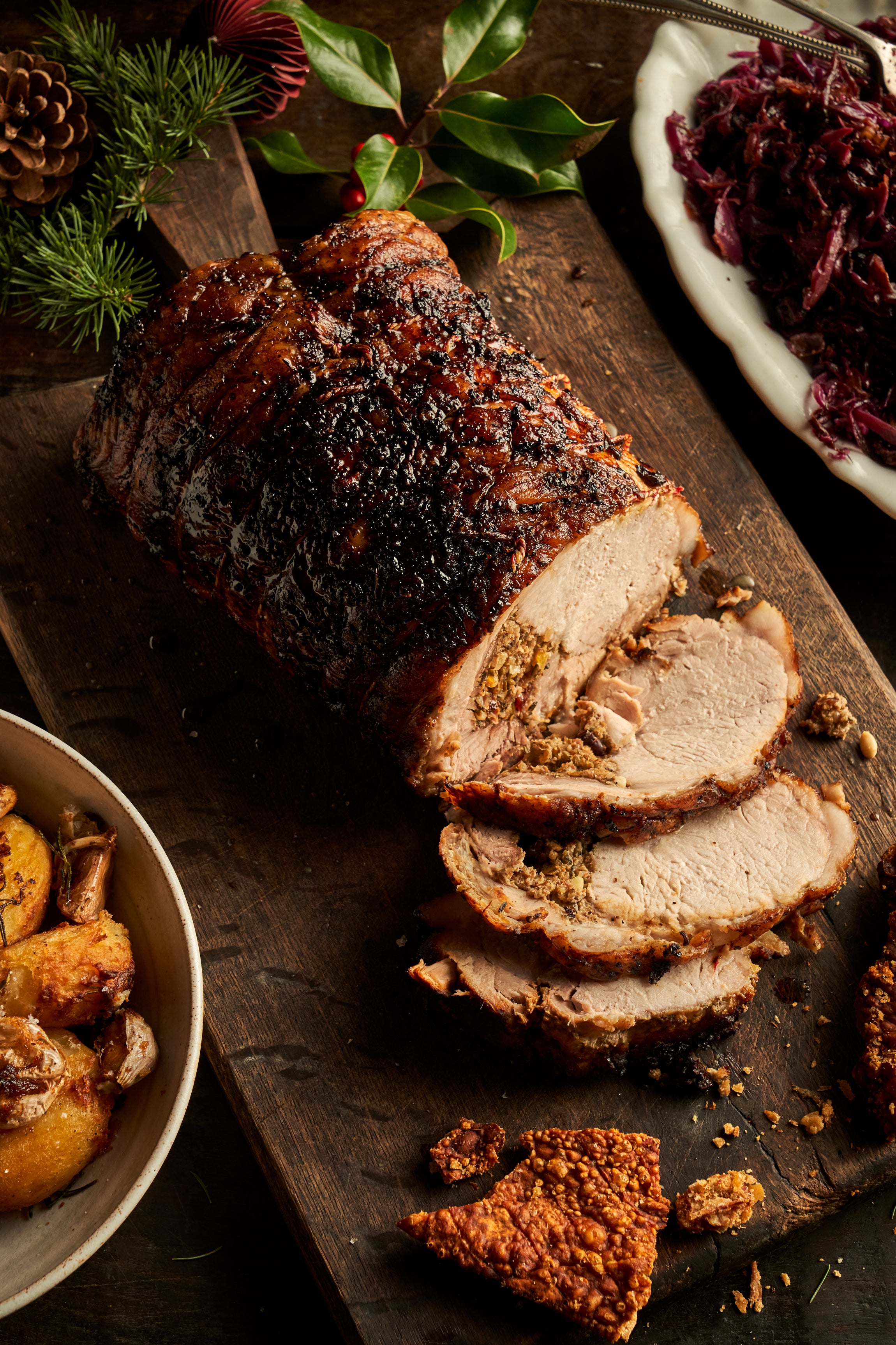
All the theatre of a classic Italian feast, reimagined for the British Christmas table (Chris Terry)
A five-hour labour of love that rewards you with crackling, fruit-studded stuffing and gravy made from the potato stock. It’s Italian Christmas meets British roast – generous, joyful and built for feeding a crowd.
Serves: 8, plus leftovers
Time: 5 hours, plus resting
Ingredients:
1 x 5kg higher-welfare boneless pork loin, with belly attached and fat trimmed to ½cm-thick, skin removed and reserved (ask your butcher)
50ml Vin Santo or sherry
4 carrots
1 red onion
2 sticks of celery
1 heaped tsp fennel seeds
2 tbsp plain flour
1 heaped tbsp cranberry sauce, plus extra to taste
For the stuffing:
200g free-range chicken livers, cleaned, trimmed
250ml milk
4 red onions
4-5 slices of higher-welfare smoked pancetta
Olive oil
50g unsalted butter
1 heaped tsp fennel seeds
3 bay leaves
1 bunch of rosemary (20g)
1 bunch of thyme (20g)
200g mixed dried apricots, cranberries, raisins, sultanas
50g pine nuts
1 whole nutmeg, for grating
250ml white wine
200g stale breadcrumbs
For the potatoes:
2.5kg Maris Piper potatoes
1.5L organic chicken stock
1 bulb of garlic
A few sprigs of fresh rosemary
For the mixed veg:
6 parsnips
1 swede
4 small turnips
10 small carrots
A few sprigs of woody herbs, such as rosemary, thyme, sage
4 cloves of garlic
4 fresh bay leaves
2 tbsp cider vinegar
Method:
1. Get your meat out of the fridge and up to room temperature before you cook it. Place the chicken livers in a bowl, cover with the milk and set aside to soak.
2. To make the stuffing, peel and roughly chop the onions. Finely slice the pancetta, then place in a large frying pan on a medium-high heat with one tablespoon of oil, half of the butter, the fennel seeds, bay leaves and two generous pinches of black pepper. Cook for three minutes, stirring regularly, while you pick and roughly chop the herb leaves, and finely chop the dried fruit, then add to the pan along with the onions and pine nuts. Turn the heat down to medium and cook for 10 to 15 minutes, or until softened and starting to caramelise.
3. Make a well in the middle, add the remaining knob of butter and the livers, discarding the milk. Grate in half the nutmeg, season with sea salt, pour in the wine and allow to cook away. Remove from the heat, pick out and discard the bay leaves, stir in the breadcrumbs, then set aside and allow to cool (you can roughly chop the livers at this point, or keep them chunky).
4. Place the pork loin, fatty side up on a board, score diagonally at one-inch intervals, then season generously all over with sea salt and pepper. Pour over and massage in half the Vin Santo, then flip the pork, pour over and massage in the remaining Vin Santo, then set aside.
5. Lay out several lengths of butcher’s string at one-inch intervals on the board. Place the pork fatty-side down on top, with the loin furthest away from you, then lightly score the flesh three or four times at one-inch intervals along the belly, pack the stuffing tightly on top across the centre underneath the loin, then roll up the pork, patting on and compacting the stuffing as you go – you’ll end up with around 10 stuffing balls’ worth of leftover stuffing. Sit it with the seam underneath and tie with the string to tightly secure it.
6. When you’re ready to cook, preheat the oven to 180C/350F/gas 4.
7. Make a trivet: scrub the carrots, peel, quarter and break up the onion into petals, halve the celery sticks, then place into a large roasting tray. Sit the porchetta on top.
8. Score the underside of the skin and season generously with sea salt and the fennel seeds. Flip it over and score again randomly. Place the fat skin-side up on the top bars of the oven, with the porchetta on the shelf beneath, so the rendered fat drips onto the pork. Cook for three hours, or until the meat is really tender, basting now and again, removing the crackling after about one hour, or when golden and crisp.
9. Peel the potatoes, cutting any larger ones so they’re an even size – you want them quite chunky (roughly eight centimetres). Heat the stock in a large pan, add the potatoes and parboil for 14 minutes. Drain into a colander over a large bowl to catch the starchy stock – this will make an incredible gravy later. Steam dry, then shake the colander to chuff them up. Add to a large roasting tray with the unpeeled garlic cloves, rosemary and a pinch of salt and pepper.
10. Scrub the remaining root veg well, keeping the skin on. Trim and cut the parsnips and swede into rough chunks, cut the turnips into sixths (or eighths, if large), and trim the carrots, keeping them whole. Add to a large roasting tray, season with salt and pepper, pick over the herb leaves, add the unpeeled garlic, bay and vinegar. Set aside.
11. Transfer the cooked porchetta to a board, cover with tin foil and a tea towel, then leave to rest for 1 hour 30 minutes.
12. Carefully spoon a few tablespoons of pork fat over each veg tray (use olive oil, if you’d like to keep them veggie), toss well, then place all the veg in the oven and roast for one hour to one hour 20 minutes, or until golden.
13. Skim away the remaining fat from the porchetta tray into a jar, leave to cool, then place in the fridge for tasty cooking another day. To make your gravy, place the porchetta tray over a medium heat on the hob. Stir in the flour, mashing the carrots and scraping up all those gnarly bits from the base. Stir in the cranberry sauce, then add 700 millilitres of the reserved starchy stock and simmer until it’s the consistency of your liking, stirring occasionally. Strain the gravy through a coarse sieve, pushing all the goodness through with the back of a spoon, then season to perfection, tweaking with a little extra cranberry sauce, if you like.
14. Carve up the porchetta, and serve with the gravy, roast veg, crackling and all your favourite trimmings.
Rick Stein’s roast goose with sage and onion stuffing and apple sauce
open image in gallery
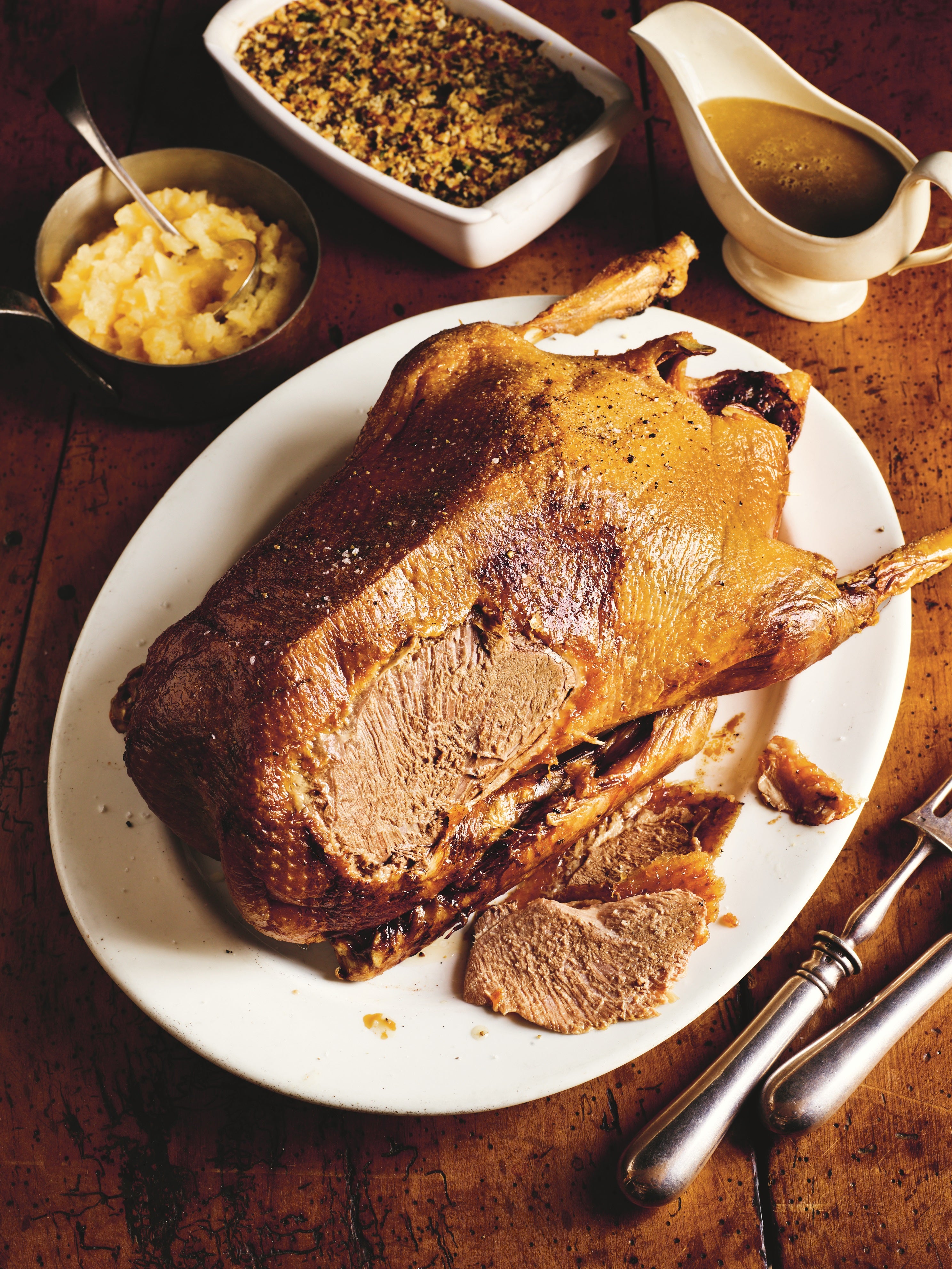
Stein’s ode to goose fat and crisp skin proves there is life beyond turkey (James Murphy)
Stein champions goose for its rich, beef-like flavour and glorious fat. Paired with chestnut stuffing and sharp apple sauce, it’s a centrepiece that feels properly old-school and indulgent.
Serves: 8
Ingredients:
1 x 4.5-5kg oven-ready goose
Salt and black pepper
Sage and onion stuffing
3 large onions, finely chopped
75g goose fat
200g fresh white breadcrumbs
200g vacuum-packed chestnuts, chopped
Finely grated zest of 1 lemon
4 tbsp chopped fresh sage
3 tbsp chopped parsley
1 large egg, beaten
Oil, for greasing
Salt and black pepper
Stock/gravy
4 rashers of streaky bacon, chopped
Goose giblets
1 small onion, chopped
1 carrot, chopped
2 celery sticks, chopped
2 bay leaves
6 black peppercorns
2 heaped tbsp plain flour
Apple sauce
4 Cox’s apples, peeled, cored and sliced
Method:
1. Preheat the oven to 220C/fan 200C. Remove any clumps of fat from the inside of the goose cavity, put them into a pan and leave over a very low heat until melted. Pass the fat through a fine sieve into a bowl. Season the goose inside and out with salt and place it on a rack set over a large roasting tin. Roast for 30 minutes. Remove from the oven and lower the temperature to 180C/fan 160C.
2. Lift the goose onto a board with 2 wooden spoons (you don’t want to pierce the skin), pour off the excess fat from the roasting tin and then replace the goose on the rack. Keep the fat for future roast potatoes.
3. Put the goose back in the oven and roast for a further 1–1½ hours, or until the juices run clear when the thickest part of the thigh is pierced with a skewer and the temperature of the meat when probed in the thickest part of the thigh reaches 66°C for a minute.
4. To make the giblet stock for the gravy, fry the bacon, giblets and vegetables in a little goose fat until golden brown. Pour off the excess fat, add 1.2 litres of water, the bay leaves and peppercorns and simmer for 1 hour. Strain through a sieve and set aside.
5. For the stuffing, fry the onions in about 75g of the goose fat until soft and very lightly browned. Put the breadcrumbs, chestnuts, lemon zest, sage and parsley in a bowl, add the onions and season with salt and pepper to taste. Stir in the beaten egg to bind the mixture together. Spoon the stuffing into a well-greased terrine dish or loaf tin, cover with a lid or foil and set aside to cook later.
6. For the apple sauce, put the prepared apples into a pan with 100ml of water and simmer for 12-15 minutes, stirring now and then, until soft. Season the sauce with a pinch of salt and keep it warm.
7. When the goose is cooked, lift it onto a board, cover it with foil and leave it to rest for at least 20 minutes. Put the stuffing in the oven and cook for 25-30 minutes.
8. Pour off most of the fat from the roasting tin, leaving about a tablespoon. Set the tin on the hob, stir in the flour and cook for a couple of minutes. Add the giblet stock and deglaze the tin by rubbing the base with a wooden spoon. Simmer for about 10 minutes, then taste to check the seasoning. Pass the gravy through a sieve into a warm gravy boat.
9. Serve the goose with the stuffing, apple sauce and gravy, plus roast potatoes and vegetables.
Tip: Not being a very neat carver, I like to carve in the kitchen and take the slices of goose to the table on a large, warm plate. I cut off the legs and cut each one in half, then carve the breast meat away from each side into long, thin slices.
‘Rick Stein’s Christmas: Recipes, Memories & Stories for the Festive Season’ (BBC Books, £28)
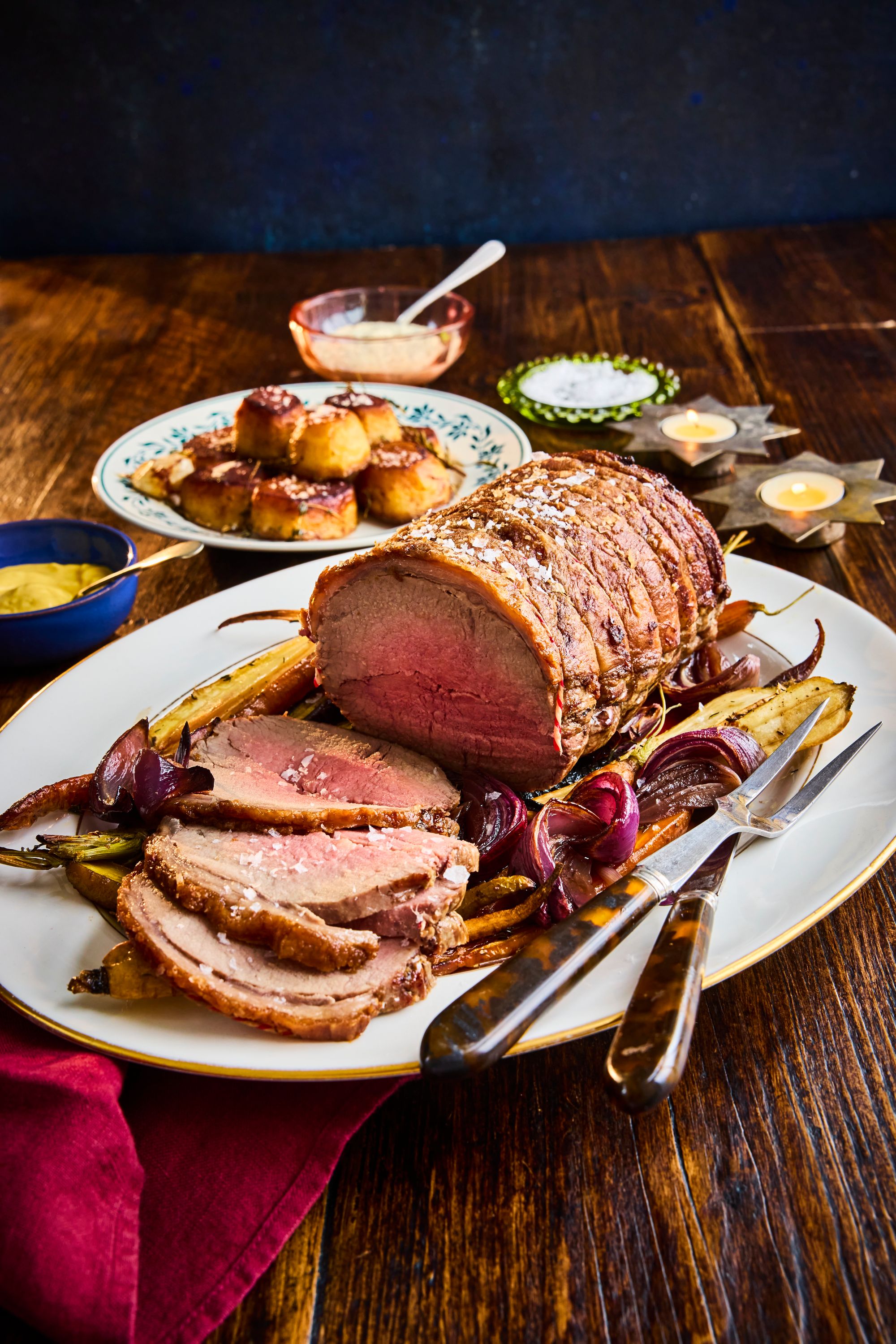
Christmas roast beef with easy veg medley
open image in gallery
A fail-safe roast for anyone who prefers their Christmas centrepiece blush-pink (Maldon Salt)
A classic sirloin cooked until beautifully pink and rested to perfection. With caramelised root veg and a hit of red wine, it’s a great option for anyone who wants festive comfort without the faff.
Serves: 8
Prep time: 15 minutes | Cook time: 50 minutes
Ingredients:
For the beef:
2kg sirloin roasting joint
1-2 tbsp oil or beef fat
Sea salt
A glass of red wine
For the veg:
3 red or brown onions, cut into wedges
500g (rainbow) carrots, cut in half lengthways
500g parsnips, cut into long batons
Small bunch of thyme
2 tbsp olive oil
Sea salt
To serve:
Creamed horseradish (or a mix of 1:1 creamed horseradish and creme fraiche, plus a little chopped parsley)
Mustard
Method:
1. Take the beef out of the fridge 2 hours before cooking. Pat dry and season all over with sea salt.
2. Once the beef has come up to room temperature, preheat the oven to 180C fan.
3. Put the veg and thyme on a large roasting tray. Toss with 2 tbsp olive oil and season with sea salt and black pepper. Roast for 5-10 minutes as you sear the beef.
4. Set a large frying pan over a high heat, add a little oil or beef fat and, once hot, brown the beef on all sides. Perch the browned beef on top of the vegetables, pour in the glass of wine, and transfer to the oven for 20 minutes per kilo (40 minutes for a 2kg joint), turning the roasting tray halfway to ensure even cooking.
5. For the most accurate results, use a meat thermometer and remove the joint from the oven when the internal temperature at the centre of the thickest part of the joint reaches 48-50C for rare, or 51-53C for medium-rare. The temperature will continue to rise as the beef rests, taking it up to 51-53C for rare or 54-56C for medium-rare. Rest for 20 minutes.
6. Serve the beef and vegetables with creamed horseradish and mustard.
Recipe from Maldon Salt
Juleand slow-roast duck

open image in gallery
A Scandinavian alternative that quietly outshines the main-event turkey (Christine Rudolph)
Inspired by Scandinavian Christmas traditions, this duck is slow-roasted until the meat collapses and the skin turns glassy and crisp. Apples, shallots and prunes bring sweetness and depth.
Serves: 8
Ingredients:
4-5kg duck
1 tbsp fine salt
1 tbsp freshly cracked black pepper
500g fragrant apples, cut into wedges, about 1.5 cm thick
3 French shallots, halved
100g prunes
15g thyme sprigs, plus extra to serve
1 tbsp grapeseed or sunflower oil
For the roasting vegetables:
2 large carrots, quartered, cut into 7cm pieces
2 large onions, thickly sliced
2 large celery sticks, cut into 7cm pieces
1 tsp sea salt flakes
For the gravy:
150ml port, sweet vermouth or dry red wine
40g unsalted butter
40g plain flour
Method:
1. Remove the fat close to the cavity of the duck. Wash the duck and pat dry. Rub all over with half of the salt and pepper. Stuff the front cavity (at the neck) with some of the apples, then bring the flap of skin over the apples and secure with a toothpick.
2. In a bowl, mix the shallots, prunes, thyme, remaining apples and some of the remaining pepper. Place in the large cavity. Rub the duck with oil and rub with remaining salt and pepper. Tie the legs together and pin the wings to the side of the bird with two metal skewers. Place on a wire rack over a tray and chill to dry out the skin, up to 24 hours.
3. Preheat the oven to 120C (250F). Bring the duck to room temperature. Place the roasting vegetables in the centre of a roasting tray and place duck on top.
4. Sprinkle with a little more salt. Roast for four to five hours.
5. The inner temperature should be 80C (176F). If the pan is getting dry, add 150-300 ml water.
6. Rest the duck on a board and set the vegetables aside. Pour the juices off into a bowl and leave somewhere cold for the fat to set on top, then spoon the fat off. You should have at least 350ml duck juices. If not, make up with water.
7. Place the roasting pan over low heat and add the port to deglaze, scraping well. Add the butter to melt, stir in the flour, then the duck juice. Cook until the gravy thickens. Serve the duck with the gravy and vegetables, garnished with thyme.
‘Copenhagen Cult Recipes’ by Christine Rudolph and Susie Theodorou (Murdoch Books, £20)
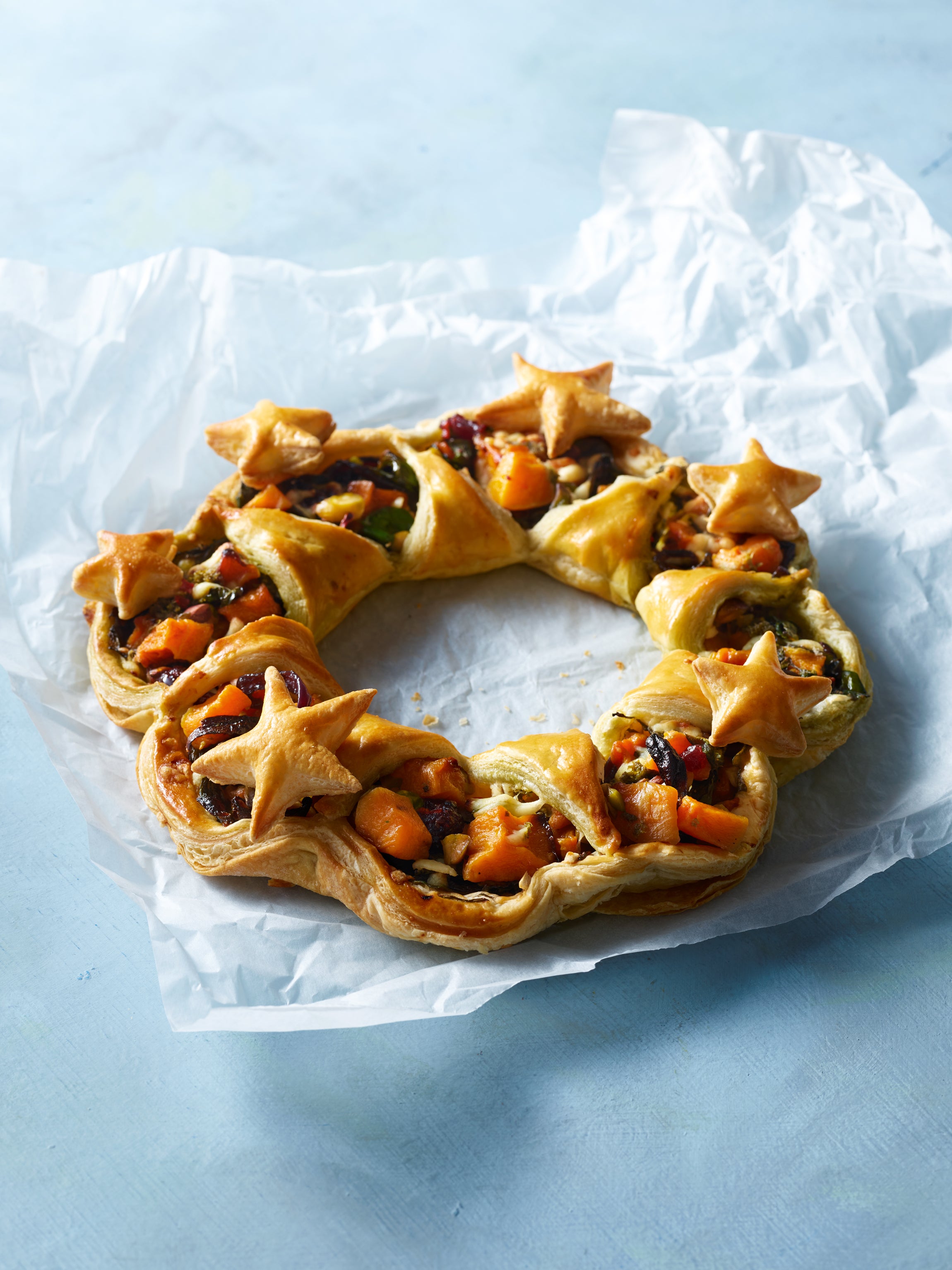
Heather Thomas’s butternut squash festive wreath
open image in gallery
A vibrant plant-based showpiece that looks like edible Christmas decor (Joff Lee)
Part decorative centrepiece, part clever vegetarian main, this pastry wreath delivers colour, crunch and festive spice. Pesto, cranberry and chilli cut through the richness for a dish that looks as good as it tastes.
Serves: 4-6
Ingredients:
900g butternut squash, peeled, deseeded and cut into small cubes
2 red onions, thinly sliced
2 tbsp olive oil
2 tbsp maple syrup
4 unpeeled whole garlic cloves
2 x 375g packs of ready-rolled puff pastry
100g baby spinach leaves
85g shelled pistachios
1 red chilli, deseeded and diced
100g grated Cheddar cheese
4 tsp green pesto
4 tsp cranberry sauce
1 medium free-range egg, beaten
Sea salt and freshly ground black pepper
Method:
1. Preheat the oven to 200C (180C fan)/400F/gas 6. Line two baking trays with baking parchment.
2. Place the squash and red onions on two other baking trays and drizzle with the olive oil and maple syrup. Tuck the garlic cloves in between, season lightly with salt and pepper and roast in the preheated oven for 30-40 minutes, or until tender and starting to caramelise.
3. Meanwhile, roll out the pastry sheets, if needed, until they are about six millimetres thick and big enough to cut a large round from. Place each one on a lined baking tray. Using a 27cm flan tin or dinner plate as a guide, place it on top of each puff pastry sheet and cut round it to make a large circle. Set aside the pastry trimmings. Next, use a smaller plate to lightly score out an inner circle in the centre of each round. Use a sharp knife to cut through the pastry of the inner circle, first lengthways, then widthways, and again through the quarters to create eight sections.
4. Squeeze the garlic out of the skins and stir into the hot roasted squash and onion mixture. Add the spinach and leave it to wilt slightly and soften. Place spoonfuls of the mixture in a ring around each pastry disc, avoiding the outer edge and the central star.
5. Sprinkle with the pistachios, chilli and grated cheese. Drizzle alternately with pesto and cranberry sauce around the ring on top.
6. Work your way round each disc, raising the outer edge a little and pulling the point of each cut inner section over the filling towards the pastry edge. Pinch them together with your fingers to seal.
7. Lightly brush the pastry with beaten egg and, if using, attach some pastry stars (see below). Bake in the preheated oven for 20 minutes, or until puffed up, crisp and golden brown.
Note: To make decorative pastry stars, roll out the pastry trimmings and stamp out some stars with a star-shaped pastry cutter. Attach to the pastry wreath with beaten egg before baking.
‘The Veggie Christmas Cookbook’ by Heather Thomas (HarperNonFiction, £12.99)
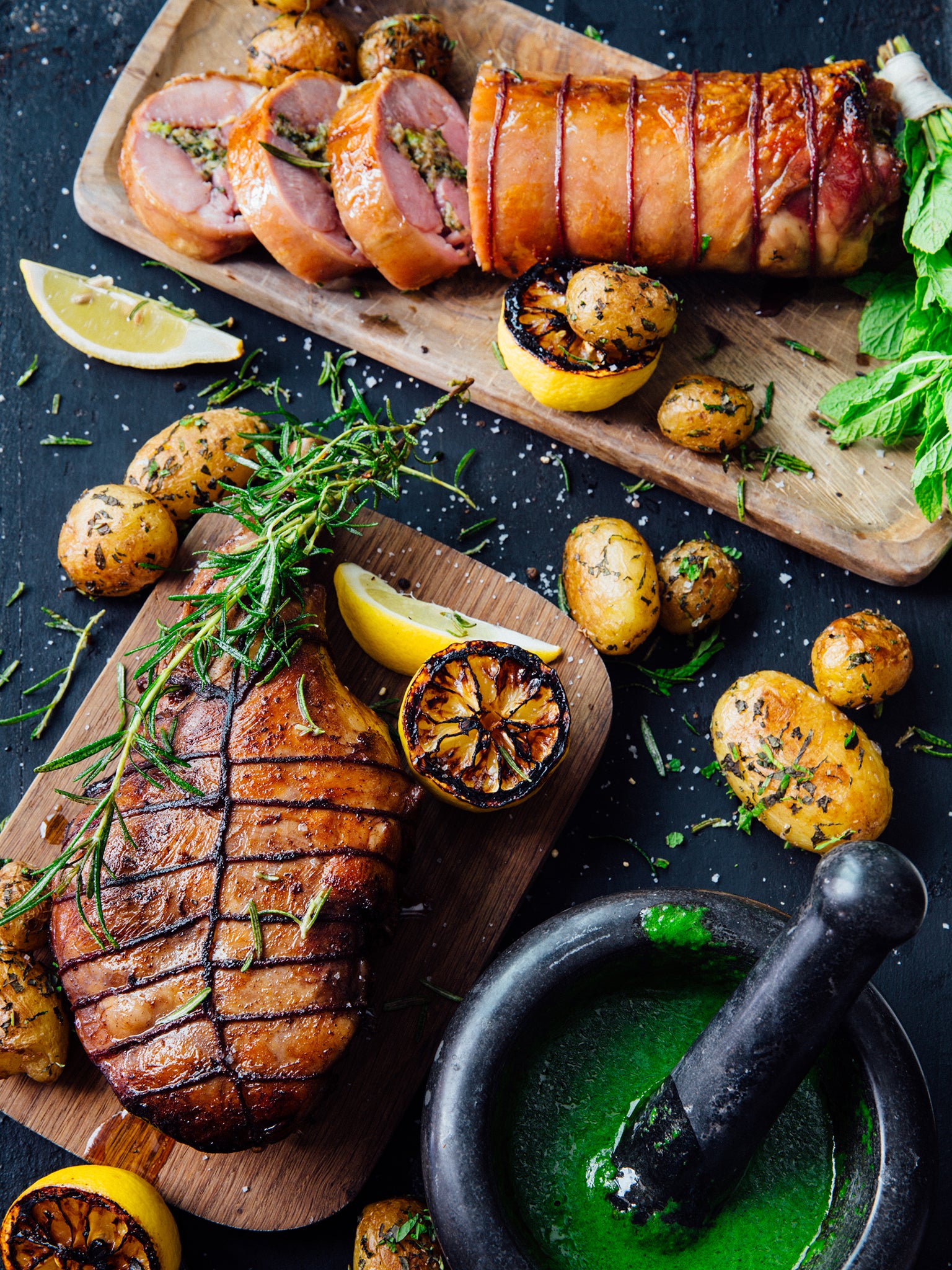
Greg Marchand’s stuffed leg of lamb with Jersey Royal potatoes
open image in gallery
A Parisian take on the Sunday roast, built for those who want proper festive drama (Greg Marchand)
Frenchie’s Greg Marchand transforms a traditional British roast with a mint, pistachio and parmesan stuffing that brings bright, herbaceous luxury. Perfect for anyone who wants a centrepiece with real flair.
Serves: 4
Preparation: 1 hour 30 minutes
Ingredients:
For the stuffing:
2 shallots, finely sliced
50ml water
50ml white wine vinegar
1 tsp sugar
200g mint, blanched and coarsely chopped
200g sandwich bread, toasted and cooled
45g pistachio nuts, roasted and coarsely chopped
40g parmesan cheese
3 anchovies
Dash of Tabasco sauce
2 eggs
½ tsp thyme
For the lamb:
1 leg of lamb, deboned – you can ask your butcher to remove the bone
For the Jersey Royal Potatoes:
600g Jersey Royal potatoes
200g butter
½ bunch mint, minced
Juice of 1 lemon
Pinch of salt
Method:
1. For the stuffing, combine all ingredients and cook over medium heat until the liquid evaporates and the shallots are translucent. The mixture should be moist and should hold its shape if rolled into a ball.
2. For the lamb, preheat the oven to 220C (gas mark 7).
3. Stuff the leg and tie it up. Heat the oil in a skillet or frying pan and brown the meat well on all sides. Roast the leg with 3 lemons, halved, for 30 minutes, and then reduce the temperature to 180C (gas mark 4) and cook for a further hour.
4. Take the meat out of the oven, wrap in aluminium foil, and rest for 20 minutes.
5. For the potatoes, in a stockpot, cover the potatoes with cold water and add plenty of salt. Bring to a boil and cook the potatoes until they are soft, about 20 minutes, then drain.
6. Heat the butter in a large skillet or frying pan and brown the potatoes over low heat. Add the mint and season with lemon juice and salt.
7. Serve the potatoes in a side dish. Carve the lamb at the table and serve with the roasted lemons.
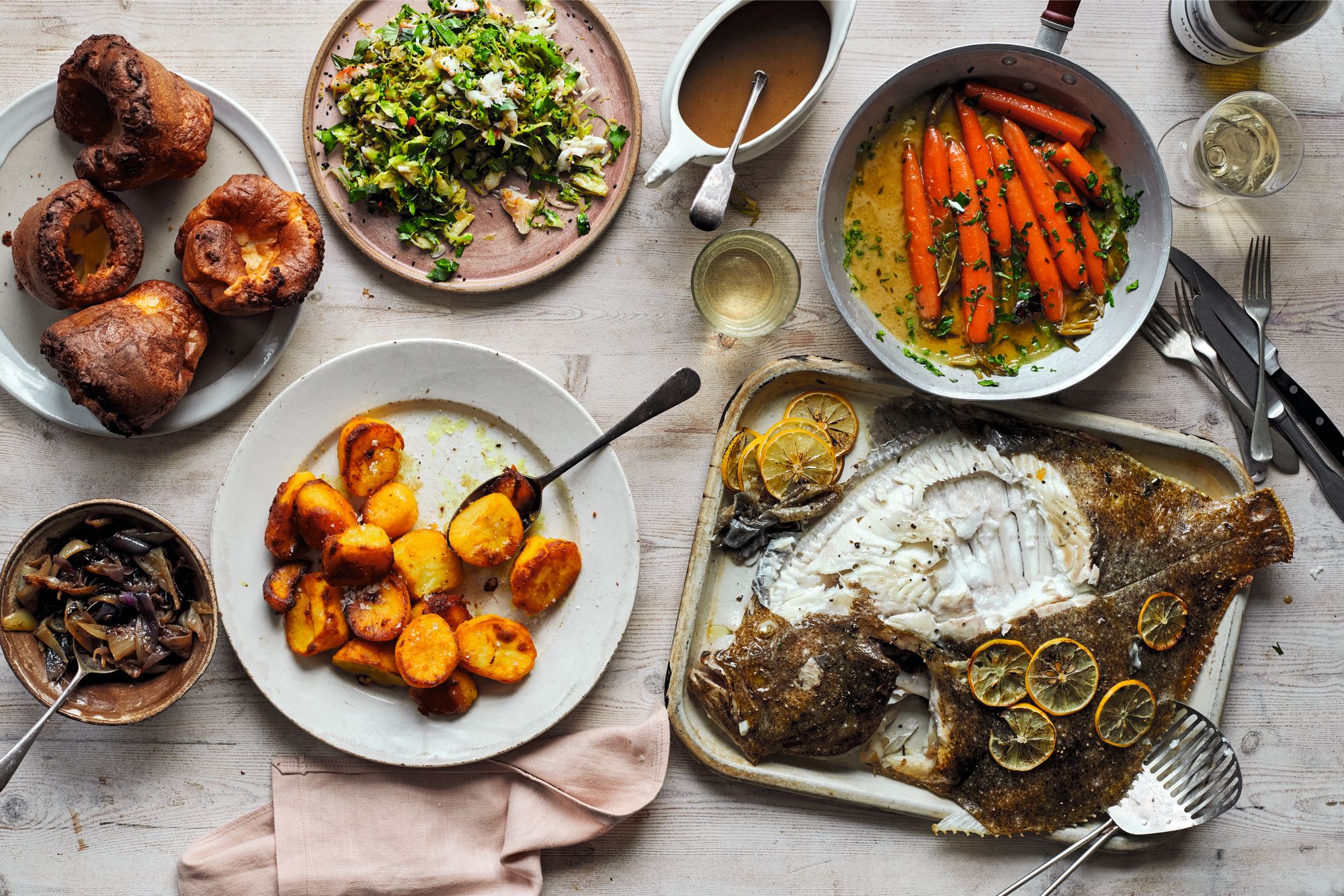
Paul Ainsworth’s traditional roast dinner (but with turbot)
open image in gallery
For when only a grand, gold-star centrepiece will do – and you want guests to talk about it all year (Issy Croker)
Ainsworth swaps meat for a whole turbot, creating a grand, deeply savoury centrepiece served with yorkshire puddings, glazed carrots and an intense chicken wing gravy. It’s Christmas dinner reimagined with chef precision.
Serves: 4
Ingredients:
1 whole turbot, weighing about 2.5 kg
10 tbsp olive oil, plus extra for frying
1 lemon, thinly sliced
10 sprigs of thyme
4 white onions, peeled and cut into eighths
4 red onions, peeled and cut into eighths
8 large sage leaves
100ml good-quality white wine
Cracked white pepper
Sea salt
For the braised carrots:
200g unsalted butter
500ml chicken stock
3 sprigs of thyme
2 star anise
1 bay leaf
65g honey
3 pinches sea salt
8 medium carrots, peeled
10g flat-leaf parsley, chopped
For the chicken wing gravy:
500g chicken wings, chopped
2 tbsp olive oil
5 banana shallots, thinly sliced
4 sprigs of thyme
3 garlic cloves, roughly chopped
½ tsp coriander seeds
½ tsp black peppercorns
160g button mushrooms, sliced
5 sprigs of tarragon, torn
100ml Madeira
300ml white wine
10g dried porcini mushrooms
900ml white chicken stock
35g chicken granules (I use Bisto)
Cracked black pepper
For the yorkshire puddings:
150g plain flour
3-4 large eggs (about 150g)
150ml whole milk
8 tbsp olive oil or beef dripping
Method:
1. Preheat the oven to 180C fan.
2. The first job is to prepare the turbot. You can ask your fishmonger to do this, or if not, take a sharp pair of scissors and cut off the dorsal fins, then cut off the tail with a sharp knife. On both the white and dark sides of the turbot, make 4-5 light incisions over all four fillets. Keep the fish darkskinned side up and season with sea salt on both sides. Take 5 tablespoons of the olive oil and massage this all over the turbot – the top, underneath and including the head. Now lay the lemon slices all over the dark side of the fish and half the thyme (5 sprigs).
3. Now take a medium-to-large bowl and add the onion wedges, the remaining 5 tablespoons of olive oil, the sage leaves and white wine and season with sea salt and a few twists of white pepper. Give the ingredients a good mix with your hands, then transfer all the onions to a baking tray to create a trivet. Cover with foil and bake for 1 hour.
4. Remove the foil from the tray, place the turbot on top of the onions and continue to cook for 20-25 minutes. The best way to tell if this beautiful fish is cooked is by investing in an inexpensive digital meat probe, and probing at the thickest part of the fillet, which is near the head. When the probe reads 50C, take the turbot and onions out of the oven and allow the fish to rest. Now place the turbot on a platter, ready for the middle of the table.
5. Now caramelise the onions. Place a large frying pan over a high heat and add a little olive oil. Place the lovely braised onions in a flour sieve, just to remove any excess moisture, then place them into the hot frying pan and fry for 2-3 minutes to give them some lovely colour. I love to spoon these baked, caramelised onions into the middle of my yorkshire pudding wells.
6. To make the braised carrots, place all the ingredients, except the carrots and parsley, into a large casserole and bring to a simmer. Add the carrots to the hot liquid, cover with a lid and bake in the oven for 50 minutes.
7. Remove the carrots from the oven, place the casserole dish over a medium-high heat and reduce the cooking liquor for 4-5 minutes, until the carrots are nicely glazed. Finish with the parsley and serve in the centre of the table alongside the turbot.
8. For the chicken wing gravy, place the chicken wings in a roasting tray with the olive oil and a couple of pinches of sea salt. Roast them for 45 minutes, stirring with a spatula every 15 minutes, so they are caramelised all over.
9. After 45 minutes, remove from the oven and pour the excess fat from the roasting tray into a large saucepan. Heat the fat over a medium–high heat, then add the shallots, thyme, garlic, coriander seeds and peppercorns and cook in the fat until nice and golden. Now add the mushrooms and cook until golden brown. Then add the tarragon and deglaze the pan with the Madeira, reducing the liquid until the onion mixture is dry. Now add the white wine and cooked chicken wings and reduce again until all the liquid has evaporated. Then add the porcini mushrooms and chicken stock and bring the mixture to a simmer. Whisk in the chicken granules, turn down the heat and simmer for 10 minutes. Using a ladle, skim any excess fat off the top of the sauce, then pass the thick gravy through a fine sieve. The gravy is now ready to serve with the turbot roast dinner.
10. To make the yorkshire puddings, increase the oven temperature to 220C fan. Add the flour to a mixing bowl, break the eggs into the flour and whisk together. Pour in the milk, whisking, to form a smooth batter and season with a pinch of sea salt and couple of twists of black pepper. Place a tablespoon of oil or dripping into each well of a pudding tin or mould.
11. Transfer the tin to the oven and, when the oil is nice and hot (and ever so slightly smoking), ladle or pour the batter into each well, filling them halfway. Bake for 25 minutes until risen, crisp and golden. Do not open the oven door during cooking – check the yorkshires through the window of your oven. Once they are cooked, take the yorkshires out of the oven and, very carefully (ideally with a pair of tongs), turn the yorkshire puddings upside down and pop back into the oven to drain off any excess fat.
12. To serve, place all of your vegetables, yorkshire puddings and gravy in warm dishes on the table around the fish, for everyone to help themselves.
‘For the Love of Food’ by Paul Ainsworth (Pavilion Books)
Gaz Oakley’s vegan stuffed squash roast

open image in gallery
Proof that the vegan main can be the most beautiful thing on the Christmas table (Quadrille)
A plant-based main that feels abundant and celebratory, packed with spiced rice, mushrooms, chestnuts and glazed onions. Beautifully layered and surprisingly hearty, it proves vegan Christmas can be every bit as indulgent.
Serves: 6
Ingredients:
1 large butternut squash, washed
A little olive oil
For the glazed onions:
2 red onions, finely sliced
3 tbsp balsamic vinegar
5 tbsp organic coconut sugar
For the Christmas rice:
150g wild rice, cooked
150g whole cooked vacuum-packed chestnuts, roughly chopped
75g dried apricots, chopped
150g mixed nuts, chopped
Pinch of cayenne pepper
Pinch of paprika
Juice of ½ lemon
Pinch of sea salt and pepper
Pinch of dried sage
For the sautéed mushrooms:
160g fresh mushrooms (I used girolles)
1 tsp roasted garlic powder
Sea salt and pepper
5 tbsp cranberry and orange sauce
4 peppers, roasted, skin removed
6 sun-dried tomatoes, rehydrated
2 handfuls baby spinach
Method:
1. Preheat your oven to 180C (350F). Split the squash in half lengthways, place cut-side up onto a baking tray and bake for 45 minutes, or until just soft.
2. Meanwhile, make the glazed onions. Heat three tablespoons of water in a non-stick saucepan, add the sliced onion and sweat for five minutes. Add the vinegar and sugar, then cook for a further 10 minutes over a low heat, stirring occasionally, until caramelised. Set aside.
3. Mix the Christmas rice ingredients in a mixing bowl until fully combined, then set aside.
4. Sauté your mushrooms. Heat two tablespoons of water in a non-stick frying pan over a medium heat. Add the mushrooms, garlic powder and seasoning. Sauté for five minutes.
5. When the squash is cooked and cooled slightly, scoop out the seeds, then scoop out a 2cm (1in) channel of flesh and mix that into the Christmas rice mixture. Spoon the cranberry sauce into one of the squash halves, followed by the rice. Top with the peppers, onions, mushrooms, sun-dried tomatoes and spinach. Place the other squash half on top, tie together in three places and roast for a further 15 minutes. Carve and serve straight away.
‘Vegan Christmas’ by Gaz Oakley (Quadrille, £15)
Dining and Cooking