
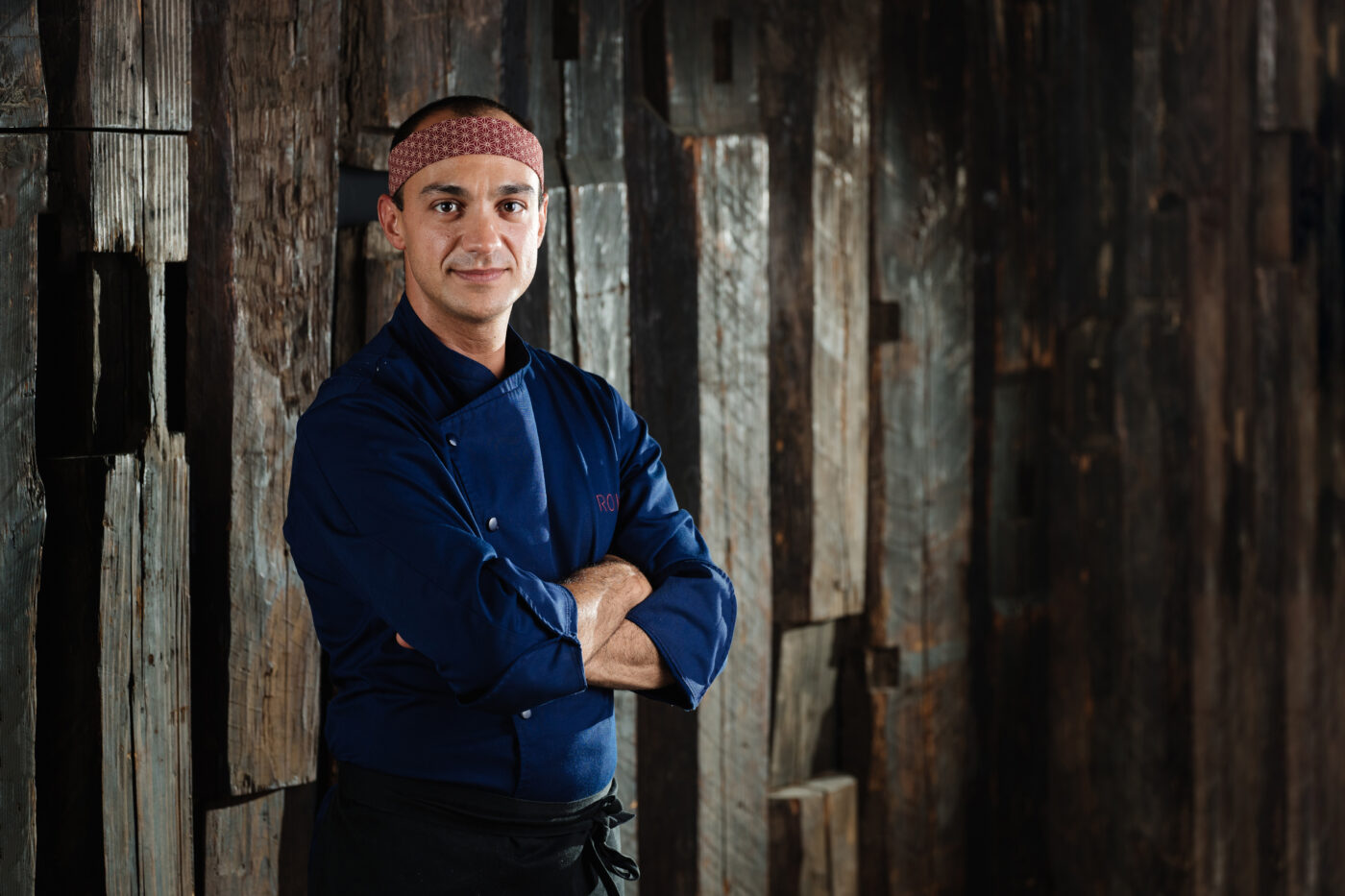
Italian and Japanese cuisines are not, traditionally, a match made in heaven. We’ve all seen enough well intentioned but disastrously executed attempts at fusion cooking on MasterChef to know that some cuisines are best left well enough alone. Which makes Sardinian-born executive chef Luca Spiga’s Japanese-influenced menus at Roka the exception that proves the rule.
Having joined the global Japanese restaurant group in 2011, Spiga has risen through the ranks from head chef to his current position as group development chef, looking after Roka’s four London locations alongside sister brand Etaru. Working closely with Roka founder and Zuma visionary, Rainer Becker, Spiga ensures that at the heart of Roka lies the art of robatayaki, a theatrical culinary art which invites guests to witness dishes being prepared and cooked over charcoal on a central robata grill, a tradition dating back to Japanese fishermen.
That, however, is a world away from the culinary traditions Spiga was brought up with. Born in the Sardinian capital of Cagliari, Spiga knew from the off that his calling was in the kitchen, and undertook a variety of training placements in hotels and restaurants to hone his homeland’s cuisine. He upped sticks and moved to London in 2005, where he found a gig at the now-closed Michelin-starred Italian restaurant, Locanda Locatelli. Having spent five years working his way up through the ranks, the time came to diversify his culinary knowledge and, in 2010, he became chef de partie at Marcus Waring at The Berkeley – another Michelin approved establishment, this time serving contemporary British cuisine.
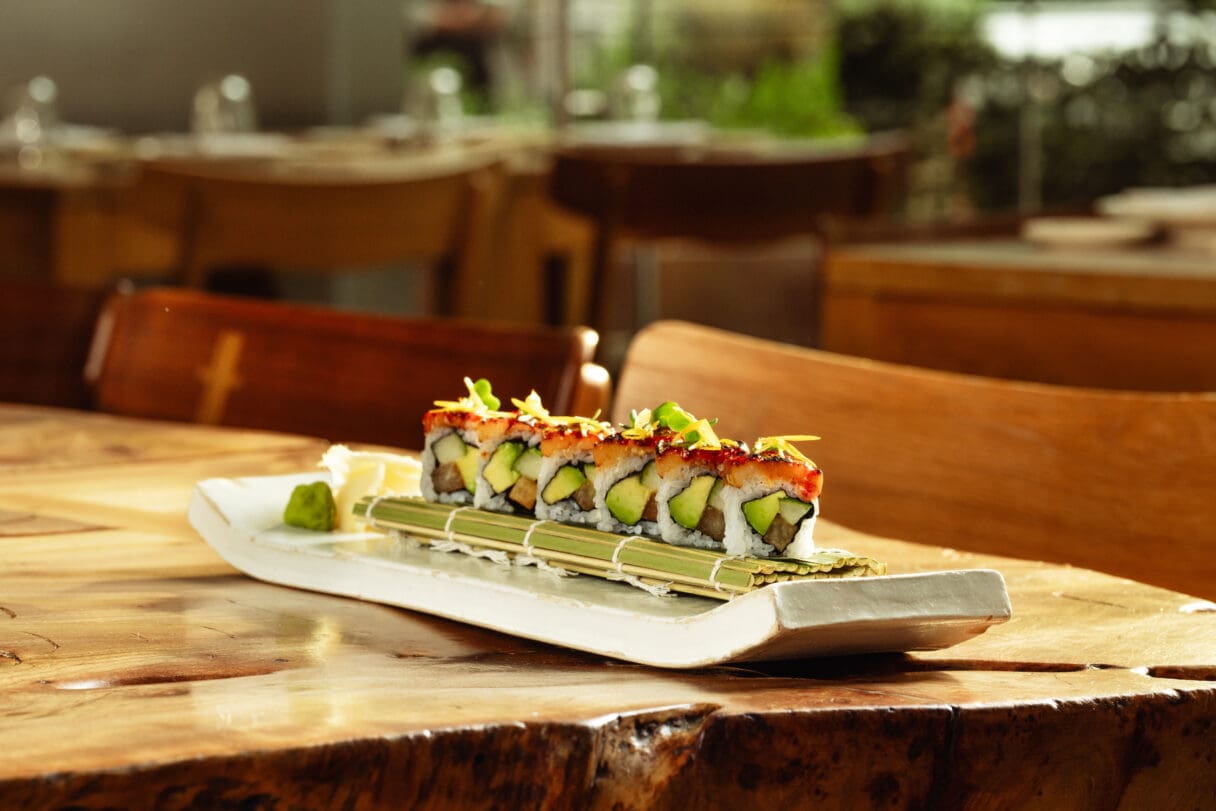
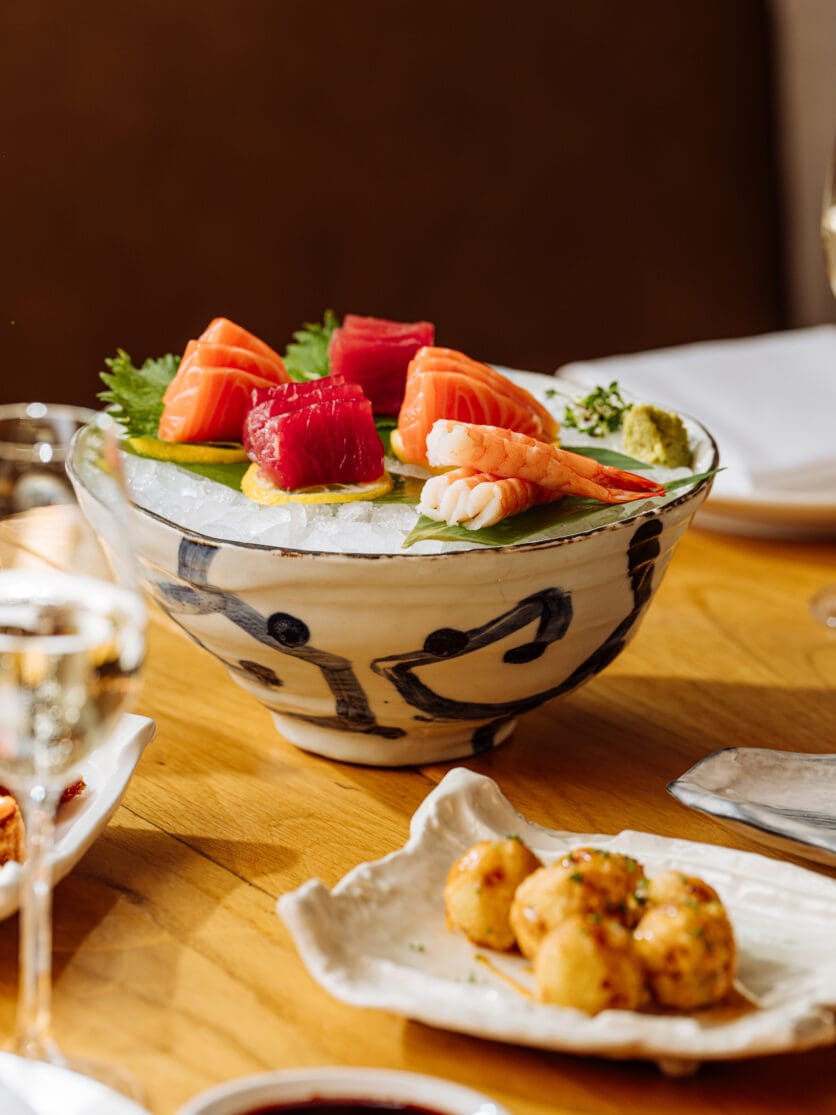
With his skillset largely centred around British and European flavours, Spiga was after a new challenge – and a new cuisine. He joined Roka in 2011 and went back to basics, learning every intricacy of Japanese cuisine, from carving sashimi to rolling maki. Having earned his stripes, and a new palate, Spiga now oversees every dish on the Roka menu, from Australian wagyu sirloin with burned leeks and chilli butter, to handcrafted dumplings, traditional rice hot pots, and an array of temaki, sushi, maki and robata-grilled dishes.
We sit down with Spiga to discuss his transition from Italian to Japanese cuisine and staying ahead of food trends.
Tell me about your childhood. Did you always want to be a chef?
I was born in Sardinia and during summer I spent a lot of time with my grandmother baking sweets and traditional dishes from the island. Here is where my passion for food started. Looking and learning from my grandmother was something magical.
What’s your earliest food memory?
At three years old, I remember eating my entire birthday cake almost all by myself.
What restaurants did you work in during the early years of your career?
When I came to London my very first job was in an Italian-Japanese restaurant called Spighetta. Then I spent five years with Giorgio Locatelli learning all the Italian signature dishes to very elevated standards. I started in pastry, but moved around all of the sections of the kitchen until I decided to leave for a French culinary experience.
I went to work for the then-two Michelin-starred Marcus Wareing at The Berkeley. It was a very good experience but I realised I needed to move away from Michelin-starred restaurants to find something else that I could feel more passionate about.
Where did you hone your Japanese culinary skills?
After all of my experience with Italian and French restaurants, I decided I wanted to learn more about Asian/Japanese cuisine. I believe every chef needs to know and understand the different culinary traditions around the globe, so they can really understand flavour and how guests enjoy our food. I started in Roka Charlotte street, where I learnt, and continue to develop, my Japanese culinary skills.
I have travelled to Japan several times over my years with Roka to seek inspiration and look for new trends and techniques to keep innovating here in London and at our restaurants around the world. Japanese cuisine is very focused on the quality of the ingredients and I also found this to be the case in my home country throughout Italian cuisine.
What drew you to Roka?
Learning about Japanese cuisine [and] cooking on an open fire with amazing ingredients. I also love that it’s a big team of people to share energy with.
What influences your menus?
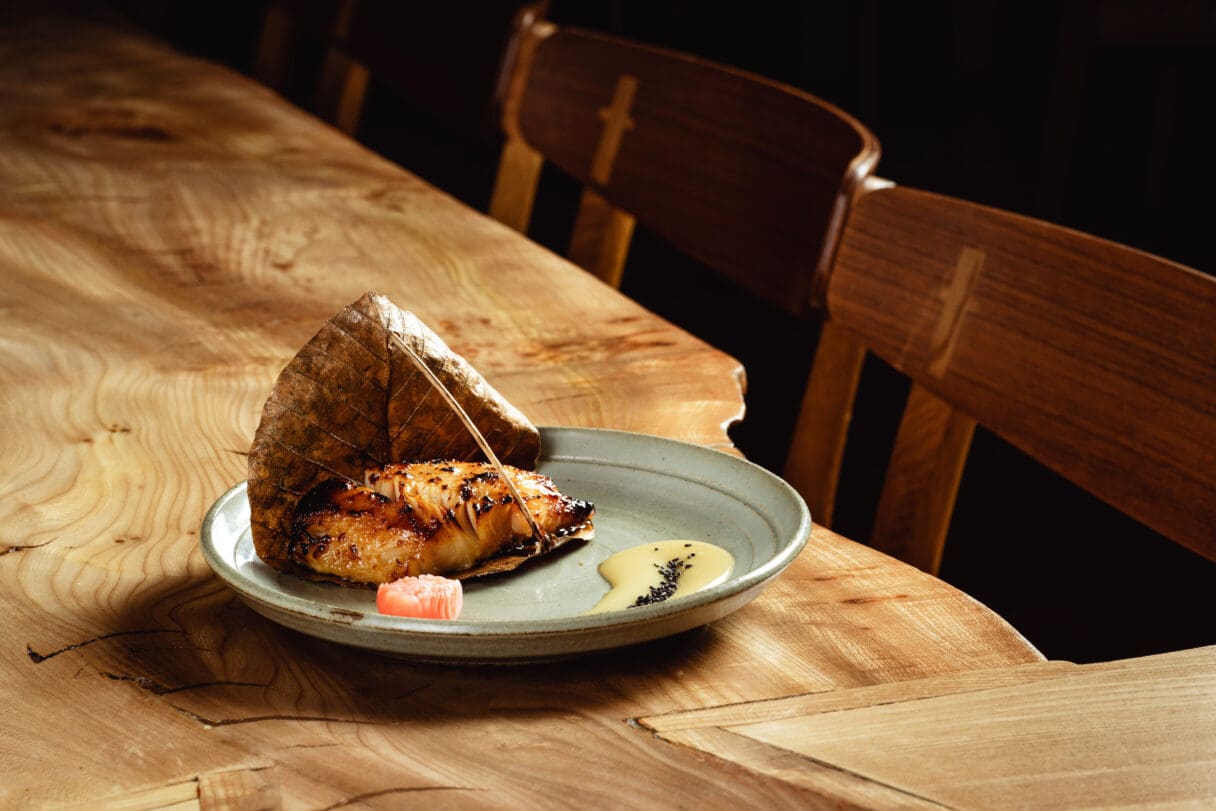
I am always trying to find a better way to create/keep consistency around the globe whilst also trying to find local ingredients in each location to create a unique dish at every Roka restaurant.
You’ve been at Roka for more than 15 years. How has the restaurant evolved in that time?
Yes, time goes very fast! We always want the best for the guest and like to stay on top of new trends and techniques. We are more aware of dietary and allergy requests, and always try to create dishes thinking about this.
What is your one other favourite London restaurant?
J.Sheekey is one of many favourites, always consistent and very old school.
Are there any other London chefs you’re impressed with at the moment?
Clare Smyth – I love the way she treats her teams and her staff, and the obvious impact she has had on the country’s culinary scene.
How do you spend your free time away from the restaurant?
Spending time with my family, cooking with my son, and getting outdoors.
What’s your favourite dish on the menu?
Lamb cutlet is one of the most incredible dishes. It is well balanced and cooked on an open fire which really elevates the dish.
Visit rokarestaurant.com
Read more: Meet the chef: Martyn Nail of The Dorchester
Dining and Cooking