
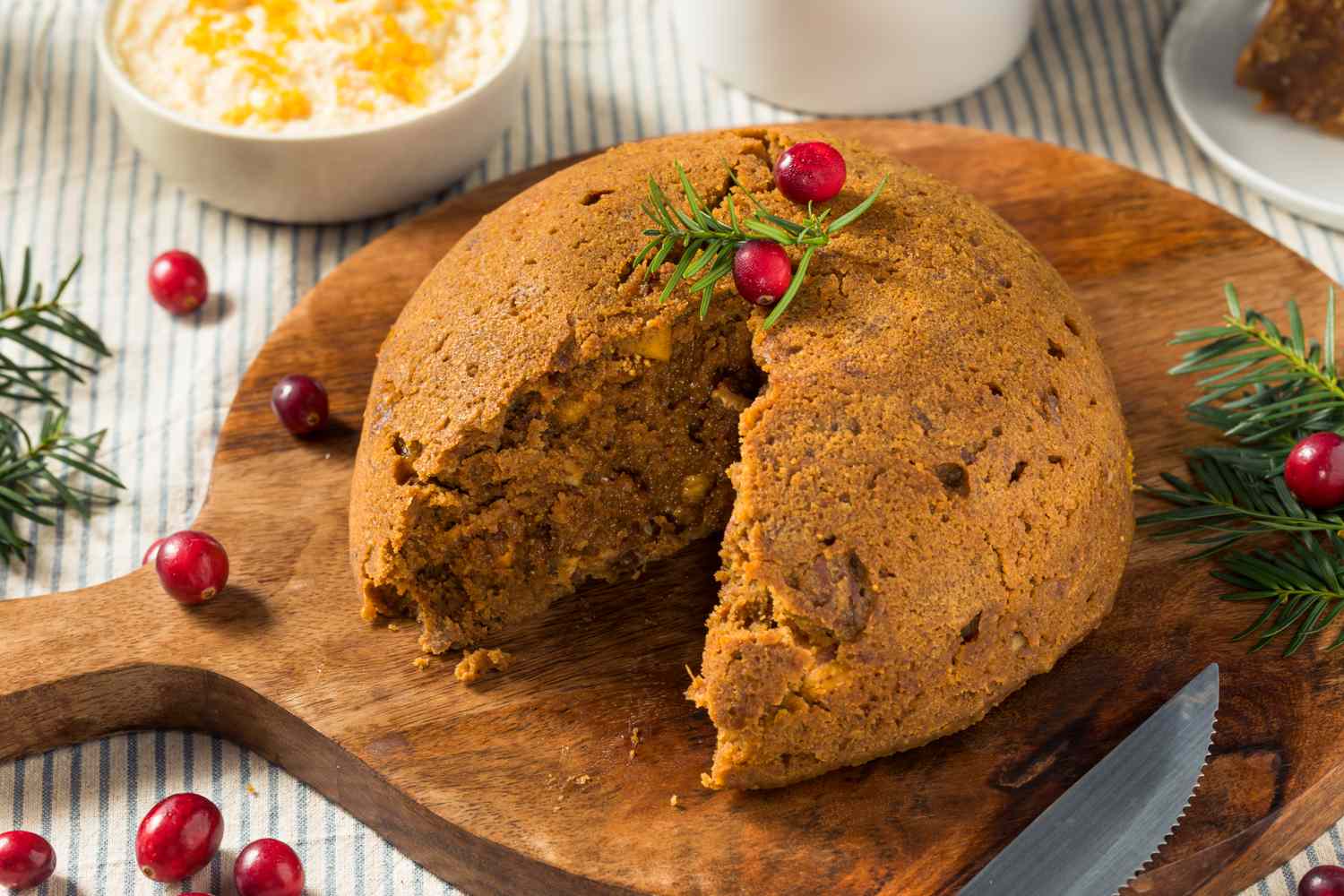
We’ve sung “oh, bring us some figgy pudding” since childhood without really understanding the context or what the mysterious dish comprises. That, in and of itself, makes the festive dessert iconic.
Crazy enough, the original recipe didn’t demand actual figs (it could be any dried fruit), was often savory (showcasing tender beef or mutton), and lacked a pudding-like consistency, making it one of those conundrums, like sugar plums, that has found a permanent, yet undisputed place in American holiday vernacular.
So we tasked Shailesh Deshmukh, executive development head chef for Edwardian Hotels to delve into figgy pudding’s history and provide additional insight on the traditional holiday dessert.
What Is Figgy Pudding?
“Traditional figgy pudding typically includes chopped figs, mixed vine fruits, grated apple, sugar, breadcrumbs, and warm spices such as allspice,” explains Deshmukh. “These ingredients come together to create the pudding’s distinctive rich, fruity flavor.”
The dish is often steamed and served in a dome shape. Its texture is also dense and cake-like, sometimes flambeed in brandy for dramatic flair and garnished with a holly sprig for even more of a festive presentation.
What Is The History Of Figgy Pudding?
It’s important, first and foremost, to reiterate that “pudding” shares a different meaning in British English. Rather than a congealed confection derived from a boxed instant powder mix, it typically implies the sweet course of a meal (i.e. “I’m going to have a slice of cake for pudding.”)
Figgy pudding’s origins were also more savory, in broth form, and with raisins, other dried fruits, spices, and wine as added luxuries. It was also commonly referred to as “frumenty,”
“The mixture was traditionally enriched and thickened with breadcrumbs or ground almonds, giving it a rich texture long before it evolved into the steamed pudding we know today,” says Deshmukh. The raw fat from the loins and kidneys of animals, otherwise known as “suet,” was also used as a thickening agent.
“Over time, the heavy, savory pottages cooked in the medieval period gradually evolved as ingredients like [the aforementioned] dried fruits, sugar, and spices became more accessible,” he adds. “Cooks began transforming these pottages into sweeter, enriched puddings, leading to the dessert-style figgy pudding we recognize today.”
Due to its cold weather-appropriate preparation and temperature and the inclusion of seasonal spices, it is now primarily enjoyed during Christmas.
Modern Takes On Figgy Puddings
As with most traditional dishes, recipes evolve to excite the palate and tap into a chef’s creative arsenal.
At The Londoner hotel, Deshmukh reveals that their iteration adds a “special touch” by soaking dried fruits in alcohol for several months. “This long infusion enhances the depth and richness of the pudding’s flavor,” he says.
Additionally, with more contemporary cooking techniques and the use of modern ovens, Deshmukh notes that today’s versions tend to be “lighter in texture while retaining the traditional flavors.”
Pastry chefs have also swapped the suet for butter and added warm toffee and caramel sauces to infuse a bit of moisture. Additional interpretations include incorporating dried citrus peel and walnuts, as well as reimagining the structure to bake in cookie and pie form.
Bring Us Some
No matter the preparation, one thing’s for certain: The beloved seasonal treat has found a permanent spot on holiday tables around the world, but now with a frame of reference. And if fig is the focus but a cake isn’t calling your name, try one of these fresh and flavorful fig recipes to satisfy any sudden hankering.
Dining and Cooking