

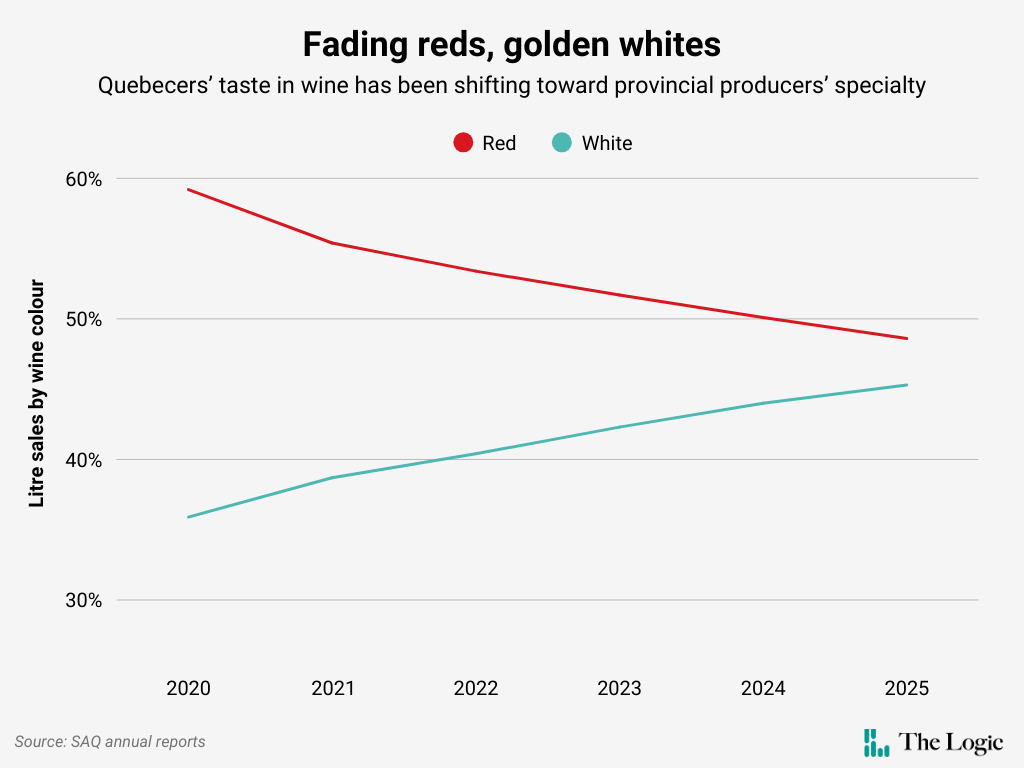
MONTREAL — Quebecers, far and away the biggest wine drinkers in Canada, are drinking far less of the red stuff these days, with sales falling 18 per cent over the last five years, according to data from Société des alcools du Québec (SAQ).
It might seem strange, then, that Quebec wineries are happy with the development. That’s because the province, which produces far more white wines, is poised to benefit from a global trend toward Chardonnays, Rieslings and other lighter shades of plonk. “We’re definitely in line with what people are drinking, so it’s actually working out quite well,” said Mélanie Gore, CEO of Conseil des vins du Québec (CVQ), which represents the province’s winemakers.
Talking Points
Because of its weather, Quebec has long produced more white than red wine—which bodes well for the increasing demand for the lighter stuff
The trend will continue in the coming years, with wineries in the province planning on planting 75 per cent white varieties in the next three years, mostly at the expense of red grapes
Grapes have grown in Quebec for centuries. Coaxing anything drinkable from them has been a challenge for nearly as long. The cold winters and humid summers tend to visit a particular hell on grapes, as does the lack of available sunshine compared to, say, France’s Burgundy region. Growing grapes often involves covering them when they are growing and burying their vines when they’re not. It also means planting grape varieties like Vidal and Frontenac blanc—mostly white hybrids engineered to better withstand everything that the Quebec climate throws at them.
Related Articles
By
Joanna Smith and Aimée Look
As a result, 45 per cent of the 3.5 million bottles of wine produced in 2024 were whites, while reds accounted for just under 30 per cent. Rosé, bubbly, orange and ice wine made up the rest. Quebec wineries plan on planting 75 per cent white varieties in the next three years, mostly at the expense of red, said Gore. The effect has already paid off, with Quebec wine sales at the SAQ increasing by more than 28 per cent, to $17.6 million, between 2021 and 2024, according to CVQ data.
A desire for lighter, fruitier, less alcoholic fare is driving demand for white wines across the industry, which bodes well for Canadian winemakers in general, according to Carolyn Hurst, co-owner of Westcott Vineyards Winery in Ontario’s Niagara winemaking region. “There is a great story brewing in terms of how everybody is chasing what we already have,” Hurst said.
Quebec’s wine industry is benefiting in other ways. COVID-19 and the ensuing drink-from-home movement also helped sales, as did the removal of U.S. wines from SAQ shelves, Gore said. The province has plenty of water, while many other wine regions suffer through spells of drought, and climate change has actually lengthened the growing season, said Gore. “Unfortunately, it gives us headaches, but it helps us in other ways,” she added.
Dining and Cooking