
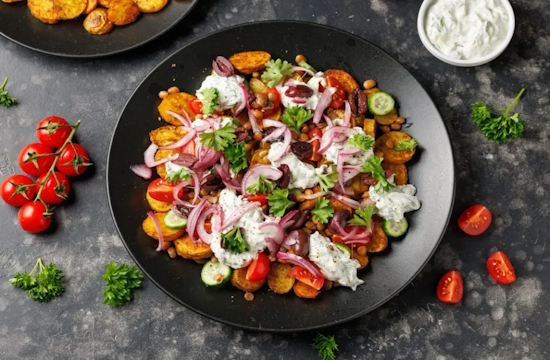
For decades, Greek cuisine in the United Kingdom was largely represented by family-run tavernas and Greek-Cypriot restaurants, often founded by first-generation immigrants. These establishments typically offered comfort food such as moussaka and souvlaki, catering to local tastes and nostalgia rather than showcasing the full range of Greek culinary tradition.
In the past decade, a significant change has occurred. Driven both by economic factors and by the desire of Greek restaurateurs to explore new markets, a new generation of Greek restaurants has emerged, particularly in London. This new generation of restaurants has moved beyond the clichés of large meze platters and musical accompaniment (bouzouki), focusing instead on authentic, often modernized versions of classic Greek cuisine.
Today, Greek cuisine enjoys high recognition in the United Kingdom, being presented as a complete gastronomic experience and a vibrant, valuable part of the local culinary scene. The British market is one of the largest, most cosmopolitan, and highly competitive markets in the world. Greek foods and beverages, through excellent packaging, innovative marketing, and the momentum generated after the pandemic, have succeeded in renewing British consumers’ interest in the Mediterranean diet.
In this context, Greek exporters should consider the following:
Authenticity: Consumers are increasingly seeking authentic Greek foods, providing Greek businesses with the opportunity to export high-quality, traditional products.
Product Differentiation and Development: The growing preference of British consumers for premium, high-quality, authentic products—such as Greek honey—represents a significant opportunity for differentiation and development, particularly through specialized distribution channels like delicatessens, health stores, and online shops. In this context, Greek wine is gaining traction as British interest in indigenous grape varieties increases, while Greek honey, according to recent data, recorded significant growth in the first half of 2025, with a 71.46% increase in value and a 68.35% increase in quantity compared to the same period in 2024. At the same time, a thriving market exists for Greek-style yogurts.
Interest from Supermarkets: Supermarkets and hypermarkets show interest in Greek products, both due to their quality and as a way to introduce consumers to other varieties and flavors.
Innovation: Opportunities are emerging for developing new flavors and health-focused products.
Direct Importing: Businesses can consider the possibility of directly importing their products, serving the entire UK market and expanding their activities into wholesale and catering sectors.
The information is sourced from the Economic and Commercial Affairs Office in London.
Dining and Cooking