
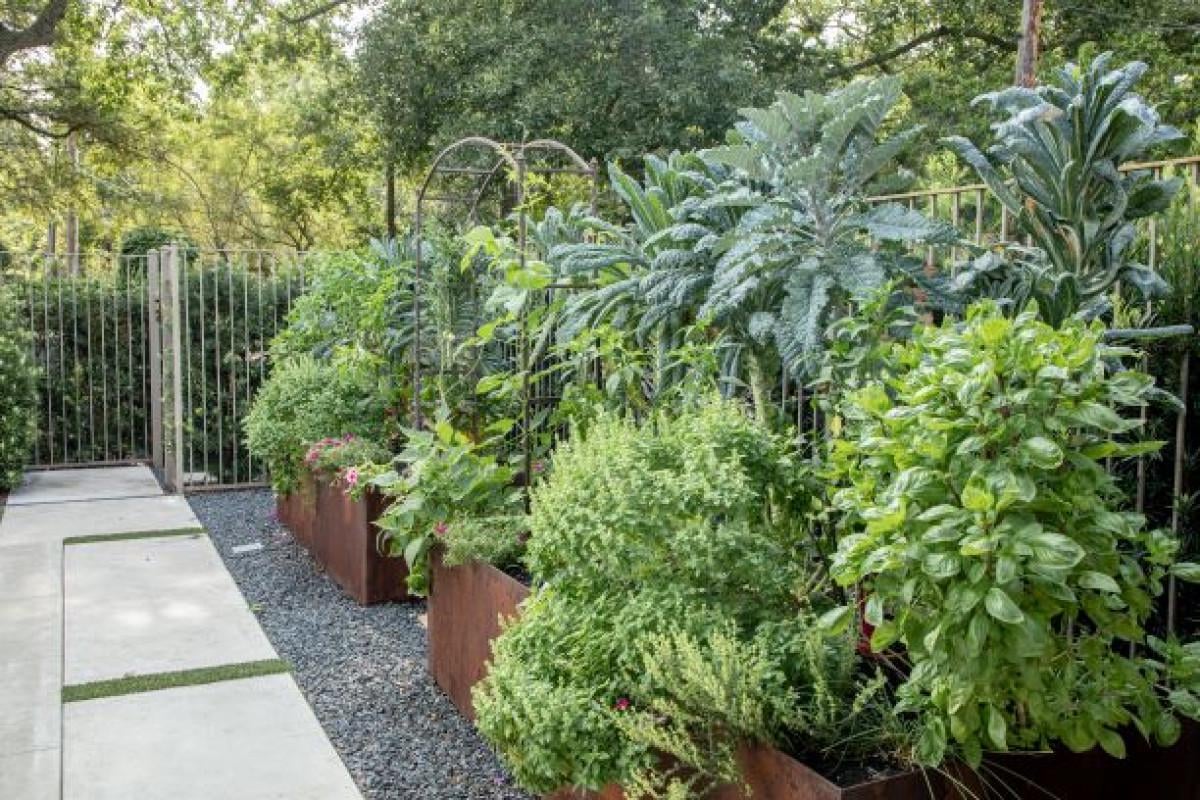
Hi all, I’m fairly new to gardening and I’m currently attempting to grow vegetables in pots, as I don’t have space for raised beds or in-ground growing. The pots I’m growing veggies in are 5-10 gallons (20-40 litres), generally with one veggie plant per pot.
I’ve been reading about different ways to mulch (super important as I’m currently in the middle of Australian summer!) and I really like the sound of living mulch / intensive gardening, eg as discussed here https://www.gardenary.com/blog/what-is-intensive-planting-and-does-it-work and https://www.gardenary.com/blog/reasons-i-dont-use-mulch-for-my-vegetable-garden I’m staking all of my plants and I’m happy to spend a decent amount of time in the garden, so I think it’s a system that could work for me.
But!!! I’m concerned about soil volume in my pots. For example, I’m growing individual cherry tomato plants, which supposedly need 19L of soil each, in 21L pots. 21-19 = 2, so that only leaves me 2L for other plants acting as living mulch. If I grow one dwarf marigold, or one parsley plant, then that already needs the whole 2L of soil that’s left in the pot – but a single one of those plants wouldn’t cover all of the bare soil in the pot and so would be ineffective as living mulch.
My question is: what plants would work as living mulch for vegetables and, more specifically, what plants would work as living mulch for vegetables growing in somewhat small pots? What living mulch plants take up minimal soil volume relative to the amount of shade/protection they give the soil?
I’m especially interested in growing living mulch plants that I can eat, or that fix nitrogen, or that attract pollinators. From my research so far, it seems like chives (1L soil needed for 3 plants) and arugula (2L soil needed for 3-5 plants) could be good options – is that right? What other plants could work?
thank you in advance – this subreddit is such a godsend!
by smol_and_anxious
5 Comments
Nasturtiums, white or crimson clover, borage, purslane, fava beans, vetch, green beans, allysum, thyme and other herbs like oregano, marjoram, sage and basil if you keep it trimmed down.
You can ignore pot sizes, just know you will need to water and fertilize more often. 10 gallon grow bags should be plenty for vegetables.
I don’t have experience with living mulch. Maybe look for native ground covers in your area. Look at companion plants for your veggies too. Hang a shade tarp if your summers get burning hot.
How hot does it get in your area, and how cold in the winter? From what little I know about Oz, most areas, except for high in the mountains, or in the far north, will be two season gardening: some plants growing in cool winters, and a different batch for warm to hot summers. The only nitrogen-fixer that easily fits the living mulch niche is tepary beans, though regular bush beans will work if you pinch the growing tip at the two true leaf stage.
Other plants that should work in summer include: Genovese & Thai basil, summer savory, thyme, New Zealand spinach, hanging basket tomatoes, purslane (if it’s legal), lovage, garlic chives, Callibrachoa, Verbena hybrids, and Scaevola.
I live in a hot & very dry summer climate (not quite true desert, but very close to it in S. California). I don’t grow much in pots during summer because even with the few types of vegetables that will grow well in containers, it’s just too much effort (I have a fairly large in-ground garden). That being said, I do grow peppers in 15 gal nursery pots; still a hassle since they might need watered twice a day when it’s really hot, but it does save me some space.
Personally, I would *never* grow anything more than one plant per pot (exception being something like root vegetables, green onions — that sort of thing). Like, I wouldn’t even grow two basil plants together in a single 15 gal pot. Certainly no “living mulch” or “companion plants” or anything like that….all that’s gonna do is compete for water and nutrients with the plant you’re actually wanting to grow.
A good quality potting medium (that *doesn’t* dry out too fast — many online recipes or storebought mixes are formulated for much milder & more humid climates) goes a long way. Especially when topped with a few inches of a very coarse mulch. Another thing that helps a great deal is to either shade the pots themselves, or double-pot (put the pot with the plant into a slightly larger empty pot, to keep the sun from hitting it directly). Even painting the pots with a gloss white paint can help.
And shade cloth can be very useful during the hottest parts of the year, of course.
Just my opinion/experience, though.
Maybe strawberries would work for a living ground cover. They are fairly shallow rooted and don’t grow too tall.