
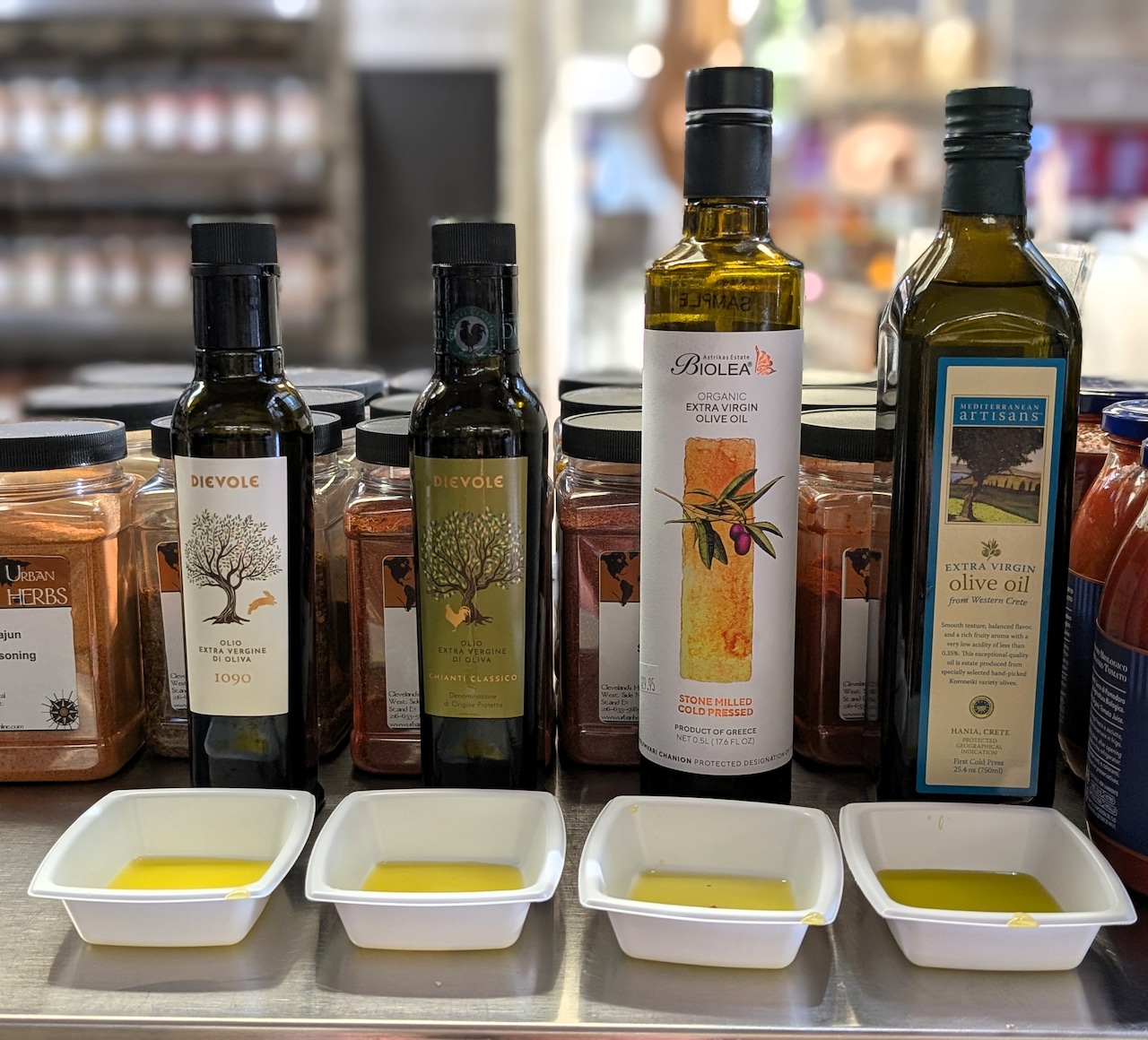
CLEVELAND, Ohio — If you’re a serious foodie like me, you have several bottles of olive oil in your kitchen. A light bottle of oil for sautéing with a mild flavor, a medium oil for salad dressings and several strongly flavored bottles for drizzling over soups and salads, finishing pastas or just dipping fresh bread.
While the light and medium oils may be easy to find, how does one identify the best olive oil for finishing? Or gifting? Northeast Ohio has several passionate importers and retailers, two professional educators and a tasting bar to help source the best of the green gold.
By now most people know that “extra virgin” is mechanically extracted and unrefined. They may not know that the harvest date matters. And it does. To maximize flavor and health qualities, olive oil should be used before it’s two years old. A harvest date makes that calculation possible.
With that in mind, it makes sense to buy olive oil in small quantities, just enough for a year. Stocking up is pointless.
In my kitchen, the widely available premium olive oil, Frescobaldi’s Laudemio, for example, is dated 2024. That means the olives were pressed in fall of 2024. Knowing that I should use it up soon as the fresher 2025 olive oils are just becoming available.
It’s helpful if the oil has a specific designation of origin as well. Kind of like geographic appellation in wine. That designation means it’s not a countrywide or even multi-country blend.
For example, I have two bottles of the Dievole brand olive oil; one is from Tuscany and the other from the Chianti region of Italy. Both are high quality, but different. Like wine, fruit varietal and terroir matter.
Dievole brands are available locally at Gallucci’s Italian Foods in Cleveland as well as Urban Herbs and The Import Store at the West Side Market. Other retailers carry them as well.
Price point can also be an indicator of quality. Budget-priced olive oils aren’t likely to be the freshest, highest quality extra virgin olive oil on the market.
How do you know high quality?
When you taste olive oil look for flavors of fresh-cut grass, tomato leaf, artichoke, green almond. You may get some bitterness from the healthful polyphenols and a peppery finish. Flat and greasy are bad signs.
Still, like wine, the best olive oil is the oil you like best.
 Buttercream & Olive Oil in North Royalton carries premium olive oils from France, Italy and Spain.Jennifer Thornton
If you want to indulge in some of the best, talk to Jennifer Thornton, owner of Buttercream & Olive Oil, a retailer, cooking school and café in North Royalton.
Thornton started her interest in olive oil with research in Provence, France. Soon she was visiting mills, then working the olive harvest and mills in France, Italy, Spain and California. She ran an olive oil shop in Paris and has been an international olive oil judge.
One of the biggest things in sourcing good olive oil she said, “is transparency.”
At her shop she works directly with olive oil producers.
“We know when olives were harvested,” she said. “We can talk to them and get the chemical composition, the oleocanthals and polyphenols that provide for extremely healthy olive oil.”
“Our guarantee is that we only sell olive oils from the most recent harvest, filtered to keep it fresher longer,” she noted.
While all olive oils are healthy, Thornton said, “We’re working in the extra-strength doses. That gives them longer shelf life and doubles the benefits.”
She carries French, Spanish and Sicilian olive oils. While each has different nuances, she described them as fruity, bitter and peppery.
“They’re robust but not too strong or overpowering,” she said.
The oils are available online and in her shop. Thornton also does Olive Oil Discovery classes ($90) to share her knowledge of and teach cooking with olive oils. The next scheduled class is Jan. 31.
Loretta Paganini, who grew up in Italy and owns Loretta Paganini School of Cooking in Chesterland, said shoppers should look for the expiration date and location.
“Oil is only good for a year to 18 months. Not only that, but the olives must also be harvested in Italy and pressed in Italy,” she said, warning, “There are so many oils made from olives that come from all over the place.”
She touts Italian olive oil, saying Spanish producers grow highly productive olive trees but “the quality is not the same.”
She also points out that oil tends to be stronger as you go south as in southern Italy and Greece.
“The olive oil from north of Italy is delicate,” she said recommending it for fish and lighter dishes.
And, yes, good olive oil can be costly.
“It’s expensive because its labor intensive,” she said. “It’s hard work.”
Paganini’s culinary shop has sold out of her Umbrian olive oil. For those who want to learn more, she teaches an Olive Oil Workshop ($95) at her school. The next scheduled class is Feb. 23.
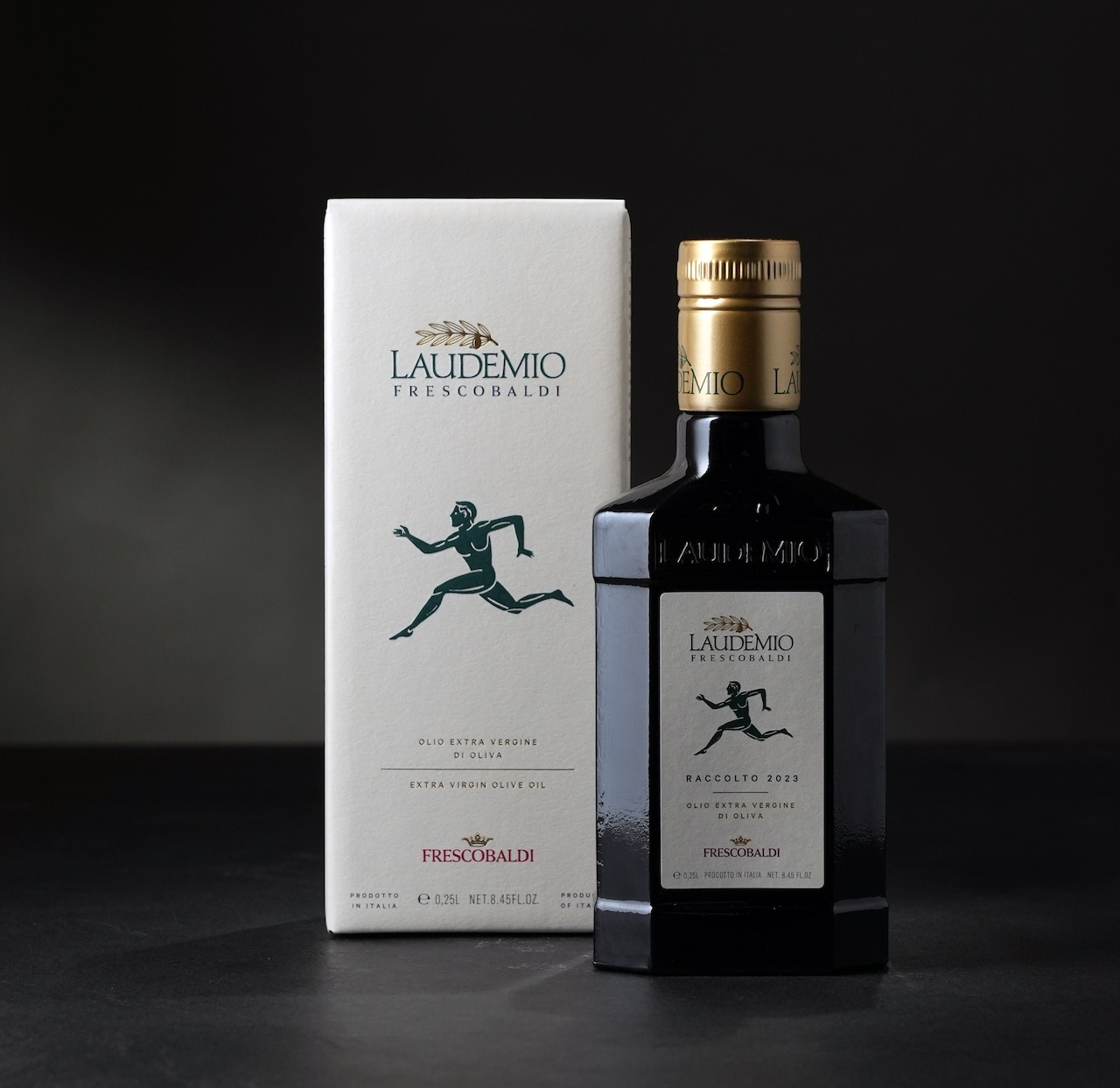 Premium olive oils are great for drizzling on soup, pizza, meat, salad and so much more.Paris Wolfe
Matteo Frescobaldi, 30th generation olive oil producer from Italy, doubles down on the importance of looking at the label for dates and origin. Over 700 years of production, his family has established a 900-acre olive estate in Tuscany.
A label noting the origin will help consumers identify an oil from a single harvest and region.
“The key aspect of quality or uniqueness is given by the territory, the concept of terroir. Terroir is as unique for wine as for olive oil, if not even more,” he said. That’s because “olive oil is 100 percent natural from the olive. Once it’s extracted, it’s done. Nothing can be done or used to increase the taste.”
Frescobaldi recommends using it with every Italian dish.
“Drizzle over grilled meats, certain pizzas, grilled white bread, tuna tartare, beef tartar, soups, steamed vegetables, boiled potatoes,” he said.
Due Sorelle Food Imports in Lisbon, Ohio, is a small importer run by two sisters. Products are sold online and at various Northeast Ohio retailers.
In addition to the Dievole line, owner Ashley Foster offers Casa Caponetti Olive Oil 2024, a cold-pressed, extra virgin olive oil grown from just north of Rome. Larder Delicatessen & Bakery carried the Caponetti last year. It’s still available online from Due Sorelle.
“It’s a high-quality product,” she said. “I trust the vendor that you’re getting something that’s not cut, olives grown where they say they were.”
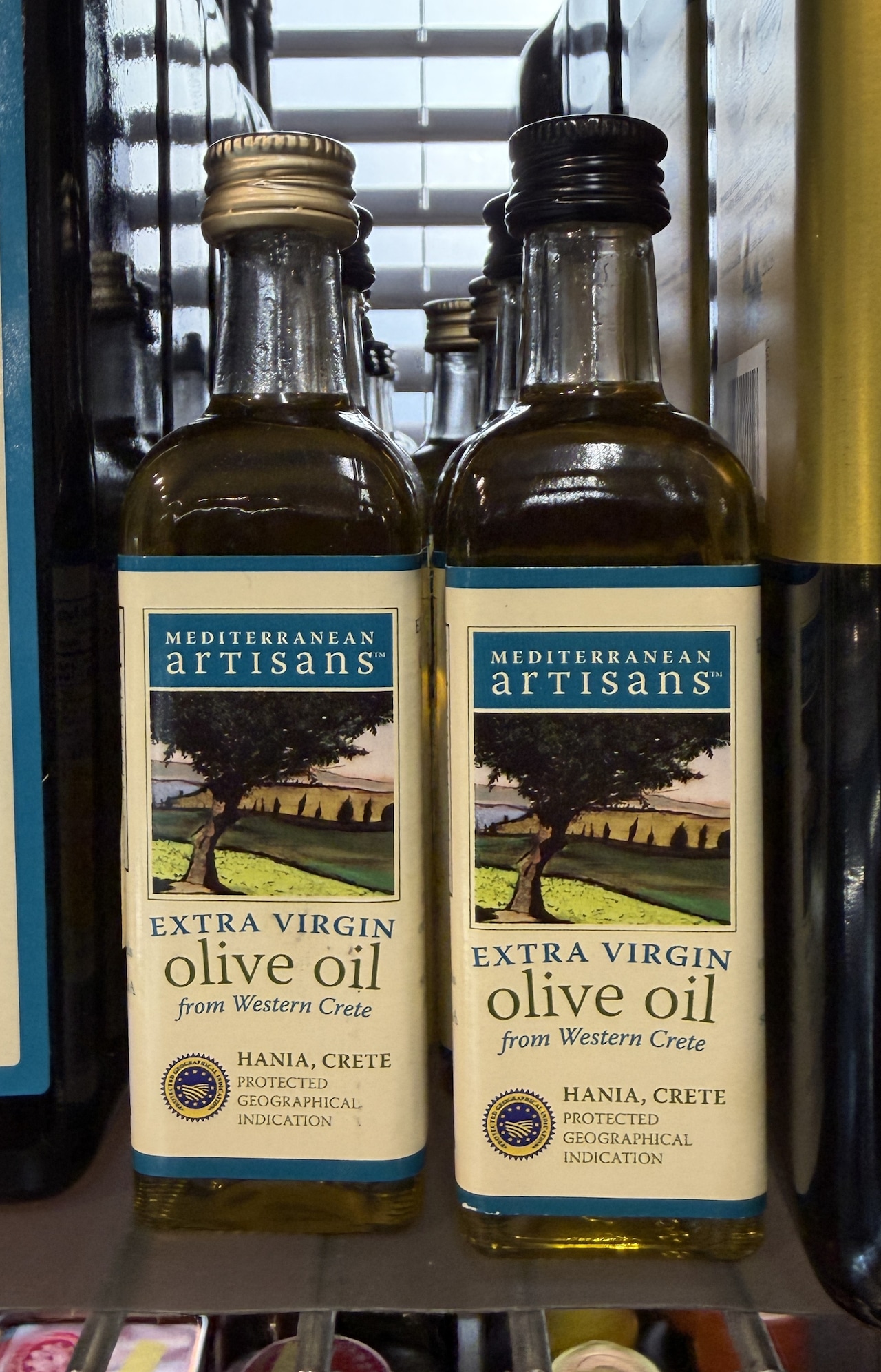 Astoria Cafe & Marketplace is one of several retail outlets for Mediterranean Artisans olive oil from Crete, Greece.Paris Wolfe
The market section of Astoria Café & Marketplace in Cleveland’s Gordon Square neighborhood has several olive oils from Spain, Italy and Greece. Each reflects the terroir of origin, which the label identifies, said George Kantzios, owner of the importing company Agora Foods International in Cleveland.
In addition to these Kantzios has been importing a “house brand” – Mediterranean Artisans Extra Virgin Olive Oil from Hania in Western Crete, Greece. This is available at Astoria, The Import Store at the West Side Market, Gallucci’s Italian Foods, Miles Farmers Market in Solon and more.
“It’s our brand. I started the business with it 18 years ago,” said Kantzios. Like most premium olive oils, this one’s label indicates the region of origin and even notes that it has PGI, or Protected Geographical Indication.
PGI is a certification ensuring the product is produced within a specific geographical region following traditional methods.
“There’s a lot of shenanigans being done. We try to find a product that suits our specs and needs,” he said. “I want to know they’re putting in an olive oil that won’t be compromised.”
“One way for the consumer to be reassured is to look for the symbols used by good olive oil producers — DOP and PDO,” he noted. “They can tell it’s gone through the tests. If you have those you can rest assured you’re getting a good product.”
DOP is for Denominazione di Origine Protetta. It’s an Italian certification that ensures production happens in a specific region using traditional methods and local olives. PDO means Protected Designation of Origin. It’s European Union-wide certification with similar standards when it comes to region and production.
On the east side of Cleveland, Gallucci’s Italian Foods, has about 50 different olive oils. They offer variety and a price range for most uses. These include those mentioned above.
“Think of olive oils in the same way you think about wine,” said Marc Kotora, vice president and fourth generation with the Italian specialty retailer. “What’s best is what is best for your palate and your flavor profile.”
Kotora has a personal preference, “The Sicilian tend to be a bit more intense, stronger with that intense olive flavor.”
Gallucci’s typically has an olive oil tasting bar in the olive oil aisle where customers can find that personal palate pleaser. Gallucci’s removes the tasting bar during the busy holiday season.
For those interested in going local – as in U.S. origin – 15 Olives produces olive oil in Florida and California. Its bottles are labeled with harvest dates and it is available online in robust, bold and mild versions. I have one of each in my kitchen.
Olive oil classes
For those who want to learn more about olive oil, two local cooking schools have classes.
6 p.m., Monday, Feb. 23 Olive Oil Workshop ($95) at Loretta Paganini School of Cooking in Chesterland11 a.m. to 1:30 p.m., Saturday, Jan. 31 Olive Oil Discovery Class at Buttercream & Olive Oil in North Royalton
Dining and Cooking