
This is One Thing, a column with tips on how to live.
Living in New York City, I’m often asked if I go down to Times Square for the festivities on New Year’s Eve. That’s a hard no; I can’t think of a worse way to mark the occasion than fighting with strangers over a foothold of fenced-in asphalt in the cold, all for the privilege of watching mediocre performances on big screens … just like you could at home. But nor am I one of those people who takes a kind of smug pride in going to bed sober at 7:00 p.m. Instead—for going on 10 years now—I spend the evening cooking and enjoying a delightfully fussy, semiformal dinner party with my dearest friends.
We menu-plan and assign dishes weeks ahead, and text each other about the delicacies we’ve procured on our shopping trips. There are always at least six fixed courses, not including hors d’oeuvres (oysters, soup, lamb or beef, granita, salad/cheese, and dessert), and we’ve been known to push it to seven or eight with a homemade ravioli or tuna tartare. Dessert is usually served after a midnight pause for toasting, and we end the night with cognac, chocolates, and espresso’s nudge out the door.
If this sounds like a lot of work, it is! But for me, there’s something magical about marking the passage of time by treating your loved ones and yourself to an evening of beautiful food and flowers, polished silver and pressed napkins. The effort and expense involved are an expression of care, and the sparkle and warmth of the gathering lingers well into the first chilly weeks of the year.
Speaking of sparkle, you need not take on all the happy stress of a NYE dinner like mine to relish its most elegant—and simple to make—part. Between the rich main dish and the salad, we always have a palate cleanser in the form of a citrus granita topped with a splash of Champagne. And if you do only one thing to celebrate the holiday, it should be this.
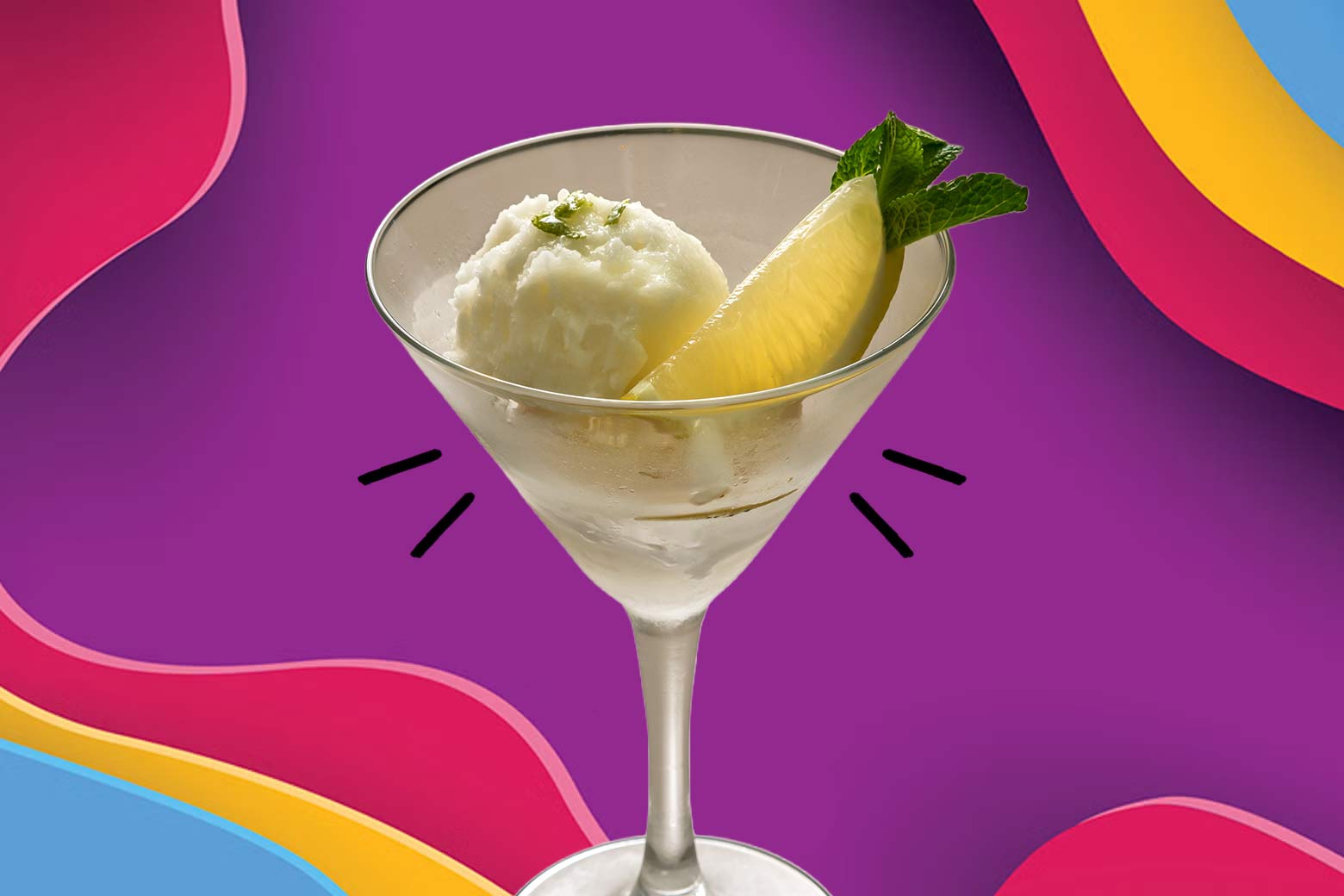
For the unfamiliar, granitas are a frozen treat usually made from fruit juice and sugar (though there are more adventurous kinds), sort of like shaved ice. They don’t require an ice cream maker or any special equipment to whip up—just the fruit and your freezer. Though we use the granita as a zesty tastebud reset, it works equally well as dessert, especially if you garnish it with whipped cream, fresh fruit, and/or chocolate shavings. Because winter is citrus season, taking advantage of some of the more exciting varieties popping up in the market—like blood oranges or tangerines—is a good idea, though regular oranges or grapefruits are delicious options as well.
Aside from the freezing time (ideally overnight, but if your freezer is really cold, as little as four hours can work), making the granita is a matter of minutes. The simplest recipes will have you sweeten your fruit juice, pour it into a container, and scrape it with a fork every so often during the freezing process to achieve that snowy texture. In this recipe (which is adapted from one by David Tanis), I’ve added just a smidge of complication in the service of getting the best result possible. After you’ve juiced the citrus of your choice, we’re going to make a quick syrup with some of it, and I recommend that in addition to the usual sugar, you add in a bit of light corn syrup. This is a trick I picked up from Jeni’s Splendid Ice Creams at Home, wherein Jeni uses corn syrup to ensure smoothness in her sorbets.
After that, it’s just a matter of stirring together the rest of the juices and a glug of liqueur, if you like. The mixture is frozen in a zip-top bag, and when you’re ready to serve, simply bash the bag with a wooden implement to break up the ice, scoop it into your prettiest coupe glasses, and baptize with a splash of sparkling wine.
Joe, the friend who introduced me to the pleasures of granita, and with whom I’ve dined on so many New Year’s Eves and other nights besides, passed away earlier this month, after a long battle with cancer. He was a gentle soul with an easy, frothy laugh; a painter of gorgeous landscapes and dazzling color fields; a loving partner to his husband, Charles, for 47 years. We had all hoped to get in one more of our feasts before Joe had to go, but that was not to be. Still, tomorrow, the rest of us will gather. I will make the granita this time, and when its bracing, bubbly sweetness spreads across my tongue, I will think of Joe and smile.
If you decide to make it for your loved ones, I hope it brings your evening—and the year ahead—some small measure of joy.
Citrus Granita
(Adapted from David Tanis)
Preparation time: 20 minutes, plus freezing time
Servings: About 6
Ingredients
If You’re Not Including This in Your New Year’s Eve Plans, You’re Starting 2026 Off on the Wrong Foot
It May Not Be a Traditional Christmas Dish. But Trust Me, It’s What You Want on Your Table This Year.
We’ve All Been Overthinking Christmas Dinner. The Best—and Easiest—Menu Has Been Right There All Along.
Are You Putting These No-Nos in Your Christmas Cookies? You’d Better Check Twice.
½ cup granulated sugar
2 tablespoons light corn syrup (such as Karo), optional
3 cups freshly squeezed citrus juice, such as tangerine, blood orange, grapefruit, or orange (one variety or a mix; about 3 pounds)
Juice of 2 large limes
2 tablespoons orange liqueur, Aperol, or Campari, optional
Sparkling wine for topping
Citrus zest (preferably in curls) for garnish, optional
Preparation
Combine all of the citrus juices (except lime) in a large bowl.
Put the sugar and corn syrup, if using, in a small saucepan and add 1 cup of the citrus juice. Over medium-low heat, whisk until sugar is thoroughly dissolved and you have a consistent syrup, about three minutes. Whisk the syrup into the bowl with the rest of the citrus juice. Stir in the lime juice and the liqueur, if using.
Pour the mixture into a zippered plastic freezer bag. Seal well and freeze for at least 4 hours in the coldest part of your freezer, or preferably overnight.
To serve, chop the frozen mixture roughly with a wooden spatula (still inside the bag), then spoon into coupe-style glasses. Top with a splash of sparkling wine and a sprinkle of citrus zest, and serve immediately.

Sign up for Slate’s evening newsletter.
Dining and Cooking