

As one of the country’s leading nutritionists, Federica Amati has played a key role in educating us about the dangers of ultra-processed foods.
But as more of us fret about UPFs, she has a new concern. “My biggest bugbear is the fear and panic that this narrative has caused,” she says. So now she has a plan to help shoppers navigate supermarket aisles jammed with UPFs without succumbing to dread over what they are feeding their families.
The phrase “ultra-processed food” was coined in 2009 by Carlos Monteiro, a Brazilian professor of nutrition. But there has been an explosion in awareness of the dangers of UPFs thanks to the likes of Chris van Tulleken, the professor of infection and global health at UCL and author of Ultra-Processed People, and Tim Spector, professor of genetic epidemiology at King’s College London and co-founder of Zoe, the health science company.
Additives to knowBenzoic acid is a preservative that is a health risk if combined with vitamin C (called ascorbic acid in ingredients lists).Sucralose, an artificial sweetener, can negatively affect gut bacteria and increase cravings for sweet products.Glucose syrup can contribute to type 2 diabetes, obesity and cardiovascular disease risk by causing fast sugar spikes.Acesulfame K, a sugar-free sweetener, has been linked to altered gut bacteria.Ponceau 4R and sunset yellow FCF are colourings linked to hyperactivity.Carrageenan, used to thicken or stabilise food, has been linked to inflammation and increased risk of irritable bowel disease.Fructose is a sugar that is metabolised in the liver; excess is stored there as fat.Brilliant blue FCF is a colouring that can cause allergies and upset gut bacteria.
Amati is head nutritionist at Zoe and nutrition lead at Imperial College London’s School of Medicine. Author of the bestselling Every Body Should Know This, she is married to Paul Sculfor, a model and host of a podcast about addiction, drawing on his own experiences. They have two daughters.
“People hear UPFs as a term to be afraid of, but they’re not quite sure what they’re afraid of,” Amati says. “Others say, ‘Everything’s killing me anyway. I’m going to eat what I want.’ ”
Her advice remains that you should eat as many whole foods as possible. But UPFs are unavoidable — more than half of a UK adult’s calories come from ultra-processed food products; in teenagers, it is about two thirds. So we need to know what we are eating when we do buy them.
• Read more expert advice on healthy living, fitness and wellbeing
And the picture, Amati says, is more nuanced than you may think. “Branding any product that’s undergone industrial processing as a ‘UPF’ is not always helpful. UPFs are an ill-defined category. There is a world of difference between eating a Weetabix for breakfast and glugging down a Monster Energy drink.”
There are three aspects of problematic processing that we should be more aware of. First is just how many foods have been engineered to have a “biological sweet spot” making them “hyperpalatable”. Their combinations of fat, sugar and salt maximise reward in the brain and push us to keep eating long after we feel full. Over time, consuming hyperpalatable foods changes how our brain and gut communicate and affects how the body regulates appetite.
Processing risksHyperpalatability Refers to the engineered combination of salt, fat and sugar in foods that makes them highly appealing, overrides the body’s ability to recognise satiety, and results in increased calorie intake and higher body fat.Energy intake rate Describes foods that are easy to eat and deliver calories rapidly, and have been shown to cause both higher body weight and less favourable blood pressure and cholesterol profiles.Food additives Some have health implications, others are deemed safe, but certain combinations may still disrupt gut bacteria if mixed due to a “cocktail effect”.
Second, she says, we need to consider a food’s energy intake rate (EIR), the marker of how much the processing has distorted the food matrix, which is the physical structure of the food and how its components interact. This influences how a food is digested by our bodies and how fast we eat it. “Think of the difference between eating whole peanuts and spoonfuls of peanut butter. The whole peanuts take longer to eat,” she says. It is a particular issue when foods are high in calories and there is no food matrix to slow the consumption and absorption of those calories.
Then there is the a-word: additives. “There is a narrative that we should avoid all of them at all costs,” Amati says. Mono and diglycerides of fatty acids (E471) may have been associated with increased risks of cardiovascular disease, overall cancer as well as breast and prostate cancer, but we shouldn’t put that in the same bucket as ascorbic acid (vitamin C). However, if a product has a long list of additives, there’s the potential for it to produce an unhealthy “cocktail effect”, where additives deemed safe on their own combine with each other in a way that can cause more harm than they would alone. “That disrupts the gut microbiome, increases the risk of inflammation and can lead to a higher risk of type 2 diabetes,” Amati says.
Scientists at Zoe have devised a risk scale for processed foods linked to health outcomes such as blood pressure, blood glucose levels and cholesterol levels. Foods in the high-risk category, if eaten frequently, are linked to worse health, while moderately risky foods could also have an impact. Low-risk processed products are not considered likely to imperil health.
UPFs is a huge category, Amati says. “Some are not as bad as others in terms of health, which is what the risk scale is for.” It’s meant to inform consumers and public health officials alike.
• Read more restaurant reviews and recipes from our food experts
Analysis by Zoe of more than four million products found that 20-25 per cent of the foods in our supermarkets are high-risk processed. “That’s very different from telling people that 60 per cent of their calories are from foods that are going to kill them,” Amati says.
The marketing of UPFs dismays her, especially products that “tout themselves as having healthy attributes but which are essentially unhealthy”. These include snack bars that are promoted as a healthy option before or after a workout. “These processed bars do not meet healthy criteria, despite their virtuous assertions. Any marketing claim on a food is designed to increase sales. They’re not there as nutritional information.”
A cereal packet may accurately say that it contains added vitamin D. “But is that misleading for the overall health impact of the food?” she asks.
And she is scathing about some UPFs that she believes are created purely for taste and profit rather than nutrition, such as sweetened fizzy drinks or Doritos. The latter are hyperpalatable. “They don’t serve any nutritional purpose,” she says. “The food hasn’t been processed to make it easier to cook.” In comparison, microwavable pouches of beans, some of which would be categorised as UPFs because they have additives, have been processed to make them convenient and to give them a long shelf life. “That processing helps more people eat beans,” she says.
You can find the processing risk scale of a product by scanning its barcode in the new Zoe app (£9.99 a month; zoe.com)
‘Health’ bars
Federica Amati chooses the products she would buy ✓ and what she’d avoid ✗. First, bars with virtuous-sounding names — these are promoted as a healthy option, she says, yet many are industrial formulations and no substitute for a piece of fruit or a handful of nuts.
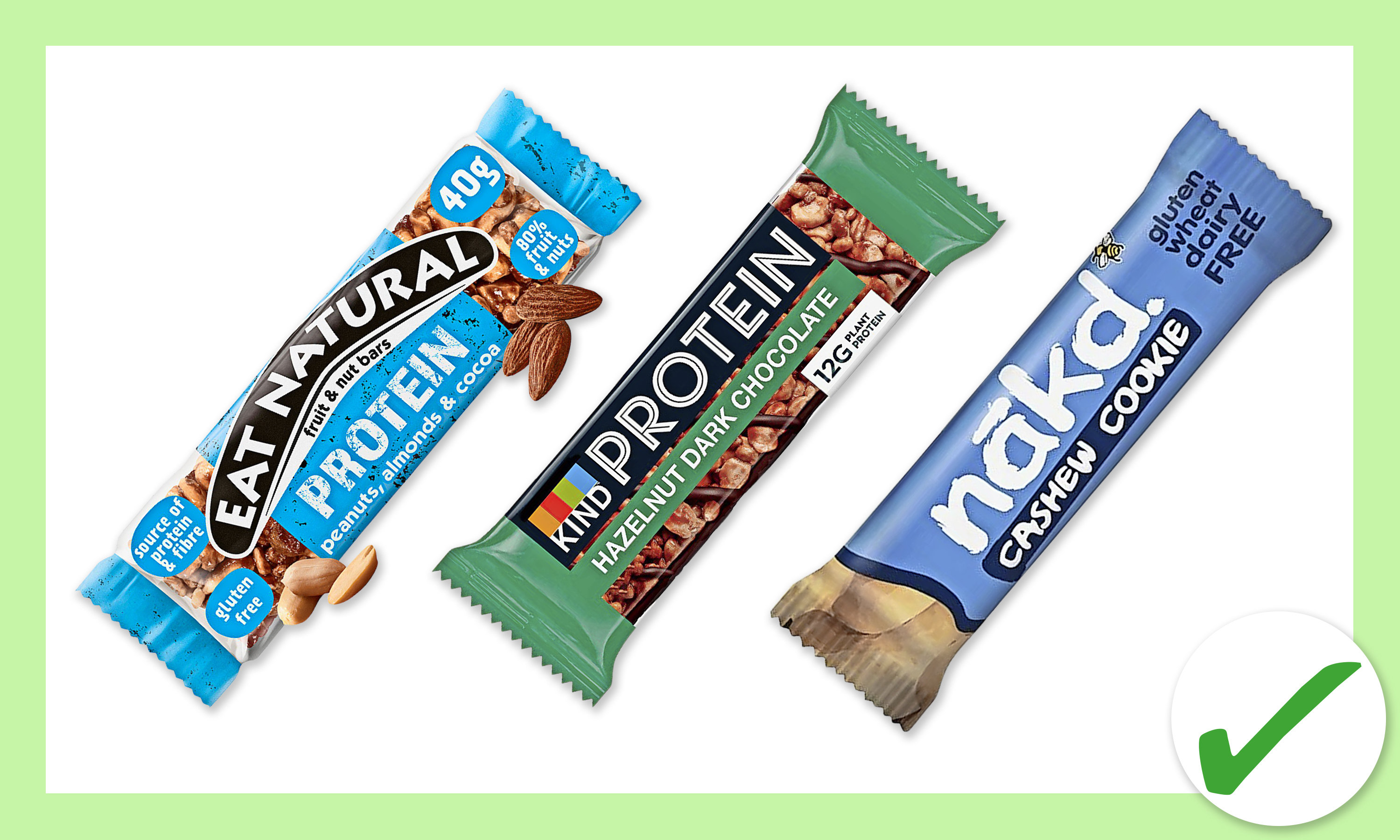 Eat Natural Protein Peanuts, Almonds & Cocoa
Processing risk scale No risk
Hyperpalatable No
Energy intake rate No
Additives to watch out for 0
Nutrition per 45g bar Sugar, 6.8g. Salt, 0.02g. Sat fat, 2.6g. Fibre, 3.2g. Protein, 9.7g
My favourite of the bunch. It’s made primarily with whole nuts and dried fruit. The processing that the ingredients have undergone and the combination of sweetness is not enough to make the bar hyperpalatable. As whole nuts take time to chew, the energy intake rate is not a concern, and there are no worrying additives to watch out for.
Kind Protein Hazelnut Dark Chocolate
Processing risk scale No risk
Hyperpalatable No
Energy intake rate No
Additives to watch out for 1
Nutrition per 50g bar Sugar, 8g. Salt, 0.18g. Sat fat, 3.6g. Fibre, 5.5g. Protein, 12g
Also a low-risk option — but this bar does contain one additive, glucose syrup, which is best not consumed regularly because it is linked with obesity, type 2 diabetes and heart disease. But I like that this bar packs more fibre than many others — you should aim for 30g a day — and includes dark chocolate, which has health benefits thanks to its bioactive compounds, including flavanols.
Nakd Cashew Cookie
Processing risk scale Low
Hyperpalatable Yes
Energy intake rate No
Additives to watch out for 0
Nutrition per 35g bar Sugar, 12g. Salt, 0.01g. Sat fat, 1.4g. Fibre, 2.7g. Protein, 3.6g
This bar doesn’t include additives of concern, although it’s not clear which “natural flavourings” on the ingredients list are being used. It is hyperpalatable thanks to the combination of fats from its cashews and sugar from the dates, but they are at least present as whole foods. Have as an occasional treat, but you’re better off eating a handful of cashews with a date if you are craving a sweet snack.
 Trek White Choc & Raspberry Protein Flapjack
Processing risk scale Medium
Hyperpalatable Yes
Energy intake rate No
Additives to watch out for 3
Nutrition per 50g bar Sugar, 12g. Salt, 0.3g. Sat fat, 4.7g. Fibre, 1.8g. Protein, 9.5g
Deliciously moreish, these pose a medium risk if consumed frequently due to their hyperpalatability and a cocktail of additives, including “natural flavouring”, which could have a detrimental effect on our gut microbes. Despite being “oat bars”, they’re only 24 per cent oat and don’t deliver much fibre. I wouldn’t take this bar on any trek.
Clif Crunchy Peanut Butter
Processing risk scale Medium
Hyperpalatable Yes
Energy intake rate No
Additives to watch out for 0
Nutrition per 68g bar Sugar, 17g. Salt, 0.58g. Sat fat, 1.2g. Fibre, 5.1g. Protein, 11g
Popular in gym cafés, this bar is hyperpalatable and could override hunger signals. It has no risky additives, but again “natural flavours” could affect the gut biome. It contains 17g sugar, more than half an adult’s recommended maximum daily intake of 30g. If you really were dangling from a cliff you might need this amount of energy in a few mouthfuls. Otherwise I’d leave it on the shelf.
Go Ahead Fruit & Oat Bakes Apple
Processing risk scale High
Hyperpalatable Yes
Energy intake rate No
Additives to watch out for 1 + cocktail effect
Nutrition per 35g bar Sugar, 7.8g. Salt, 0.21g. Sat fat, 0.3g. Fibre, 1.7g. Protein, 1.2g
This bar is marketed as being 128 calories, with no artificial colours or flavours. But the additives it contains, including acetic acid esters of mono and diglycerides of fatty acids, could negatively affect your health if you ate one of these every day. It’s also hyperpalatable, which increases the likelihood of you eating more. This bar offers very little in terms of nutrition.
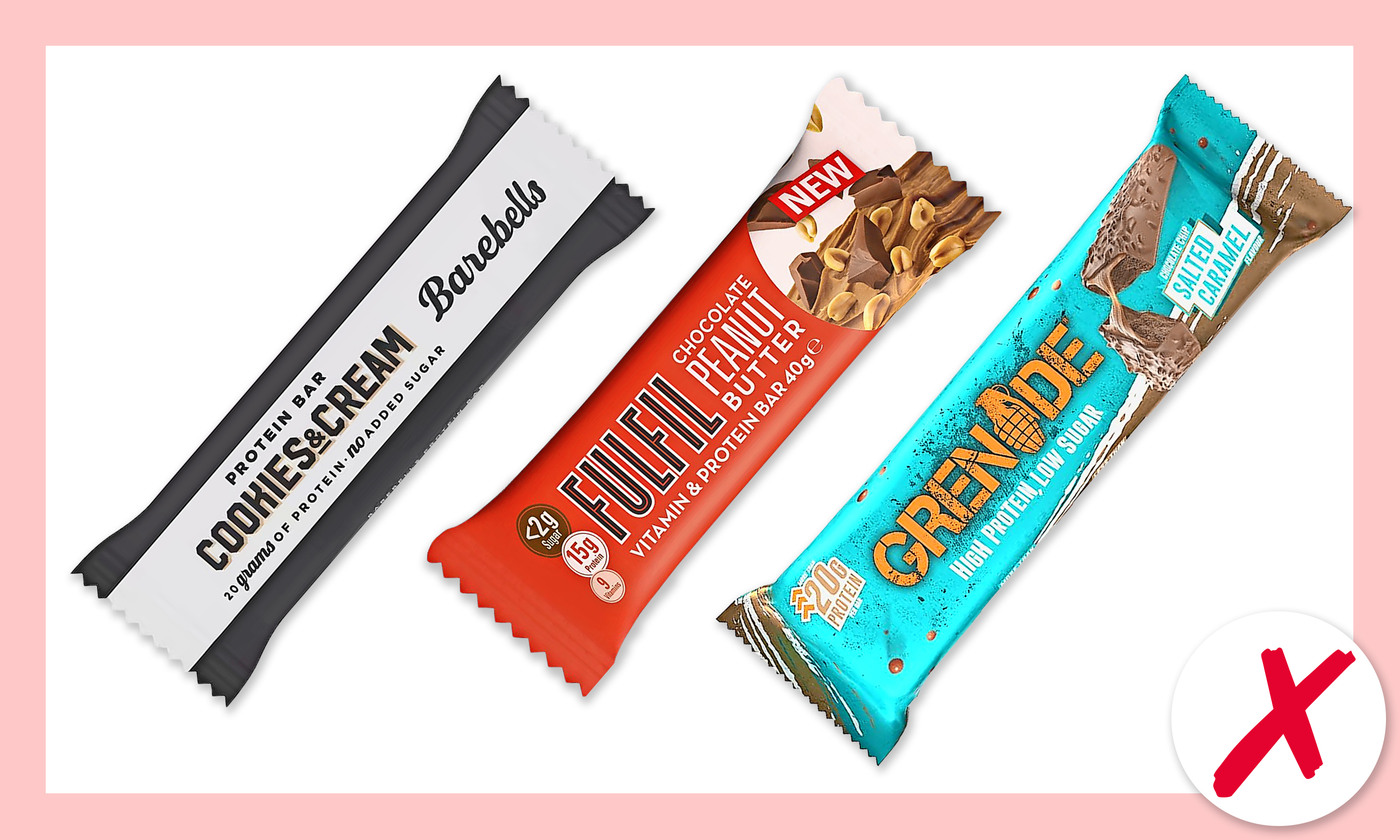 Barebells Protein Bar Cookies & Cream
Processing risk scale High
Hyperpalatable No
Energy intake rate No
Additives to watch out for 1 + cocktail effect
Nutrition per 55g bar Sugar, 1.4g. Salt, 0.1g. Sat fat, 3.1g. Fibre, 3.5g. Protein, 20g
Another popular gym brand that boasts 20g protein, with no added sugar. What it doesn’t boast about is the presence of the sweetener sucralose and a long list of other additives that together are likely to have a negative cocktail effect on gut microbes. These make the bar high risk. It is a combination of industrial ingredients that won’t do you any favours.
Fulfil Chocolate Peanut Butter
Processing risk scale High
Hyperpalatable No
Energy intake rate No
Additives to watch out for 1 + cocktail effect
Nutrition per 55g bar Sugar, 1.5g. Salt, 0.12g. Sat fat, 3.8g. Fibre, 3.1g. Protein, 20g
This bar promises to be low in sugar and high in protein, with nine added vitamins. However, the additives used to make it (there are virtually no whole foods here, just cleverly combined industrial ingredients) are likely to pose a risk to your gut health if consumed every day. A long list of ingredients is rarely a positive sign. Just have a handful of nuts instead.
Grenade Chocolate Chip Salted Caramel
Processing risk scale High
Hyperpalatable No
Energy intake rate No
Additives to watch out for 1 + cocktail effect
Nutrition per 60g bar Sugar, 1.3g. Salt, 0.33g. Sat fat, 5.4.g. Fibre, 2.4g. Protein, 21g
Flagged on its website as “UK’s No 1 protein bar brand”. It contains glycerol and maltitol, both sweeteners best avoided in your regular diet, as well as palm fat, a saturated fat that raises LDL or “bad” cholesterol. Made with a mixture of flavourings, powders and fats, this bar also poses a risk for the cocktail effect, where all these compounds may interact to have an adverse impact on health.
Cereals
Most cereals deliver a lot more sugar and salt than you’d expect, which makes them unhealthily moreish. Packaging claims often highlight a small nutritional virtue to distract from limited health value. As a rule, choose cereals with high fibre and that contain whole foods.
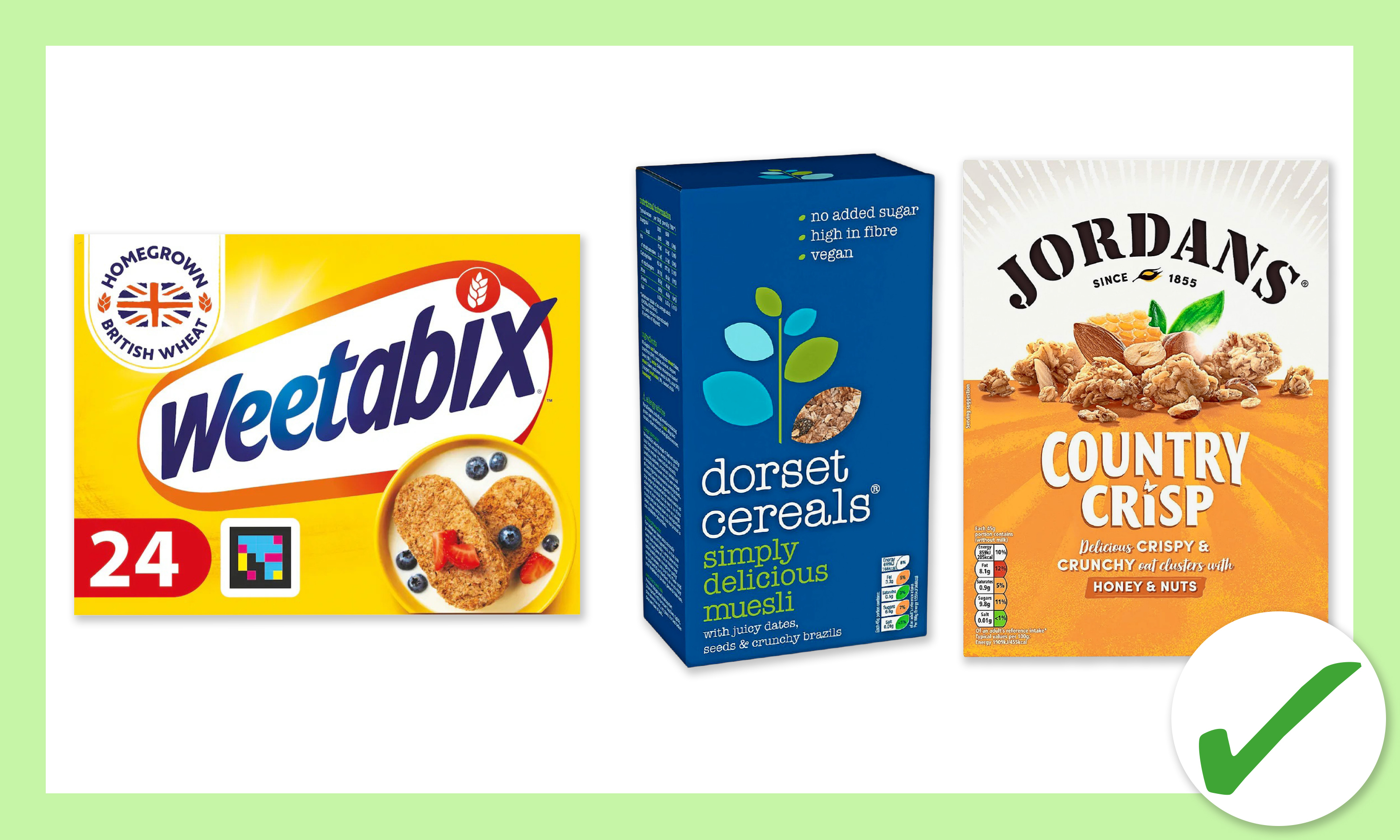 Weetabix
Processing risk scale No risk
Hyperpalatable No
Energy intake rate No
Additives to watch out for 0
Nutrition per 100g Sugar, 4.2g. Salt, 0.28g. Sat fat, 0.6g. Fibre, 10g. Protein, 12g
The processing here isn’t harmful, it’s low in sugar and delivers an excellent 10g fibre per 100g, or 3.8g in a serving of two biscuits. That’s a good start towards the recommended 30g fibre per day. With less than 2 per cent of your daily salt limit per serving and negligible saturated fat, this keeps your gut and heart happy. There’s nothing to override the body’s fullness signals or confuse your gut bacteria.
Dorset Cereals Delicious Muesli
Processing risk scale No risk
Hyperpalatable No
Energy intake rate No
Additives to watch out for 0
Nutrition per 100g Sugar, 14.7g. Salt, 0.03g. Sat fat, 1.1g. Fibre, 9g. Protein, 9.6g
This contains a hefty 14.7g sugar per 100g, but this comes from dried fruit and nuts rather than sweetening agents. This distinction matters. The decent fibre content moderates the impact of this sugar and you get the bonus of the micronutrients that come with dried fruit. The textures from these whole foods make overconsumption difficult. The absence of additives means your gut microbiota encounters food not chemicals.
Jordans Country Crisp Honey & Nuts
Processing risk scale Low
Hyperpalatable No
Energy intake rate No
Additives to watch out for 0
Nutrition per 100g Sugar, 21.8g. Salt, 0.03g. Sat fat, 2g. Fibre, 5.5g. Protein, 9.4g
You have 9.8g sugar per 45g serving here, but this cereal too is rescued by its fibre content, which moderates the glycaemic load (how much a food item will raise your blood glucose levels). It has a relatively high fat content, but this is derived from nuts and seeds, providing unsaturated fats alongside wholegrains. Its complex ingredients make it hard to overeat; still, I’d sprinkle on yoghurt, not have a bowlful.
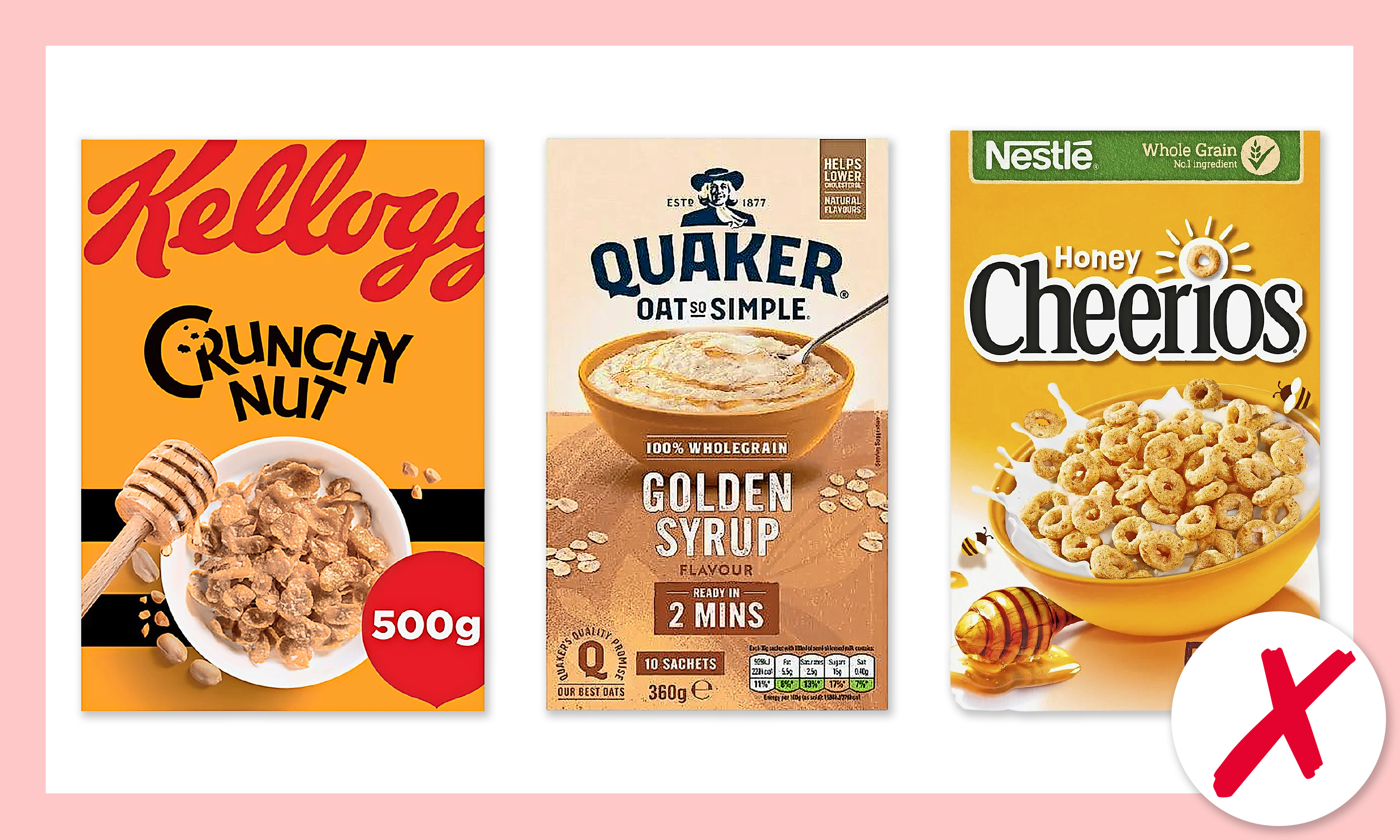 Crunchy Nut cornflakes
Processing risk scale Low
Hyperpalatable Yes
Energy intake rate No
Additives to watch out for 0
Nutrition per 100g Sugar, 35g. Salt, 0.75g. Sat fat, 0.7g. Fibre, 2.5g. Protein, 6g
Despite their low processing risk, a single bowl of these golden flakes delivers a third of an adult’s recommended daily maximum sugar intake of 30g. There are no additives of particular concern, but what’s missing is fibre. You’re essentially consuming sweetened corn with minimal nutrition beyond vitamins added during processing. Meanwhile, its sweet-salty crunch makes it that moreish late-night snack.
Quaker Oat So Simple Sachets
Processing risk scale Medium
Hyperpalatable Yes
Energy intake rate Yes
Additives to watch out for 0
Nutrition per 100g Sugar, 2.8g. Salt, 1.3g. Sat fat, 2.5g. Fibre, 4.1g. Protein, 5.5g
The “So Simple” claim masks comparatively high levels of salt for a breakfast cereal. While oats themselves are a low-risk food, the instant versions often add salt for flavour and texture. These sachets deliver hyperpalatability and a high energy intake rate, likely to leave you feeling hungry and dissatisfied in the long run. It may be a better option than most boxed cereals, but it’s not as wholesome as traditional oats.
Nestlé Honey Cheerios
Processing risk scale Medium
Hyperpalatable Yes
Energy intake rate No
Additives to watch out for 1 + cocktail effect
Nutrition per 100g Sugar, 22.2g. Salt, 0.66g. Sat fat, 0.8g. Fibre, 9.1g. Protein, 9.3g
These contain wholegrains and fibre, 2.7g per serving. However, this cereal is also moreish and hyperpalatable, with a triple-sweetener strategy: sugar; invert sugar syrup, which is an additive of concern; and honey. The amount of sugar per serving is more than a fifth of an adult’s daily limit. Meanwhile, the “natural flavouring” listed is too ambiguous for my liking. If you must buy, opt for the non-honey version.
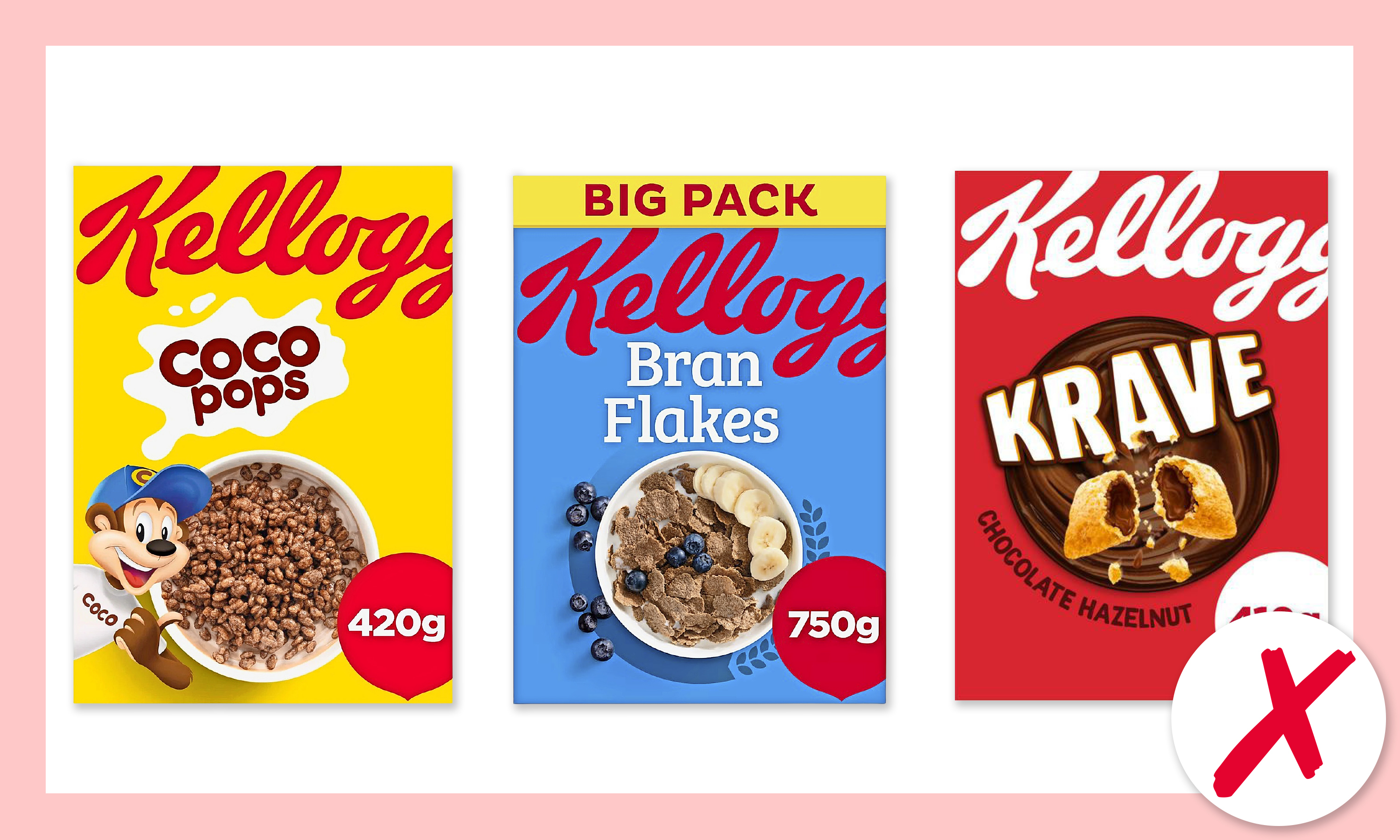 Kellogg’s Coco Pops
Processing risk scale Medium
Hyperpalatable Yes
Energy intake rate No
Additives to watch out for 1
Nutrition per 100g Sugar, 17g. Salt, 0.65g. Sat fat, 0.9g. Fibre, 3.8g. Protein, 6.3g
A 30g serving contains a sixth of an adult’s daily sugar intake, delivered by sugar and glucose syrup, which is linked to insulin insensitivity and cardiovascular disease, and cocoa. The hyperpalatability comes from the sugar-cocoa combination, designed to activate reward pathways through both sweetness and chocolatiness. Processing strips the rice of its fibre and nutrients before reconstitution through fortification.
Kellogg’s Bran Flakes
Processing risk scale Medium
Hyperpalatable Yes
Energy intake rate No
Additives to watch out for 1 + cocktail effect
Nutrition per 100g Sugar, 14g. Salt, 0.66g. Sat fat, 0.4g. Fibre, 17g. Protein, 11g
Long marketed as a “healthy” choice, and with plenty of fibre, these do deliver on gut health. They also train your palate to crave sugar, with 4.2g sugar per portion, plus moderate salt. This pushes them to medium risk. Their crunch and sweetness make them easy to overeat. The additives that help hyperpalatability include glucose syrup (in addition to regular sugar), barley malt extract and “natural flavourings”.
Kellogg’s Krave Chocolate Hazelnut
Processing risk scale High
Hyperpalatable Yes
Energy intake rate No
Additives to watch out for 1 + cocktail effect
Nutrition per 100g Sugar, 29g. Salt, 1.1g. Sat fat, 4g. Fibre, 3.3g. Protein, 6.9g
Here again we find deliberate hyperpalatability engineering: wheat, oat and rice pillows filled with chocolate-hazelnut cream. You consume more than 8g sugar per 30g serving, a quarter of the recommended daily limit, and it’s supplemented by palm oil in the filling, creating a fat and sugar combination that effectively overrides satiety. There’s more glucose syrup, along with five low-risk extras.
Ready meals
Some ready meals are close to home cooking; others are little more than high-risk, processed, salt and starch assemblies. Salt, sugars in many guises, cocktails of additives and lack of fibre matter more than calorie counts. If sugars or modified starches are in the top five ingredients, find an alternative.
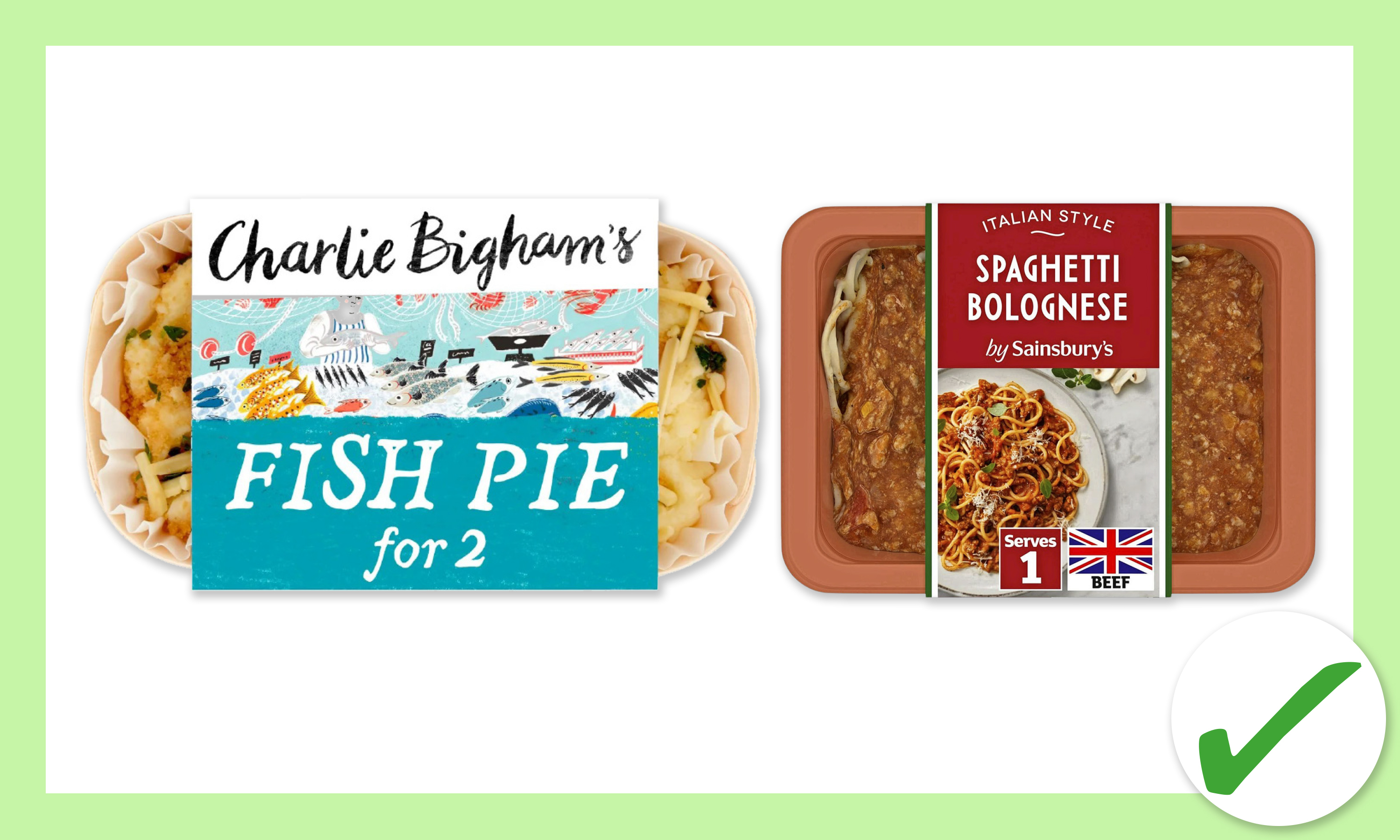 Charlie Bigham’s fish pie
Processing risk scale Low
Hyperpalatable No
Energy intake rate No
Additives to watch out for 0
Nutrition per 340g dish for one Sugar, 6.1g. Salt, 2.21g. Sat fat, 14g. Fibre, 3.1g. Protein, 23.7g
The ingredients list reads like a real recipe — hake, salmon, smoked haddock, potatoes, butter, cream and herbs — with no additives. Salt is high at 2.2g per portion (about a third of your daily limit of 6g), and saturated fat reaches almost two thirds of a day’s allowance for a woman (20g) and almost half a man’s allowance (30g). A good option for an occasional easy meal.
Sainsbury’s spaghetti bolognese
Processing risk scale No risk
Hyperpalatable No
Energy intake rate No
Additives to watch out for 0
Nutrition per 400g dish for one Sugar, 9.6g. Salt, 2.1g. Sat fat, 5.5g. Fibre, 5.4g. Protein, 25.6g
An example of a mass-market meal that stays close to real cooking. Tomatoes, pasta, beef, onions and oil dominate the ingredients list, with only basic starches used to thicken the sauce and no additives of concern. Salt is fairly high at 2.1g per portion (a third of your daily limit), but saturated fat is modest and there’s a reasonable amount of fibre.
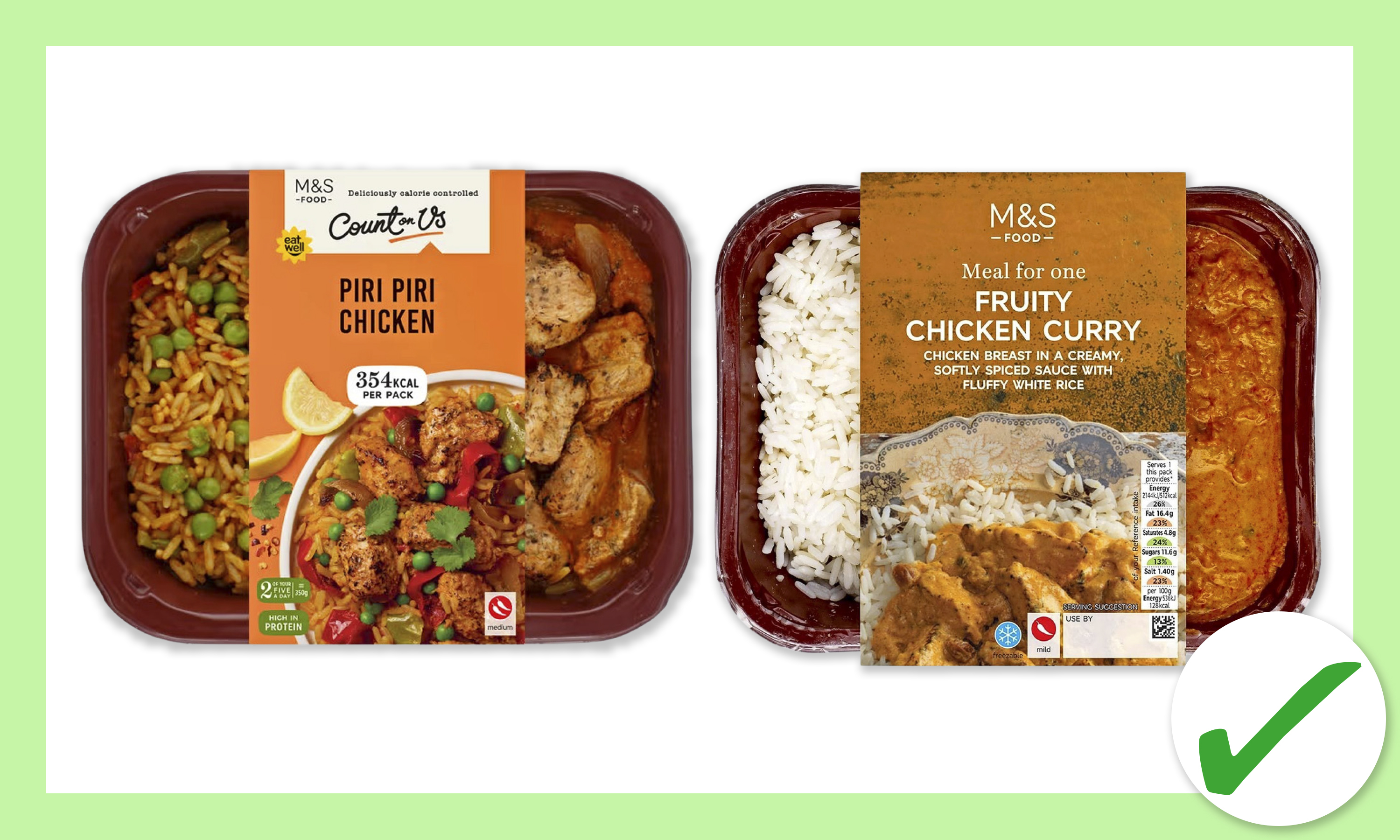 M&S Count On Us piri piri chicken
Processing risk scale No risk
Hyperpalatable No
Energy intake rate No
Additives to watch out for 0
Nutrition per 350g dish for one Sugar, 13.3g. Salt, 1.4g. Sat fat, 0.7g. Fibre, 5.6g. Protein, 26.6g
One of the few calorie-controlled ready meals that doesn’t rely on artificial sweeteners or additives to be appealing. Salt is moderate at 1.4g per portion and saturated fat is low, while fibre and protein are both respectable for a single tray. It’s not perfect — there’s still more rice than vegetables — but as ready meals go, this is a good option.
M&S fruity chicken curry
Processing risk scale No risk
Hyperpalatable No
Energy intake rate No
Additives to watch out for 0
Nutrition per 400g dish for one Sugar, 11.6g. Salt, 1.4g. Sat fat, 4.8g. Fibre, 3.6g. Protein, 28g
All in all, this feels like a reasonably balanced meal in the context of ready or convenience foods: enough protein to satisfy hunger, a modest fat profile, a manageable salt load and no problematic additives. The sugar and salt are worth bearing in mind if you eat such meals frequently, but for occasional use, this one delivers a decent hit of nutrition without excessive processing. Do add veg.
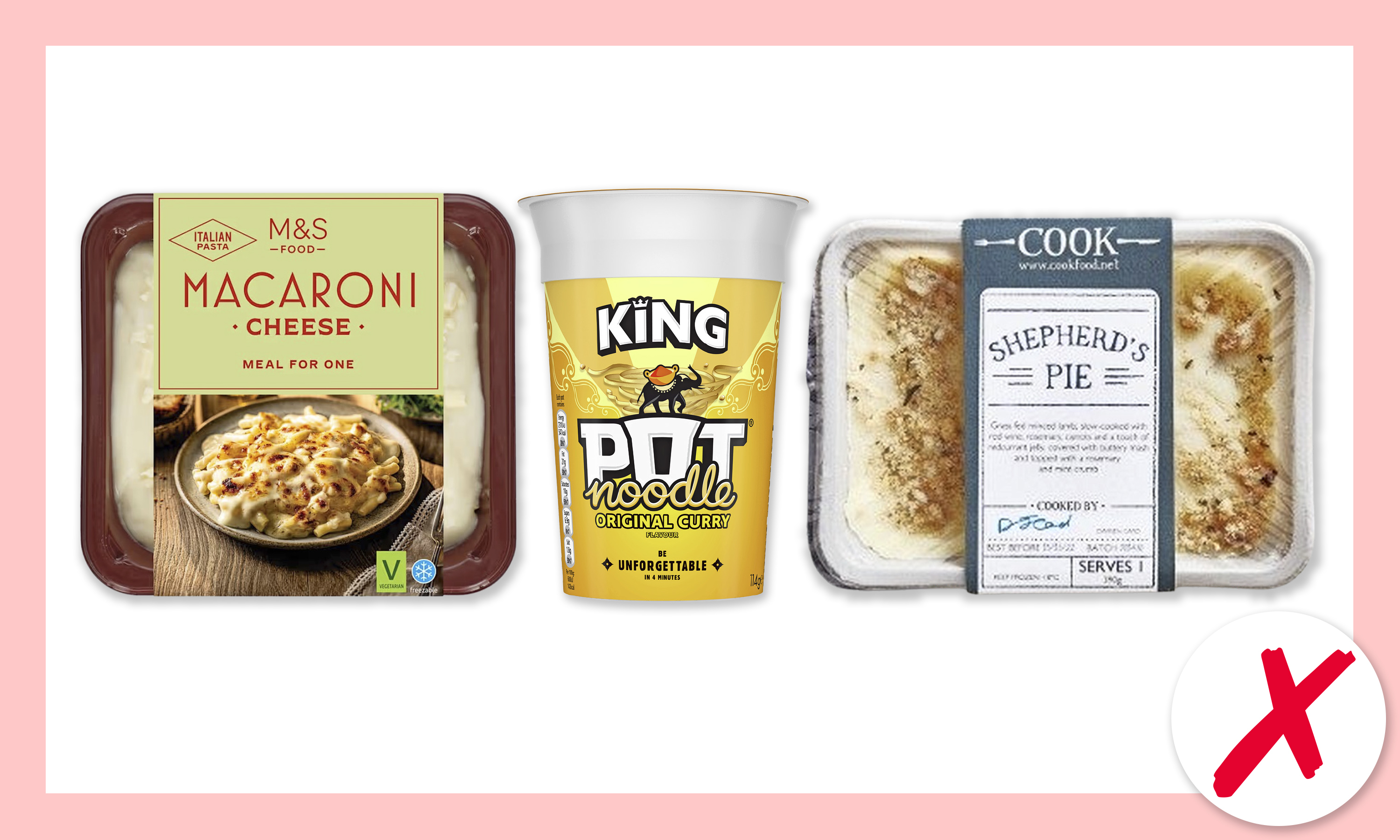 M&S macaroni cheese
Processing risk scale No risk
Hyperpalatable No
Energy intake rate Yes
Additives to watch out for 0
Nutrition per 400g dish for one Sugar, 6.4g. Salt, 1.72g. Sat fat, 16.4g. Fibre, 3.2g. Protein, 29.6g
Pasta, milk, real cheese and a basic roux do the heavy lifting here, not emulsifiers or flavour enhancers. But one portion delivers nearly all of a woman’s recommended daily saturated fat and more than half of a man’s, and more than a quarter of your salt, so it’s undeniably rich. There’s very little fibre, which means it’s filling but not especially supportive for your gut.
Pot Noodle King original curry
Processing risk scale High
Hyperpalatable No
Energy intake rate Yes
Additives to watch out for 2 + cocktail effect
Nutrition per 385g pot Sugar, 7.3g. Salt, 1.7g. Sat fat, 10g. Fibre, 4.6g. Protein, 11g
A classic ultra-processed convenience meal: fried refined noodles plus a highly processed flavour sachet. There’s a hefty quantity of salt and little fibre or protein, so you get a quick glucose hit and not much else. Additives and flavourings do most of the work in terms of taste and texture, and we still don’t know their long-term effects on the gut when mixed with starches such as maltodextrin.
Cook shepherd’s pie
Processing risk scale High
Hyperpalatable No
Energy intake rate Yes
Additives to watch out for 3 + cocktail effect
Nutrition per 390g dish for one Sugar, 7.8g. Salt, 2.6g. Sat fat, 10.9g. Fibre, 5.1g. Protein, 30g
Nutritionally, this is classic comfort food: a decent amount of protein and plenty of mash. The risk comes from the cocktail of additives and its high energy intake rate: this means calories are delivered rapidly, with knock-on effects for body weight, blood pressure and cholesterol. There are multiple emulsifiers, thickeners and refined starches too.
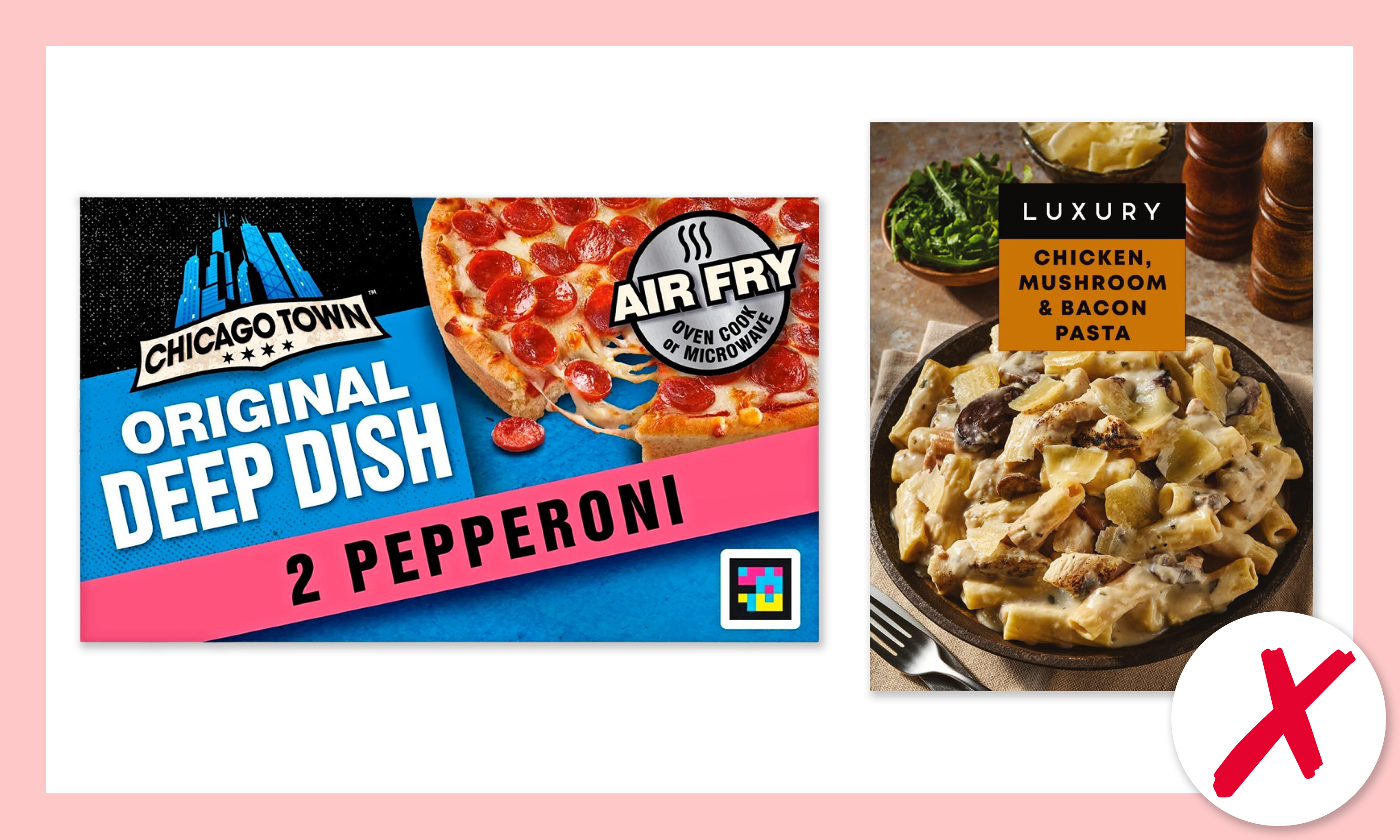 Chicago Town original deep dish pepperoni pizzas (pack of two)
Processing risk scale High
Hyperpalatable Yes
Energy intake rate Yes
Additives to watch out for 2 + cocktail effect
Nutrition per 155g serving (one pizza) Sugar, 3.5g. Salt, 1.4g. Sat fat, 5.9g. Fibre, 2.5g. Protein, 16g
A refined wheat base, processed pepperoni and a thick cheese layer deliver a powerful blend of salt, fat and starch, with preservatives such as nitrites in the meat. This contains more than a third of a woman’s saturated fat and a fifth of a man’s, with very little fibre and no healthy whole foods.
Iceland Luxury chicken, mushroom & bacon pasta
Processing risk scale High
Hyperpalatable Yes
Energy intake rate Yes
Additives to watch out for 3 + cocktail effect
Nutrition per 400g dish for one Sugar, 4.7g. Salt, 2.2g. Sat fat, 18.1g. Fibre, 2.4g. Protein, 33.3g
“Luxury” here really means creamy, salty and heavily processed with multiple additives, including carrageenan, which is an additive of concern. The sauce relies on modified starches, stabilisers and smoke flavourings to achieve its taste. It’s high in saturated fat and nothing like a home-cooked version.
Salty snacks
Many savoury snacks are formulated to be eaten rapidly and in excess, often using ingredients such as sugar to intensify flavour. When choosing snacks, prioritise those made from recognisable ingredients and that have a shorter additives list.
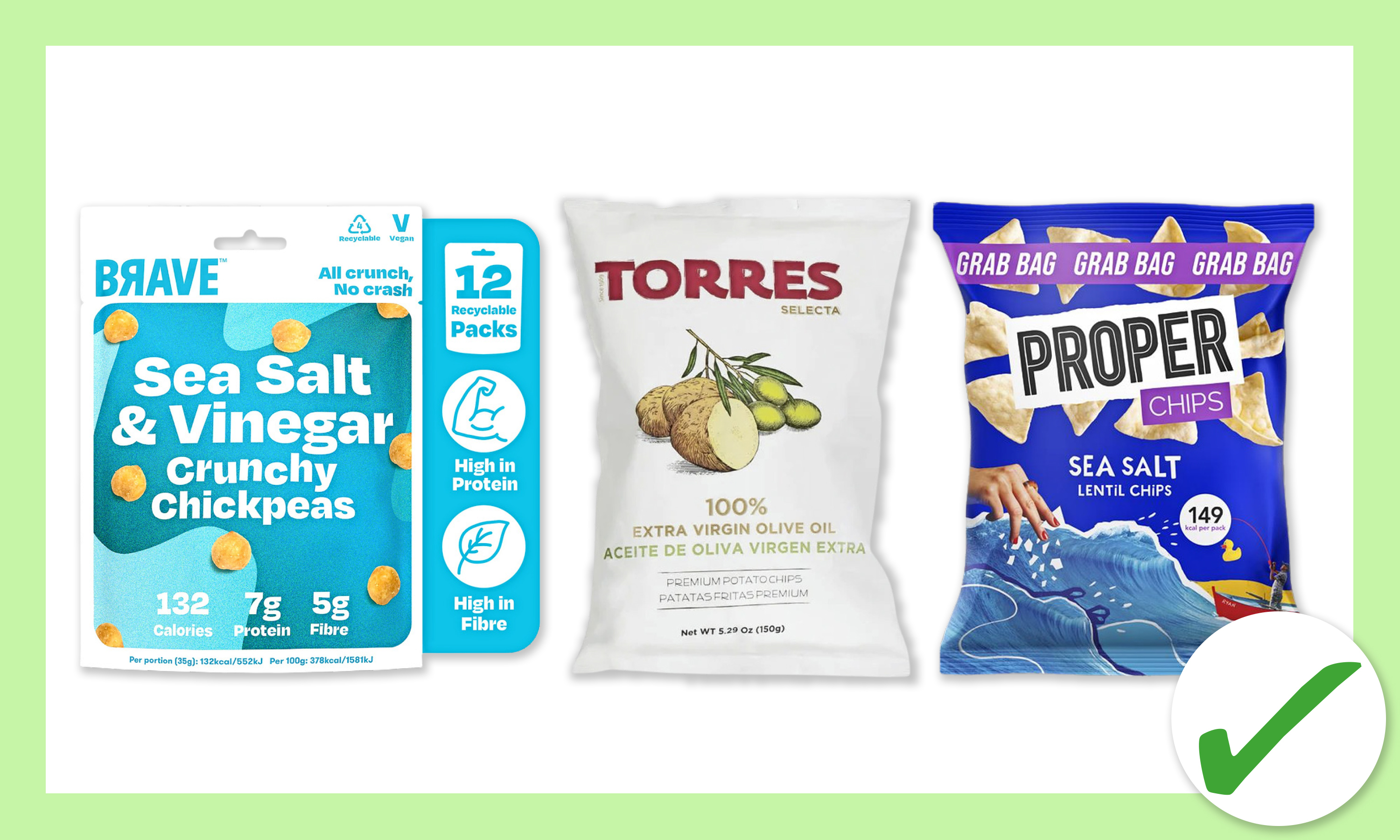 Brave sea salt & vinegar crunchy chickpeas
Processing risk scale Low
Hyperpalatable Yes
Energy intake rate No
Additives to watch out for 0
Nutrition per 35g bag Sugar, 0.8g. Salt, 0.5g. Sat fat, 0.4g. Fibre, 5g. Protein, 7g
These are closer to a whole food than a UPF snack thanks to the minimal processing. At a decent 5g fibre plus 7g protein per 35g bag, they are nutritious. Their firm texture means you have to chew, not graze, which is how snacks should be. Still, they are hyperpalatable due to the salty, fatty content. Make these a treat, not an everyday way to get your legumes in.
Torres extra virgin olive oil crisps
Processing risk scale Low
Hyperpalatable Yes
Energy intake rate No
Additives to watch out for 0
Nutrition per 40g serving Sugar, trace. Salt, 0.44g. Sat fat, 1.92g. Fibre, 1.68g. Protein, 1.84g
About as honest as crisps come. Just potatoes, extra virgin olive oil and salt. They contain only 0.44g salt per 40g and no added sugar. The extra virgin olive oil provides flavour and satiety, and the modest saturated fat level reflects this better quality of oil. A rare example of minimal processing done well. They’re still a crisp and hyperpalatable, not a health food, but these are the ones I’d buy.
Proper Chips sea salt lentil chips
Processing risk scale Low
Hyperpalatable Yes
Energy intake rate No
Additives to watch out for 0
Nutrition per 20g bag Sugar, 0.2g. Salt, 0.37g. Sat fat, 0.6g. Fibre, 0.1g. Protein, 1.9g
If you think you are getting lentils here, think again. What you’re getting is a hyperpalatable snack — essentially fried lentil flour — that could override your fullness signals far more than a helping of the real thing. That said, the salt level is just about acceptable and there’s some protein here too. Fibre is non-existent but at least there are no additives to worry about, which makes these low risk.
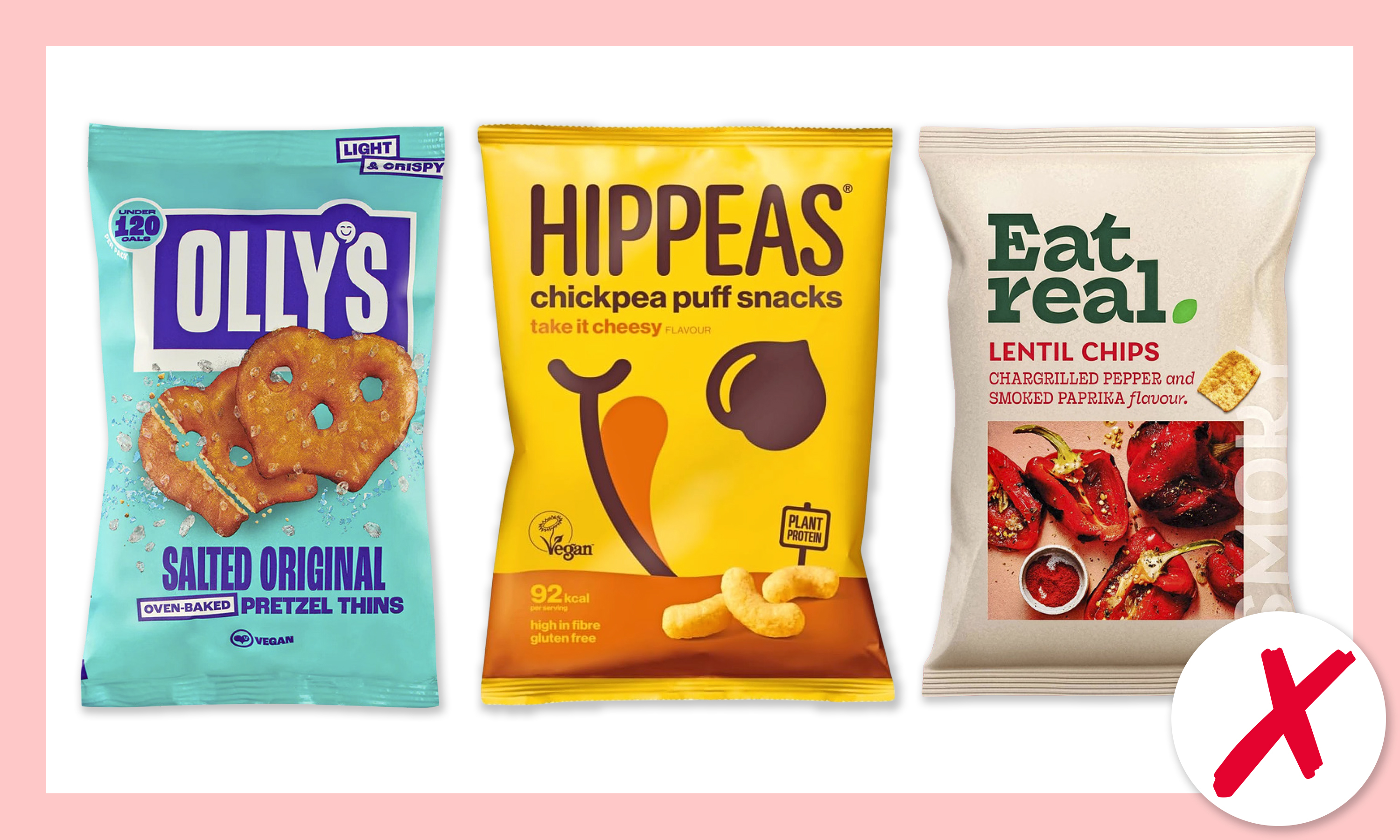 Olly’s salted original pretzel thins
Processing risk scale Medium
Hyperpalatable Yes
Energy intake rate No
Additives to watch out for 0
Nutrition per 35g bag Sugar, 0.7g. Salt, 0.9g. Sat fat, 0.2g. Fibre, 1.2g. Protein, 3.9g
Essentially, these are salted wheat crisps dressed up as a smart choice. They deliver 15 per cent of an adult’s daily salt limit, and their ultra-thin shape encourages overconsumption. The slight protein boost and “oven-baked” promise don’t offset the low fibre. Sweet barley malt extract and an emulsifier (soya lecithin) contribute to their hyperpalatability, pushing this snack to be medium risk.
Hippeas Take It Cheesy chickpea puffs
Processing risk scale Medium
Hyperpalatable Yes
Energy intake rate No
Additives to watch out for 0 + potential cocktail effect
Nutrition per 22g serving Sugar, 1g. Salt, 0.22g. Sat fat, 0.26g. Fibre, 1.3g. Protein, 3g
This appears to be a chickpea snack with minimal sugar, salt and saturated fat. But these are not whole-food chickpeas; they are processed into puffs engineered for crunch and speed of eating. They offer real fibre and protein, but the airy texture and cheesy flavour make them highly palatable. The use of “natural flavouring” hides a potential cocktail of compounds.
Eat Real chargrilled pepper and smoked paprika lentil chips
Processing risk scale Medium
Hyperpalatable Yes
Energy intake rate No
Additives to watch out for 0
Nutrition per 100g Sugar, 2.6g. Salt, 2.61g. Sat fat, 1.6g. Fibre, 4.6g. Protein, 13g
A fair bit of processing has to take place to turn lentils into chips. The spiced flavouring sounds wholesome, but the salt load tells a different story. The smoked paprika and pepper flavourings deliver rewarding complexity that disguises the salty hit. Fibre is reasonable but “natural flavouring” appears again.
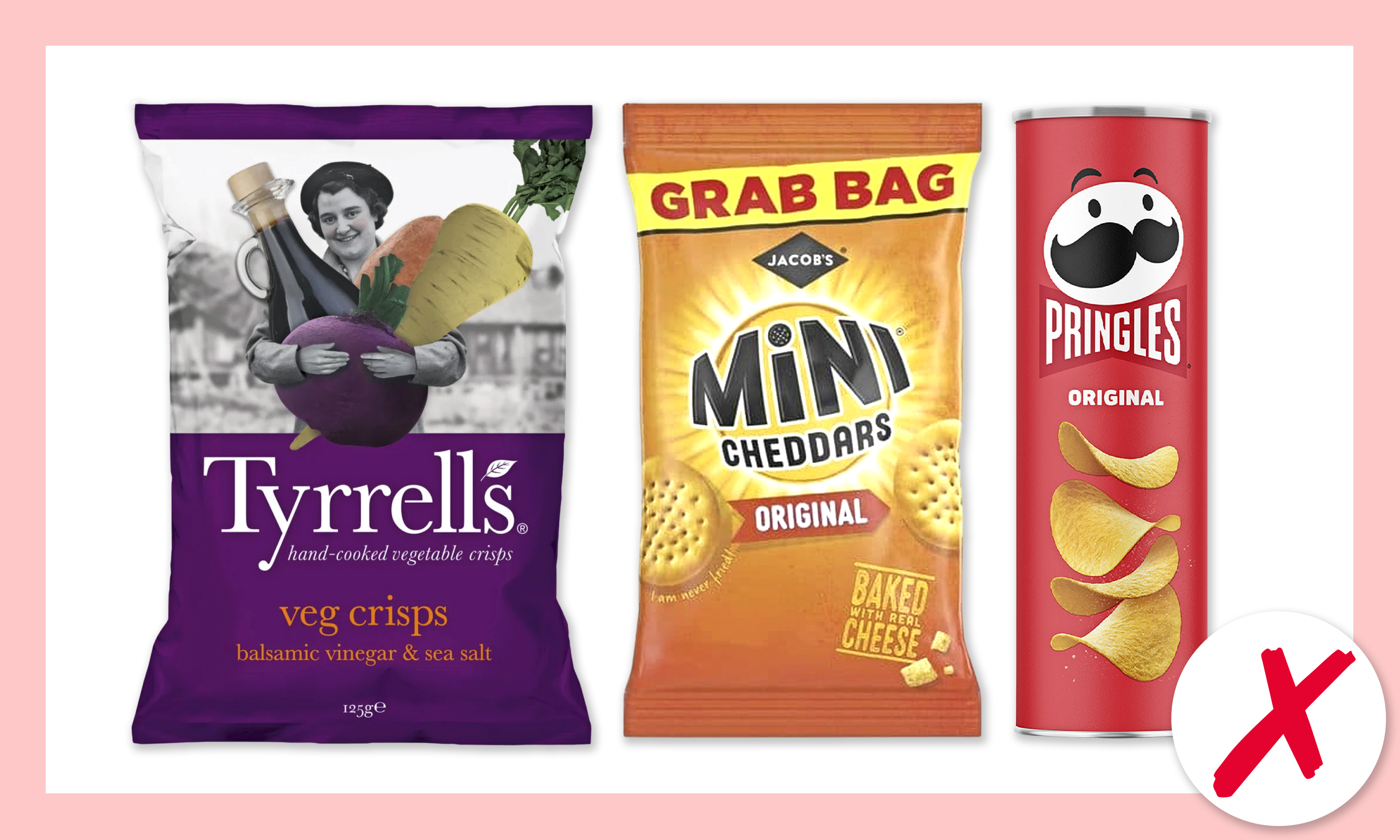 Tyrrells veg crisps
Processing risk scale Medium
Hyperpalatable Yes
Energy intake rate No
Additives to watch out for 0
Nutrition per 40g serving Sugar, 8.9g. Salt, 0.64g. Sat fat, 1.2g. Fibre, 3.9g. Protein, 2g
Here is sweet-salt crunch disguised as “vegetable snacking”. Yes, we have real vegetables (parsnip, carrot, beetroot), but these crisps contain nearly a third of your daily sugar intake per serving, mostly from balsamic vinegar powder, alongside 0.64g salt. Again, this sugar-salt combo creates the neurochemical sweet spot for overconsumption, while the fibre offers little metabolic benefit.
Mini Cheddars
Processing risk scale Medium
Hyperpalatable Yes
Energy intake rate No
Additives to watch out for 1 + cocktail effect
Nutrition per 45g bag Sugar, 2g. Salt, 1g. Sat fat, 6.4g. Fibre, 1.2g. Protein, 4.6g
Mini Cheddars exemplify a nutritionally empty, highly engineered snack: small, salty, fatty and designed to disappear quickly. Each bag delivers 15 per cent of daily salt intake and 6.4g saturated fat. Then there’s the addition of glucose syrup, which shouldn’t feature in our everyday diet, making them medium risk. Coupled with a variety of other additives, there’s a potential cocktail effect for our gut microbes.
Pringles
Processing risk scale High
Hyperpalatable Yes
Energy intake rate No
Additives to watch out for 1 + cocktail effect
Nutrition per 40g pot Sugar, 0.3g. Salt, 0.4g. Sat fat, 1.2g. Fibre, 1.6g. Protein, 2.4g
The pinnacle of snack engineering: dried potato (less than 50 per cent actual potato; the remainder is starch, oil and additives), processed into sheets, shaped into identical cylinders and fried. They are designed for melt-in-the-mouth eating at speed. Additives like maltodextrin accelerate glucose absorption, which is not helpful to our metabolism. These fatty, hyperpalatable discs are designed for overconsumption.
What to avoid in the drinks aisle
Many popular drinks fall into the red zone on the food processing risk scale thanks to the sheer number of additives involved, from colouring agents to flavouring chemicals, plus added sugar. Anything with a laundry list of ingredients is best avoided.
 Monster Energy
Processing risk scale High
Additives to watch out for 4 (glucose syrup, sorbic acid, benzoic acid, sucralose)
Nutrition per 500ml can Sugar, 55g. Salt, 0.96g. Sat fat, protein, fibre — negligible
This is effectively a can of sweetened stimulant, with high sugar, caffeine and worrying flavouring agents. Additives such as benzoic acid, sorbic acid, flavourings and stabilisers add to the processing risk. When these ingredients are combined and consumed every day, we don’t know how they affect health. For instance, when benzoic acid is mixed with vitamin C in drinks it can produce benzene, which is a carcinogen.
Red Bull The Ice Edition sugar-free iced vanilla berry
Processing risk scale High
Additives to watch out for 3 + cocktail effect (sucralose, acesulfame K, brilliant blue FCF)
Nutrition per 100ml Sugar, 0g. Salt, 0g. Sat fat, protein, fibre — negligible
Although sugar-free, this drink is packed with artificial sweeteners and flavourings. Brilliant blue FCF and acesulfame K are worrisome additives linked to altered gut bacteria. The sweetener sucralose has also been found to change the gut microbiome, affects how the body handles glucose and primes the brain for sweet tastes, potentially increasing cravings for sugary foods elsewhere.
Lucozade original energy
Processing risk scale High
Additives to watch out for 6 + cocktail effect (glucose syrup, potassium sorbate, acesulfame K, ponceau 4R, sunset yellow FCF, sucralose)
Nutrition per 250ml Sugar, 11.2g. Salt, 0.22g. Sat fat, protein, fibre — negligible
Lucozade’s traditional formulation relies heavily on glucose syrup, regular consumption of which has been associated with an increased risk of developing type 2 diabetes, obesity and cardiovascular disease, contributing to its high-risk processing score. While often marketed as a sports or recovery drink, its primary function is rapid energy delivery through sugar.
 Robinsons Fruit Shoot orange
Processing risk scale High
Additives to watch out for 2 (sucralose, acesulfame K)
Nutrition per 200ml bottle Sugar, 2.4g. Salt, 0.06g. Sat fat, protein, fibre — negligible
Despite its child-friendly branding, Fruit Shoot is effectively flavoured water. The low sugar content may appear reassuring, but it is replaced by the artificial sweetener sucralose, which may condition children to sweetness and damage teeth. The lack of fibre means even the small amount of sugar present will be absorbed quickly, which, in the long run, can harm blood vessels and increase the risk of chronic diseases.
Sunny D blue raspberry
Processing risk scale High
Additives to watch out for 3 (brilliant blue FCF, sucralose, acesulfame K)
Nutrition per 250ml Sugar, 2.5g. Salt, 0g. Sat fat, 0g. Protein, 0g. Fibre, 0.2g
Additives rather than natural fruit ingredients drive the vivid colour and strong flavour of this drink. Although sugar is relatively low, the combination of artificial sweeteners, colour and acidity creates a drink that is easy to overconsume and has no nutritional virtues. Another risk to dental health.
J2O orange and passion fruit
Processing risk scale High
Additives to watch out for 2 (sucralose, potassium sorbate)
Nutrition per 275ml Sugar, 11g. Salt, 0g. Sat fat, 0g. Protein, 0g. Fibre, 0g
This too is essentially a sweetened juice blend with added flavourings. Its 11g sugar per bottle delivers a rapid glucose hit and is more than a third of your adult consumption for a day, and without any of the fibre that whole fruit would supply. The absence of texture means your body receives none of the satiety cues that you’d get from eating fruit in its whole form. Have this only as an occasional treat.
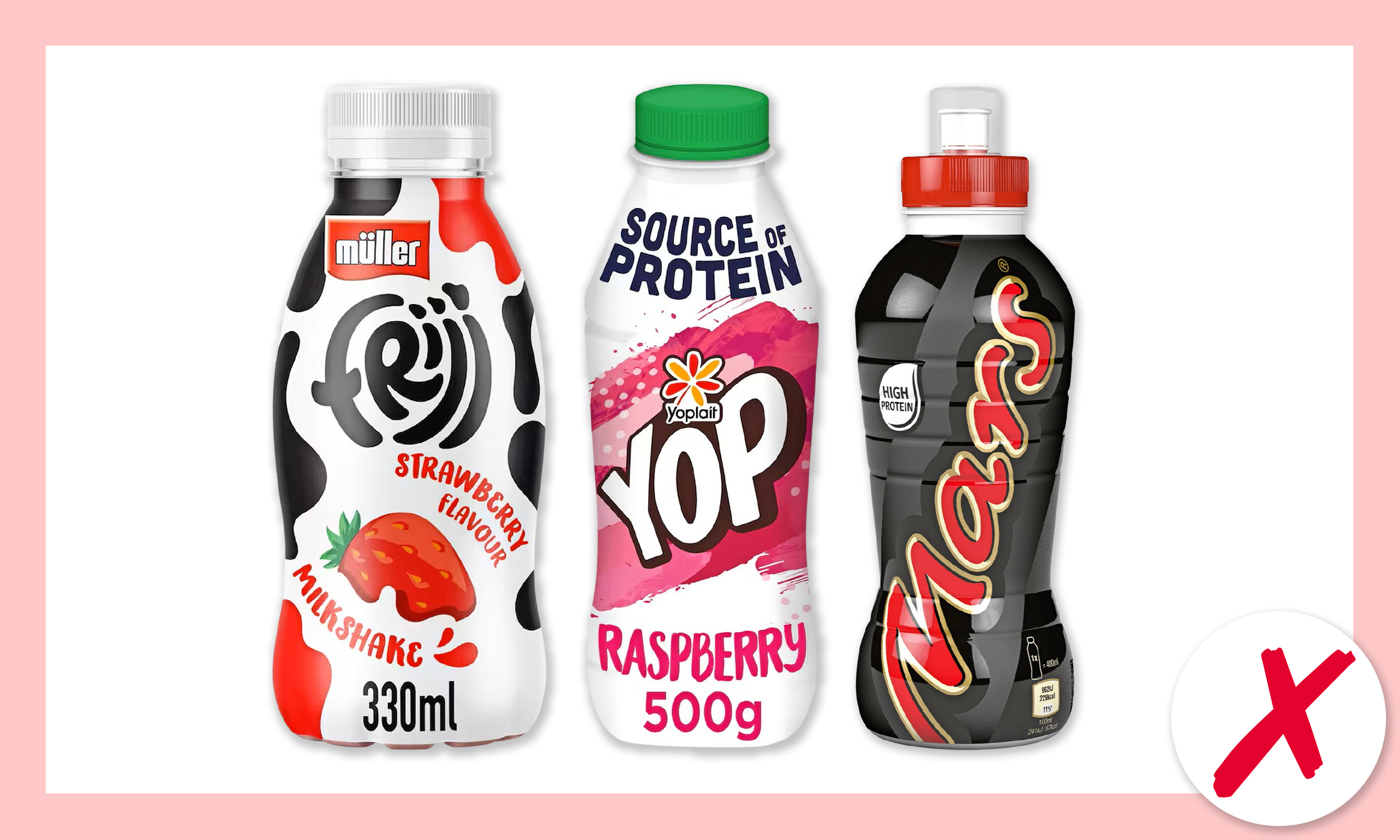 Muller Frijj strawberry milkshake
Processing risk scale High
Additives to watch out for 3 + cocktail effect (carrageenan, cellulose, fructose)
Nutrition per 330ml Sugar, 34.3g. Salt, 0.4g. Sat fat, 2.6g. Protein, 12.2g. Fibre, 0g
Frijj combines more than the recommended daily allowance of sugar in one bottle with added flavours and stabilisers to create its characteristic thick, creamy texture. Added fructose and carrageenan are a worry. Although it contains a reasonable amount of protein from milk, the smooth texture also means it is extremely easy to drink quickly, which encourages overconsumption. Better to make your own milkshake.
Yop raspberry yoghurt drink
Processing risk scale Medium
Additives to watch out for 0
Nutrition per 150g serving Sugar, 15.5g. Salt, 0.18g. Sat fat, 0.8g. Protein, 4.5g. Fibre, 0g
Yop is often perceived as a health drink. It’s not. Sure, it contains no problematic additives and is based on yoghurt, which provides protein and fermentation that can support gut health. However, its 15.5g sugar per serving still places it closer to a sweetened dairy dessert than a health drink, and without fibre to moderate absorption. Still, its real-food base makes it a better option than milkshakes that rely on emulsifiers and stabilisers.
Mars chocolate milk drink
Processing risk scale High
Additives to watch out for 3 + cocktail effect (carrageenan, acesulfame K, sucralose)
Nutrition per 400ml Sugar, 24.2g. Salt, 0.95g. Sat fat, 5.9g. Protein, 12.7g. Fibre, 0g
A drinkable chocolate bar with a cocktail of additives that again includes sucralose and carrageenan. The combination of sugar, saturated fat and flavour additives creates a perfect storm for reward-system activation, motivating you to come back for more and more. A decent protein content does not compensate for the lack of fibre. Its creamy texture encourages rapid consumption, minimising satiety.
Hair and make-up: Lucie Pemberton using Hourglass. Jumpsuit, reiss.com. Cuff, sezane.com
Dining and Cooking