
| New Age
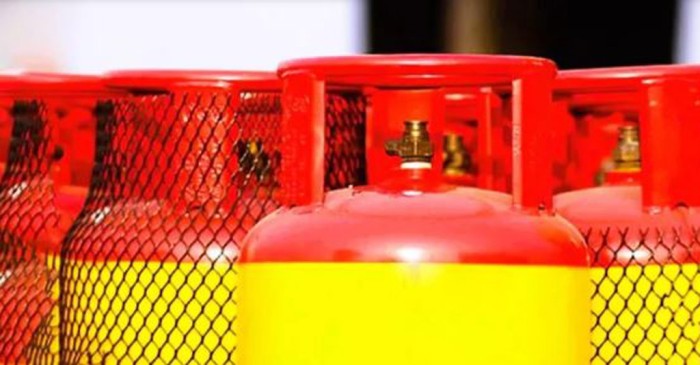
THERE are shortages born of nature and markets, and then there are shortages manufactured by human design. Bangladesh’s ongoing liquefied petroleum gas crisis belongs firmly to the second category. For nearly two weeks, LPG cylinders have vanished from large swathes of the country. Where they are available, a government-fixed price of Tk 1,253 for a 12-kilogram cylinder has morphed into Tk 1,800, Tk 2,000, even Tk 2,100. This is not volatility; it is daylight robbery dressed up as market logic.
LPG today is not a luxury fuel. It is the backbone of Bangladesh’s urban and semi-urban kitchens, the fallback option in cities where pipeline gas has long been unreliable, and the primary energy source for millions of middle- and lower-income households since new gas connections were halted. Restaurants, roadside eateries and small food producers all depend on it. When LPG becomes scarce or unaffordable, the shock ripples outward, quietly feeding inflation, squeezing household budgets and raising the cost of daily survival.
The official explanation is familiar and convenient: supply shortages, import bottlenecks, LC complications, seasonal spikes in global demand during winter. Each of these factors carries a grain of truth. None explains why a cylinder imported at yesterday’s price suddenly costs Tk 700 more today. None explains why gas disappears from the market days before the regulator announces a new price. None explains why the same cylinder sells at wildly different prices across neighbourhoods. Markets do not behave like this on their own. Cartels do.
At the centre of this dysfunction sits the Bangladesh Energy Regulatory Commission (BERC), an institution that dutifully announces prices every month and then retreats from the field as if enforcement were someone else’s responsibility. Price-setting without price-policing is not regulation; it is performance art. The law gives BERC the authority to fine, penalise and even jail violators. Yet violations are routine, penalties rare and fear non-existent. Predictably, syndicates have learned that rules in Bangladesh’s LPG market are suggestions, not constraints.
This is hardly unprecedented. Bangladesh has seen similar patterns in rice, onion, edible oil and fertiliser markets. A commodity becomes essential. Supply chains concentrate in a few private hands. Oversight weakens. Artificial shortages emerge. Prices spike. Public outrage flares — and fades — until the next crisis. LPG is simply the latest chapter in a long book of regulatory abdication.
What makes this crisis more troubling is its structural nature. Unlike pipeline gas, LPG distribution is overwhelmingly private. There is no state buffer stock to stabilise supply, no public distributor to set a credible benchmark, no emergency release mechanism to cool prices. Consumers are scattered across cities and villages, their grievances diffuse, their voices easy to ignore. Pain, when evenly distributed, is politically invisible.
Importers blame dealers. Dealers blame companies. Companies blame global markets. In this choreography of evasion, accountability dissolves. Yet the core issue is not scarcity alone; it is opacity. No one outside the industry knows how much LPG is imported, how much is stored, where it is held or how quickly it moves through the supply chain. In such darkness, hoarding thrives.
Globally, LPG markets are volatile but functional regulation cushions the blow. India, for instance, treats cooking gas as a quasi-public good, combining private distribution with state oversight, digital tracking and targeted subsidies. Price shocks are managed, not outsourced to consumers. Bangladesh, by contrast, has embraced liberalisation without building the regulatory muscle that liberal markets require. The result is not efficiency, but exploitation.
The human cost is real. Lower-income families cope by cutting protein from meals. Middle-class households reallocate money from education or healthcare. Small food businesses raise prices or shut down temporarily. Inflation creeps upward, not because of global shocks alone, but because an essential input has been allowed to spiral unchecked. An LPG crisis does not stay in the kitchen; it travels to the marketplace, the classroom and the clinic.
So where are the regulators? Why is market monitoring so weak? Why are mobile courts sporadic, inspections predictable and penalties symbolic? Why does BERC communicate with trade bodies through polite letters instead of enforcement notices? These are not technical questions. They are questions of will.
The solutions are neither radical nor mysterious. First, LPG must be formally treated as an essential commodity, not merely another tradable product. That designation should trigger heightened surveillance during peak demand seasons. Second, the entire supply chain — from importer to distributor to retailer — must be brought under real-time digital monitoring. If banks can track money instantly, regulators can track gas cylinders. Third, enforcement must be visible and painful. A few high-profile penalties would do more to stabilise prices than a dozen press releases.
Fourth, consumer protection agencies must be empowered to act swiftly, with functional hotlines and rapid-response teams. Complaints that vanish into bureaucratic drawers only embolden cartels. Finally, the government should consider mandating designated fair-price outlets run directly by major importers, allowing consumers to bypass dealer syndicates altogether.
None of this requires reinventing the state. It requires using the state that already exists.
There is a deeper lesson here. Markets do not fail because they are private; they fail because rules are optional and enforcement is selective. When regulation is weak, the strongest players will always exploit necessity. LPG dealers are not uniquely immoral; they are operating in a system that rewards manipulation and punishes compliance.
Cooking gas is not a privilege. It is a basic input into daily life. Allowing syndicates to hold it hostage is not merely an economic failure; it is a moral one. If the government cannot enforce its own prices on an essential commodity, it sends a dangerous signal: that power, not law, determines outcomes.
The LPG crisis will pass, as all such crises do. Supplies will return. Prices may soften. But unless the underlying regulatory emptiness is addressed, the cycle will repeat — with gas today, electricity tomorrow and something else the day after. Stability is not achieved by announcements. It is achieved by enforcement.
The choice before Bangladesh is simple. Either essential markets are governed in the public interest, or they will continue to be governed by syndicates. In the kitchen, as in the economy, someone always pays the price.
MA Hossain is a political and defence analyst based in Bangladesh.
Dining and Cooking