
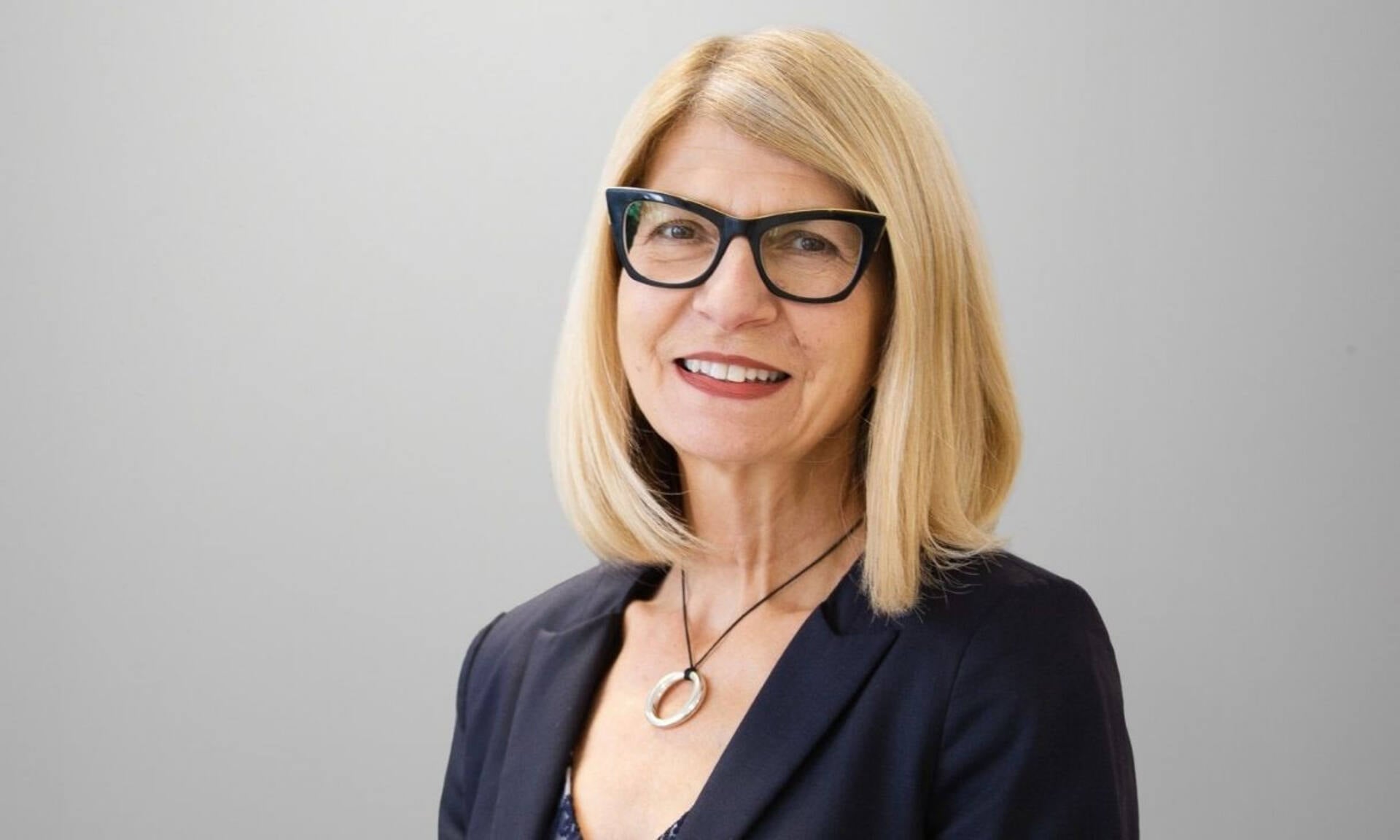
At universities, the word transformational is so routinely deployed now, that it loses meaning. Strategic plans promise it, leaders invoke it, consultants invoice for it.
Yet occasionally, the term carries weight—anchored not in branding, but in biography. For Professor Catherine Itsiopoulos, the newly appointed Deputy Vice-Chancellor of RMIT’s STEM College, transformation is neither metaphor nor managerial embellishment. It is the throughline of a career that has moved from clinical health and dietetics to academic leadership, from metabolic pathways to institutional culture, and now to one of the largest and most complex STEM portfolios in the country.
RMIT’s STEM College operates under the motto “Together transforming the world through STEM”and Itsiopoulos does not shy away from the ambition, but is clear-eyed about what transformation must mean if it is to be more than window dressing.
“Training and research should be transformational,” she says, “but they must also have purpose and impact.”
From health to systems
Before entering senior academic leadership, Itsiopoulos built her career in health sciences, focusing on the prevention and management of chronic disease through diet—particularly the traditional Mediterranean diet. Her research examined key metabolic pathways long before “lifestyle medicine” became a fashion. Alongside her scientific publications, she authored four Mediterranean diet cookbooks, bridging research, culture and practice.
Grounding matters. It shaped how Itsiopoulos thinks about STEM. She does not see siloed disciplines, but as an interconnected ecology—melding medicine and nutrition, agribusiness and exports, urban infrastructure, transport, buildings, bridges and technology.
“How do all these disciplines coalesce,” she asks, “to actually transform our lives for the better?”
The question for Itsiopoulos is not poetics or rhetoric. Nor is it confined to laboratories.
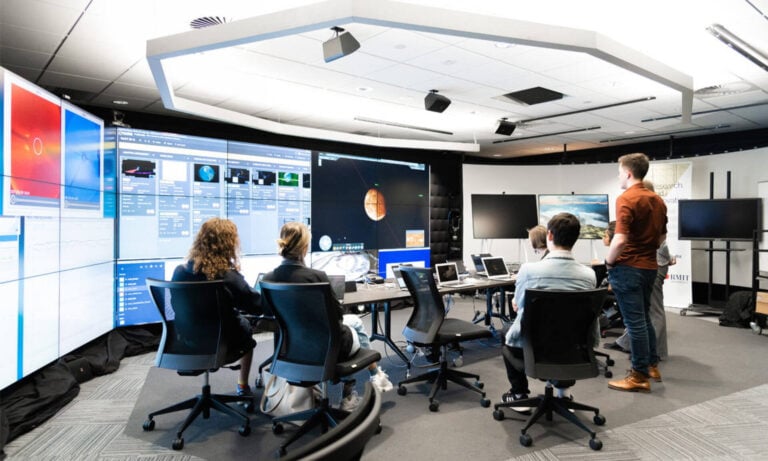 Students standing and sitting in a space lab facility at RMIT STEM College. Photo: RMIT
Fit-for-purpose
Itsiopoulos is keen on the idea of a fit-for-purpose workforce. “I’ve built and led health-led programs,” she says, “and my focus has always been on building an empowered workforce that serves communities.”
Pressed on what that means, she doesn’t retreat into abstraction.
“Imagine a workforce that isn’t fit for purpose,” she says. “We’ve all seen that.”
For Itsiopoulos, fit-for-purpose is not about compliance or performance metrics. It is about alignment—between people, roles, skills, culture and mission. That applies as much to academic staff as to professional services teams.
“Everyone should be set up for success,” she says. “That means being in the right job. Sometimes you’re not. Sometimes you thought it was for you—but it isn’t.”
It is an unusually frank admission in university leadership. So too is her acknowledgement that failure of fit is not always personal.
“Sometimes it’s the right role and the wrong management,” she says. “Or the right role in the wrong organisation.”
“Well, yeah. Exactly.”
Culture problems in institutions
Itsiopoulos formally became permanent in the role in in December 2025, after serving as interim since late 2024. What she inherited was paradoxical.
STEM is RMIT’s strongest-performing college. It attracts high student demand, benefits from sustained government policy support, dominates graduate employment outcomes, and generates roughly 70 per cent of the university’s research income. Its engineering school is the largest in Australia.
And yet.
“Our culture surveys showed STEM staff were the least engaged across the university,” she says. “People weren’t happy. They weren’t engaged.”
Performance, it turned out, was masking dysfunction. The Vice-Chancellor was explicit when appointing her: the college was delivering—but at a cost.
The response was not structural tinkering, but cultural reconstruction.
 Ensuring more women do STEM, especially those from diverse bakgtrounds is one of Itsiopoulos’s objectives. Photo: Depositphotos
‘We care’
Under Itsiopoulos’ leadership, the STEM executive articulated a deceptively simple values framework: We care.
It is not a slogan. It is operationalised as a decision-making test.
“Care underpins collaboration, accountability, respect and empowerment,” she says. “We use it as a pub test when making critical decisions.”
The phrase is embedded in leadership practice and deliberately socialised across the college. In an environment dominated by engineering, technology and industry partnerships, it signals a recalibration of what excellence looks like.
Not softer. More human and diverse. Itsiopoulos is driven to see more women in STEM and particularly culturally diverse women.
There is a significant presence of women in health she says but “in but engineering, the statistics really are poor, at only 13per cent. and I want to see it inch out to 20 per cent as soon as possible.”
To that she has programs engaging diverse ethnic communities and within them women.
Industry, research—and space to think
RMIT’s STEM research is unapologetically industry-focused. Education is research-led and co-designed with industry, for industry. In engineering, applied outcomes are often the primary driver.
But Itsiopoulos is wary of pure instrumentalism.
She understands that some research—particularly in health, social systems and design—does not deliver immediate commercial returns.
“In health and nutrition,” she says, “research drivers often come from clinicians and researchers trying to improve how we understand health, prevention and care.”
That includes therapies, methods and practices aimed not just at treatment, but at prevention and quality of life.
Advances in diabetes and cardiovascular drugs, she notes, are extraordinarily effective—extending life regardless of diet.
“But then the question becomes,” she says, “what do we mean by healthier?”
Epidemiology tells us we are living longer, but not always better.
Lessons from Ikaria—and the city
Itsiopoulos’ Mediterranean diet research inevitably leads to long-life cultures: Ikaria, Sardinia, Okinawa.
What unites them is not a superfood or dietary trend, but a pattern of living: fresh local food, physical activity embedded in daily life, strong social connections, minimalism and time outdoors.
“Lifestyle management,” she says, “is about diet, exercise, sleep, stress—and social connectedness.”
She is no romantic. We do not all live on static Mediterranean islands. We live in large urban expanses. We need roads, bridges, medicines, transport and technology.
The challenge for STEM, then, is translation: how to design urban, technological and social systems that recover some of the protective features of traditional lifestyles without pretending we can return to them.
That includes acknowledging inconvenient truths.
“Highly processed food is cheap, accessible and convenient,” she says. “You can take your family out on a modest budget, and it can be fun.”
But, she adds, such food should be a rare treat. Cooking at home, she argues, is fundamental—not only to physical health, but to mental wellbeing.
Transformation, she suggests, lies not in moralising individual choices, but in designing systems—food, cities, work, transport and technology—that make healthier choices easier, not harder.
Purpose, not jargon
For Itsiopoulos, STEM is not simply about skills pipelines or innovation ecosystems. It is about purpose—applied rigorously, humanely and without illusion.
Transformation, in the her hands is more than a buzzword. It is a demand: that universities produce knowledge, people and systems that genuinely improve lives, guided by a workforce with values—one that, as she insists, cares.
Implementation, of course, can seem a Sisyphean task in large academic institutions. Yet, in a sector that too often oscillates between market logic and bureaucratic inertia, Itsiopoulos’ insistence feels quietly—and perhaps productively—radical.
Dining and Cooking