
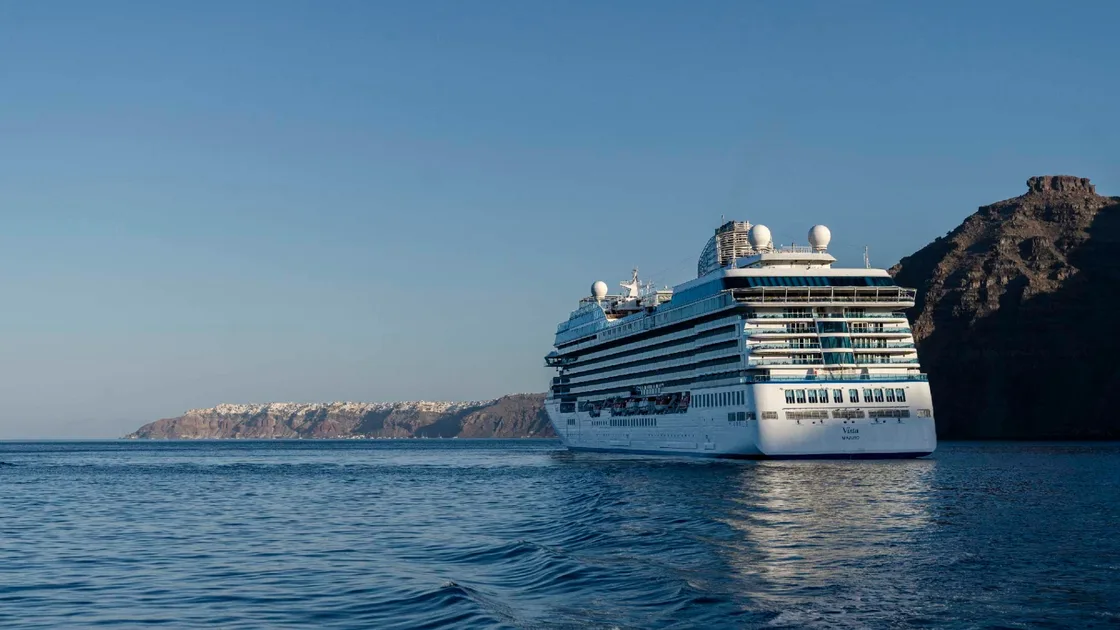
“You better get up here.” This was the message from my travelling companion as our ship pushed up the Bosphorus to Istanbul. I was in our room laying clothes in a suitcase for the first time in 12 days. A tiny cloud of grief hung over me: packing a bag hadn’t been necessary since we left Barcelona nine ports and many Champagnes ago, sailing under clear skies through calm waters as the last wisps of summer blessed our passage. How to cope with the mundanity of squeezing a suitcase closed after two weeks on the Mediterranean? I ate the chocolate that had been placed on my plumped pillow the night before and headed up to Deck 14.
Istanbul unspooled, the domes and minarets of mosques, fortress walls snaking over hills, ancient observation towers, boats and bridges, busy and urgent and epic. You can know that Istanbul lies at the crux of Europe and Asia, spanning a waterway that snakes between the Aegean and the Black Sea. You can read about empires and the grand shuffles of history. It’s something else to be gliding along an ancient watery path sailed by Romans and Ottomans, peacemakers and marauders, spice traders and refugees.
And now us, on Oceania Vista, a handsome 1200-berth ship coming to the end of a Culinary Luminaries cruise where food and wine is the focus, celebrated in themed dinners, cooking classes and at every stop along the way. Sure, there’s a Chagall museum in Nice, Livorno is an easy tootle from Pisa’s leaning tower, Rome has a Colosseum, and Athens is overlooked by an Acropolis with compelling history. But with just one day in every port, we chose lunch. I’ve long thought you can learn as much about a place from a menu or market as a museum, anyway.
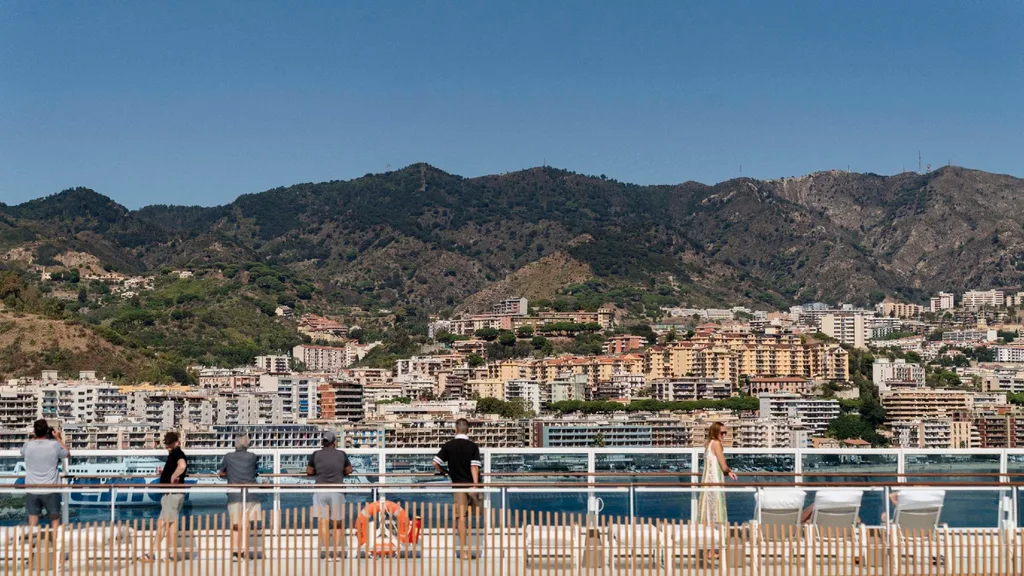 (Credit: Rob Locke)
Before the cruise, we gave ourselves a couple of days in Barcelona to settle into the time zone. Hotel Borneta opened in 2024, away from the fray in El Born. The 92-room boutique hotel has a rooftop bar for sizzling nights but on a lazy afternoon, the colonnaded footpath fronting the building is the perfect place for a contemplative spritz. Let’s contemplate botifarra, for example: the rich, peppery pork sausage that’s a local specialty dating back to the Roman Empire. It’s depicted in glazed pottery fragments unearthed beneath Mercat El Born, a few steps from Hotel Borneta, it’s also available at lively Santa Caterina market or in modern eat-in deli Vila Viniteca, both within a 10-minute walk.
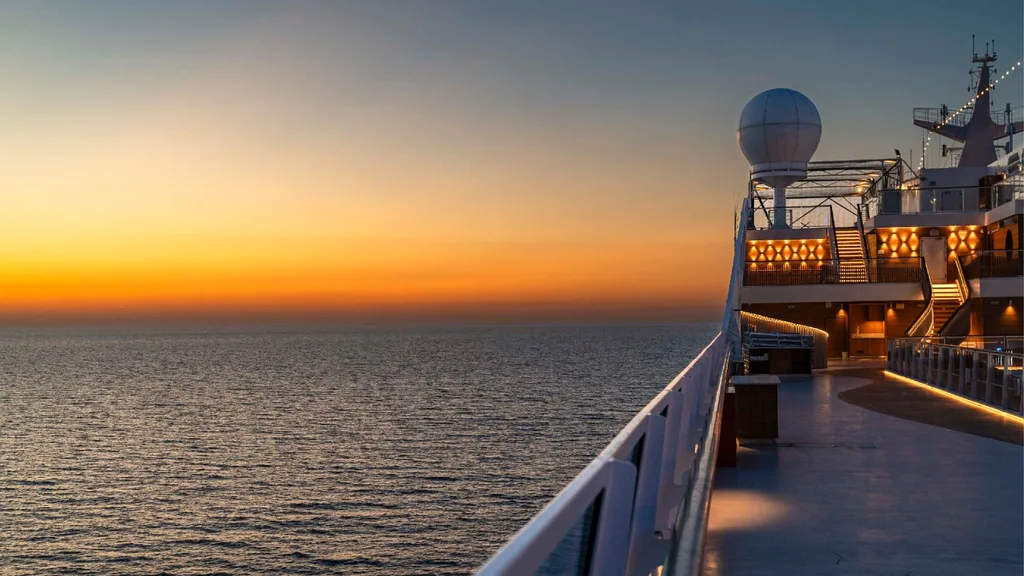
And now to Vista. As the deep chug of the engines pushed us 315 kilometres north to France, the only anguish is choosing between a Gin and Tonic on our private verandah, a social glass of sparkling in the foredeck Horizons bar, or a relaxed meal on the Terrace Café looking back through the wake to the disappearing coastline. It’s all too easy to sink into the Vista vibe: the two-year-old ship is calm and spacious and the crew – from 47 countries – accomplished and unrelentingly friendly.
The next day in Marseilles, we make a pilgrimage to Chez Fonfon, a two-level bouillabaisse specialist overlooking the pretty cove of Vallon des Auffes. The famous fish soup speaks to the city’s maritime history, but also to the way lore and legend are threaded through food as much as they are expressed in ancient edifices and great art. Was bouillabaisse invented after fishermen boiled their catch in sea water? Should olive oil be added? Can you call it bouillabaisse if it doesn’t include eel? Or is it fine to set questions aside and simply be satisfied overlooking a yacht-lined quay, spooning rouille (a garlicky saffron emulsion) onto croûtons as they slowly sink into shimmering fish-studded broth?
There’s more shimmering during a breathtaking dawn arrival in Villefranche-sur-Mer, where villas twinkle in spearing morning light. It’s a quick train ride from there to Nice for Provençal apricots in the market and lunch at tiny cash-only La Merenda, where it’s impossible not to overhear the next table exult over their luscious beef stew. Wandering through the Old Town means picking up a socca (chickpea pancake), not only a salty, sturdy snack, but also another opportunity to tap into history.
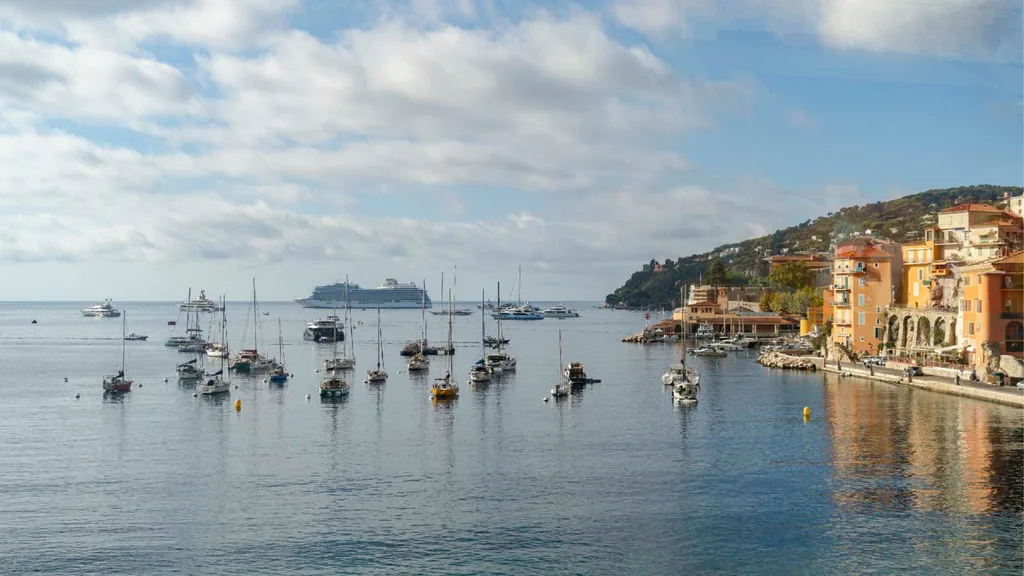 Villefranche-sur-Mer on the Côte d’Azur. (Credit: Rob Locke)
One socca story dates to the 1543 Siege of Nice: the desperate Niçois tipped a slurry of chickpea soup and hot oil over the city walls to stave off Turkish invaders, then realised their liquid weapon actually tasted pretty good. Stories are threaded through the food of Messina too. We lunch at La Trattoria Famiglia Morello, where signora Morello has prepared a help-yourself array of antipasti, then steers us to stoccafisso. Even though Sicily has its own rugged coastline, this air-dried Norwegian cod is a key local dish, probably dating back to the 11th-century Norman invasion. What a treat to sit in this 50-year-old daytime-only restaurant for a feast of such heritage and meaning.
Some of our lunches are self-directed, others are organised on-shore excursions. In Livorno, Oceania arrange a town car, uniformed driver and accompagnatrice turistica Elena Morelli. Through her, we learn about the Tuscan port city’s best snacks, including torta di ceci, similar to Nice’s socca but enjoyed in a sandwich, sometimes with eggplant. In Rome, cooking teacher Claudia Paiella leads a tasting tour of Mercato Trionfale where a morsel of porcini mushroom fills my soul with deep, earthy flavour. At Ristorante Vladimiro, lunch is rigatoni all’Amatriciana made with Roma’s extra firm take on al dente. In Santorini, guide George Ntantis takes us to Artemis Karamolegos Winery where we learn about the special pruning technique that turns grape vines into living baskets, protecting fruit from vicious winds. A glass of assyrtiko brings the gifts of this unique island practice to crisp, bright life.
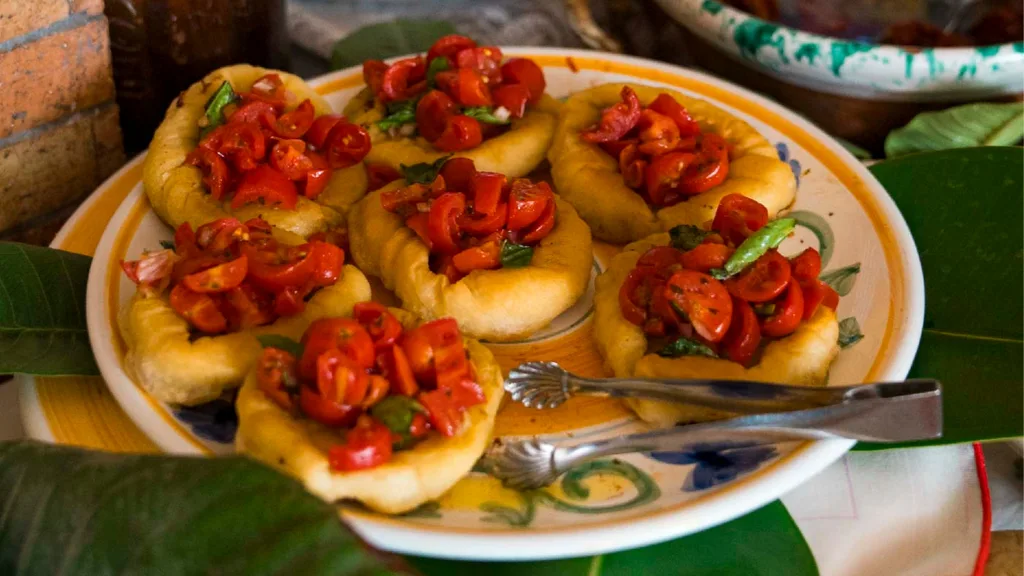 Antipasti at La Trattoria Famiglia Morello (Credit: Rob Locke)
The experiences on board are as engaging and thoughtful as anything on land. At Jacques, one of four fine-dining restaurants, waiters wheel trolleys tableside, perfectly filleting sole with Michelin-star finesse. You might expect a signature Italian restaurant to have wine experts on hand – and Toscana does – but the olive oil sommelier is a surprise. Will you dip just-baked bread into fruity, grassy frantoio olive oil from Upper Lazio, or a spicy, herbaceous Sicilian variety? The extensive choice of wines in the restaurants is poured with generosity by a fleet of sommeliers but there are dedicated bars too.
I’m drawn to sunset aperitivo with a string quartet soundtrack in the Grand Lounge and I love the straightforward offering at Martinis piano bar (make mine dry and dirty) but my favourite is Founders Bar for its impeccable cocktails and theatrical flourish. I am always going to say “yes” to a highball presented in a smoke-filled dome. I’ll say “yes, please” to upskilling too. Oceania’s chef instructor Lori Powell brings experience from decades as a food stylist, not least with Martha Stewart. From a sweeping marble bench in the most beautiful schoolroom I’ve ever seen, she teaches us to make zucchini fritters, a dish tied to the Mediterranean region we’re sailing through.
 (Credit: Rob Locke)
Of course, I’ve long known the Mediterranean is a sea. But this clicks for me in a different way, somewhere between Sicily and Crete, a 750-kilometre two-day passage. When I’ve travelled by plane, train or car in this part of the world, I’ve experienced the Mediterranean as coastal regions, chains of towns separated by borders and language. Aboard ship, the sea is the main event, the negative space on my mind map becoming land not water, and the Mediterranean feels more of a whole, linked by today’s currents and the endless churning of history. I am part of it, steeped in its stories, infused with its flavours, even as I zip my suitcase closed to say goodbye.
Author
Dani Valent
Journalist/ Home Economist
Magazine Issue:
December 2025
Sign up for our newsletter
Sign up to receive the Gourmet Traveller newsletter and offers we choose to share with you straight to your inbox
By joining, you agree to our Privacy Policy & Terms of Use
About your privacy Are Media Pty Limited collects your personal information through this site to process registrations, send out newsletters, communicate offers, discounts, competitions, or surveys, and to provide you with targeted advertising based on your online activities. Our Privacy Policy contains information on how you can access or correct your personal information, which entities we may disclose your personal information to (including overseas recipients), how to opt out of targeted advertising, and how to lodge a complaint.
Dining and Cooking