
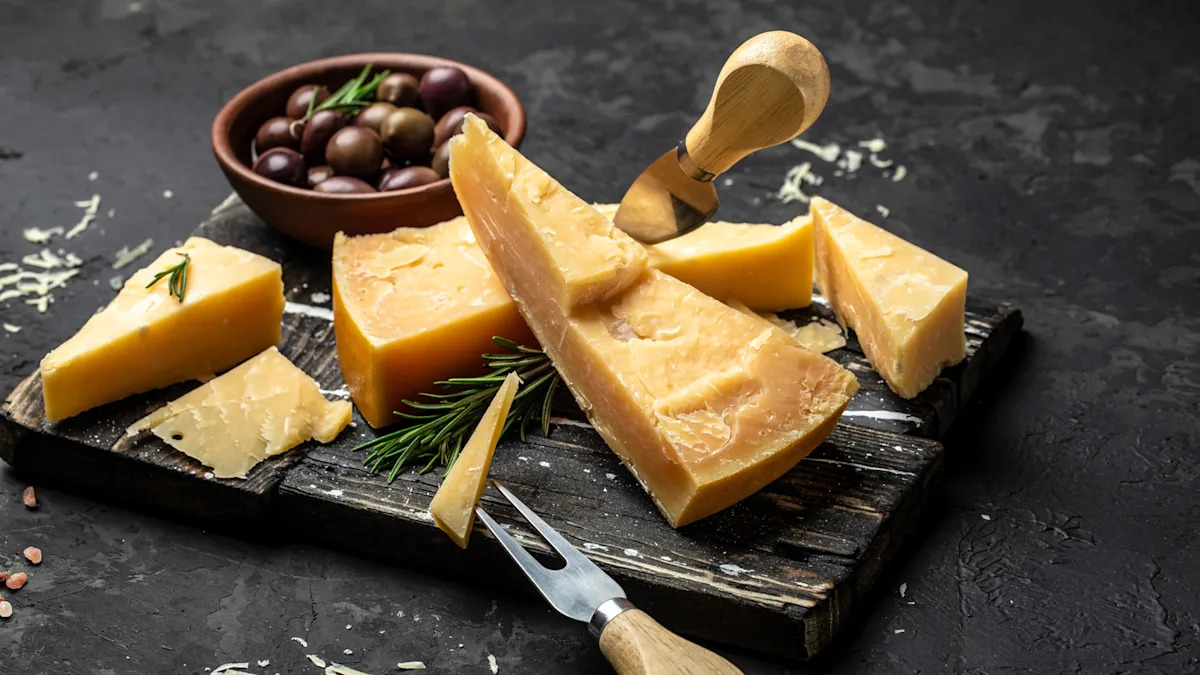
Eggs are pretty special when it comes to nutrition. In a single ready-to-use package, you have a convenient way to add protein and essential nutrients like vitamin B to a meal. But let’s face it, eggs don’t go with everything, and if you want some different options for upping your protein intake, you might be surprised to learn just how much you can get in Parmigiana Reggiano.
A one-ounce serving of Parmigiano Reggiano contains up to 10 grams of protein, compared to the 6.3 grams found in the average egg. The Italian cheese also knocks it out of the park when it comes to calcium, with 320 milligrams or 25% of your daily requirements in each ounce. Although eggs do contain calcium, it’s found mainly in the shell, with the edible portion offering just 28 milligrams.
A serving size of Parmigiano Reggiano is smaller than an egg when it comes to weight, but a little goes a long way. Cheese is not always something we measure, but to give you an idea, an ounce of hard cheese is around the size of your thumb, or around one-third of a cup when grated. This probably more than you’d use as a topping for a pasta dish, but it’s what you’d want to include per person in a cheese-forward recipe such as spaghetti carbonara or cacio e pepe.
Read more: How Scrambled Eggs Are Different Around The World
Why is Parmigiano Reggiano so nutrient dense?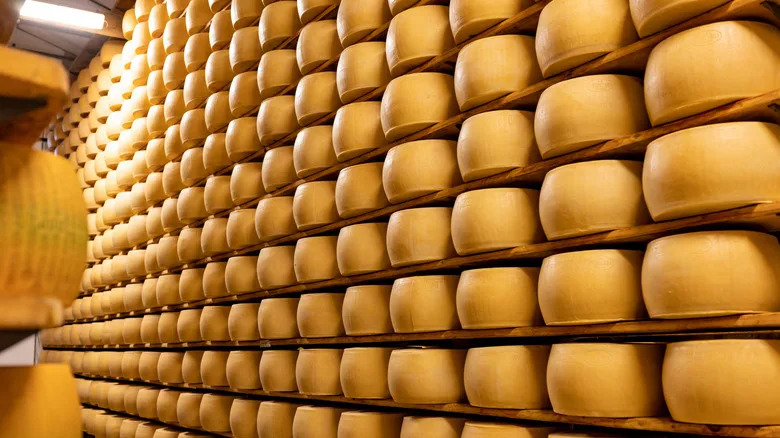
wheels of Parmigiano Reggiano stored on shelves – barmalini/Shutterstock
The nutrient density of Parmigiano Reggiano all comes down to the way it’s made. It starts with just three simple ingredients — milk, rennet, and salt — which are heated, brined, and then formed into wheels to age. It’s this aging process that slowly removes the water from the milk, leaving more concentrated nutrients. With 550 liters of milk to make a single wheel, that’s a lot of protein and calcium in the end product.
The aging is also what sets it apart from other cheeses. True Parmigiano Reggiano is only made in particular regions of Italy, and must be aged for a minimum of a year, but often several years. Compare this with American Parmesan, which has a minimum age of just 10 months, and you’ll find that there are far fewer regulations on our version.
Getting your hands on the good stuff can be pricey, but there are other cheeses that offer high protein content. Grana Padano, which is often touted as the affordable alternative to Parmigiano Reggiano, has a very decent nine grams of protein per ounce, while Gruyere has around 8.5 grams per ounce.
If you’re wondering where the famously protein-packed cottage cheese fits into this, it’s all about serving sizes. Cottage cheese or other fresh cheeses like ricotta only have around three grams of protein per ounce, but are usually consumed in larger portions, with a half cup containing around 12 grams of protein.
Want more food knowledge? Sign up to our free newsletter where we’re helping thousands of foodies, like you, become culinary masters, one email at a time. You can also add us as a preferred search source on Google.
Read the original article on Tasting Table.
Dining and Cooking