
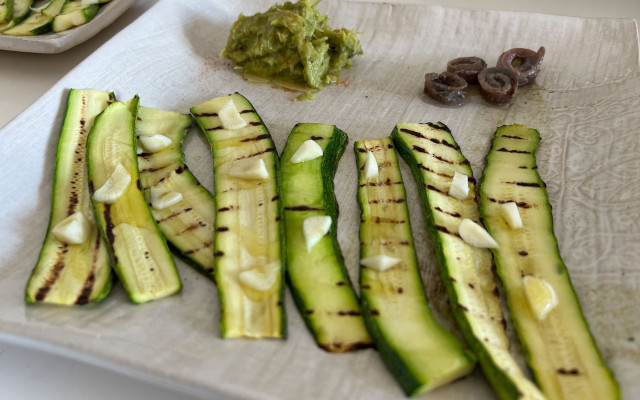
Far from being a simple low-calorie vegetable, the Italian courgette represents an exemplary case of agronomic innovation and territorial biodiversityAlthough its genetic roots date back to the Americas, it is in the heart of Italy that this fruit was transformed into the modern product that is now appreciated worldwide, giving rise to a mosaic of local varieties – from Romanesca to Trombetta d’Albenga – that define the rural identity of each region.
This article analyzes the courgette as functional food, bringing to light scientific evidence of its ability to protect DNA and eye health. From organic supply chain management to the new frontiers of sustainable packaging, the profile of a Made in Italy excellence emerges, capable of combining gastronomic tradition, the Mediterranean diet, and respect for the environment.
History and development of the modern zucchini
The courgette (Cucurbita pepo L.) belongs to a species native to theCentral America, introduced in Europe after the 16th century. However, it is precisely in Italy, And more precisely to Milan in the 19th century, which gave the courgette its modern form (Lust et al., 2016). The first documented evidence of courgettes as we know them today dates back to 19th-century Milanese horticultural and culinary registers, which describe immature, tender, and elongated fruits, harvested before full ripening, clearly distinguishing them from traditional winter squashes.
The varietal selections developed between the 18th and 19th centuries, particularly in northern and central Italy, led to the spread of cultivar Specifically intended for consumption of the immature fruit. This innovative approach to cultivating cucurbits represented a true agronomic revolution, prioritizing continuous productivity over shelf life.
From a cultural point of view, the courgette is deeply rooted in the popular cuisine Italy, where it is eaten whole, including the inflorescences (zucchini flowers), which are the protagonist of numerous regional recipes such as fried zucchini flowers, frittatas, and stuffed zucchini. Rural tradition has valued every part of the plant, from the leaves to the flowers to the fruit, perfectly embodying the principles of recovery cuisine and seasonality.
Botanical characterization and seasonality
From a botanical point of view, the courgette is the immature fruit of the plant Cucurbita pepo L., belonging to the Cucurbitaceae family. The plant is an annual herbaceous plant, with a bushy or creeping habit, broad leaves, and bright yellow unisexual flowers.
La natural seasonality The season for zucchini in Italy ranges from late spring to early autumn. Commercial availability extends year-round thanks to greenhouse cultivation, although open-field production remains the preferred crop from an organoleptic standpoint.
Production sites, terroir and organic cultivation
Zucchini is grown in all the Italian regions, with significant concentrations in Emilia-Romagna, Lazio, Campania, Sicily, and Veneto. The terroir influences the fruit’s earliness, pulp consistency, and water balance. Agricultural practices include crop rotation, controlled irrigation, and frequent harvesting.
La organic production is well-established and scientifically validated. The most effective solutions include: fertilization with vermicompost at 10 t/ha (53% increase in production compared to chemical fertilizers, Rekaby et al., 2024); biological control of aphids using parasitoids (Aphidius spp.) and predators (Aphidoletes, Micromus); management of viral infections with organic biostimulants based on algae and alfalfa extracts, enzymatic hydrolysates and micronized zeolite, which reduce the viral titer by a tenth and activate systemic resistance mechanisms (Corrado et al., 2024).
Growing courgettes organically improves, among other things, soil fertility (+15-25% organic matter) and nutritional quality of the fruits. Higher contents of phenols and essential amino acids such as arginine have been detected in courgettes grown using the biodynamic method (Fazzi et al., 2025).
Italian biodiversity: local excellence and varieties
The success of zucchini in Italy is evidenced by the incredible varietal diversity that has developed in different regions. These varieties are distinguished not only by their aesthetic appearance, but also by their organoleptic properties and specific culinary aptitudes:
Roman courgette (Lazio)Characterized by a ribbed shape and a light green, striped skin, it is famous for its persistent flower even after harvesting and for its crunchy flesh, ideal for eating raw or frying;
Albenga trumpet courgette (Liguria)A climbing variety with long, curved fruits that end in a bulge. The flesh is firm, almost seedless, and has a nutty flavor. It’s highly prized in gourmet cuisine for its low water content during cooking.
Sicilian courgette. Also known as ‘long courgette’ (lagenaria siceraria), although it belongs to a different genus, it shares the gastronomic use. It is typical for its fruits which can exceed a metre in length and for the use of keep me (the tender tops of the plant), which represent a unique example of the integral use of the vegetable;
Faenza and Florentine courgettesRound or ribbed varieties from Tuscany and Emilia-Romagna, selected for their ease of stuffing (stuffed courgettes) thanks to the consistency of the flesh that maintains its structure even at high temperatures.
This genetic diversity is not only a cultural heritage, but a agronomic resourceMany of these landraces exhibit natural resilience to specific environmental or pathogenic stresses, making them ideal candidates for organic and regenerative agriculture projects.
Nutritional properties
According to official data from CREA, 100 grams of raw courgettes provide:
a high water content (93,6%);
a low energy intake (16 kcal);
modest amounts of protein (1,5 g), carbohydrates (1,7 g) and fibre (1,2 g).
The presence of potassium (290 mg, compared to a Nutritional Reference Value of 2000 mg, according to EU regulation 1169/11), vitamin C (11 mg, compared to a NRV of 80 mg) should be noted.
Yellow varieties also have significant amounts of carotenoids, among which lutein (up to 1036 mg/kg dry weight in the peel), β-carotene e zeaxanthin, bioactive compounds with recognized antioxidant properties (Martínez-Valdivieso et al., 2017).
Health properties based on scientific evidence
Scientific research has documented several health benefits associated with regular consumption of zucchini.
Antioxidant activity and cellular protection
Research has documented the ability of courgettes and their bioactive compounds (lutein, β-carotene, zeaxanthin, dehydroascorbic acid) to exert an activity of protection of cellular DNA from oxidative damage induced by hydrogen peroxide (Martínez-Valdivieso et al., 2017). This study, conducted on Drosophila melanogaster, found percentages of inhibition of genotoxic damage ranging from 11% to 100%, depending on the concentrations and varieties tested.
Yellow zucchini epicarp and mesocarp extracts also demonstrated selective cytotoxic activity against HL60 (human promyelocytic leukemia) tumor cells, with IC50 values of 0,08 mg/mL and 0,2 mg/mL, respectively, suggesting a potential role in chemoprevention (Martínez-Valdivieso et al., 2017).
Eyesight protection
I carotenoids present in courgettes, in particular lutein and zeaxanthin, are structural components of the retinal macula and have a protective action against age-related macular degeneration and cataracts, filtering high-energy blue light and neutralising free radicals (Martínez-Valdivieso et al., 2017).
Supports metabolic and digestive health
The low glycemic index of zucchini, combined with its fiber content (both soluble and insoluble), contributes to the regulation of postprandial blood sugar and intestinal function. The high water content (>93%) also promotes hydration and a feeling of satiety, supporting weight management strategies.
It’s important to emphasize that the health benefits of courgettes are part of a varied and balanced diet, rich in vegetables and fruit, rather than the effects of a single food in isolation.
Gastronomic uses and culinary valorization
Zucchini are extremely versatile in the kitchen:
raw. In carpaccio, julienne or spiral;
cookedSteamed, grilled, sautéed, stewed or fried;
ripien with meat, breadcrumbs, cheese or vegetables
preserved in oil, vinegar or sweet and sour;
in first courses such as pasta, risotto, soups and stews
in gourmet preparations. Mousses, veloutés, flans and soufflés.
I courgette flowers – with their delicate texture and subtle, slightly sweet flavor with herbaceous notes – are also a prized ingredient in Italian regional cuisine. In risottos and frittatas, or fried in batter, with a bite of mozzarella and an anchovy in oil in the classic Roman recipe.
Packaging and sustainability
The marketing of Italian courgettes, particularly in the organic sector and in large-scale retail trade, is facing a crucial transition towards sustainable packagingSince vegetables are subject to rapid post-harvest dehydration, protecting the fruit is essential, but the use of traditional plastic film (PVC or PE) is increasingly being questioned.
The most promising innovations include:
biodegradable and compostable filmsDerived from vegetable starches (such as Mater-Bi), they allow the fruit to breathe, reducing condensation and the risk of mold, and are then disposed of in the organic fraction;
trays made of pressed cardboard or wood fibre. Used especially for valuable varieties such as Romanesca or courgette flowers, which offer superior mechanical protection compared to plastic.
These solutions not only reduce the environmental impact, but also respond to the growing consumer demand for a plastic-free supply chain, enhancing the integrity of the product without compromising its shelf life.
Conclusions
Italian zucchini represents a virtuous example of agricultural simplicity, nutritional richness, and culinary tradition. Contemporary scientific research is confirming what peasant wisdom has intuited for centuries: zucchini is not just a light and versatile vegetable, but a functional food capable of actively contributing to the prevention of chronic diseases.
Their value is recognized by the international market and consumers, especially when combined with organic, sustainable, and local production. From 19th-century Milan to today’s global markets, Italian courgettes continue to represent agro-food excellence that deserves promotion along the entire supply chain, from varietal research to the table.
Bibliography
Blouin, M., Barrere, J., Meyer, N., Lartigue, S., Barot, S., & Mathieu, J. (2019). Vermicompost significantly affects plant growth. A meta-analysis. Agronomy for Sustainable Development, 39(4), 34. https://doi.org/10.1007/s13593-019-0579-x
Corrado, C. L., Donati, L., Taglienti, A., Ferretti, L., Faggioli, F., Reverberi, M., & Bertin, S. (2024). An evaluation of organic biostimulants as a tool for the sustainable management of viral infections in zucchini plants. Horticulture, 10 (11), 1176. https://doi.org/10.3390/horticulturae10111176
Fazzi, M. C., Girelli, C. R., Migoni, D., Fracasso, B., Cesari, G., & Fanizzi, F. P. (2025). 1H-NMR-Based Metabolomic Profiles of Zucchini (Cucurbita pepo L.) Grown with Different Agricultural Practices for Sustainable Crop Production. Foods, 14 (6), 919. https://doi.org/10.3390/foods14060919
Lust, T. A., & Paris, H. S. (2016). Italian horticultural and culinary records of summer squash (Cucurbita pepo, Cucurbitaceae) and emergence of the zucchini in 19th-century Milan. Annals of botany, 118 https://doi.org/10.1093/aob/mcw080
Martínez-Valdivieso, D., Font, R., Fernández-Bedmar, Z., Merinas-Amo, T., Gómez, P., Alonso-Moraga, Á., & del Río-Celestino, M. (2017). Role of zucchini and its distinctive components in the modulation of degenerative processes: Genotoxicity, anti-genotoxicity, cytotoxicity and apoptotic effects. Nutrients, 9(7), 755. https://doi.org/10.3390/nu9070755
Rekaby, S. A., Ghoneim, A. M., Ali, W. M., & Yousef, A. F. (2024). Impact of some organic fertilizers on nutrient uptake, yield of courgettes (Cucurbita pepo L.) and soil fertility properties. Technology in Agronomy, 4, e030. https://doi.org/10.48130/tia-0024-0029

Dario Dongo, lawyer and journalist, PhD in international food law, founder of WIISE (FARE – GIFT – Food Times) and Égalité.
Dining and Cooking