
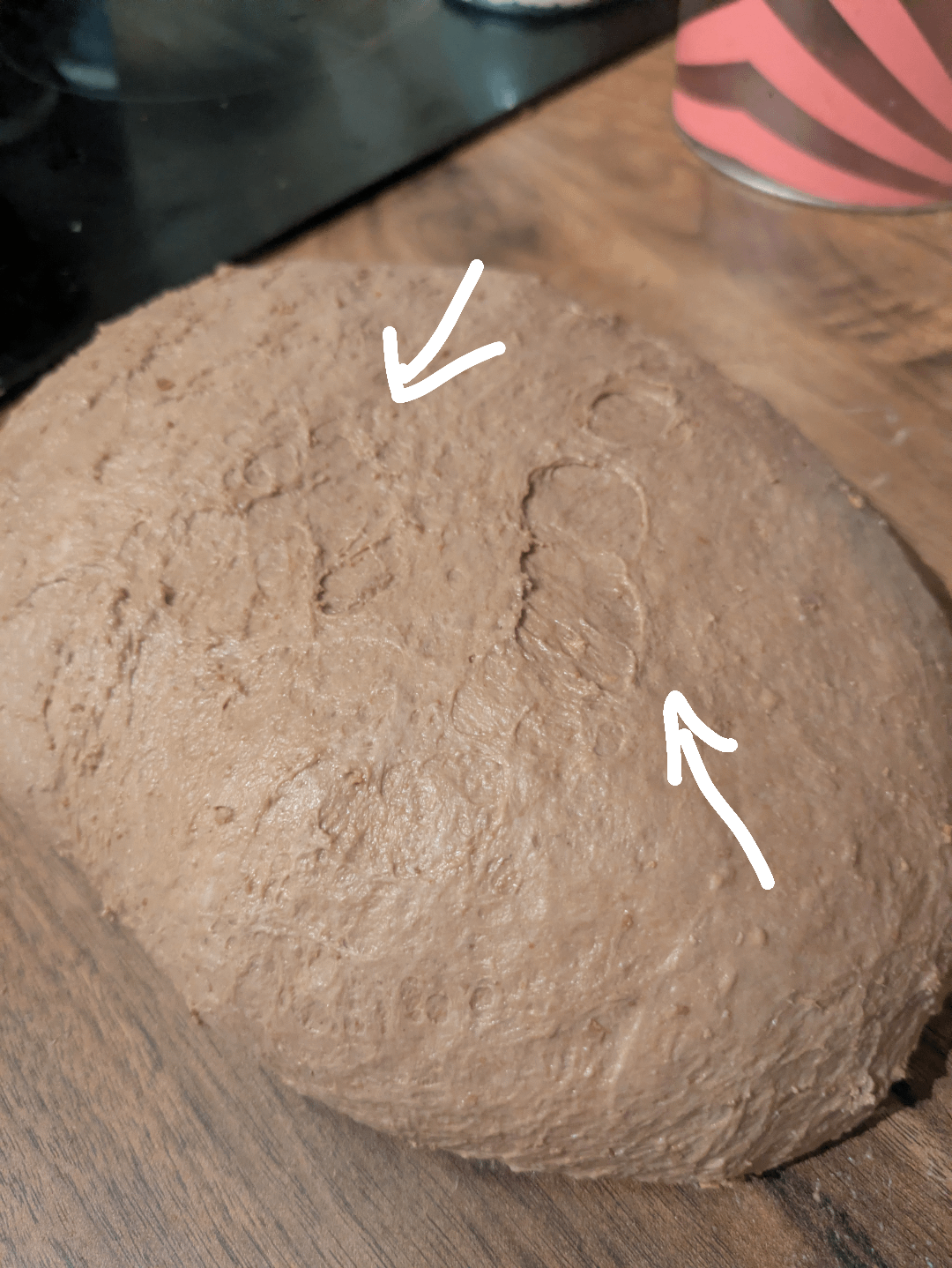
Just attempting the chocolate and cherry loaf from Perfect Loaf, and I've always wondered whether the torn gluten during slap & fold is bad news? I kind of hope to see a smooth dome shape on top as I go. We have about 10-15% wholewheat flour and a 30 minute autolyse. To avoid tearing:
- Does it need a longer autolyse?
- Should I be less vigorous during slap & fold?
Am I just seeing the visible gluten being torn, and it's still building strength beyond what my eye can see? I read about "gluten strands" and I'm never sure how microscopic we're talking.
I'm only querying this as there's quite a lot of weighty addition, could do with a loaf like this being as strong as possible I guess. TIA
by RegularStrength4850
8 Comments
Following this, I’m curious too
As I recall from the instruction video I watched before doing slap and folds the first time, the dough may appear to be tearing on and off during the first few minutes but ”mends” itself and it’s not a cause for concern. When you see what’s in the picture, you need to keep going and eventually you will arrive at a smooth and taut dough ball.
On the over hand, if the dough pictured is after having gone through extensive slap and folds, you may have started to hurt the gluten.
What’s the flour?
Following
Its not ‘bad” in that it will ruin your dough. because it will come back together.
However, for most doughs this is a good indicator that youve reached a point where the dough has tightened up a bit too much and it’s time to take a 5-10 min break in your kneading.
Generally speaking, when you’re early in the kneading phase the gluten tears easier. The goal is to reach a smooth ball of dough by the end of slap and folds before you bulk ferment.
How much kneading you’ll have to do is dependent on flour type, hydration, and whether or not you have inclusions. Higher hydration, higher percentage of whole wheat or alternative flours like rye, and the presence of any sort of inclusions cause disruptions in the gluten network which increases the time required to knead.
Let it sit a little bit. Let the dough relax and it should fix itself
I tried slap and folds after an overnight autolyse. Same thing happened, so that is probably not the answer. But as other here suggested, I gave myself a minute or two to rest (and the dough, too, ofc) and went on with the slapping and the dough smoothed out eventually.