
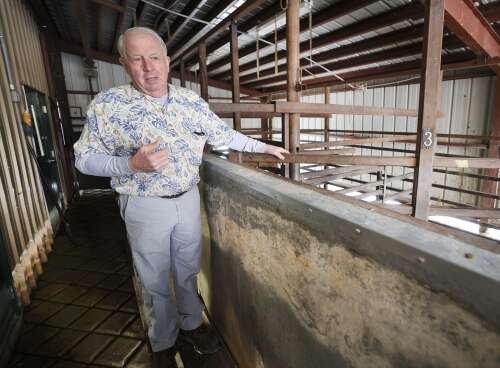
‘Americans have become very separated from where their food is produced,’ owner Jerry Zink says
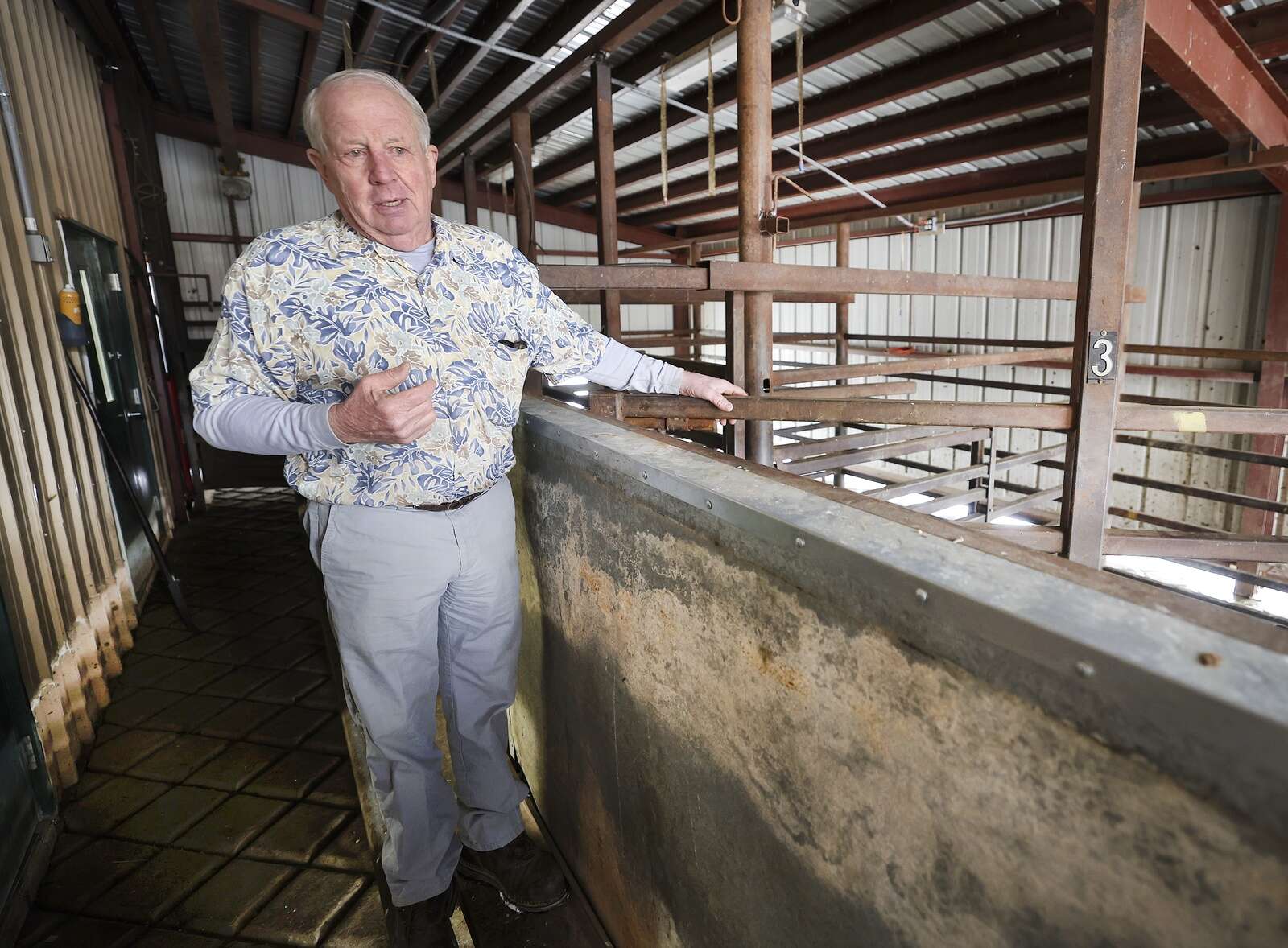
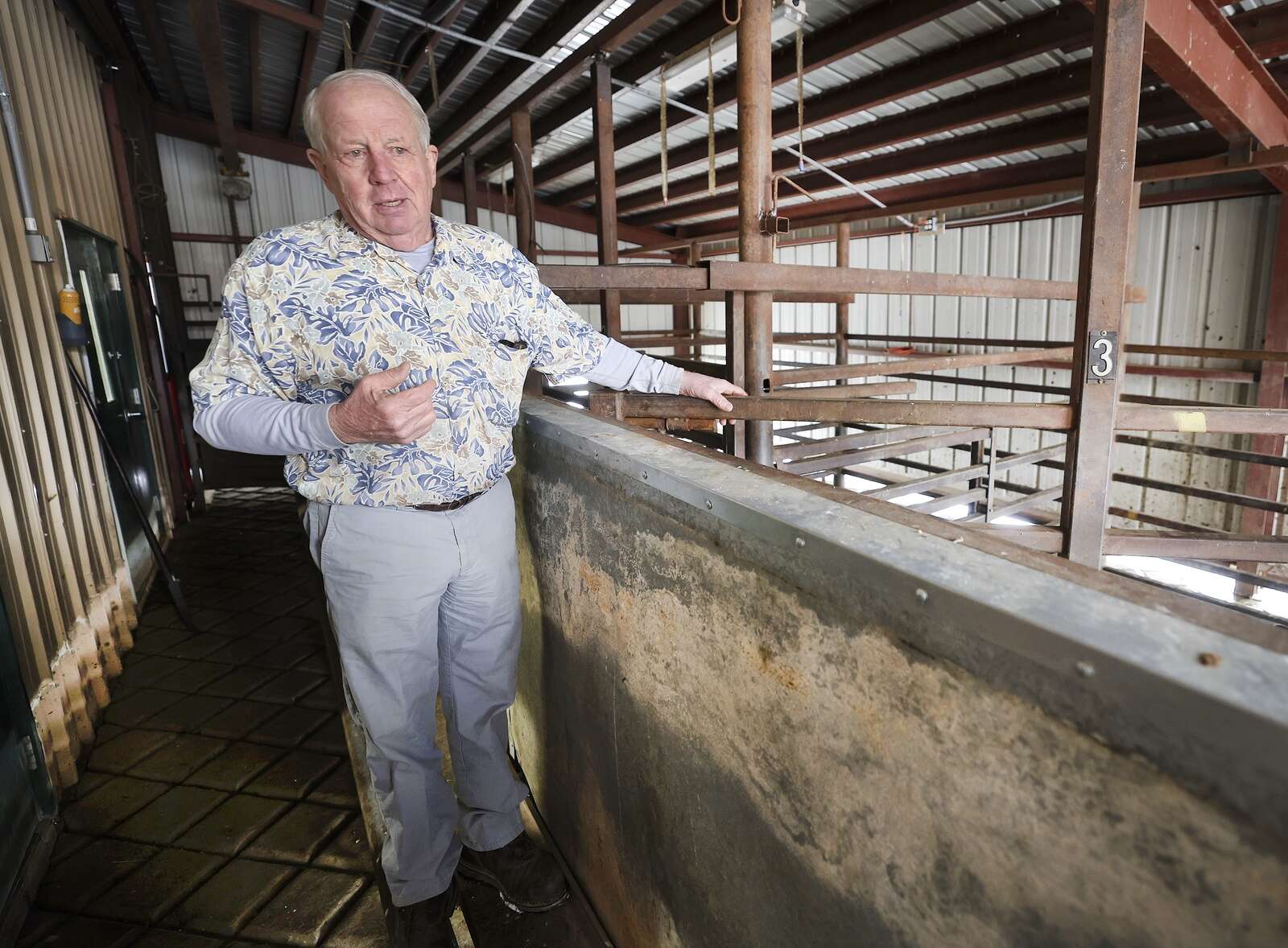
Jerry Zink, owner of Sunnyside Meats, describes the livestock intake area on Tuesday at the Sunnyside Meats Processing Plant south of Durango. Animals enter the holding pens designed to keep people out-of-sight so livestock remain calm. (Jerry McBride/Durango Herald)
Organic. Grass fed. Ethically raised. Ethically processed. Low carbon footprint. Locally sourced.
These are all buzzwords a growing, health-conscious population wants to see on the meat they eat.
In La Plata County, there is no shortage of independent farmers whose meat products fit most – if not all – of those labels. But many consumers may not fully understand what it takes to get that product from the pasture to their plate.
“Americans have become very separated from where their food is produced,” said Jerry Zink, owner of Sunnyside Meats processing plant south of Durango.
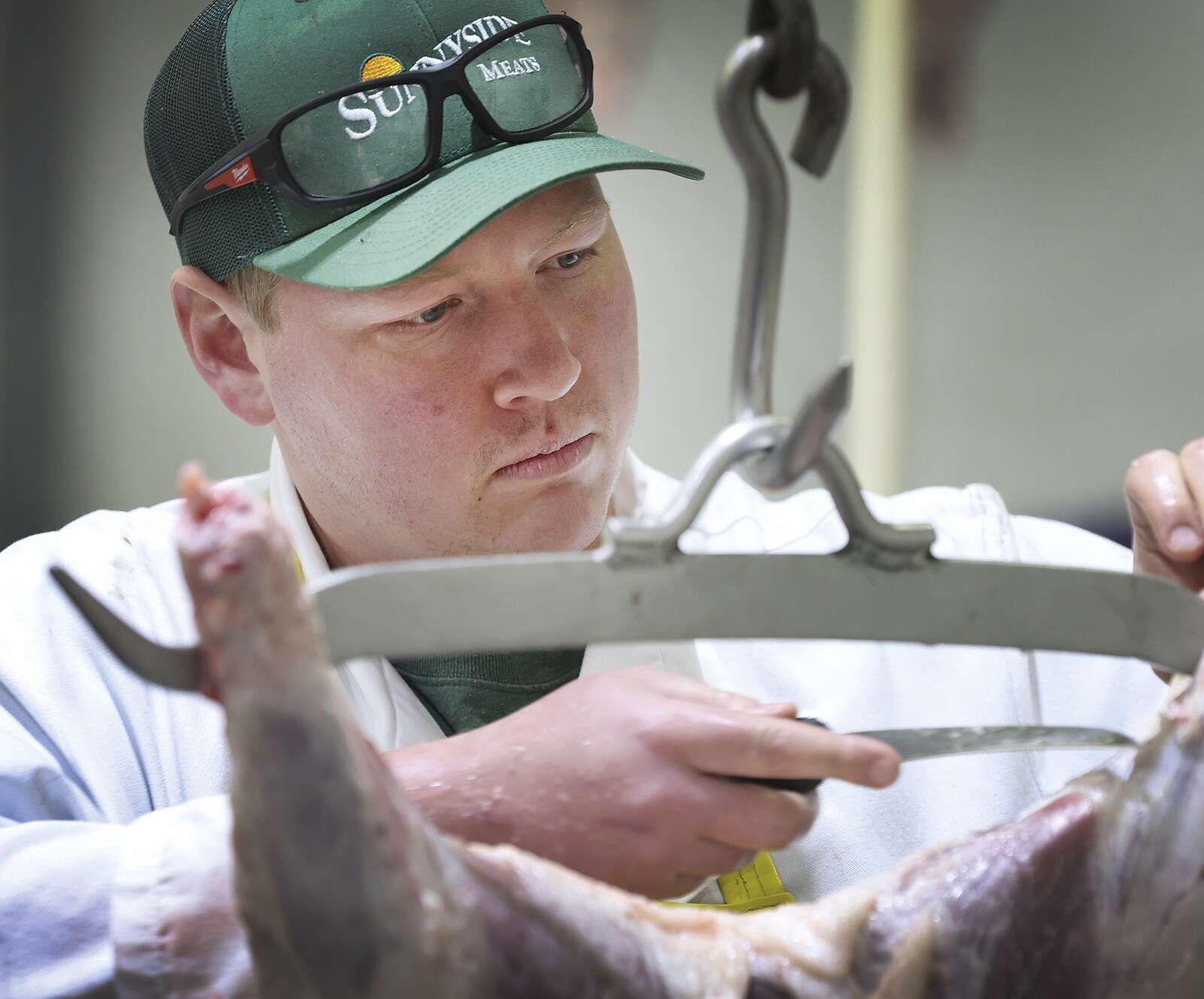
Turner Fountain, a butcher with Sunnyside Meats, works on a hog on Tuesday at the processing plant south of Durango. (Jerry McBride/Durango Herald)
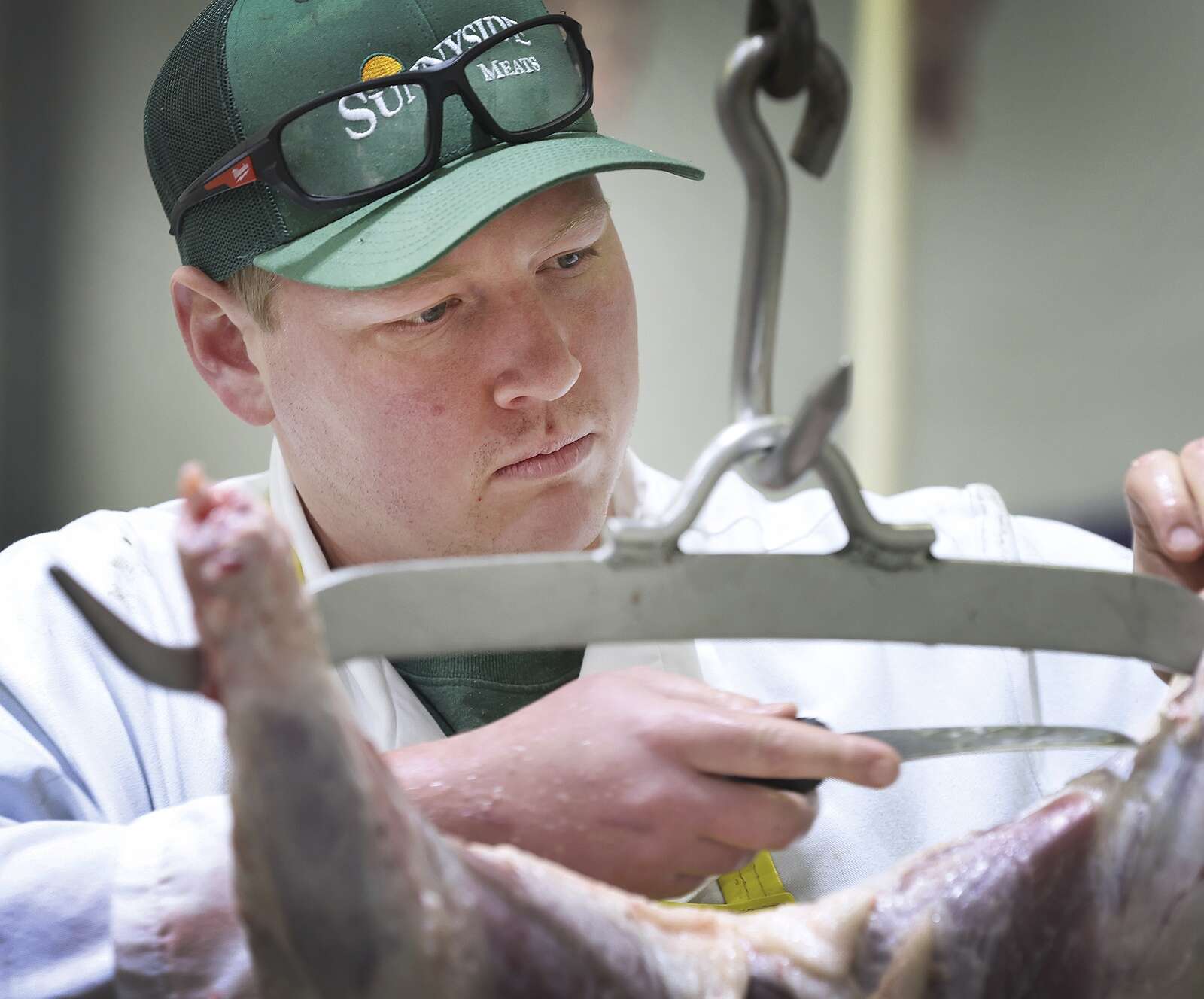
Understanding what happens in that in-between is important, La Plata County meat producers say. And one of the most critical links in that food chain is the processing plant.
The system is not set up for livestock producers – particularly small-scale, farm-to-table operations in La Plata County that sell direct to the consumer – to butcher, package and arrange inspection by the U.S. Department of Agriculture on their own. A USDA inspection is a federal requirement for any commercially sold meat product.
That’s where processing facilities like Sunnyside Meats come in.
Sunnyside Meats bridges the gap between the animal in the pasture and the cut on your plate.
It allows local producers to schedule processing days and transport livestock just a few miles to the plant, where the animals are “harvested” inspected, and packaged for commercial sale – which keeps food dollars local and reduces reliance on distant industrial plants.
“Without Sunnyside, we would not be in business,” said Ben Elliot, of Big Ben’s Meats.
For Elliot, the processing facility is the most important part of his operation. The facility takes a live animal, which Elliot referred to as an undervalued product in the region, and turns it into a source of actual revenue.
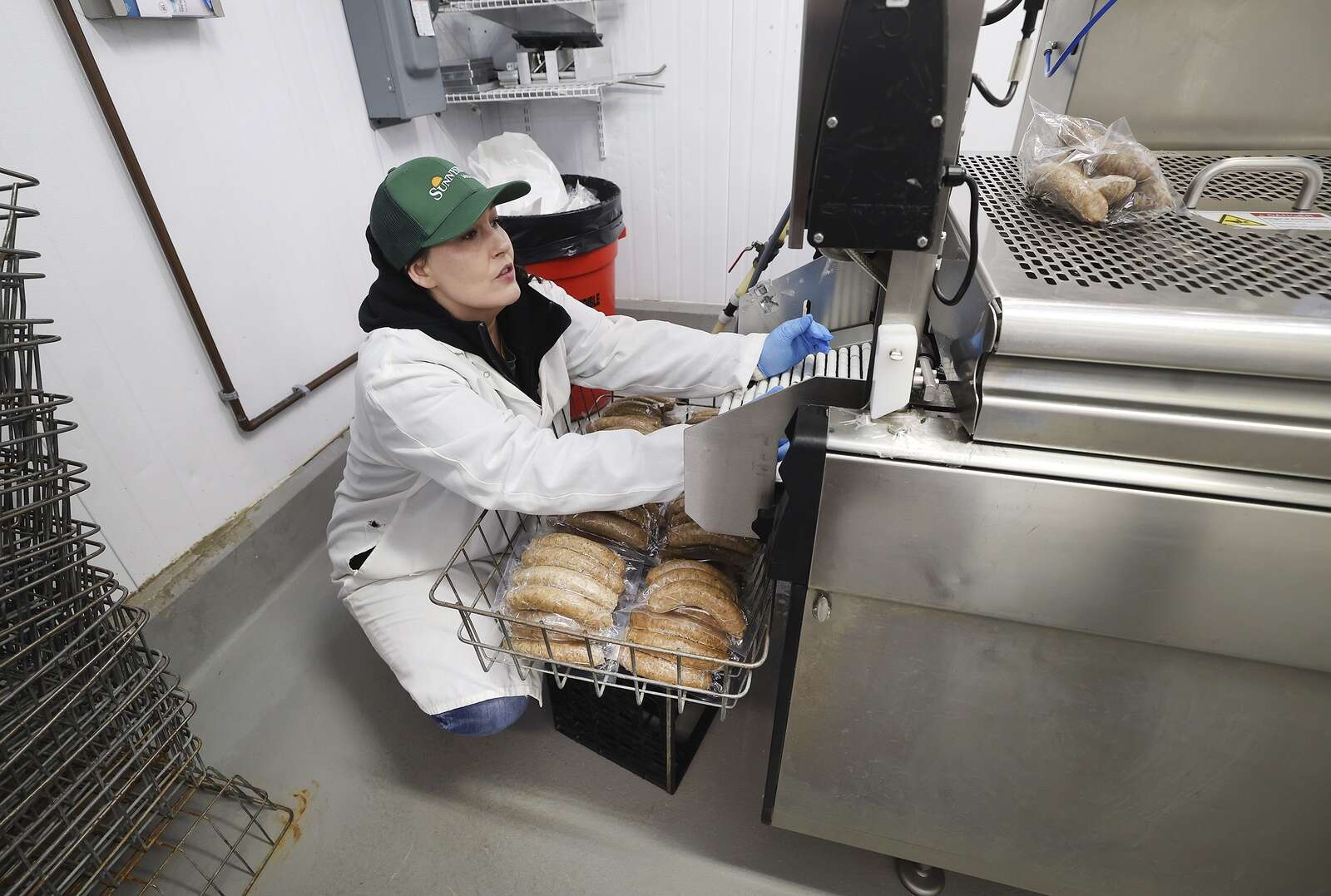
Ellen Skinner vacuum-packs green chile brats on Tuesday at the Sunnyside Meats processing plant south of Durango. (Jerry McBride/Durango Herald)
The farther producers must transport livestock, the higher the expense – a burden that falls particularly hard on small, specialized La Plata County farmers who prioritize the quality and health of their animals.
If Elliot had to send his animals hours away to larger processing plants like the ones in Greeley or in Utah, the cost of transport alone would make the business financially unfeasible.
The county went without a local processing plant for about 10 years until Zink opened the facility in 2002, after a group of county planners, cattlemen and economic development officials worked with Zink to establish a USDA-inspected plant they believed would strengthen the region’s agricultural economy.
Inside the plant, the process follows a carefully regulated sequence: harvesting, chilling, processing, cutting and packaging.
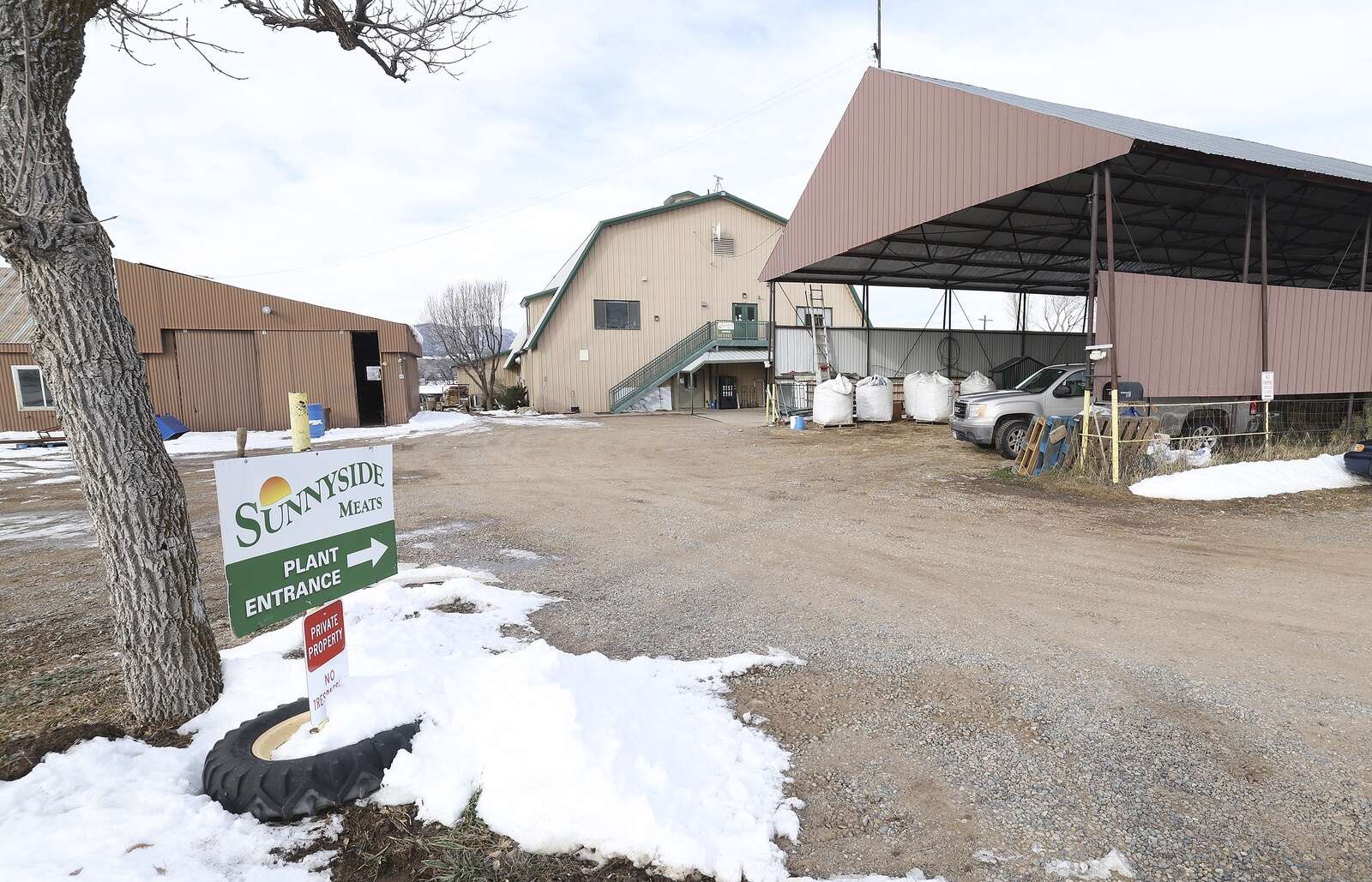
The Sunnyside Meats processing plant on Tuesday south of Durango. (Jerry McBride/Durango Herald)
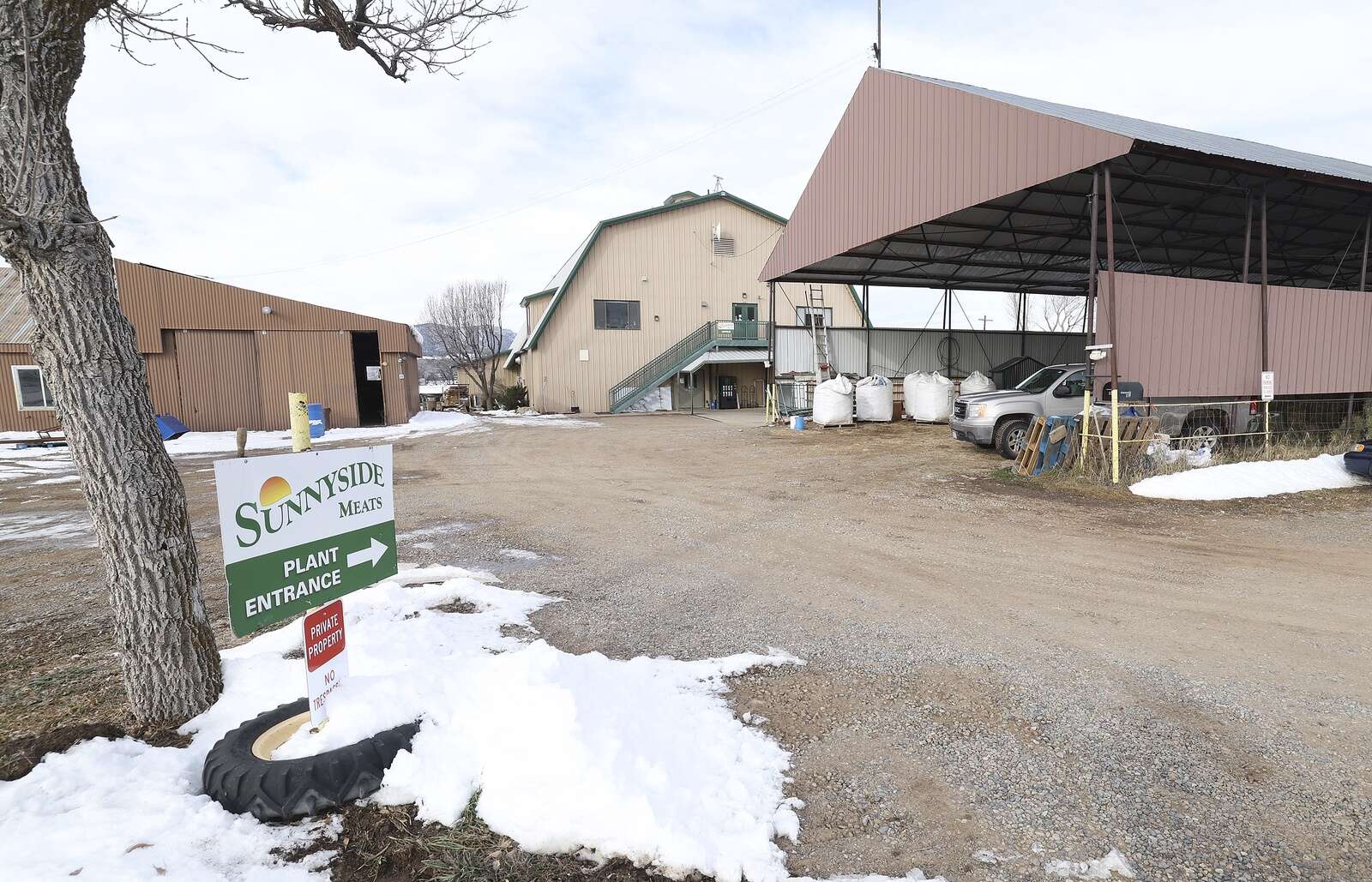
Animals cannot enter the plant without a USDA inspector present to first examine them. Livestock are held in pens designed by Temple Grandin, a scientist who revolutionized livestock handling and animal welfare, to minimize stress, including curved chutes and waffle-patterned flooring.
From there, animals move through a curved chute into the harvesting room – a bright, vaulted chamber where livestock are slaughtered using either a bolt stunner or a high-powered stun gun, depending on the animal.
On Tuesday morning, partially skinned hog carcasses were being worked on as music played from a large Bluetooth speaker in the corner.
The process is not without its unsightly moments, but it takes less than five minutes and is not as gruesome as one might expect. A large part of that efficiency – and the emphasis Zink places on animal welfare – is due to the plant’s small scale.
Sunnyside processes roughly 1,000 cattle, 1,200 lambs and 500 hogs each year. In comparison, Zink said large-scale plants such as those in Greeley can process roughly 8,000 cattle a day – about eight cows every minute.
The size allows employees to work more carefully and precisely, catching sick animals or processing issues at a much higher rate than larger facilities, which tend to generate more waste and experience more accidents.
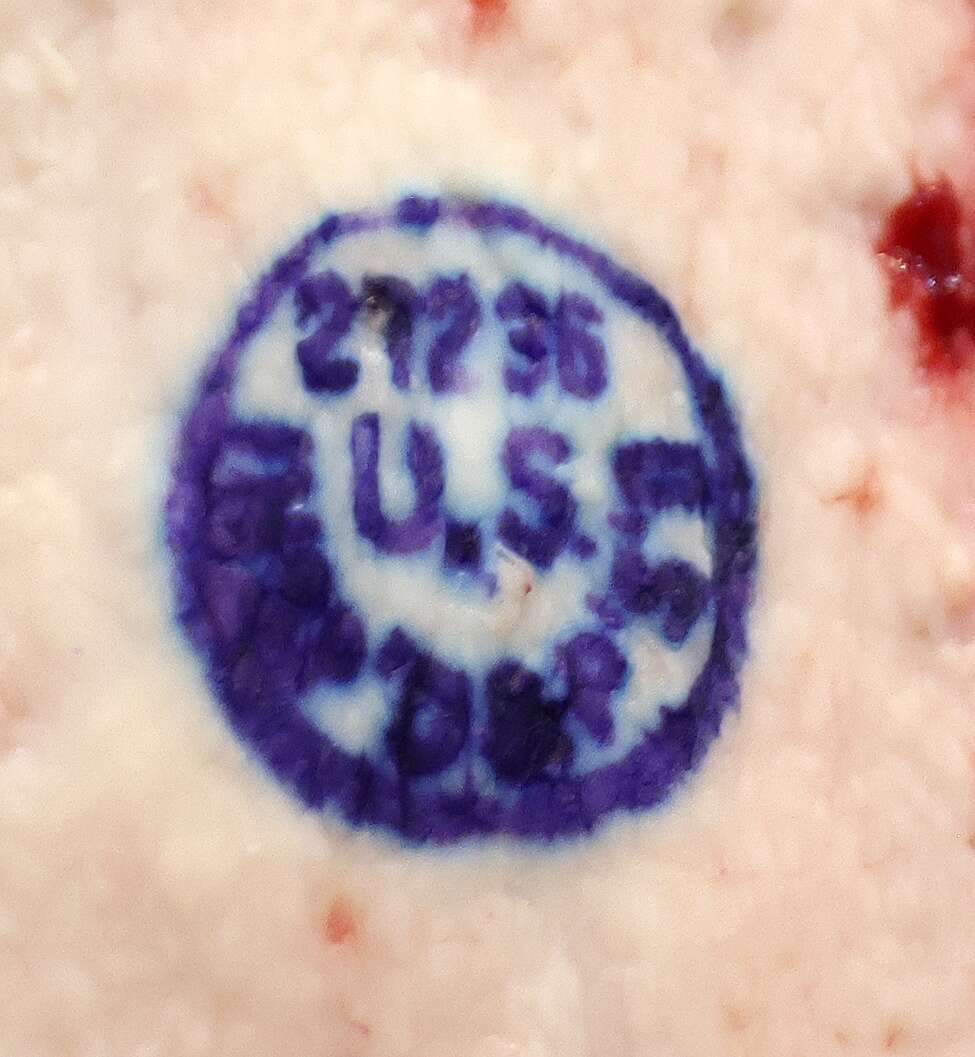
A U.S. Department of Agriculture inspection stamp on a cow carcass at Sunnyside Meats processing plant indicates the product passed inspection. (Jerry McBride/Durango Herald)
If more people understood how their meat was produced, Zink said, it could help mitigate some of the more harmful practices in industrial livestock production, as consumer demand ultimately drives producer behavior.
“It’s nice to have it (the processing facility) locally, so that you can keep your prices as affordable as possible,” said Suzanna Schroeder, co-owner of Heritage Hill Farm, a small, family-run operation that specializes in heritage pork.
Schroeder and her husband raise North American guinea hogs, an endangered livestock breed. They sell their meat to friends, family and customers at the Bayfield Farmers Market, which requires USDA inspection – although the farm generates just enough revenue to support itself, operating more as a passion project than a primary income source, she said.
The family’s primary income comes from Schroeder’s job as a high school teacher, and her husband’s job as a builder, she said.
What Schroeder believes is even more important than cost is Sunnyside’s process.
“You want the animals to not be stressed, and you want them to be humanely treated,” she said.
She said that what a lot of people outside the industry don’t understand is how much producers love their animals, and how much thought goes into choosing where their animals are processed.
It’s something the community should be aware of and consider when deciding who they are buying meat from, Schroeder said.
The value of a local USDA processing facility extends beyond the individual farms, local producers said.
Beyond affordability for the farmer, Schroeder said having a local facility keeps money circulating within the community rather than flowing to large, out-of-county corporations.
Joe Wheeling, who runs James Ranch Beef, said that Sunnyside has enabled local meat providers to expand and offer higher-quality, more accessible products directly to local consumers.
“Without a USDA processing facility, we wouldn’t have the number of local meat providers,” Wheeling said.
There would be no way for small, local farmers to process and package their meat and receive the USDA label of approval that allows them to sell local product locally.
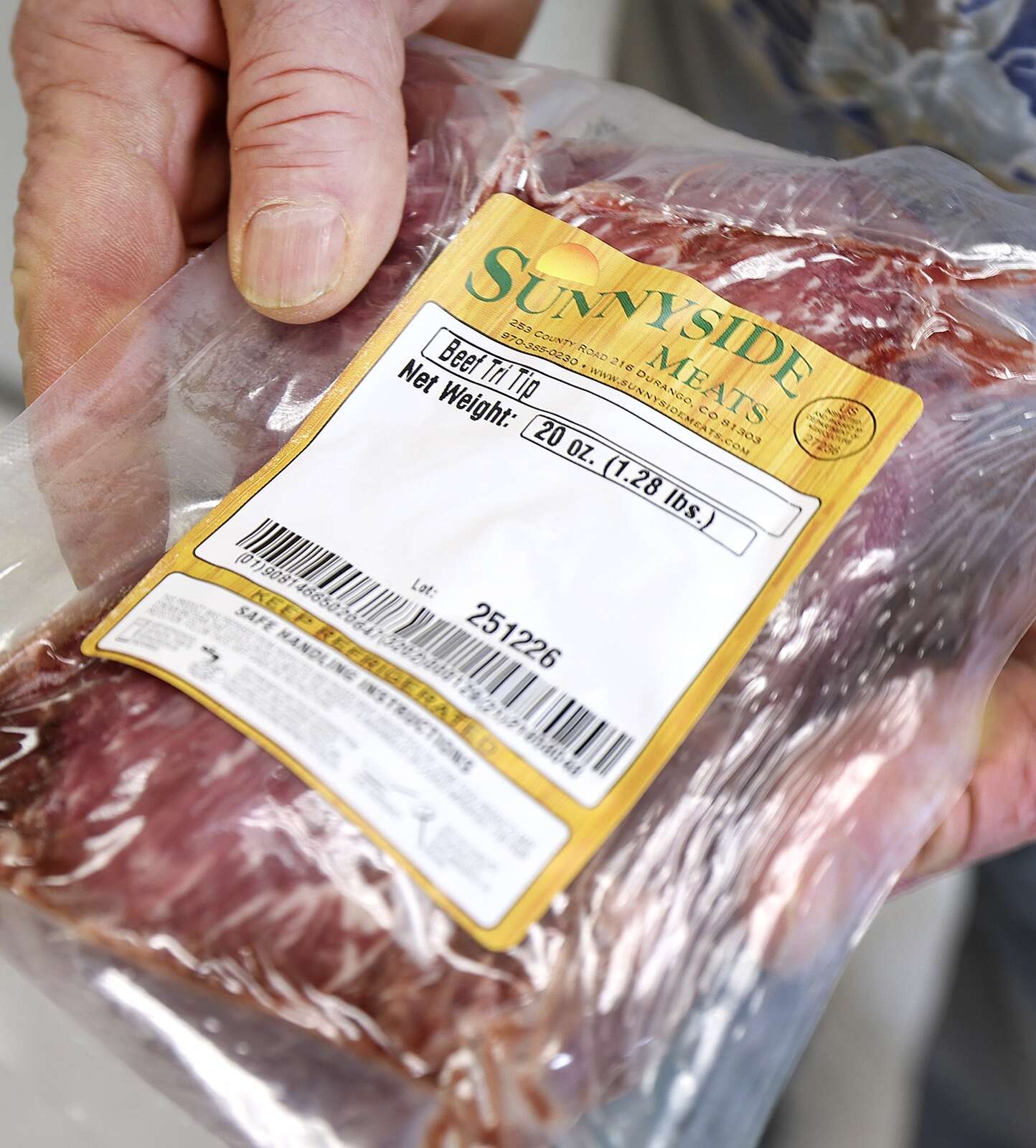
Jerry Zink, owner of Sunnyside Meats, holds the final product Tuesday before it leaves the livestock processing plant south of Durango. (Jerry McBride/Durango Herald)
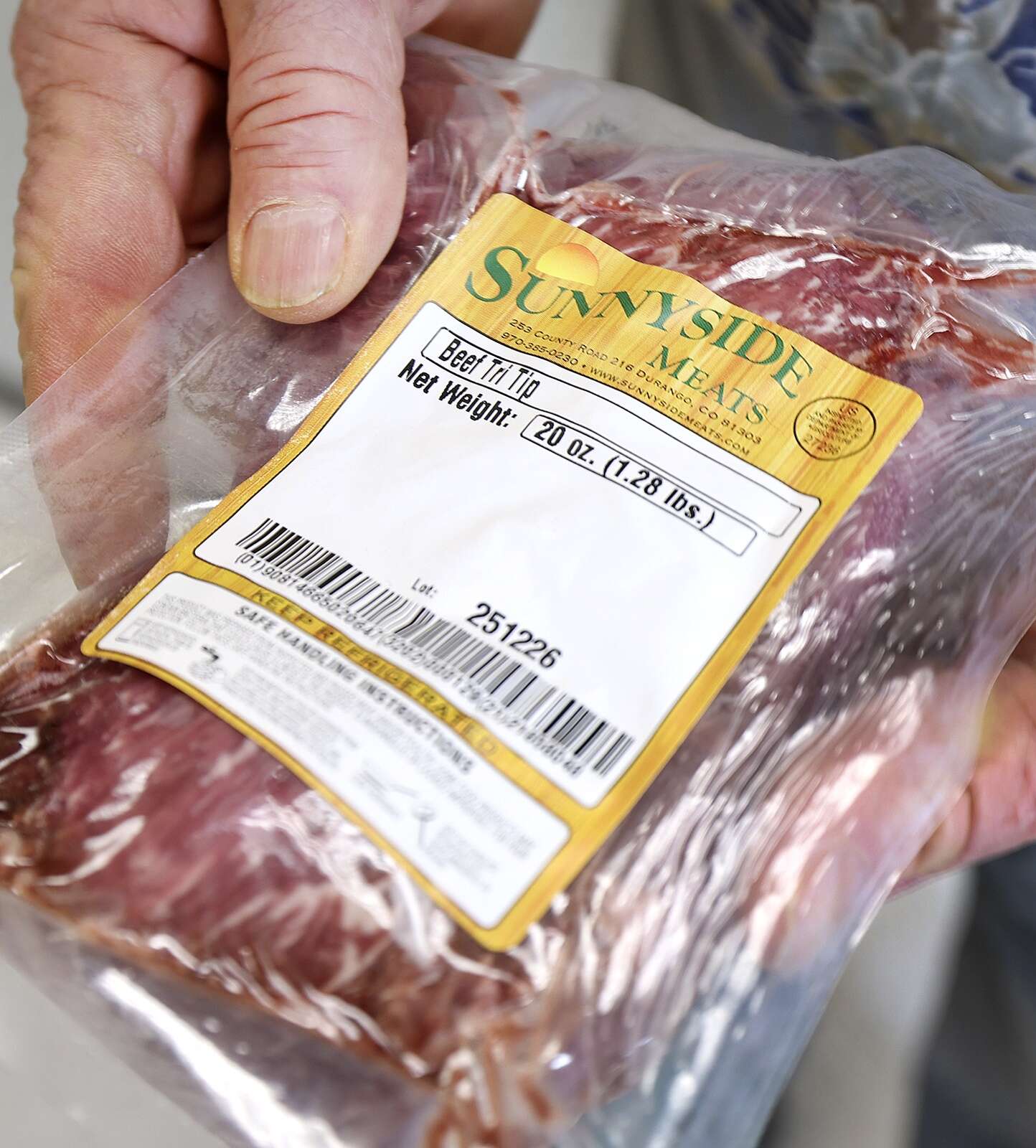
“It keeps it really, really local,” he said. “And with that, I think we get a sense of food security, because we aren’t dependent on some feedlot and packing plant in Greeley, Colorado.”
Demand for processing at Sunnyside has increased steadily over the years, reflecting growing consumer interest in locally produced food and direct-to-consumer meat sales.
Zink said he saw consumer taste evolve during the COVID-19 pandemic. People became more health conscious, which translated to a greater interest in the quality and origin of the meat, he said.
And the recent alteration to the food pyramid that places meat and dairy products at the top is beneficial to general attitudes about what people want to eat, Zink said.
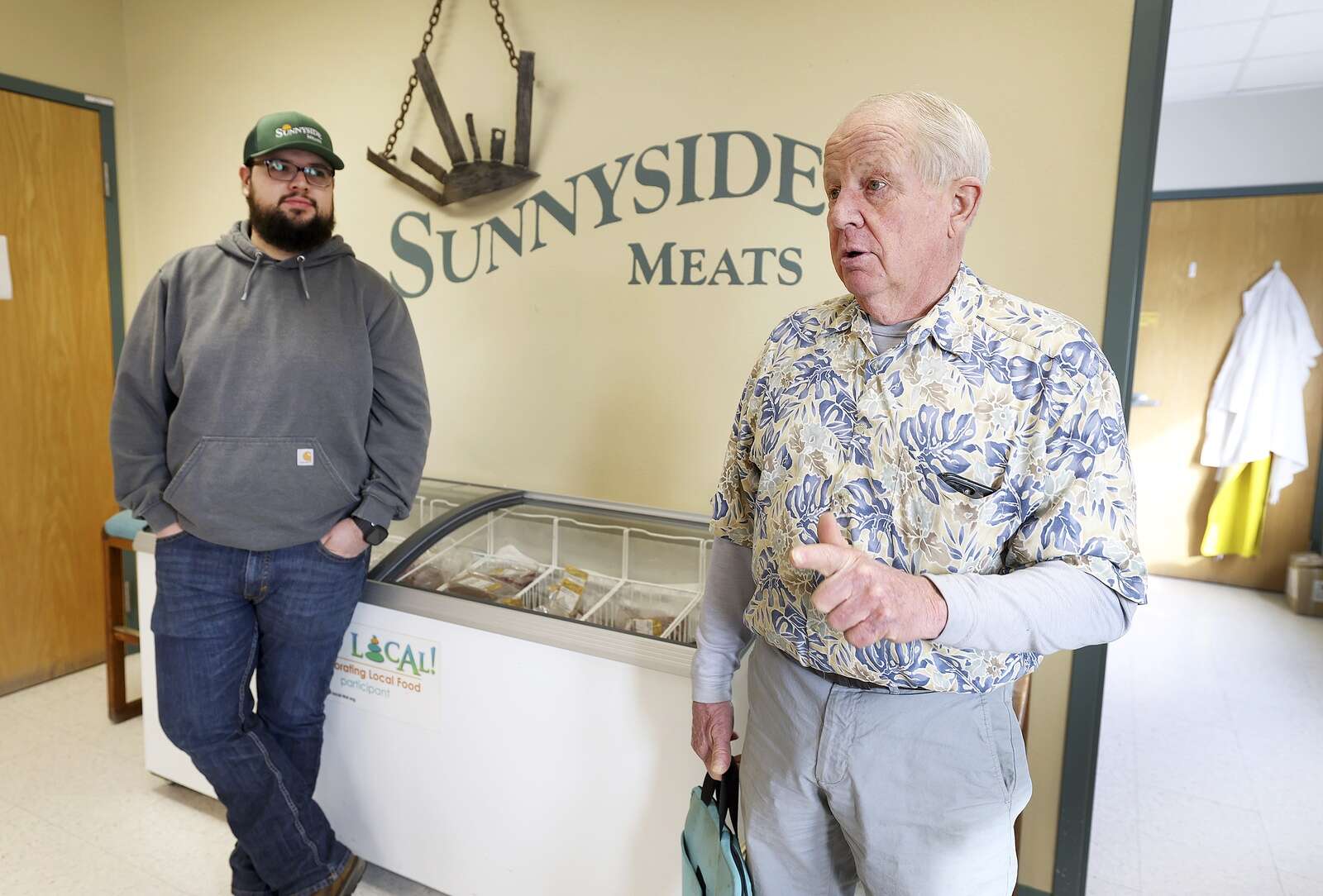
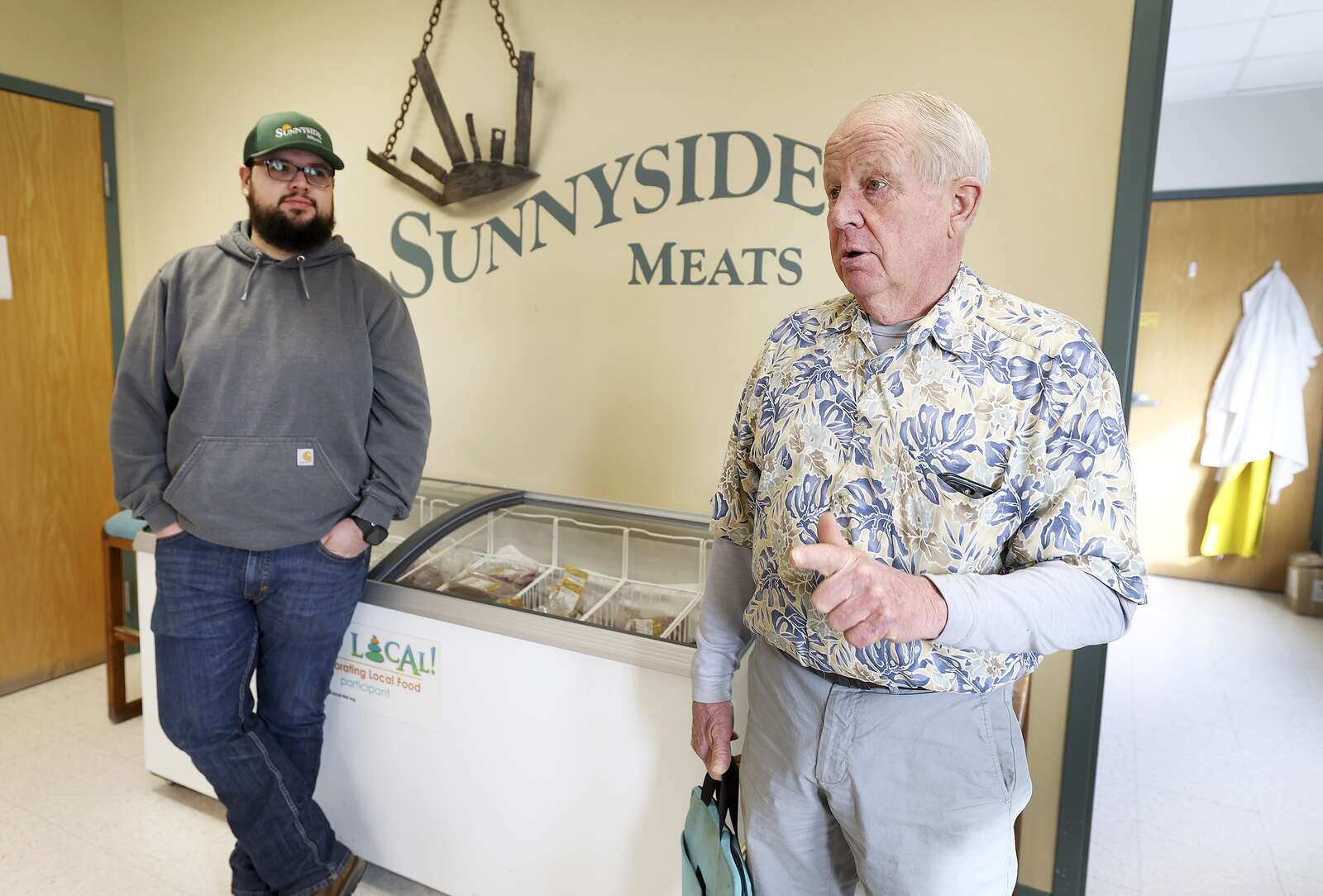
Jerry Zink, owner of Sunnyside Meats, right, and Junior Garcia, general manager of the Sunnyside Meats facility, a livestock processing plant talk about the operation of the facility on Tuesday south of Durango. (Jerry McBride/Durango Herald)
There are now two additional small USDA-inspected processing plants in Southwest Colorado – in Mancos and Cortez – a development Zink sees as a positive.
Even so, Sunnyside’s waitlist stretches to 2027, although Zink said there are always some open dates and flexibility.
“Honestly, we need a couple more facilities,” said Junior Garcia, the facility’s general manager.
“I always recommend that if you want to harvest an animal – at least in this area – as soon as that calf hits the ground, schedule your appointment.”
jbowman@durangoherald.com
Copy article link
Dining and Cooking