
When UNESCO added Italian cuisine to its list of Intangible Cultural Heritage in 2025, the announcement sparked familiar gestures of national pride. Yet beneath the celebratory tone, something quieter lingered. Heritage recognition is not merely a tribute; it is a request for continuity. It implies that a tradition is fragile enough to require protection and valuable enough to deserve it.
Italian cuisine has never been a static repertoire of recipes. It is a language spoken through time, place, memory, and seasonality. It is an architecture of restraint and hospitality, shaped not by luxury but by proportion. The UNESCO designation does not freeze this language in the past; it invites a future in which meaning is not lost for the sake of convenience, speed, or spectacle.
For Italian chefs working abroad, this shift carries philosophical weight. They no longer represent a national culinary identity in a casual or touristic sense. They stand as intermediaries between a cultural heritage and a global audience that consumes Italian food as entertainment, comfort, or nostalgia. The role is not to celebrate what is Italian, but to render it intelligible — and at times defensible — without falling into dogma or sentimentality.
Heritage and Commodity
The tension surrounding Italian cuisine today lies in its dual existence as both heritage and global commodity. Italian food circulates the world faster than its language, and with far fewer negotiations. In supermarkets and on social media, it is often reduced to stereotypes: pizza as convenience, pasta as comfort, tiramisù as indulgence. The UNESCO recognition exposes this flattening not by condemning it, but by asking a question: what happens to a cultural language when it is reproduced endlessly without context?
Heritage status does not prohibit adaptation. It demands intention.
“Heritage status does not prohibit adaptation. It demands intention.”
This line is not a slogan but a structural concern. Heritage should not prevent evolution; it should prevent incoherence. Italian cuisine has always moved across borders, yet it has done so while retaining an internal logic rooted in memory and geography. When that logic disappears, the cuisine continues to exist, but its language becomes mute.
The Chef as Interpreter
In this landscape, the Italian chef abroad becomes less an ambassador and more an interpreter. Interpretation is a responsible act: it acknowledges that meaning must be translated, not merely replicated. Many Italian chefs who work far from home learn that explaining is part of cooking — explaining why a dish is light, why it is seasonal, why it avoids excess. They learn that tradition is often misunderstood as rigidity, when in fact its strength lies in proportion and restraint.
This interpretive role is rarely glamorous. In international hospitality, the modern Executive Chef must navigate guests with conflicting expectations: some seek authenticity, others entertainment, others nostalgia. The responsibility is not to please all, but to avoid turning heritage into caricature. The UNESCO recognition amplifies this responsibility without formalizing it.
Authenticity Without Nostalgia
The word authenticity has been abused to the point of losing meaning. For Italian cuisine after UNESCO, authenticity should not signify nostalgia or resistance to change. Rather, it should signify fidelity to logic and intention. The cuisine has evolved for centuries; it has absorbed influences, adapted techniques, and traveled. Its identity has always been elastic, but never arbitrary.
What must be preserved is not the form but the function. Tomatoes can be from different soils, but their acidity must still balance the dish. Pasta can be made in different climates, but its cooking must respect texture. Even pizza — one of the most copied and misunderstood foods on the planet — survives globalization only through proportion: dough, fermentation, heat, and restraint.
Italian chefs abroad operate in a space where evolution and authenticity are not opposites. They are co-dependent.
The Question of Health and Balance
Perhaps the most overlooked aspect of Italian cuisine is its relationship to balance and health. Long before wellness became a global industry, Italian food operated on principles of moderation. Meals were structured with rhythm, vegetables and grains acted as foundations, proteins were complements rather than centerpieces, and indulgence was integrated without excess.
In an era where chefs are increasingly expected to embody lifestyle rather than profession, this aspect becomes culturally relevant. Many Italian chefs abroad are rediscovering the health dimension of their cuisine not through diets, but through equilibrium. After UNESCO, this dimension may become central to the narrative: heritage is not frozen in museums; it survives through practice and well-being.
Tradition and the Future
The paradox of UNESCO heritage is that it must be protected through use. A tradition that is not practiced becomes folklore; a cuisine that is not eaten becomes artifact. The responsibility of Italian chefs abroad is therefore not archival but generative. They must ensure that Italian cuisine remains usable, understandable, and meaningful in the future.
In this sense, tradition is not backward-looking. It is a form of future-making. It offers continuity without repetition, identity without rigidity. The UNESCO recognition provides a frame, but it is daily practice — in kitchens, markets, and classrooms — that will determine whether Italian cuisine remains heritage or becomes souvenir.
Beyond Celebration
The UNESCO designation should not be interpreted as an endpoint. It is not the culmination of Italian culinary history, nor a final validation. It is a beginning. It calls for a broader conversation about responsibility, interpretation, and cultural literacy. It asks Italian chefs abroad to carry not a flag but a language — a language that must remain intelligible even as it evolves.
Heritage is fragile. It survives only when it is used with intention.
Author Bio:
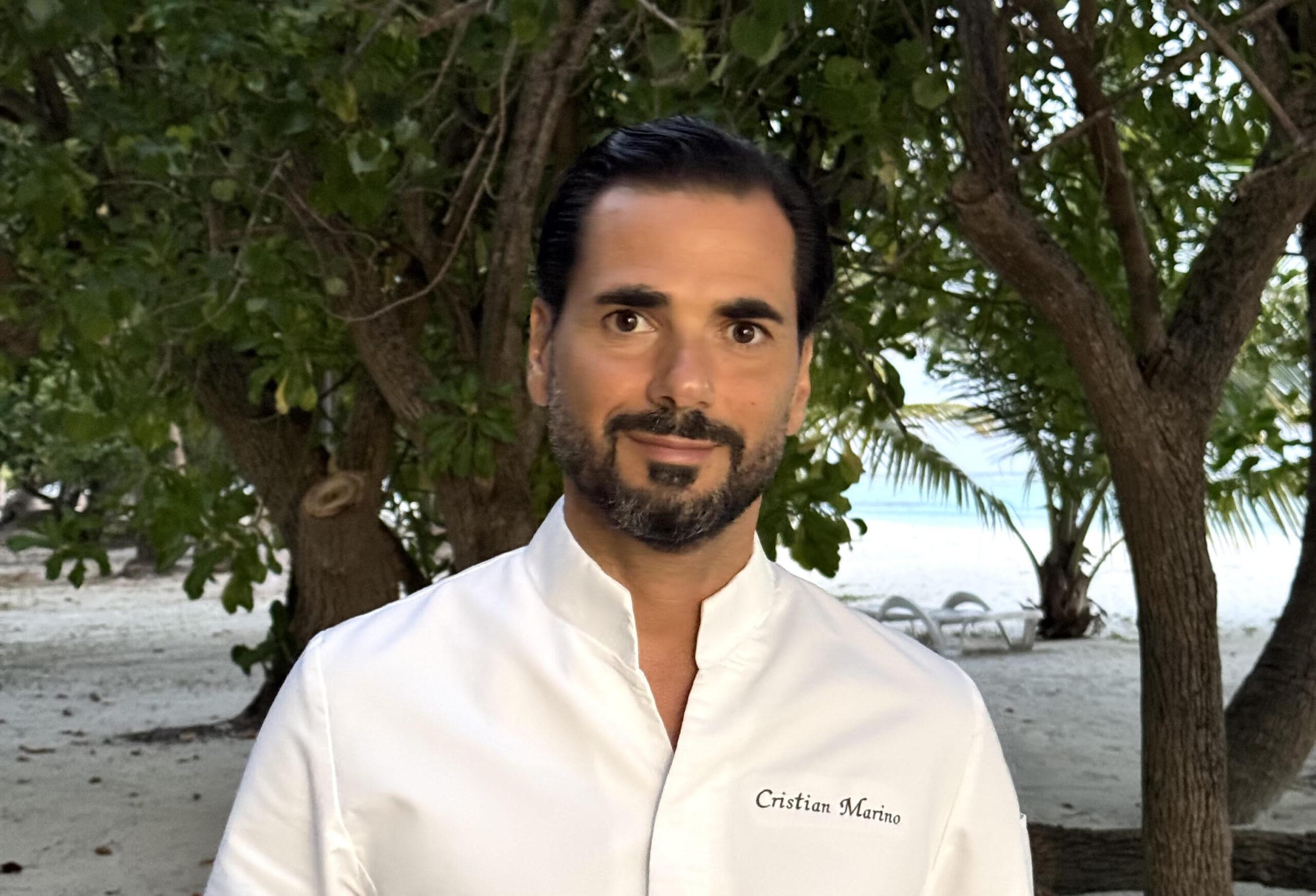
Cristian Marino is an Italian Executive Chef and culinary consultant specialized in international hospitality. He writes about culture, leadership, and the evolution of contemporary cuisine.
Dining and Cooking