
…Inside a Lagos-based Italian restaurant where everything is imported, and nothing is advertised
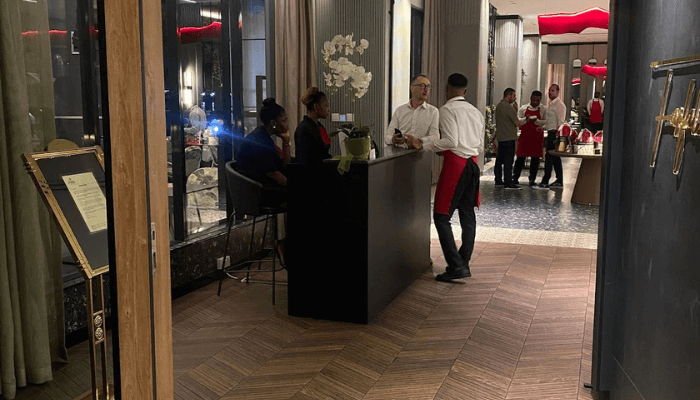
The first thing you notice about Farfallino isn’t a sign. There isn’t one, really. No bold lettering announcing itself to Victoria Island’s traffic, no banner — nothing. It’s carefully tucked inside the famous Black Diamond Hotel, like a secret waiting to be discovered.
This is intentional. Marc Doumit, the Group Food and Beverage Manager, will disclose later that they’ve never advertised any of their restaurants. “Once the door opens, we allow people to find us,” he says. Premium service, he believes, is the best advertisement. Word of mouth will take care of the rest.
It’s 9 pm on a Lagos evening, and inside, the space feels deliberately uncrowded. Of the 170 seats in the main dining room where everything: plates, tables, flooring, even the light fixtures, has been shipped from Italy, perhaps forty are occupied. The outdoor area, with space for another fifty diners, an ocean view and a shisha spot, hosts a handful of groups. Yet no one thinks this is emptiness; it’s exclusivity by design, the kind of place where slippers and unbuttoned shirts won’t get you past the host stand.
Chuks, our waiter, has his name embroidered on his apron. He moves with the practised efficiency of someone trained not just to serve but to understand what he’s serving. “The calamari,” he explains, setting down the Calamari Alla Romana, “is fried Roman-style.” The rings arrive golden, tender, accompanied by tartar sauce that hasn’t been sitting in a squeeze bottle. This is part of what Bernard Zaatar, Farfallino’s manager, means when he describes their training philosophy: servers here learn to help guests understand the menu, then give them space to enjoy the experience.
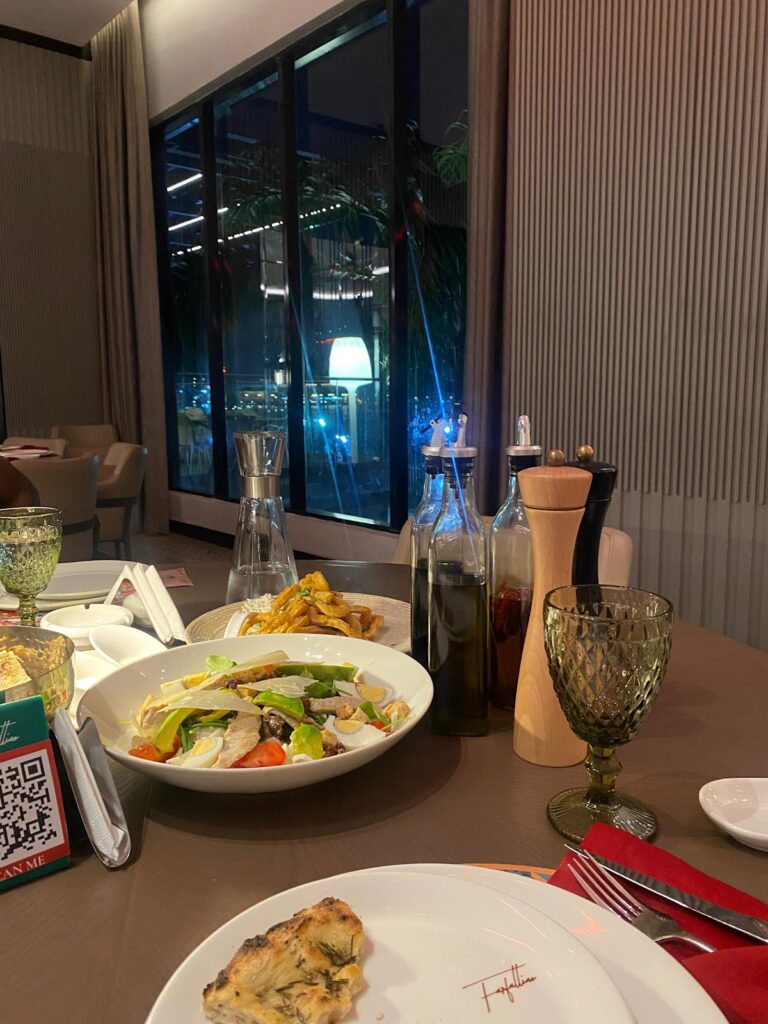
The complimentary bread arrives warm. Then the Avocado Ripieno—avocado halves filled with tomato, chicken, lemon mayonnaise, fresh basil, and parmesan. It’s a small thing, but it signals something larger about Farfallino’s approach: taking Italian technique and adjusting it for Nigerian preferences. “We had to curate a menu that feeds the Nigerian taste,” Marc explains between courses. “A bit spicy, reduced cheese, more protein.”
This is the calculus of running an Italian restaurant 4,000 miles from Bologna. Everything in Farfallino’s kitchen—every bottle of olive oil, every anchovy, every grain of arborio rice—arrives by air freight from Italy. The pasta isn’t dried and boxed; it’s made fresh daily in a machine imported for that purpose. The wines can’t be found anywhere else in Lagos. Even the two head chefs are Italian, along with the pizzaiolo who works the pizza station.
“A real Italian restaurant,” Marc says, “starts from decoration, utilities, products, food, wine, and who is cooking. Farfallino has it all.”
But this authenticity comes with complications. The imported ingredients have short lifespans. Severe weather affecting flights means supplies don’t arrive. And these aren’t items readily available at Lagos markets. Most suppliers won’t risk stocking expensive, perishable goods that might spoil. For a fifteen-month-old restaurant that values its reputation, one bad review could undo everything. So they don’t compromise.
The Pizza Margherita arrives at the table: tomato sauce, mozzarella, basil. The crust has that characteristic Italian char and chew. Chuks doesn’t hover; he’s learned the fine dining rhythm of appearing exactly when needed and disappearing when he’s not. This is different from how servers operate at Cactus or Salma’s Terrace, the group’s other establishments. Fine dining demands restraint, an understanding that diners have paid not just for food but for time and space to enjoy it.
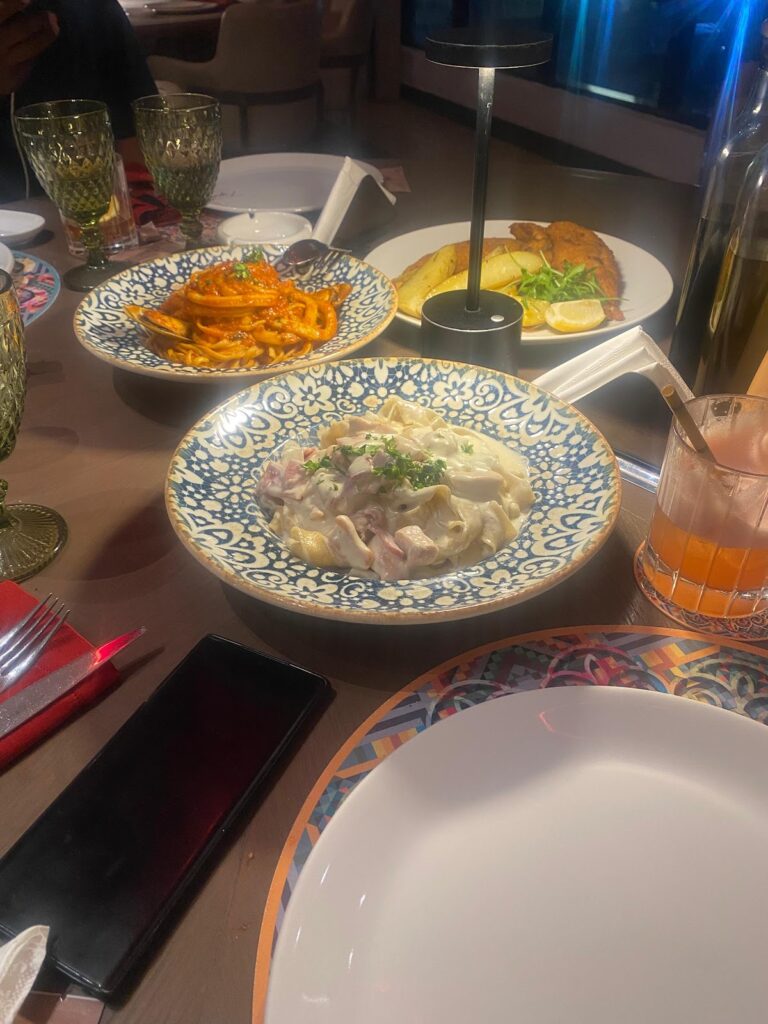
The main courses tell the story of adaptation more clearly. The Linguine Puttanesca comes properly spicy—olive oil, garlic, parsley, capers, anchovy fillets, black olives in a chilli tomato sauce that would make a Neapolitan nonna nod in approval, but with enough heat to satisfy Nigerian palates. The Fettuccine con Panna e Prosciutto con Petto di Pollo (homemade fettuccine with cream, ham, chicken breast, and parmesan) is rich without being heavy. The roasted potato and chicken round out the table, straightforward and perfectly executed.
Between courses, Marc and Bernard sketch out the broader picture. They’re part of Rocky Sporting Club, a hospitality group approaching forty years of existence. Their portfolio includes Black Diamond Hotel with its continental and intercontinental dining rooms, Cactus Restaurant (their oldest operating establishment, opened in 1998), Salma’s Terrace (a Lebanese restaurant serving oil companies onshore and offshore), MBS Suites, and Kallos Spa. Farfallino is the newest addition, barely fifteen months old.
“Running a restaurant is risky,” Bernard says. “Most shut down after some years. The strategy is to maintain the same standard—not just the food, but everything. Hygiene, the work model, staff training, and motivation.” At Cactus, he notes, 160 staff members include more than ten dedicated solely to hygiene and HSE. “The secret of a successful restaurant is to continue how you start.”
The drinks arrive throughout the evening: a Tramonto with Bacardi Carta Oro, Campari, pineapple, cinnamon syrup, and lemon juice; a classic Bellini; a Negroni that tastes like it was mixed in a Milanese bar; a Virgin Colada for those abstaining. The cocktail program, like everything else, doesn’t cut corners.
What becomes clear over the course of the evening is that Farfallino exists at an intersection: between fine dining standards and accessible hospitality, between imported authenticity and local reality. “Nigerians are very open-minded people,” Marc observes. “They love discovering and trying new cultures.”
The Nigerian population in Italy is substantial. As of 2023, there were 99,630 Nigerians in the country, and many often return home craving the food they had there. Farfallino provides that. They have the same meals, the same wines, the same experience. They’ve even catered weddings for couples who want the Italian experience without the transatlantic flight.
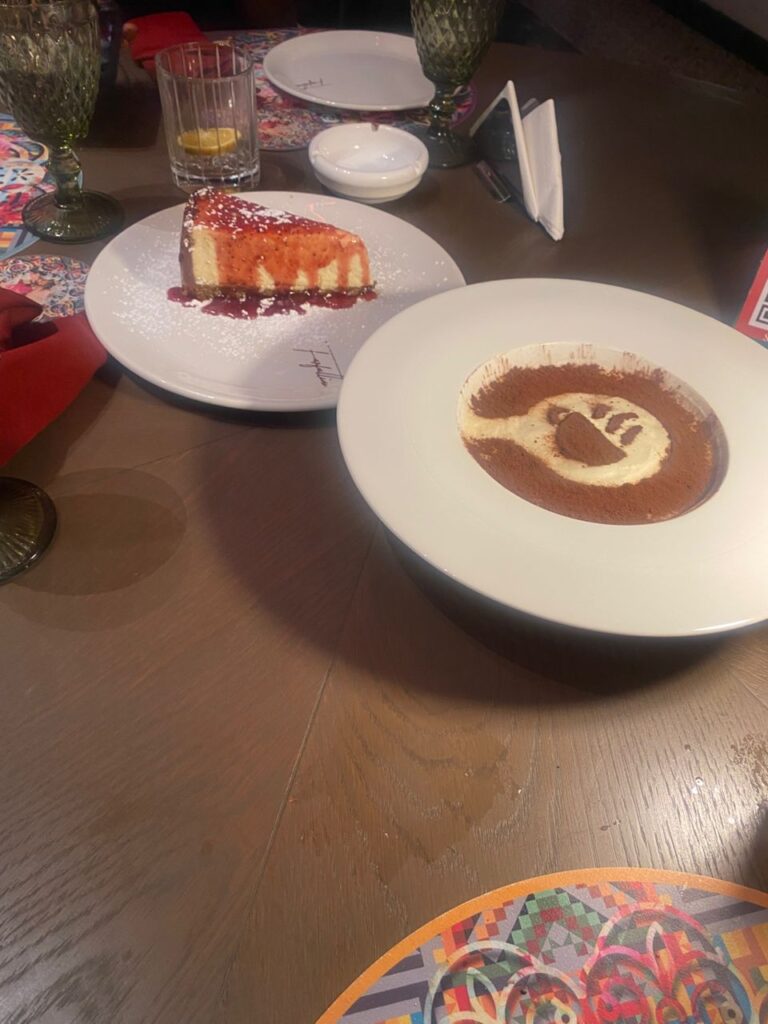
Dessert arrives: Tiramisu al Cioccolato with chocolate mascarpone cream, Savoyard biscuit, coffee, chocolate drops, and cocoa powder; and Cheesecake all’Italiana, a baked creamy Italian cheesecake with a choice of caramel, chocolate, or strawberry sauce.
By the time we leave, just before midnight, the dining room maintains its studied emptiness—perhaps a third full, perhaps less. Chuks has been attentive without being intrusive, appearing to clear plates and refresh drinks with timing that suggests careful training. The bill, when it comes, isn’t exactly cheap. Bernard was frank about that earlier: “Farfallino is not a cheap restaurant, but not an expensive one either. Diners get value for what they pay for.”
The question of what success looks like in ten or twenty years hangs in the air. Farfallino chose a city where restaurants open and close with alarming frequency, supply chains are unpredictable and operating costs are high. Yet it refuses to join the advertising lottery. “Social media hype usually brings temporary customers”, Marc says. “It’s always better to let them find you themselves. They become more loyal that way.”
Marc seems confident in this approach, saying it has worked time and again with their other successful establishments.
Outside, Lagos continues its endless hum. You come out to see everyone screaming at you to notice them. And it suddenly hit us that Farfallino’s silence might be its loudest statement.
Esther Emoekpere and Oluwatosin Ogunjuyigbe
Esther Emoekpere is a data analyst in the audience engagement department at BusinessDay, where she uses data to understand reader behaviour, spot unusual trends, and support the newsroom with insights that shape story performance. She holds a BSc in Statistics from the Federal University of Agriculture, Abeokuta.
She also with the BD Weekender team, where she covers a range of beats including profiles, food, lifestyle, restaurants, and fashion—creating stories shaped by audience interest and real-time engagement trends.

Dining and Cooking