
Very hot and dry were two words that were commonly repeated in the countryside of Jaen for many years. The reservoirs were low, the olive trees were in great difficulty and the harvests were increasingly shorter. However, the situation has taken an unexpected turn: the olive oil harvest in Jaén has plenty of water and the problem is the rain. This excess has become the new headache for the province that produces the most olive oil in the world.
The latest data from the Food Information and Control Agency (AICA) have confirmed what many farmers had already seen coming since November: oil production in Jaén has fallen by 45% compared to the previous year. From almost 300,000 tons in 2024 it has gone down to just 164,841 tons at the end of 2025. And the most striking thing is that it has not been due to the drought, but just the opposite: due to too much rain at the worst possible time.
Why has water become the main enemy of Jaén’s harvest?
How can rain after years of drought be bad? The key is when and how it rained. The intense rainfall in November and December fell right at the start of the olive harvesting campaign.
This created a problem: mud, stopped machinery and crews unable to enter the field. In many olive groves it was impossible to access them with tractors or vibrators, and hand picking has also become slower and more expensive. This delay has had direct consequences on the quality and yield of the fruit of the olive trees.
From COAG Jaén they summarize it bluntly: the olive has arrived late to the oil mill and in worse conditions. Each day of delay has meant less fat yield, fewer liters of oil per kilo of olive.
In addition, another factor that has been going on for months is added to this problem: the extreme heat of June. After a promising spring, high temperatures punished fruit setting and reduced its weight. That is, when it seemed that 2025 was going to be the year of recovery, the weather once again played against us, first with excessive heat and then with uncontrolled rain.
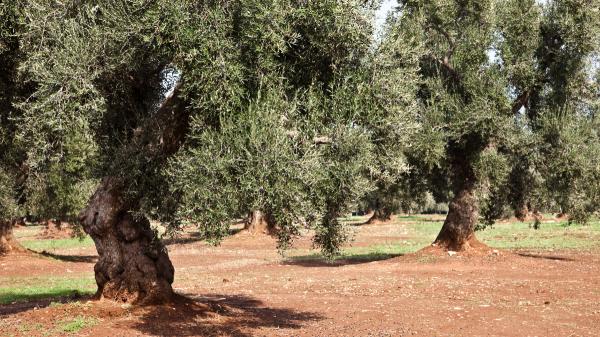
Less oil in the wineries, but more movement in the market: the paradox that “liquid gold” is now experiencing
The curious thing about this campaign is that, while production falls sharply, sales not only resist, but grow. According to UPA Andalucía, in the last quarter of 2025 oil output increased by 10%, with a particularly strong month of November: 129,727 tons sold. That is, less is produced, but more is sold.
Exports are also pushing strongly. In Andalusia they have grown by 44%, which is putting pressure on stocks that are already 13% lower than last year. As of December 31, 2025, Spanish wineries stored some 715,736 tons, well below the figures for 2024, which had already come from three years of poor harvests.
In Jaén, this context is experienced with a mixture of concern and relief. Concern, because the farmer sees his production fall by almost half. Relief, because the market responds and the oil continues to have a market, something key for the survival of the traditional olive grove.
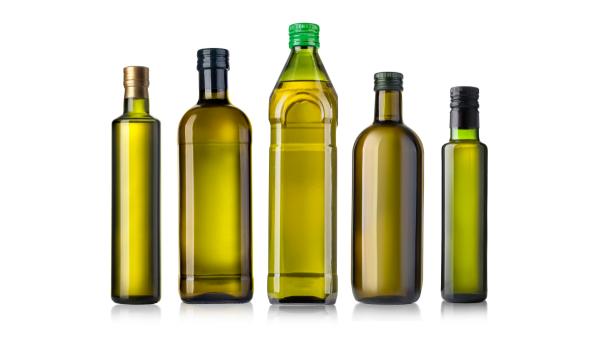
What is happening now with oil prices and why do experts ask for calm despite the drop in production?
When supply goes down and demand goes up, logic would say that prices should skyrocket. And yet, the sector asks for caution. After the historic peaks experienced in previous campaigns, no one wants to return to a scenario of instability.
Right now, the price of extra virgin at origin ranges between 4.20 and 4.29 euros per liter, a range that experts consider reasonable to maintain balance. It is not a low price, but it is not exorbitant either, and it allows costs to be covered in a context of complicated production.
From UPA Andalucía they insist that the key is stability. The general secretary of the organization, Jesús Cózar, has made it clear: selling more oil than is produced requires maintaining a balance that guarantees profitability for the farmer and, at the same time, consumer loyalty.
Because here is another important fact: despite the ups and downs, olive oil continues to be perceived as an essential product. It is not a dispensable luxury. It is part of the daily diet, inside and outside of Spain. And that explains why, even with less oil in the cellars, the market remains so active.
The new olive grove scenario: when the problem is the unpredictability of the climate
For decades, the biggest fear was the lack of water. Today, the problem is irregularity: torrential rains when they don’t come, heat waves at critical moments and campaigns that change direction in a matter of weeks.
Precisely the 2’25 vintage is a good example. It started with moderately optimistic expectations after the spring rains, but then the heat of June arrived and things changed. In the end, when it was time to harvest, excessive rain arrived and everything became more complicated.
Neither excess heat nor drought, nor lack of demand. The problem now is excess water at the least opportune time.
If you want to read more articles similar to Neither drought nor heat: the olive oil harvest in Jaén has too much water and the problem is the rain, we recommend that you enter our Other environment category.
Literature
Food Information and Control Agency (AICA). Available at: https://www.aica.gob.es/
ADVANCE OF THE MARKET SITUATION OF THE SECTOR. FROM OLIVE OIL, TABLE OLIVES AND OLIVE POMAC OIL. CAMPAIGN 2025/2026. Available in: https://www.mapa.gob.es/dam/mapa/contenido/agricultura/temas/producciones-agricolas/frutas-y-hortalizas/aceite-de-oliva-y-aceituna-de-mesa/avances-e-informes-de-situacion-de-mercado/AVANCE-situaci-n-mercado-sector-ole-cola_Diciembre-2025_.pdf
UPA Andalucía highlights that, in December, 30% less oil was produced than in 2024 and 10% more was sold. UPA Andalusia. Available at: https://www.upa.es/upa-andalucia/noticias-upa/2026/6836/
Dining and Cooking