
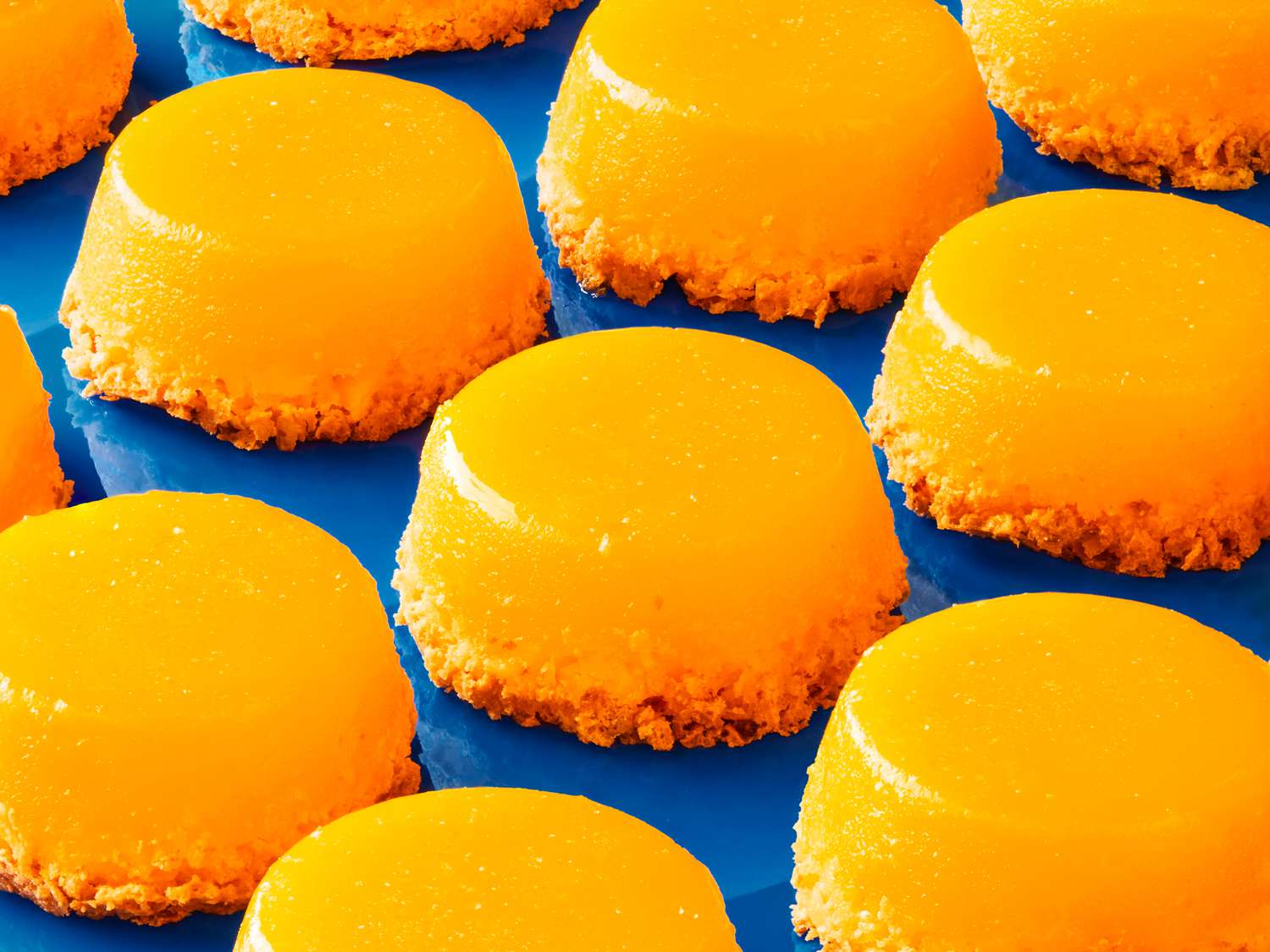
This quindim delivers the dessert’s hallmark contrast: a glossy, golden custard top with a coconut-rich base underneath.A generous use of egg yolks gives the custards their lush texture and vibrant color.Gently baking the mixture in individual molds allows the custards to set softly while staying silky and spoonable.
These Brazilian treats feature a rich, eggy custard perched atop a chewy coconut crust. Both crust and custard come from a single batter: The macaroon-like crust forms as the shredded coconut floats and browns while baking; once cooled, the desserts are inverted, revealing the shiny, sunny custard layer. White sugar will result in bright yellow custard, while light brown sugar will tint it pale gold. Make sure the quindim is completely cooled and fully set before flipping the muffin tray.
Quindim, a term that traces its etymology from both Brazilian Portuguese and West African languages, may also appear in the plural as quindins. When the custard is baked in a ring mold, it is called quindão. This recipe comes from Jessica B. Harris, a scholar of the African diaspora who discovered quindim while traveling in Salvador, in Brazil’s Bahia state, and fell in love with it there. Read more about her travels and culinary discoveries.
Where is quindim popular?
Quindim is a beloved Brazilian dessert, especially in Salvador, the capital of Bahia. It’s widely believed to have arrived in Brazil in the 17th century through the culinary traditions of enslaved Africans, while its rich, eggy custard base also points to strong Portuguese influences. Like many Brazilian dishes, quindim reflects a blending of cultures that came together to shape the country’s food history.
What is quindim made of?
Quindim is a glossy coconut custard cake gently baked in a water bath until just set. Sweetened with either white or light brown sugar, its lush texture comes from egg yolks cooked low and slow, while whipped egg whites keep it light. Shredded coconut adds a pleasant chew, giving the silky custard a bit of contrast in every bite.
Note from the Food & Wine Test Kitchen
Before making this recipe, read Step 3 carefully. The quindim is first baked in a bain-marie, or water bath, to slowly cook the custard without scalding the exterior. To avoid overcooking the dessert, you’ll want to remove the muffin tin from the hot water-filled pan once fully cooked to gently cool on a wire rack for about 1 hour. At this point, you should leave the oven on, as you’ll need to reheat the pan filled with water for 10 minutes before you’re ready to unmold the quindim, which is quite possibly the most finicky part of the process. However, a quick dip in hot water and running a small offset spatula along the sides should help facilitate the process.
Dining and Cooking